Segment 2 of 3, 13 November 2023Word Count 39,071, 130-minute Reading Time with over 400 Images
Note that I am continually updating this entry with new information and corrections as I discover them during my on-going research into Jekyll Island’s History. The section on golf was significantly updated in March 2026 to better and more accurately tell the story of Golf on Jekyll Island..
The Original 1886 Jekyl Island Clubhouse, Just After Completion
Please be aware, this is not an original work. Instead, it is my attempt at building a consolidated, chronological narrative –– an anthology if you will — with related illustrations from several excellent books and on-line resources that provide a very detailed account of the Jekyll Island history.
As I began to compile my narrative I found I needed to break it down into smaller compilations, I suspect in much the same way as the authors of the books that I reference below discovered.
This segment begins where my Pre-Club Era Segment ends, and was originally intended to go through the present day Jekyll Island State Park. However, just the Club Era was overwhelming. While primarily being focused on the 1883 to 1947 Club Era and the story of the Club’s formation, the more important buildings occupied by the Club members, inclusive of the Club Hotel, Apartments and the fifteen member-built cottages, as well as a segment on the end of the Club Era, I do include some forward-looking comments about changes made during the 1947 to present State Era where it seemed appropriate given the extent of those changes.
The most valuable of the following books are the ones by June Hall McCash with various different co-authors, including her late husband William Barton McCash and son Brenden Martin; they are:
For anyone looking to gain a full appreciation for the subject, I strongly encourage you to find and read these works and see all of the images they include. They are compelling to read and filled with far more details and facts than what I’d characterize as my high-level overview of the Club Era. Again, it was originally my intention to provide a more comprehensive look than what I have thus far composed in my spare time that quickly turned into an Alice-in-Wonderland like journey down multiple Rabbit Holes.
The following guide is something I stumbled-over while doing my research that provides a very brief overview of the Jekyll Island Club History via a timeline, and also includes an excellent written guide for visitors to the Jekyll Island Clubhouse and grounds. Click on the image to open the full, two-page guide.
Club Membership was a Luxury Expense, not an Investment
Reader Notes:
In order to help readers gain some additional context about the Club Era, I have in many cases included the years and sometimes dates when key personalities were born and died, as the ages and eras play an important role in why and when the Club began its terminal path to closure in the 1940’s.
I’ve also added notations on cited dollar values from ‘back-in-the-day’ of what their current value is as of November 2023 when adjusted for inflation, i.e., in 2023 $’s.
I’ve also used, in most cases, the post 1929 spelling of Jekyll Island with both “L’s” except when referencing the founding of the Jekyl Island Club and in other proper names using the original spelling of Jekyl such as the name of the steamer yacht Jekyl Island after islands’ name’s spelling was legally changed by the state of Georgia to correct the 195-year-old error.
Oh, and yes… you’ll likely come across typo’s and grammatical errors; my apologies. I’m my own proofreader and editor, which is not as effective as having fresh-eyes to review a work.
Viewing Suggestions & Recommendations
Scaling: Given the WordPress typefaces, type size and formatting — never mind the length and all of the images — my compilations are best viewed on a larger desktop computer flat screen monitor, with perhaps a Zoom Setting of 110% or 125%, as it will make it much easier to read, especially for the current year values in superscript that follow then-year dollar amounts.
Hyperlinks:You’ll find hyperlinked text in the various tables of contents for the main headings and sidebars that can be used to ‘jump to them’ vs. trying to scroll to them. You’ll also note the major section headings in each table of contents that appear in blue text are also hyperlinked. And, throughout the ‘document’ you’ll find hyperlink that can be used to jump-back to the tables of contents and indexes to speed-up navigating forward and backward in the document.
Like all hyperlinks, you just merely need to move your cursor and ‘hover’ over the blue colored and sometimes Bold text and if the cursor changes to a hand with the index finger extended, you can click on it you will be taken to that section of the document.
Links to Other Internet Sites: You will also sometimes findarticle names or other outside sources in Blue Text or sometimes Bold Blue Text when also associated with an image that I have mentioned inside the body of a paragraph or in “Notes” that indicates they are links to that article or source.
Once again, like other hyperlinked text, you just merely need to move your cursor and ‘hover’ over the blue colored text and if the cursor changes to a hand with the index finger extended, you can click on it you will be taken to a new window with that source.
Images: In many cases, unless it’s obvious from the accompanying text what an image is related to, I have included an image I will have used bold text in the body of the document next to the image that helps explain it. And, to make the images easier to see, I’ve done my best to ensure a larger and scalable image of every embedded image in my compilations can be opened with a click in a new window to provide far-greater detail.
As it is for hyperlinked text, you just merely need to move your cursor and ‘hover’ over the image and if the cursor changes to a hand with the index finger extended, you can click on it and the image will open in a new window.
John Eugene DuBignon, Newton Finney & The Jekyll Island Club
Between 1875 and 1885, ownership of Jekyll Island was consolidated under John Eugene DuBignon [b.1849, d.1930], the son of Joseph DuBignon, grandson of Henry Charles DuBignon, and great grandson of Christophe Poulain DuBignon.
John Eugen became an entrepreneur engaged in banking, manufacturing, and shipping in Brunswick, who also saw Jekyll’s potential as a private hunting preserve now that it was no longer viable as a plantation following the Emancipation Proclamation issued by President Lincoln on January 1, 186 during the third year of the American Civil War.
John Eugene DuBignon Acquires Jekyll Island
Since John Eugene had no claim to the island because his father, Joseph DuBignon, died before Jekyll was divided among his uncles and aunt, he began acting on his vision and pursued opportunities to acquire all four parcels of the island. Between 1879 and 1885, he eventually bought the island for what amounted to $13,000 ~$411,500 in 2023 $’s in four separate transactions.
The Southern Third – The 26-year-old John Eugene easily acquired the land on the south end of Jekyll — the 1,500 acres below beach road –– following the death of his uncle, Charles DuBignon, who died bankrupt in 1875. Charles’ widow, Ann V. Grantland, sold the inherited share of the island at auction in 1879 to settle a lawsuit and restore her financial stability for $4,500 $138,000I n 2023 $’s: the successful bidder was John Eugene. It was on the southern third that he established a farm where he raised Devon cattle and in 1884 built a stick style wood-framed farmhouse where he lived with his wife Frances and daughter Josephine.
The Middle Third– In 1883, he acquired John Couper’s former inherited share of the island — the portion of the island north of the beach road to the area known as Rock Bois — from Brunswick merchants Friedlander and Anderson, who had no use for the land. He paid $4,000 $122,000in 2023 $’s cash, less than the amount of his uncle’s $5,235.26 $159,000 in 2023 $’s debt they had just settled with it’s their recent acquisition.
Aunt Eliza’s 30-Acres – In June 1885, he persuaded his spinster aunt Eliza DuBignon to deed-over her 30-acres known as Bryan’s Old Field for the promised sum of $100 $3,165in 2023 $’s, a sum that was still unpaid at the time of her death in October 1886.
The Northern Third– John Eugene thought he purchased his late uncle Henry Charles inherited third of the island — 3,000 acres north of Rock Bois to the end of the island — in May 1885 when he paid Mary Tufts $3,500 $111,000 In 2023 $’s to settle his uncle’s debt, believing she had clear title. The court ruled otherwise and ordered the land be auctioned-off to settle a lingering “Equity of Redemption” issue. John Eugene had actually been actively working behind the scenes throughout the Mary Tufts lawsuit in an effort to acquire the land. To protect his $3,500 payment to Tufts, on 27 May 1885, he made certain he was at the auction and successfully acquired the title for $1,000.$32,000 in 2023 $’s, ultimately paying the same amount of $4,500 that he paid for his uncle Charles south third of the island.
His entrepreneurial sense was reinforced when the burned-out, Dungeness1 mansion on Cumberland Island was acquired by Andrew Carnegie’s younger brother, Thomas M. Carnegie, in 1881 who built a new mansion on the site. Although Thomas Carnegie died from pneumonia in 1886 before his 59-room Queen Anne style mansion and grounds were completed, his wife Lucy continued to live at Dungeness where she built other estates for her children and eventually owned 90% of the island by the early 1900’s.
Note 1: Dungeness was originally a hunting lodge built by James Oglethorpe in 1736. After being abandoned, Nathanael Greene acquired 11,000 acres in 1783 to settle a debt, just before he died in 1786. In 1803, his widow Catharine Littlefield Greene built a four-story tabby mansion over a Timucuan shell mound that was abandoned during the U.S. Civil War and burned in 1866.
Originally from Sackets Harbor, New York, 21-year-old Newton Finney [b.1835, d.1910] first came to Jekyll Island by way of Fon du Lac, Wisconsin in 1856 with the United States Coast Survey (USCS) to help chart the topography of Saint Simons Sound and Brunswick Harbor.
During this assignment, he met his future wife, Josephine DeBignon, whom he later married on 17 April 1860 in nearby Brunswick, Georgia. He came to know the DuBignon family history, its ties to Jekyll Island and also befriended his brother-in-law, John Eugene DuBignon.
After the outbreak of the Civil War, Finney severed his ties to the USCGS given his new ties to the south, and obtained a commission in the Confederate Army, attaining the rank of captain of engineers during the Civil War.
Like many, Finney lost the Georgia property and significant wealth he had acquired before the war. Following the war, Finney partnered with important political and social figures — including Oliver King, a wealthy New York broker and railroad supplier — and began to rebuild his wealth. He subsequently moved his family to New York in 1873, where he became an up-and-coming financier and member of the prestigious New York City Union Club.
DuBignon Searches for Buyers as he Acquires the Island
John Eugen persisted in his efforts to regain ownership of the Island with the goal of selling it at a profit. While still trying to secure ownership of his Aunt’s grant and the north third of the island, John Eugene began to market the Island as a hunting preserve to potential buyers from New York. In mid-March 1885, John Eugen entertained his first prospective buyers for a hunting expedition that failed to yield the desired interest. However, a month later, a second group visited the island including 35-year-old New York businessman John Claflin, who agreed in provide financial assistance to John Eugene in the form of short-term loans via $10,700 ~$346,564 in 2023 $’s in promissory notes with the title to Jekyll Island as collateral so Dubignon could gain clear title to the island and move forward with the sale to Claflin.
To that end, on 16 June 1885 John Eugene recorded three promissory notes to Claflin: one for $350 ~$11,336 in 2023 $’sn payable in 6-months, one for $350 ~$11,336 in 2023 $’s and one for $10,000 ~$323,891 in 2023 $’s payable in one year to cover his $3.500 ~$113,362 in 2023 $’s payment to Mary Tufts, the $4,000 ~$129,556 in 2023 $’s balance of his payment to Friedlander, $3,100 ~$100,400 in 2023 $’s for miscellaneous expenses and $100 ~$3,238 in 2023 $’s for his debt to Eliza DuBignon.
However, by this time Claflin was having second thoughts about becoming the sole owner of an island, and John Eugene was also having second thoughts about selling the island to a lone buyer. It was his brother-in-law Finney and his partner Oliver King who once again encouraged John Eugene to let them market the hunting preserve and resort as a club to a syndicate of wealthy New York investors that would yield a significantly higher profit to John Eugene, never mind a substantial commission to Finney and King. DuBignon shared this alternative scenario with Claflin who agreed — with some relief –– to release him from the sale. Moreover, Claflin also ended up not only helping to promote the club to potential investors back in New York, he became one of the founding members.
With clear title in hand, John Eugene along with Finney, Oliver King, and three others petitioned the Glynn County Court for approval to create a corporation in Glynn County Georgia for the purpose of selling shares in an exclusive winter retreat and resort offering hunting, fishing, yachting, with a clubhouse and operating trains and launch as deemed necessary. They successfully incorporated their proposed enterprise as the “Jekyl Island Club” on December 9, 1885.
On February 17, 1886, Finney signed an official agreement with John Eugene, who sold Jekyll Island with all improvements and livestock thereon to Finney’s Jekyll Island Club Corporation for $125,000 ~$4,001,000 in 2023 $’s after having been in the hands of the DuBignon family since 1794. The clubhouse would be built next to John Eugene’s house and farm within what became the 240-acre Jekyll Island Historic District.
As planned, to finance the construction of the Club’s main facilities, they agreed to sell 100 shares of the Jekyll Island ClubCorporation stock to 50 people at $600 a share ~$19,500/share in 2023 $’s for a total investment of $63,600 ~$2,077,300 in 2023 $’s in the Club. However, there was still a catch: the corporation would need to secure the the sale of the 100 shares of stock by 1 April 1886, otherwise the sale would be of no effect leaving Claflin potentially tied to his earlier commitment to buy the island from John Eugene.
Finney quickly sold six of the first seven pair of shares to the men who signed the charter petition: himself, DuBignon, Oliver King, Richard Ogden, William D’Wolf, and Charles Schlatte and, though not named, I suspect the 7th pair of the first shares was sold to Lloyd Aspinwall, who was also a founding member of the Club. Finney then issued invitations to many members of the Union Club with strong business and social ties, as well as wealthy businessmen at the Chicago Club and, to a lesser degree, in cities such as Philadelphia, Boston, and San Francisco. In all, Finney was able to find 53 people to join the Club, including wealthy luminaries such as then 52-year-old Henry Hyde, 52-year-old Marshall Field, 49-year-old J.P. Morgan, 39-year-old Joseph Pulitzer, and 37-year-old William K. Vanderbilt who were willing to invest in the yet-to-be-built Club on the site-unseen barrier island off the coast of southeast Georgia.
John Eugene DuBignon was the only “local resident’ who was a member of the Club, and his modest farm house on the island still stands in the Historic District near the more elegant “cottages” built by wealthy club members over the next 46-years. In fact, the stick style farmhouse he built in 1884 was originally located on what became the site of the San Souci apartments, and in 1896 relocated to become the superintendent’s cottage, then later served as the “ClubCottage,” a guesthouse for Club members and island visitors. Although technically never a ‘cottage’ in the true sense of the Jekyl Island Club vernacular, it is now referred to as the DuBignon Cottage.
After the Jekyl Island Club Corporation acquired the Island on 17 February 1886, on 1 April the executive committee met in New York to make the final $125.000 ~$4,177,859 in 2023 $’s payment to John Eugene: $50,000 ~$1,671,143 in 2023 $’s from the Club’s accounts and $75,000 ~$2,506,715 in 2023 $’s with the first issue of 150 20-year mortgage bonds at $500/ea ~$16,711 in 2023 $’s bearing 4.5% interest. The Mercantile Trust Company of New York was the trustee and held the title to the island. Later in the day, the executive committee created the constitution, by-laws, and to nominate officers for the Club. The first president was Lloyd Aspinwall2, vice president was Judge Henry Elias Howland, treasurer was Franklin M. Ketchum, and Richard L. Ogden became secretary. After seven long years, the “Jekyll Island Club” came to be in 1886.
Note 2: Lloyd Aspinwall served just 5 months as the Club president before he died suddenly. Henry Howland then took up the position as president of the Club, Richard Ogden became the Club superintendent when the Club opened in January 1888, and Club founder Newton Finney resigned from the executive committee to become secretary of the Jekyll Island Club Corporation.
The executive committee also conducted a little public relations business…
Likely based on a press release used to create an article in the Sunday leisure section of the New York Times on 4 April 1886 andunder the title of, a new “association of wealthy gentlemen” that went on to read, “It is predicted that the Jekyl Island Club is going to be the ‘swell’ club … inasmuch as many of the members are intending to erect cottages and make it their Winter Newport.”
Not quoted but paraphrased, the source noted, “Ladies would enjoy all the privileges of their husbands, fathers, and brothers. They would fish, shoot, ride, and camp out. Family participation was encouraged as well.”
The Executive Committee Tour & Plan for Development
In May 1886, the executive committee met and toured the island, by which time DuBignon had ensured the island was stocked with plenty of wild game. The committee members who’d not seen the island before were purportedly impressed by the the Spanish Moss-draped Live Oak and Magnolia-dotted barrier island with it’s accessibility to yachts and weather that would be conducive to sailing, fishing, and golfing… not just in the winter months, but year round.
The committee established plans for a large clubhouse that would provide lodging for members and serve as the island’s social center. Chicago architect Charles Alexander was hired to design, draw up the plans and oversee completion of the Queen Anne style clubhouse, while Horace Cleveland — one of the best-known landscape architects in the country — was hired to lay out the grounds. It was Cleveland who recommended the clubhouse not face east towards the ocean, but west towards the river and renowned marshes of Glynn with fabulous sunsets that were very calming to view.
While engaged in developing the landscape plan for the Club, seventy-three-year-old Cleveland wrote to fellow architect Frederick Law Olmstead that “it took all the resolution I could muster to traverse on foot or on horseback the areas of forest I had to explore, and in spite of every possible precaution, I was bitten and stung from head to foot.” He determined the Jekyl Club would possess a “style of severe simplicity” and remain a “natural paradise.”Source
Ground was broken on the clubhouse building in mid-August 1886, Alexander promised its completion by 1 August 1887, but he fell behind schedule. It was not finished until 1 November 1887, at a cost of $45,000 $1,425,000 in 2023 $’s.
Alexander’s drawing of the proposed Jekyll Island Clubhouse was published in the 8 January 1887 issue of American Architect and Building News, and depicts a rambling Queen Anne hotel with corner turret and wraparound veranda, bay windows, extended chimneys and an overall asymmetrical design Source
In terms of a more detailed description, the four-story, Queen Anne style club house featured sixty guest rooms; dining facilities; rooms for reading, cards, and billiards; and a barber shop.
There were three Club dining rooms — one for servants, one for children, and one for adults only.
Quarters included single and double bedrooms, with or without parlor and bath.
Prices ranged from $1.50 to $6 per night ~$50 to $200 in 2023 $’s , with guests paying 20% more than members.
The top floor was originally to be reserved for servants, but by May 1888, a separate servants’ annex was constructed northeast of the clubhouse.
In the process of building, Alexander faced incompetency, sickness, and an inadequate pier, but he finally declared the grand hotel ready in November of 1887.
Under ConstructionDuBignon House in ForegroundLandscaping in Work
Getting to and from Jekyll Island during the Club Era
Remembering Jekyll Island was truly an island without land-access, everyone and everything that needed to come and go from the island had to do so by water on ships, barges, boats and launches with shallow drafts, primarily between the Brunswick harbor and the small pier on Jekyll Creek located on the southeastern side of the island. For even the fastest steam-powered launches it was an hour-long journey each way.
Large steam-powered vessels like those of the Mallory Steamship Line delivered Club staff and sundry personal items including carriages, horses and hounds to its wharf at Brunswick Harbor. From there, smaller steam-powered craft would be contracted to transfer them to the Jekyll Island wharf for off-loading. Throughout the club’s operation during high tides large ships and yachts were also able to sail into Jekyll Creek to off-load passengers and cargo, to include regular delivery of coal, oil and other larger cargo.
The pre-existing wharf at Jekyll was deemed unfit for landing building materials and equipment by Alexander during construction of the clubhouse, as well as the roads and infrastructure on the island. Therefore, in addition to designing and overseeing the construction of the clubhouse, Alexander also had to design and oversee the construction of a new wharf3 and establish the roads and infrastructure while making due with hired barges from Brunswick, as the ones he’d been provided with were inadequate.
Note 3: Although shown on Clermont Huger Lee’s 1968 Preliminary landscape restoration plan for the Historic District, I’ve never found a photo that depicted the much smaller, DuBignon-Era pier and small ‘steamship’ landing wharf that sat just to the south of the location where the fixed pier, wharf and floating dock built by Alexander in 1887 remains in use.
As the Club neared it’s opening, it acquired its own steam and small gasoline-engine powered vessels to transport staff, guests and personal luggage to and from Jekyll Island as well as its’ own staff to captain, crew, maintain and manage the crafts’ docking, boarding and luggage handling as well as other wharf operations.
And, while I’m sure it’s true that club members who owned large, sea-going yachts like the Morgans, Vanderbilt, Lorillard, Stillman, Astor, Manville, Pulitzer’s, Baker, Stotesbury, Crane, Vail, Bourne, Gould and others would have used them for passage down the Atlantic coast on visits to Jekyll when it was practical, the large ships substantial size crews would either dock in Brunswick to off-load their owners, family, guests and luggage that would then be ferried to the island by smaller vessels, or drop anchor at the northwest end of the island. From there, their crews they would use their own launches or have those from the club ferry their charges, not necessarily heading down or dropping anchor in the somewhat narrow, deeper navigation channel on Jekyll Creek.
It would have certainly been a great vision to imagine several of these 100 to 300-foot grand yachts with dozens of crew members — e.g., Pulitzer’s steam-powered yacht SY Liberty had a length of 268 feet, displaced over 1,607 gross tons, and had a crew of over 50 –– anchored side-by-side in Jekyll Creek but I don’t believe that was the case. Quite often, their yachts would sail-on to other destinations while their owners vacationed on the island, or would likely undergo scheduled maintenance and crew leave to coincide with their downtime.
The article while interesting to read, seems to have continued the string of citing what I believe has been well-meant, but not sufficiently researched background information. I’ve seen several of the same errors, e.g., the 100′-long Jekyl Island — she was 84–long — in different media forms regarding how the club member’s large yachts were managed, the evolution of the club wharf and in particular the subject article regarding the location of the last, and largest of the club’s boathouses and, yes… boathouse is technically a compound word.
Capt. James A. Clark & Staffing the Club Yacht, Cruiser, Launch & Napthia
The key to the success of the Club Era was the safe, efficient and courteous standards set by the club’s senior captain, James Agnew Clark who was one of the first hires by the club’s executive board along with Ernest Grob — pronounced ‘grōbe’ — as the hotel clerk.
Capt. Clark4was born and raised in nearby St. Marys, Georgia, learned to master watercraft in and around Brunswick and the nearby barrier islands, and would have been nearing his 27th birthday on 14 December in the fall of 1887 before the club opened in 1888. Capt. Clark became immediate and lifelong friends with Grob who would have been 26-years old in the late fall of 1887 when Grob first arrived on the island. Grob quickly became the Jekyll Island Club’s Superintendent during its second season, a position he held for 41-years and he and Clark remained loyal and treasured club staff — treated more like family than merely employees — until they both retired in 1930.
Note 4a: While there a few very good photos of Grob, there are very few of Capt. Clark where he or his face are clearly visible. However, the exception is the one above where he’s not wearing a hat that partially covers his face, likely in his late 30’s after moving into the Brown Cottage on Jekyll Island as the live-in caretaker of the otherwise unoccupied cottage. It was in this same period during the 1893-1894 Yellow Fever epidemic he helped care for the sick who lived on the island while still protecting the interests of the club.
Note 4b: Although never identified in any books where this photo appears, I would guess that behind him is his future wife, the club’s head housekeeper Minnie Schuppan, two-years his junior whom he married on 20 November 1900, in Asbury Park City, Monmouth, New Jersey. Next to her might be Clark’s mother in her late 60’s, noting his father passed in 1871 and his only other brother passed in 1872 at 9-years of age and his three sisters were all married by the 1890’s. Again, I’m just guessing, but I suspect both Clark and Shuppen shared the three-bedroom Brown Cottage and his mother filled the role of a live-in chaperone before they were married. Clark and Schuppan would go on to have a son and a daughter, lived on Jekyll Island year-round .
Note 4c: Clark fulfilled the role as the island caretaker during the off-season and eventually a house of their own was built to the north of the DuBignon Cottage behind the clubhouse Annex in 1901. The Clarks lived in the home until their retirements in 1930, moving to nearby Brunswick, Georgia where Capt. Clark passed in March 1940, with Minnie passing in May 1949. The Clark Cottage was lost to a fire during the State Era on 9 February 1950.
In addition to Capt. Clark, in a typical Club Era season they would also hire two additional boat captains, a boat engineer, two deckhands, a dockman, and a fireman… who tended to feeding the steam boilers on the steam yachts. In 1916, a small cottage on Pier Street was built for long-time boat engineer John Courier and his family who came on when the club first opened — and is still called the boat engineer’s house — that they occupied until he left his position at the club at the end of the 1921 season. It was occupied next by Henry Etter, the club bookkeeper who took Ernest Grob’s position in the 1889 season, from 1923-1926. The former assistant boat engineer brought in during the 1920’s, James Harper, became the sole boat engineer beginning in the 1930 season. Following Capt. Clark’s retirement, there were several different yacht, cruiser and launch captains including A.J. Spaulding who helmed the Jekyl Island and Dick Backus who captained the Sylvia.
The Club’s Yachts, Cruisers Launches, Napthia Craft and Barges
It was in 1887 — during construction of the clubhouse — when the first Jekyll Island Club-owned yacht was was purchased. It was be named the Howland in honor of then current club President, Henry E. Howland. It was also in these early years of the club when the steam launch Hattie was acquired, as well as the first, smaller 24-foot naptha launch. These three club boats served the clubs needs until the turn of the century, and all three5 survived the the strongest storm to ever hit Georgia, the Hurricane of 2 October 1898.
Note 5: Capt. James Clark was “buffeted about and knocked-down” while securing the Howland and Hattie at the dock, and while the naptha launch was swamped, it was recovered and repaired.
The storm made landfall on 2 October 1898 at Cumberland Island with sustained winds of 135 mph, creating a 16-foot storm surge along the barrier islands eastern shores and leaving Jekyll Island as well as Brunswick under up to four-feet of standing water. At least 179 people died in the hurricane — four at Brunswick, but none on Jekyll Island — and the storm’s effects were felt as far south as Jacksonville. Fernandina Beach was devastated, nearby Amelia Island was leveled and as far north as Savannah 97 people drowned on a plantation. On Jekyll, the nearly finished, problem plagued, new and permanent 18-hole 1898 Dunn ‘Savanna’ golf course was essentially ruined, while the recently completed ‘improvement’ of the early Jekyll Island Club’s ‘golf grounds’ so-called 9–hole, 1998 Dunn ‘Riverside’ golf course near the current airport between Riverview and Old Plantation roads was only damaged, the wharf and dock were damaged, the windmill was blown-down and nearly every building sustained some level of damage. There was extensive damage to landscape and an orchard on David King’s lot, as well as his cottage that would plague it for years after it was acquired by Edwin Gould who gave it the name Chicota. However, nothing as severe as elsewhere along the barrier islands given the ‘historic district’ was on the leeward side of the island and somewhat protected by the dunes and older-growth tidal forests.
The 1887-vintage Howland was sold and replaced in 1901 by the larger 84-foot, 64-ton Jekyl Island yacht built in 1896 which remained in service at the club until it was closed in 1942. The steam launch Hattie was replaced in the late 1890’s by the steam launch Kitty — named after club president Charles Lanier’s niece — that was replaced in the late 1910’s by the gasoline-engine powered and faster Sylvia and another launch named the Kermath. In the mid-1930’s a twin-gasoline engine cruiser named the Sydney — whose namesake like the Sylvia and Kermath’s I did not discover — was acquired in addition to the Kermath and the Sylvia, noting the latterburned to the waterline in 1942.
The Jekyll Island Wharf and the other docks and Boathouses along Jekyll Creek
However, as a top-level timeline, the Jekyll Island pier and landing wharf inherited when the club acquired the island from John DuBignon quickly proved inadequate when construction of the clubhouse was underway in 1896 and 1897. As noted at the beginning of this section, a new, fixed pier and wharf had to be redesigned and built under the oversight of the clubhouse architect, Charles Alexander in 1887.
The resulting pier and wharf with it’s floating dock –– with a small boat house next to the wharf on the shoreline (ref. the 1893 Sanborn Map) — was utilitarian-looking vs. being finished in the more ornate victorian style used for the clubhouse. However, it provided structurally-sound and functionally sufficient to remain unchanged until 1916. Well, I say unchanged, the wharf and dock were damaged in the Hurricane of 2 October 1898 and had to be repaired, but appears to have remained visually no different from the original 1887 design by Alexander.
As can be seen in the below photo at the upper left, by the time the first club steam yacht Howland was sold and replaced in 1901 by the 1896-built, 84-foot, 64-ton steam yacht Jekyl Island, the wharf and pier looked very much the same as it had before. However, by the early 1900’s a so-called 80-foot long boat shed (ref. the 1908 Sanford Map) — highlighted by the white arrows in the three other photos — had been built just south of the Jekyll Wharf at the south end of the Riverview Drive loop, just to the northwest of the McKay / Rockefeller’s Indian Mound Cottage. I say ‘so-called’ in that it did not appear to have the needed slipway or sit above the water such that it could have been used to house large, heavy craft that couldn’t be moved without a capstan winch.
I’ve not definitively discovered if the boathouse was built and owned by the club, or by Rockefeller who acquired the McKay Cottage in 1905 as it is referred to as both the club boathouse and as the Rockefeller boathouse in various mentions in books about Jekyll Island. The reference to Rockefeller’s boathouse came in regard to when he funded the construction of the $35,000 $1,013,600 in 2023 $’s bulkhead and seawall during the off-season summer of 1916 along the Jekyll Creek in front of his ‘Indian Mound‘ cottage — so named for the first time in February 1914 — that ran north to where the Edwin Gould ‘compound’ comprised of several lots he’d acquired from other club members began.
Getting back to the construction of the seawall in 1916, the club / Rockefeller boathouse had to be relocated further south along the shoreline and was noted in one of the references had be located just just to the southwest of the former Pulitzer Cottage, acquired by John Albright in February 1914. The boathouse can be seen three-tenths of a mile south of the Jekyll Pier during the construction of the seawall, where the sunlight is reflected off its roof in the middle photo, below. The Fall/Winter 2024 edition of 31•81 article entitled ‘The Boat House Ruins‘ I referenced above possibly misidentifies this as the the larger boathouse, [aka., Launch House on the 1920 Sanborn Ins. Co. Map ] whose ruins are located at Riverview Park given these photos were taken during the Rockefeller-funded construction of the bulkhead and seawall during the off-season summer of 1916.
The ruins of the larger, ~100-foot long launch house — several concrete piers and a windlass and capstan winch pulley wheel — can be found four-tenths of a mile south of the Jekyll Pier at the southwest corner of Riverview Park. Bear-in-mind, the surviving concrete piers were likely the foundation for the inclined slipway ramp, half-of-which was inside the boat house. Riding on the slipway would have been a massive cradle driven by a steam or electric powered windlass & capstan winch used to haul the 84-foot long, 64-ton Jekyl Island out of the water and into the boathouse. A new and much smaller structure was built next to the club’s reworked wharf at the edge of the bulkhead and seawall, likely for the small Naptha and other small boat storage, etc.
My Attempt at Lifting the Fog Around the Jekyll Island Club’s Boathouse & Historic Site
I created the following, composite image to explain why I believe the boathouse shown in these two photos — the upper right, same image as from above — and a panoramic photo likely taken from a boat sitting just off the north end of the boathouse at it’s location just south of the Albright Cottage such that it would not block views of the Jekyll Creek from any of the club member cottages. The west-face of the Albright Cottage can be made-out just to the east of the boathouse in this panoramic photo. Given where it was in 1916/1917, I’d say the Club failed to achieve its goal of not blocking the cottage owner’s view to the south of Jekyll Creek.
Black Frame: The relocated boathouse sitting 3/10th of a mile south of the club wharf, west of the Albright Cottage that is now located in such a way extending out over the creek.
Note that a barge, likely the club-owned barge towed by the Jekyl Island is tied up to the boathouse wharf on the north side of the boathouse that appears to have lamp posts and two people on it.
The extent of the small wharf alongside the boathouse that extends out to the Jekyll Creek suggests that this one was truly a boathouse, likely with a rail system that allowed it to draw the smaller launches inside during the off-season.
Green Frame: The Albright Cottage ‘peeking through the trees’ and a standalone full image.
Orange Frame: The Jekyll Island Club’s iconic tower off in the distance
White Frame: What I suspect is the small storage shed located south of the wharf and bulkhead that was present when the seawall was under construction and razed afterwards.
Going one step further, I’ve overlayed and annotated a portion ofClermont Huger Lee’s 1968 Preliminary landscape restoration plan for the Historic Districtwith a current satellite image of the same area, noting Lee’s plan ended at the southwest corner of the historic district, well short of the Riverview Park area. The site of the club boathouse ruins are a 10th of a mile further south from there, or 0.07 tenths beyond where Lee’s 1968 map ends, just beyond the mouth of the tidal creek / canal at the threeway intersection of Riverview Drive and Stable Road.
It’s also noteworthy and as referenced above, after acquiring his Chicota cottage from David King in December 1900, Edwin Gould had his own, small landing wharf built in 1901 that was even longer than the club’s wharf with a small boathouse, so noted on Clermont Huger Lee’s 1968 Preliminary landscape restoration plan as well as the 1920 Sanborn Insurance Map.
As before, I have annotated by composite map & satellite image infographic:
Dk. Green Frame: The Gould Wharf
Blue Frame: The Jekyll Island Club Wharf
Yellow Frame: Original location of the club / Rockefeller boathouse, relocated in 1916
Gold Frame:The relocated boathouse sitting 3/10th of a mile south of the club wharf, just to the southwest of the Albright Cottage, apparently moved again between 1917 and 1920 based on where it was placed in the 1920 Sanborn Insurance Map of Jekyll Island..
Lt. Green Frame: Location of the larger, ~100′-long club boat house, built prior to 1920 for off-season storage or maintenance of the clubs’ 84′-long Jekyl Island steam yacht.
Looked at another way….In the upper left of the following image are screen-captures of the “The Boat House Ruins” article inVolume 7 Number 2 of 31•81, the Magazine of Jekyll Island. Alongside it are images from the 1920 Sanborn Insurance Co. Maps which have to be “stitched together” to align the segments that wouldn’t fit on the 8½” x 11″ published map pages using reference points and apply the notes on the map. At the far right are the map pieces lined-up with a 2024 satellite image of the remaining cottages and the boathouse ruins which are just as noted on the map, 800′ to the south of where the Albright Cottage would have been if the JIA had demolished it in the 1950’s instead of repairing it following what was believed to have been a fire set in the interior by an arsonist.
The following is just an enlarged copy of the marked-up 1920 Sanborn Insurance Company Map from the upper-right corner of the above image in case anyone would like to see some of the details in a higher resolution.
For even some additional added context on what would have been a very large boathouse, I’ve created two additional composites: the first is some photos of the Jekyll Island Club’s Boathouse ruins by Mike Stroud from a previous 31•81 article which do a great job of capturing where the piers and tabby-foundation around the remains of the windlass & capstan winch used to pull the 84-foot long, 64-ton Jekyl Island out of the water in its railway track-mounted boathouse cradle into the boathouse. The second are examples of Club Era Period windlass and capstan pulley systems so what’s leff standing at the Club Era’s last and largest boathouse can be put in better context.
Examples Club Era Period Windlass and Capstan Pulley Systems
Again, it’s only a supposition, but I don’t believe the concrete pilings were poured to handle the weight of the boathouse and were instead used to support the slipway rail system that the cradle rode on as the windlass & capstan winch hauled the Jekyl Island yacht out of the water.
Again, I’m somewhat surprised there are no scenic photographs, never mind more detailed photographs of the Jekyll Island Clubs’ boathouses over the years, or even boathouse operations, i.e., pulling the Jekyl Island out of the Jekyll Creek with guides alongside on the wharf’s walkway that surely existed on the last of the boathouses, as it did on the boathouse that was briefly located just beyond the Albright Cottage in 1916. I say briefly, as one of the references noted Albright’s view of the Jekyll River was obscured by the boathouse after it was placed near his cottage and caught in the panoramic photograph taken from the Jekyll Creek, while the bulkhead and seawall were being built, but had been moved once again by the time the 1920 Sanborn Insurance Map had been produced.
That said, and lacking those pictures of the actual Jekyll Island Club boathouse, I decided to create one additional composite image of the very large, recently restored 180-foot long, 22-foot wide American Boathouse in Camden, Maine, that was built in 1904 for the 130-foot long sailing yacht of Chauncey Boreland, the first commodore of the Camden Yacht Club. It should be on par with what was still being built as boathouses in the 1910’s and 1920’s, as the technology — the use of steam or electric motor driven windlass and capstan pull-driven systems — would have been about the same. As before, I have annotated by composite map & satellite image infographic:
Gold Frame:The relocated boathouse sitting 3/10th of a mile south of the club wharf, west of the Albright Cottage.
Lt. Green Frame: Location of the larger, 100′-long club boat house, likely built for the Jekyl Island club steam yacht.
White Dashed Line: The likely outline of the actual boathouse needed to house the 84-foot long, 64-ton Jekyl Island yacht.
Blue Short-Dashed Line: the likely outline of the rail track system on which the saddle that the Jekyl Island sat as it was pulled into the boathouse by the Windlass winch system.
Orange Dotted Line: The likely outline of the pedestrian wharf platform used by crew members supporting the docking and winching-in of the Jekyl Island to the boathouse.
The Jekyll Island Club Opens to its Members & Guests
It’s important to note, while the executive committee early-on had established several different committees headed-up by the founders, it was Newton Finney who voluntarily resigned from the executive committee on 6 December 1886 to assume the position of secretary, at which point the committee resolved to provide Finney with $2,500 ~$81,858 in 2023 $’s ‘fair compensation’ noting he had voluntarily given-up a $2,000 ~$66,845 in 2023 $’s commission for his work in establishing the Club, recruiting the founding members as well as transferring ownership of the island to the Club and other ‘unremitting services during the past year,’ quoting fellow-founder and partner Oliver K. King from the 6 December executive committee meeting. Finney would continue to put in tireless hours throughout 1887 to ensure the successful establishment of the Club’s infrastructure, fully-furnished buildings and grounds, and acquiring a steam launch and wharf as needed to successfully open the club while also resolving issues and keeping Club members apprised of the progress.
The Club officially opened its doors when the executive committee arrived for the 1888 season on 21 January. It was a stunning success in many respects that lasted for the next forty years, a paradise for the affluent and membership was a cherished prize.
While there was much to praise about the overall experience, the Club was not without its issues.Major Richard L. Ogden who helped to co-found the Club and initially occupied the position of secretary prior to Finney, took on the duties as Superintendent at 66-years of age for the inaugural season at a salary of $2,500 / year ~$81,858 in 2023 $’s with room and board. As superintendent Ogden oversaw grading roads, draining ponds, stocking the island with quail and pheasants, constructing buildings, planting crops and the removal of wild stallions and an overpopulation of wild hogs. (In 1899, a professional hunter was employed to deplete their numbers, and an open season was given to members).
For Ogden, the compensation would cover the expense of his time spent at Jekyll. It is likely the once highly successful businessman and renown yachtsman from San Francisco was in need of an income stream, having recently fallen on lean times. Ogden saw his railcar company, Kimball Manufacturing — at one time the largest firm in San Francisco –– pushed into bankruptcy with the failure of the Bank of California in 1875 consuming much of his fortune.
Despite all of his experience and aptitude, the first year of the Club’s operation was a challenge, from trying to rid the island of wild boars, cattle and horses, to securing staff for the hotel and dealing with never-ended ‘suggestions’ from his well-heeled guests that ultimately caused him to tender his resignation after the first season. HIs successor only served for the 1889 season during a year Finney had erroneously predicted would yield a packed house and substantial profit. Point in fact, the Club failed to generate a profit during 8 of its first 10-years of operation, even when Ernest Grob became Club Superintendent for its third season — in addition to his duties as the hotel manager — a position he held until his retirement in 1930 at the age of 69.
During January, more than 200 members, guests and staff crowded the clubhouse with expectations of boating, driving, hunting, and yachting. One hundred and fifty feet of beach awaited them at high tide, and on the other side of the island … the Marshes of Glynn with their mysterious Spanish moss. It was noted, Mr. and Mrs. William Rockefeller arrived on 2 March and the Vanderbilt’s arrived fashionably late aboard their yacht, the Alva, when it anchored off the north end of the island. Source
Most members traveled by private train car and would often spend their first evening after arriving in Brunswick at the Oglethorpe Hotel, built around the same time as the Jekyll Island Club hotel and in the same style of architecture. The members would then be ferried to the Jekyll Island Club Wharf by the Club’s private launch, the Howland through 1901 and the the Jekyll Island, under the command of Captain James Clark.
The Appeal of Georgia’s Barrier Islands
Other members of the financial elite who came to Jekyll Island were William Rockefeller, the Astors, Armours, Cranes, Goodyears, Macys, Biddles, and the Goulds. As a matter of interest, the appeal of Georgia’s Barrier Islands was what caused Thomas Carnegie to buy the nearby Cumberland Island in 1884, and Hudson automobile co-founder Howard Coffin to buy Sapelo Island in 1922. He subsequently sold it to the R.J. Reynolds family in 1934, and then founded the Sea Island Company on Sea Island in 1926, with its highly successful Cloisters. St Catherine’s Island was acquired by ABC network founder, first federal Civil Aeronautics Authority chairman and candy industrialist, Edward Noble in 1943.
Inside the clubhouse members found elegance and simplicity. The lobby was dominated by a large inviting fireplace with a hunting motif. There was room used to sit, read and just relax with its large picture windows. In addition, there was a large inviting dining room available.
Earnest Grob & Henry Hyde, Keys to the Club’s Early Success
I’ve elected to make mention in this section about Ernest Grob and Henry Hyde, as I firmly believe they had a great deal to do with creating the atmosphere at the Jekyll Island Club that made it so beloved by the founding and early-years club members.
Ernest Grob’s soft touch and approach to managing the Club hotel and knowing what the members would expect was based on his time spent managing the quintessential ‘Gilded Age’ summer resort, the Malvern in Bar Harbor, Maine during the summer and from where he acquired many of the staff that came to the Jekyll Island Club each winter.
Many of the great wooden hotels that anchored the Gilded Age summer resorts also had cottages rented for the season. Typical was the Malvern at Bar Harbor, not the largest or grandest, but definitely the most fashionable—and longest lived—of the resort’s hostelries, with a guest roster that included such as Mrs. Cornelius Vanderbilt II and her sister-in-law Mrs. Twombly, to Lord & Lady Randolph Churchill to Nijinsky. Charles Dudley Warner, co-author with Mark Twain of “The Gilded Age”, wrote of the Malvern: “Bar Harbor has one of the most dainty and refined little hotels in the world–the Malvern. Any one can stay there who is worth two millions of dollars or can produce a certificate from the Recorder of New York that he is a direct descendant of Hendrick Hudson or Diedrich Knickerbocker”.
The Malvern and the rental cottages across the street were designed and built by DeGrasse Fox, a lawyer, developer, contractor, entrepreneur and amateur architect. A roster of the tenants of these cottages in the 50+ years of their existence, before they were destroyed in the 1947 Bar Harbor Fire was a Gilded Age Who’s Who. It was once considered that Bar Harbor was where to go either to prepare oneself for a Newport launch or, alternatively, to escape the rigors of Newport, consumed by it’s one-upmanship and haughty feeling.
The 25-year-old Swiss immigrant and committed bachelor named Ernest Gilbert Grob, pronounced ‘grōbe’ [b.1861, d.1945] was hired during the 1888 inaugural season of the Jekyll Island Club to manage the operation of the hotel, be the clerk and the bookkeeper. Grob’s aptitude and resourcefulness proved to be above expectations, and the executive committee showed their appreciation by raising his $125 monthly salary to $200 per month $6,479 in 2023 $’s plus room and board. This bonus successfully ensured his loyalty to the Club. Grob returned for a second year to run the Clubhouse operations and went on to hold the position for 41 years6.
Note 6: The book Splendid Isolation by Pamela Bauer Mueller published in 2009 as an ebook begins with Chapter One, something of a diary by Ernest Grob that provides an account of the earliest days of the club.
Grob also had the important responsibility of hiring the seasonal staff to operate the Club during the season. Many of his employees came from northern resorts, such as the Malvern in Maine, which Grob managed during the summer as previously mentioned. Grob became a mainstay on the island and was highly respected by employees and Club members alike. He intentionally operated the Jekyll Island Club as a large country estate rather than a hotel, and this was the manner in which the members wanted to be treated while at their hunting club.
However, as he approached his late 60’s, coinciding with tumultuous years of the Great Depression following the stock market crash of 1929, he finally decided to retire. The loss of Grob likely brought about further change to the club at a time when most of it’s founding members had passed and their heirs were living in a different world. Unlike their self-made parents where the solitude and remote, simple outdoors pleasures of Jekyll Island could be found, the born-into-wealth generation was more interested in and attracted to alternatives in other, newer resorts — on the east coast, west coast and elsewhere made more accessible by air-travel — catering to the faster-moving, see-and-be-seen movers and shakers in business and the recently launched Hollywood movie industry.
Although not in lock-step parallel with Ernest Grob, it was clearly the efforts and attention to detail that founding club member Henry Hyde brought to bear as ‘The Czar of Jekyl Island’ when he decided to spend the entirety of his winters at Jekyll Island instead of in Aiken, South Carolina, and devote his full time and attention to the Club beginning in 1895.
Henry Baldwin Hyde [b.1834, d.1899] had founded the Equitable Insurance company in 1859 and built it into the largest of its kind in the world. He went on to build the famous Equitable Life Assurance Building in 1870, the tallest building in the world at 9-stories after it’s 1885 expansion and first office building to have passenger elevators. Hyde was one of the original Club members and also had a fastidious attention to detail in everything he was involved with, including just as a member of the Club.
Hyde was also a close friend of Frederick Baker, Treasurer of the Club. Hyde was given the nickname as the Czar of Jekyll Island by his own son based on his efforts at the Club as it struggled to overcome being closed for the 1893-94 season due to an outbreak of Yellow Fever in Brunswick as well as the stock market crash of 1893. Through his relationship with Frederick Baker, Hyde had become fully-engaged as a shadow advisor to Baker, and later became a member of the executive committee, eventually being elected Secretary-Treasurer when he declined the role of President suggesting someone else occupy what he saw as a figure-head position.
Interestingly enough, it was Hyde who in 1895 hastened the end of Newton Finney’s role in the Jekyll Island Club and his membership when he noted the $5,000 $163,717 in 2023 $’s per year annual operating expense of the Club’s New York Office and Finney’s ‘sinecure’ $300/month $11,000 in 2023 $’s position that required little or no work, were a drag on the Clubs finances and could easily be eliminated. Finney did, in fact, subsequently sell his lots to Joseph Pulitzer in 1896 and ended his association with the Club that same year, as did John Eugene DuBignon.
In just the space of a few years, before falling into ill health and passing in 1899 at the age of 65, his legacy at the Jekyll Island Club includes the renovation of the Club hotel, becoming the driving force behind building of the San Souci apartments in 1896, as well as conceiving the idea for building the Club Hotel Annex, finished after he passed in 1891.
After the brief, failed experiment with a late November season start in 1889, the Club’s subsequent seasons would begin in late December season and run through mid-spring when families came down from northern homes in New York and elsewhere to relax and enjoy the warmer climate and recreational activities offered at the Club.
Post 1916 Seawall Construction and Relocation of Boathouse
But it was the outdoors that was the real enticement: hunting, fishing, swimming, bicycling, golf, tennis. Early-on, cycling and then tennis became all the rage and the first tennis court at Jekyll Island was built in 1903 by Frank Goodyear a year after he joined the Club 1902, just to the east of where he would have his cottage built that his family first occupied in 1906. Tennis proved so popular in the early 1900’s that two more outdoor clay-courts were installed just south of the Clubhouse in 1909, where the current croquet field is now located. In 1913, Edward Gould added an indoor tennis court with men’s and women’s locker-rooms on a second story over the courts along with restrooms and showers at a cost of $25,000 $818,121 in 2025 $’s that he allowed other members to use. In 1929, the Morgan Tennis Center with a single indoor court was built and first opened in 1930, named for then club president J.P. “Jack” Morgan, Jr, which also had several outdoor tennis courts to the east of the building, where the Pier Street Shopping and Morgan Conference Center parking lots are now located.
There was also yachting. Over the 40-years leading up to the stock market crash of 1929, and the beginning of the end of the Jekyll Island Club, J P Morgan and his son J.P. Morgan, Jr.[who went by the name Jack Morgan] would anchor their steam yachts Corsair I & II north of the island given their size and draft. The same was true for William Vanderbilt with his steam yachts lvah and Valiant and Joseph Pulitzer’s steam yacht Liberty when they came to winter on the island, By the early 1900’s it was an unofficial contest to see which man came with the newest and sleekest yacht: everything was a competition at Jekyll given the nature of the members and their personal drive for ‘winning.’
J.P. Morgan’s Corsair IIVanderbilt’s AlvahPulitzer’s Liberty
Other Club members also owned lavish yachts they’d use to travel to Jekyll: Pierre Lorillard’s Caimen, James Stillman’s Wanda, Astors’ Nourmahal, Manville’s Hi Esmaro, Jr., George F. Baker’s Viking, E. T. Stotesbury’s Castle, Cranes’ Illyria, Theodore N. Vail’s Speedwell and Northwind, Commodore Frederick Bourne’s Marjorie, and the Goulds’ Hildegards, Saono, and Ketchum. Andrew Carnegie, whose brother Thomas owned Cumberland Island, visited Jekyll on yachts, Skibo and Missoe.
In addition to the first seven cottages built and owned by Club members between 1888 and 1896, the 1884 DeBignon home that predated the Club’s formation could be used as an overflow guest house. Although originally designated as the superintendents house and offered in total to Ernest Grob as his personal residence, he declined all but one bedroom reminding the committee he was a committed bachelor.
In 1896, and as a result of Henry Hyde’s efforts, the Club built the San Souci apartments. Although called an apartment building, it was one of the first cooperative apartment buildings, aka., co-ops in the country featuring six, four-bedroom units with private baths, a parlor and porches overlooking the river.
Shortly after the tenth Club member-owned cottage was built in 1901, the clubhouse Annex with eight more apartments and an additional 20 guest rooms adjoined to the southwest corner of the clubhouse was added, bringing the total number of guest rooms at the clubhouse to eighty.
It’s noteworthy that in addition to securing commercial loans and mortgages as well as the purchase of the apartments in the San Souci and Annex to fund these types of projects, the operating costs of the Club were funded by the members annual dues, other assessments for Club improvements, many made personal loans to the Club. And, then there were on-going member costs associated with paying recurring subscriptions for the use of facilities like the new stables that were built in 1897 as well as many of the activities on the island, such as golf… when the first 9-hole golf convenience grounds that were established in 1896 were improved to what was intended to be a ‘temporary’ 9-hole “Riverside golf course” laid out by Wllie Dunn was established in 1898 where the airport now stands. Membership was indeed a privilege, but it was also a sizeable luxury expense for the members, many of whom owned the aforementioned yachts and other homes elsewhere in the United States.
The Jekyll Island Clubhouse Renovation & Expansion, 1896
The Curved-End of the Main Dining RoomBilliard Room to the Southeast of the Hotel
The activity on Jekyll Island following the end of the 1895-1896 season was a busy one with construction on-going throughout the rest of the year, much of it being driven by the industrious Henry Hyde. In addition to the relocation of the DuBignon home to make way for the construction of San Souci apartments (see below), the clubhouse saw the expansion of the dining room on the north end of the building with its long-forgotten curved-end wall, skylights and fireplace that was demolished in a subsequent expansion of the dining room in 1917,. There was also the addition of the standalone billiard room —now the hotel’s lobby — connected by covered porches as well as a larger a barber shop, additional restrooms, two additional stairways and a new fireplace.
The Sans Souci Apartments is a 3-story Queen Anne styled, shingle-covered building with six, four-room units designed by Charles A. Gifford, built in 1896 and occupied for the first time in 1897. And, while called apartments, the San Souci along with the 12-unit Rembrandt building in Manhattan is considered one of the earliest cooperative apartment buildings, aka., co-ops in the United States.
Sidebar 1: Co-Ops vs. Condominiums
While its often said the San Souci Apartments were one of the first condominiums in the U.S., it was actually one of the earliest “Co-Ops” built in the U.S., noting there’s something of a legal distinction between a Co-Op and a Condominium that gets lost in the fog of hyperbole.
The Club members were all ‘shareholders’ in the Jekyll Island Club, not owners outright and as members they were entitled to build and “own” homes on the island, to include the ‘multi-dwelling’ San Souci Apartments and, later, the eight apartments attached to the Jekyll Island Clubhouse Annex. The latter is why the San Souci Associates were formed to provide the structure behind their co-operative ‘ownership’ of the building, have voting rights associated with their stake in the building and collective responsible for the building and its maintenance costs.
The first ‘true’ condominium in the United States was established in Salt Lake, City Utah after Utah became the first state to pass a condominium statute in 1960, based on similar types of shared ownership of apartments in Europe and the Caribbean. It was a 120-unit ‘community’ of five new apartment buildings known as the Graystone Arms established in 1960.
The 1896 San Souci Apartments first occupied in January 1897 had been preceded by the massive 1881 121 Madison Avenue and Rembrandt buildings in Manhattan, two of the earliest cooperative apartment buildings, aka., co-ops that were modelled after the successful, so-called “French Flat” apartments that appeared in Paris before the 1870’s. The Rembrandt in particular is also often mis-identified as one of the first condominiums.
Other early Co-Ops included the 1883 34 Gramercy Park and the 1884 Chelsea Hotel. While all of these were massive buildings, the Co-Op legal model of “cooperative hotel ownership” was essentially the same and many of the Club’s members who were from New York would have been familiar with the new Co-Op business model used for the massive apartment buildings, but adapted it for their modest but luxurious six and eight San Souci and Annex Apartments.
.
Architect Charles A. Gifford worked with the New York City-based architectural firm of McKim, Mead and White — a well-regarded developer of Colonial Revival and Shingle styles of architecture — before opening his own firm. Gifford was best known as a designer of resort hotels, including Mount Washington Hotel in Bretton Woods, New Hampshire owned by Club member, Joseph Stickney and Clifton Hall in Niagara Falls, New York. He also designed the New Jersey State buildings for the World’s Colombian Exposition in Chicago in 1893, and the Louisiana Purchase Exposition in St. Louis in 1904. Between 1896 and 1900, Gifford was commissioned to design five buildings for the Club and its members: the San Souci apartments in 1896, the Jekyll Island Club’s stables in 1897, Joseph Pulitzer’s cottage in 1897, Henry Porter’s Mistletoe cottage in 1899 and the clubhouse annex in 1901 as well as later designing the the Glynn County Courthouse in a Beaux Arts style in 1906
It was built at a time when despite the reasonable clubhouse room rates of $6.00 $219 in 2023 $’s per day, accommodations were provided on a first-come basis and specific rooms could not reserved for ‘guests’ of members. Also by this time, seven of the fifteen privately-owned Club member ‘cottages’ had already been built on lots in what is now the Historic District to afford members guaranteed accommodations for their ‘guests’ in the same, familiar and personalized vacation homes sized to meet their families and vacation home needs.
However, Club members without large or with grown families who did not plan to spend the entire season at the Club, needed nor wanted to deal with the upkeep of another home or compounding seasonal per-day costs to ‘rent’ a space, preferred to have an apartment they could own and even sub-let when it wasn’t in use.
Although it is possible William Rockefeller suggested the idea in early 1896 of building what was eventually named the San Souci — French for ‘‘carefree’ — Henry Hyde was the driving force behind its creation. Hyde selected the site on 21 June 1896 and by 27 July had secured five members to buy units to include himself, William Rockefeller, Joseph Stickney, William P. Anderson, and James A. Scrymser. The initial sixth prospective owner — either Briggs Cunningham or William Proctor — backed-out, and Apartment No.6 remained ownerless in the 1886 season when, after the club closed, it was in July 1897 when J.P. Morgan became the sixth initial member of the Jekyll Island Associates. The latter underscores that J.P. Morgan neither developed the concept nor funded and built the San Souci, as is suggested by urban legends.
Today, the Sans Souci is a twenty-four-room extension of the Jekyll Island Club Hotel operated by the Jekyll Island Club Resort, and still retains original features such as leaded glass windows, a winding oak staircase, and the octagonal skylight above it. And, I’ll note that we stayed the southeast suite of J.P. Morgan’s Apartment No. 6 for our honeymoon back in July 1993 and it was immense, as was the Jacuzzi bathtub which was clearly not original to the apartment.
Henry Hyde first considered having a multi-storied annex with private apartments and additional guest rooms added to the clubhouse in 1895, but it took a backseat to the more imperative clubhouse renovation as well as the construction of the San Souci. It was in 1897 when Hyde took up the idea and once again engaged New York architect Charles Gifford to develop a design and building plans, who at that time was overseeing the development of the new Club stables. Complicating matters by this time were space constraints associated with structures added after the club house was built, namely the Fairbanks Cottage to the southeast whose view of Jekyll Creek and the marshes could be obstructed by the new annex based on the original proposed design and location of the annex.
When approached by the Club regarding the desire to encroach on his lot, Fairbanks suggested the annex be built at an oblique angle extending from the recently added billiard room to the southeast, so neither his view of the Jekyll River and marshes nor those of the Annex apartments would be unacceptably obstructed. Fairbank’s proposal was ultimately agreed upon and construction began by August 1901 after Hyde was no longer involved in the decision, such that the new annex would be finished by the 1902 season.
As originally conceived by Hyde, the Annex would be yet another cooperative apartment building like the San Souci with two floors each with three four-bedroom units, a private bath and enclosed parlor rooms with river views. However, the level of interest in the expansion compelled the Club’s executive committee to build two floors of four four-bedroom units, with a third floor having 20 new guest rooms and servants quarters on on the fourth, attic level floor at a cost somewhat higher than the original $60,000 $2,193,000 in 2023 $’s estimate.
The club members who purchased the eight apartments were then current Club president Charles Lanier — a cousin and friend of poet Sidney Lanier who famously wrote the Marshes of Glynn and for whom the beautiful, while cable-stayed bridge that spans the Brunswick River in Brunswick, Georgia, visible from the east side of Jekyll Island is named — Cornelius Bliss — a highly successful and politically active New York Merchant and former Secretary of the Interior — Edmund Hayes — an engineer, businessman and philanthropistwho was a pioneering investor the development of electrical power from Niagara Falls whose company installed the the Steel Arch Bridge over the Niagara River and built the first power plant on the Canadian side of the river — John S. Kennedy — a Scottish-born coal & iron magnate, businessman, philanthropist and partner of Morris K. Jesup in the railroad and later banking firm of M.K. Jesup & Company — Morris K. Jesup — an American banker, philanthropist and the president of the American Museum of Natural History — Francis Bartlett — a lawyer who inherited a substantial fortune from his father, a prominent attorney, a real estate investor, and a director and philanthropist to the Boston Museum of Fine Arts — John J. Albright — a businessman who made a fortune in coal, hydroelectric power and Westinghouse Electric and philanthropist who would go on to buy the Pulitzer cottage in 1914 — and Samuel Spencer7— one of the few southerners to belong to the Club who was a civil engineer, businessman, and railroad executive and eventually became president of six railroads, a director of at least ten railroads and several banks and other companies.
Note 7: Mr. Spencer was killed four-years later along with nine others in an aberrant 1906 train wreck in Lawyers, Virginia. His private coach was the rear-most car on a Southern Railway train that had stopped on the tracks during the night to make a repair as all the guests were sleeping. Mr. Spencer’s coach and train were rear-ended by another Western and Southern Railway passenger train that dispatchers and flagmen had failed to warn about the stopped train ahead.
Indoor Plumbing: While indoor plumbing to a small number of bathrooms via gravity fed via cisterns located in the attics was incorporated into all but the first cottage — the Brown Cottage built in 1888 — the Club hotel only had limited and shared bathrooms with running water. Over time, as renovations were made and additions were built, additional indoor plumbing for toilet rooms and baths were added and originally fed by a very large, attic-mounted cistern. However, when they realized the weight of the filled cistern was exceeding the capacity of the hotel’s upper floors, in1891, they erected a water tower and windmill which served as a low-tech pump to replace the cistern: it too proved problematic over the years being damaged or destroyed by passing hurricane winds more than once. However, the San Souci was not designed with indoor plumbing as it was assumed the readily available number of servants to attend to take-care of providing water pitchers and emptying chamber pots in the late 1800’s was sufficient and subsequently added in 1901.
Electricity: When first built, even though nearby Brunswick, Georgia had been ‘electrified‘ in the late 1870’s, there were no provisions for electricity generation on the island, with most cooking being done with wood-fired stoves in the hotel kitchen for cooking, noting only two of the cottages had been built with their own kitchens: the Brown Cottage given its remote distance from the clubhouse, and Hollybourne as the Maurice family would arrive before Christmas when the Club’s kitchen staff had not yet arrived for the season. Water for bathing was heated by coat-fired boilers and lighting was provided by candlelight or oil lamps and other fixtures.
However, the addition of an electric power generator or ‘dynamo’ had been anticipated when the Clubhouse and Annex, as well as the San Souci apartments and the Baker, Struthers8, and Pulitzer cottages were built and all of them had been wired for electricity. It wasn’t until December 1902 that the $39,000 electric power generation plant with its dynamo was built such that the pre-wired buildings and cottages were electrified for the first time during the 1903 season when the club opened on 11 January.
Note 8: William Struther, Jr’s. “Moss Cottage” was actually the first home built and wired for electricity in 1896 and is believe to have also had it’s own power generator at the home as it was never fitted with gas lights. It would be until seven years later when the other pre-wired cottages would be served by the Jekyll Island Club’s dynamo / electric power generator — now home to the Georgia Sea Turtle Center — after it was completed in December 1902, just ahead of the 1903 club season when it opened on 11 January 1903.
The First Automobile: It’s important to keep in mind that for the most part, Jekyll Island was inaccessible by land through the Club Era and built without the benefit of large powered equipment by hand and with animal-power, using ramps, scaffolding and pully systems to lift heavier items like cisterns, boilers, etc. Moreover, all the materials, men, animals and equipment needed for construction had to be brought-over via ferry or barge from Brunswick, Georgia, other than materials that could be produced from natural resources on the island.
The first auto that was brought to the island was done so by William Struthers who as noted above, was also the first Club member to build a pre-wired and electrified house on the Island. In fact, his Moss Cottage built in 1896 was not only the first wired for electricity, it was the first not plumbed for gas fixtures. When he and his family arrived for the 1900-1901 season in late December he unexpectedly brought along a gasoline-powered car whose exhaust smoke and engine noise were not well received. In response to complaints, executive committee requested Struthers remove it from the island which, begrudgingly he did. By the 1901-1902 season, the Club would now allow automobiles on the island, but operated following strict rules; automobiles:
were only allowed on the beaches, via Wylle or Shell Road and the connecting roads to and from the stables,
could only drive a maximum speed of six-miles per hour,
would come to a stop when meeting a horse drawn carriage or with a rider, and
would only be operated between 10 am and 12 pm, and 2 pm to 7 pm.
As the wealthy families began to overflow the clubhouse, they built winter homes of their own as each member who had two shares was able to lease a plot of land on which to build a private residence called a ‘cottage.’
In reality, the cottages were all large but generally humble residences designed to house the large families and staff of the wealthiest club members. “Cottages” were not unique to Jekyll Island and were likely so-named as many of the Club’s members also had built grand vacation mansions at Newport, Rhode Island earlier in the Gilded Age of the 1880’s were also referred to by their owners as cottages.
When landscape architect Horace Cleveland developed the masterplan for the layout of the Club grounds, this was anticipated and he included fifty lots of land: one lot per each pair of $600 shares allocated for the Club members. Note that by 1910, the cost of a share had risen to $2,000 $64,797 in 2023 $’s.
Between 1887 and 1928, a total of 15 member-owned cottages were built, some of which were designed and built by leading architects such as Hastings and Carriers, David Adler, and John Russell Pope. Of the 15 built, 10 remain, one of which — the Furness Cottage — was re-purposed in 1898 as a servants quarters and then late, in 1932 as the Club infirmary and has since served in various other capacities. The Brown, Fairbank, Chichota and Pulitzer cottages were razed and Solterra was destroyed by fire.
The following layout of the Club is purportedly based on a March 1930 Sanborn Fire Insurance Company survey map that I’ve been unable to locate. However, as depicted, it appears quite similar to the July 1920 Sanborn map I used instead. I imposed a color-coded legend to the buildings used for housing, with the Club member cottages that are still standing in blue, the four that have either been destroyed or repurposed in grey, Club member and guest housing in yellow and Club staff housing in red.
The five cottages lost to time include:
The Brown Cottage built in 1888, conveyed to the Club in 1926 and razed in the mid-1940s.
The Baker Solterra Cottage built in 1890, destroyed by fire in 1914.
The Fairbanks Cottage built in 1890, conveyed to the Club and razed in 1944
The King / Gould Chicota Cottage built in 1897, then vacant from 1933, conveyed to the Club in 1936 and razed in 1941.
1898 Pulitzer / Aldrich Cottage was conveyed to the Club in 1934 then damaged by fire and razed in 1951 as the JIA decided it was not cost effective to repair.
A Chronological Overview of the Club Member Cottages
What follows are photo galleries and brief histories for each of the 15 cottages, much of which comes from various items I discovered during my on-line searches of the Internet and, of course, June McCash’s wonderful book, “The Jekyll Island Cottage Colony” as well as her earlier book, “The Jekyll Island Club.”
1888 – Brown Cottage
An Approximation, Based on Brick Remains from Basement Kitchen / Dining Room Fireplace Foundation, which also Aligns Front Porch to Optimum View of Sunsets on the Marshes of Glynn
Lot 71, acquired from Newton Finney in 1888 – North Riverview Drive, 31.0689°N 81.42598°W: A Queen Anne Revival home designed by William Burnet Tuthill for McEvers Bayard Brown [b.1852, d.1926], a New York banker who became a recluse and left the country after commissioning the construction of the cottage, having never lived-in nor seeing the finished cottage during the remaining 37-years of his life that he spent living outside the United States.
It was the first cottage built at Jekyll and had a full kitchen in the basement for the 35-year-old millionaire at what most other members saw as an inhospitable distance — 7/10th of a mile — from the Clubhouse and facing west, overlooking the marshes of Glynn. He erected a bridge to reach the isolated house, stables for his horses, and furnished the cottage elegantly.
The eccentric millionaire subsequently came to be known as ´The Hermit of the Essex Coast´ in England, where he went after leaving the U.S.in 1888 on his steam yacht Valfreyia, and lived the rest of his life anchored on his yacht in Essex. He authorized Club employees to use the house — such as Captain James Clark who lived there briefly with his mother and sister until 1901, and then by the Club’s steam engineer John F. Courier and his family through 1920 –– and continued to remain a Club member in good standing through his death in 1926, at which point ownership of the cottage was conveyed to the Jekyll Island Club.
The house deteriorated and was razed in the mid-1940s; all that remains are portions of the brick foundation for the fireplace next to the dumb waiter that served the basement kitchen & dining room as well as the 2nd bedroom, hidden behind a Live Oak tree just outside the fence at the southeast end of the airport, once again now marked by a State History sign. When accessed for property taxes in 1889 it was listed as 10,000 $323,200 in 2023 $’s but steadily decreased in value to $4,000 $135,291 in 2023 $’s by 1892 where it would remain.
Lot 15, acquired from his stockbroker E.K. Willard upon his resignation from the Club in 1888 – 371 Riverview Drive, 31° 3.518′ N, 81° 25.298′: From the marker – When Chicago manufacturer & Philanthropist Nathaniel Kellogg Fairbank [b.1829, d.1903] purchased lot 15 in 1889 at the age of 61, he enjoyed the simplicity of the island and “thrived on the sociability of the place.” Once considered “the most convenient and desirable site on the island,” it was the closest to the Clubhouse. His cottage was a fairly modest home with six bedrooms, two baths, a great hall, library, and kitchen.
While his wife Helen was not as fond of Jekyll as her husband, who served as the Club’s Vice President from the 1888-1889 season until his death in 1903, she came to the Island with him until 1893-1894 season, when an outbreak of Yellow Fever in Brunswick caused the Club to remain closed. Fairbank came by himself for the 1894-1895 season. After returning home in the Spring, Helen became ill with appendicitis and in June died from peritonitis. Fairbank had a paralyzing stroke after the 1901-1902 season and died a year later in March 1903.
It was throughout this same period of time when Henry Hyde had wanted to build an addition to the Club’s hotel with six apartments. However, due to an impasse with Fairbanks on the placement of the addition, it was set-aside for a stand alone structure instead: the San Souci apartment building erected in 1896 and first occupied in 1897. With that project complete, the design of what would become the Jekyll Island Club Hotel’s Annex came to the fore and pitted Hyde’s preferred placement to the south of the hotel against Fairbank’s right to enjoy the view of the Jekyll River and marshes from his home, which the Annex would partially block. It was only after Hyde passed in 1899 that Fairbank’s suggestion to build the Annex at an oblique angle towards the southwest was adopted.
Club member Walton Ferguson purchased the cottage from Fairbank’s heirs in 1904, having rented it for the previous season. Fifteen years later he sold it to Club member Ralph B. Strassburger in 1919, who was married to Club member and eventually president Frederick Bourne’s daughter, May. However, Straussbuurger put it on the market after only one season and eventually sold it to his wife’s sister, Marjorie May Bourne in 1923, who rarely used it. The cottage was conveyed to the Jekyll Island Cluband razed in 1944. However, a brick outline of the cottage was added to the lawn area and main drive by the JIA to represent where the Fairbank Cottage was located.
Walton FergusonRalph B. StrassburgerMarjorie May Bourne
101 Old Plantation Road, 31.056667°N 81.419611°W: The Infirmary-Furness Cottage, aka. Walter Rogers Furness Cottage, a Victorian shingle style, 12-room, two-and-one-half story cottage designed for 28-year-old architect Walter Rogers Furness [b.1861, d.1914] by his uncle Frank Furness’ architecture firm. Walter Furness at 25-years-of-age was the youngest founding member of the Jekyll Island Club and wintered there until blinded in one eye while playing rackets in 1898. He subsequently let his membership lapse in 1901, having electing not to pay his annual dues or assessments after 1898.
1st Move – When built in 1890, the Furness Cottage stood alone at the southern end of the Club compound. 49-year-old Joseph Pulitzer purchased the cottage from Furness in 1896 and lived in the home through two winter seasons. However, it was during 1896 when William Struthers had his Moss Cottage built, inspiring Pulitzer to have a new, twenty-six-room villa built on his lot. To do so,he had to move the Furness Cottage some ~125-feet east further back from River Road (Now Riverview Road) and after moving into the new cottage, used the Furness Cottage to house his servants.
2nd Move – The image at right shows the location of the Furness Cottage when the 1920’s Sanborn Survey Map was developed, some six-years after John A. Albright moved it the second time after buying the late John Pulitzer’s property with the two cottages in 1914, also using the Furness Cottage to house his servants after moving it 70-feet to the northeast.
3rd Move– Frank H. Goodyear built his cottage in 1906, and his son Frank Goodyear Jr. inherited the Goodyear Cottage and was elected to membership at the age of 25 in 1916. Goodyear Jr. went on to purchased the Furness Cottage from Albright in October 1929, intending to relocate it and donate it to the Club. It was on 21 January 1930, when it was moved northeast a some 700-feet to the corner of 101 Old Plantation at and Stable Roads, where it remains. Goodyear had renovated the cottage, equipped as an infirmary, and donated it to the Jekyll Island Club in memory of his mother who passed in 1915 and had made significant contributions to New York hospitals. The Josephine Goodyear Memorial Infirmary was in operation from 1930 to 1942, when the Jekyll Island Club was closed.
379 Riverview Drive, 31.0622°N 81.423°W: A Jacobethan or pseudo-Jacobean example of an eclectic Tudor style cottage popular from 1890 until 1940 designed by William H. Day was built for 50-year-old engineer and bridge builder Charles Stewart Maurice [b.1840, d.1924] of Athens, Pennsylvania.
Originally, this nine-bedroom living space (12,271 square feet) accommodated Maurice, his wife Charlotte, and their nine children. Maurice’s bridgebuilding experience factored into the cottage’s structural design: a steel support structure sat on 19 brick piers in the basement with a pair of wooden trusses in the attic that held long steel support rods tied to central cross members that held-up the second floor, distributing the weight of the home without any interior columns in the large and open living and dining rooms The cottage is also unique as it’s the only one of that era to be constructed with tabby: a concrete mixture of lime, sand, and crushed shells. The original cost to build was 19,100 $644,500 in 2023 $’s
While the Maurice family lived in the cottage, they would arrive in late November or early December before and often remain beyond the times when the Club’s kitchen and dining room had been staffed for the season, and they would host an annual Christmas dinner for the Club’s key staff and do special things for the children. Hollybourne became a gathering place for members of the Jekyll Island Club with frequent teas and dinner parties hosted by Charlotte Maurice. Charles and his wife Charlotte were also renown authorities on Jekyll Island’s history and wildlife.
The Jekyll Island Club Members Preserve the Horton House, “Old Tabby”
It is noteworthy that in 1898, members of the Jekyll Island Club lead by Charles and Charlotte Maurice took it upon themselves to stabilize and partially restore the abandoned, remaining tabby shell of the Horton House which was subsequently the home of Christophe Poulain DuBignon who, as noted earlier, acquired fractional ownership of the island in 1790’s and took-up residence in the Horton House in 1794, acquiring full-ownership in 1800. Throughout the time the home remained in the DuBignon family it was also known as the DuBignon Plantation Home or DuBignon Mansion.
After his father Christophe Poulain DuBignon passed in 1825, DuBignon’s son, Colonel Henri Charles Poulain DuBignon, was the next member of the family to reside in the home attending to the plantation using enslaved labor from 1825 until likely leaving the island in 1852, which would coincide with the year on one of three gravestones found on the Horton House / DuBignon Mansiongrounds. The house and grounds were found in near ruin in 1862 when the island was occupied by Union Troops during the Civil War., the year prior to when Henri divided Jekyll Island ownership among his three remaining sons and one unmarried daughter.
The Restoration of the Horton House and Creation of the Dubignon Memorial Graveyard
By May of 1898, year using concrete, iron bracing rods on the chimney and adding-back brick-concrete wall sections with a concrete veneer, the Maurice lead group was able to restore the structure to the physical form it maintains to this day.
While the Jekyll Island Club’s volunteer and amateur preservationists were working on the Horton House / DuBignon Mansion, they found three gravestones — also known as full grave ledgers — for three people associated with the DuBignon family: Joseph DuBignon, Ann Amelia DuBignon, and Marie Felicite Riffault.
The gravestones at one time in the past had been used to cover their graves sites on the grounds of the Horton House / DuBignon Mansion, but over time had been disturbed and damaged or perhaps moved by either Confederate or Union Army troops who occupied the island during the Civil War, perhaps even animals left to go wild and other naturally-occurring changes in the landscape that separated the gravestones from the burial plots.
The Jekyll Island Club preservationists built a new, small memorial cemetery within sight distance of the Horton House / DuBignon Mansion out of a low, stucco covered brick wall with a concrete veneer finish –– the same techniques they used as they restored the Horton House / DuBignon Mansion— wherein they placed the three gravestones.
The White marble gravestones were signed at the bottom with “Wm. T White, marble cutter Ch. So. Ca.”.
To help and preserve the gravestones, in addition to the walled and gated cemetery enclosure, they were placed on above ground, exposed brick ‘tombs‘ in a respectful manner and in the center of the memorial cemetery.
Note that in recent past, the gravestones and headstones were restored and cleaned to a high degree However, you can get a good idea of how much the island’s landscape has changed over the years by comparing the previous, early Club Era black & white photo with these more recent color photos.
In 1912, two additional headstones were added to the cemetery, possibly more-or-less memorial markers for two Club employees who accidentally drowned in the Jekyll Creek on 21 March 1912.
People for Whom the Three Gravestones Were Produced
Joseph DuBignon, (b.1814, d.1850): The first to have been buried of the three was Joseph DuBignon, the son of Colonel Henri Charles Poulain DuBignon and grandson Christophe Poulain DuBignon who died of unknown causes on 27 April 1950
Ann Amelia duBignon, nee Nicolau, (b.1787, d.1850): The second to have been buried of the three was Ann Amelia duBignon, the first wife of Colonel Henri Charles Poulain DuBignon and Joseph DuBignon’s mother, who died on Saturday, 4 May 1850, exactly one week after her son Joseph’s death on Saturday, 27 April 1850.
Marie Anne Felicite Riffault, nee Grand Du Treuilh , (b.1776, d.1852): The third to have been buried of the three was Marie Anne Felicite Ruffault, the mother of Joseph DuBignon’s wife, Felicite Elizabeth Riffault and his mother-in-law. She died on 5 April 1852 at 76-years-of-age, just a few months before Henri Dubignon and his new wife Mary Delora DuBignon moved off the island and abandoned the Horton House / DuBignon mansion and just ahead of the Civil War when both Confederate and then Union Troops occupied the island.
The other two headstones that were placed in the DuBignon Cemetery were added well after the Jekyll Island Club members had built the memorial cemetery and moved the three gravestone markers into it.
George F. Harvey & Hector DeLiynassis, 21 March 1912:
Back on 21 March 1912, one of the Jekyll Island Club’s waiters, George Harvey a young immigrant worker from England, apparently went swimming in the Jekyll Creek and came under duress and was drowning.
Another young waiter and purportedly per June McCash’s novel “Almost to Eden” was the personal waiter for the J.P. Morgan, Sr. family, 23-year-old Hector “The Greek” DeLiyannis and immigrant worker from Smyrna, Greece — misspelled Syrmna on the memorial — attempted to rescue him and also drowned.
While it is believed both of the young men were buried somewhere on the island, the headstones appear to be just like the three gravestones that were moved there: they were memorials placed there by the Jekyll Island Club’s members to honor their dear departed friends and staff members from the Club.
However, there are no remains under the three gravestones in the DuBignon Memorial Cemetery nor under the two headstones added in 1912. The DuBignon Memorial Cemetery is therefore, in effect, a memorial cemetery with merely the gravestones that honor the people represented by the markers.
The latter was purportedly confirmed in the 1970s during other historical research on the Horton House / DuBignon Mansion site when the cemetery was scanned with earth-penetrating sonar.
There Are LIkely Many Unmarked Graves on Jekyll Island
The patriarch of the family at Jekyl, Christophe Poulain DuBignon, died at the Island on 15 September 1825 and was buried in an unmarked grave close to an old oak tree by the DuBignon Creek. His wife, Marguerite, died 29 December 1825 and was buried close to her husband. Their graves are probably located in the vicinity of the present day DuBignon Memorial Cemetery, but have never been definitively found.
Just for context, unmarked graves were quite common in the 1700’s and 1800’s, particularly in times of war, or during outbreaks of malaria, tuberculosis, yellow fever and the like when bodies would be buried with little or no markings, and perhaps a description of where a family member was buried in the family bible, i.e., next to a tree or some other object that seemed permanent at the time, but also was lost to time.
Again, it’s thought Christophe Poulain DuBignon’s and his wife Marguerite’s graves are close to the present day DuBignon Memorial Cemetery, but time has erased all traces just as it has with most of the many, many other souls whose bodies were likely buried on the island and without regard to their station in life, be they the master or a servant.
Unfortunately, Charlotte died in 1909 of typhoid fever — Salmonella typhi bacterial infection which had been rampant throughout the latter part of the 1800’s and early 1900’s — contracted at Jekyll Island through eating oysters from beds that were too close to the Club’s sewage discharge into the Jekyll River. Charles and his family continued to visit Jekyll every season, with his daughters continuing to do so following Charles death in 1924.
His unwed daughters Marian and Margaret Maurice became members, inheriting the cottage in 1924, and enjoyed visiting every season until the Club closed in 1941, retaining their ownership of Hollybourne through 1947 when the state of Georgia acquired the entire island through the condemnation process. The daughters were so bitter over losing Hollybourne that they not only never returned to the Georgia coast, but also insisted on bypassing the entire state on their winter treks to Florida.
The cottage remained empty, fell into disrepair and was besieged by termites. It wasn’t until 1998 when the Jekyll Island Authority commissioned the Getty Conservation Institute to conduct studies of the house, which resulted in a climate control system to keep further damage at bay and fumigation to deal with a termite infestation. Preservation and restoration work continues to this day, as the cottage has served as a learning lab for preservation staffed with seasonal volunteers, interns, contractors, and preservationists. It is also used to host special events and weddings and in 2017 Charles and Charlotte Maurice’s great-great granddaughter Holly Maurice McClure and Joe Martin held their wedding at their families former winter home.
Lot 28 acquired from L.M. Lawson and another from Henry Hyde – 371 Riverview Drive, 31.06064°N 81.42298°W: A Queen Anne Revival style, 12-room shingled home featuring porches, turrets, and gazebo was built for 60-year-old New York businessman Frederic Baker [b.1830, d.1913]. It was the largest cottage built as of 1890 and considered one of the most desirable homes on the island, being host many notable guests, including President William McKinley in March 1899 to whom the Bakers offered Solterra while they traveled abroad.
Frederic Baker became a Club member in May 1888 before he had ever been to Jekyll Island. He and his wife Francis came for their first season on 1 January 1889 and immediately set-about to become fully-involved in the Club and build a cottage. Frederic was subsequently elected and served as the Jekyll Island Club’s treasurer for 20 years and, in that capacity by the middle 1890’s, he was essentially running the Club and making most of the important decision, never mind personally covering many Club deficits using his own funds.
It’s noteworthy he waited until late-in-life to get married, and at the age of 54 wedded Francis Steers Lake, the widow of businessman George Lake and in her 40’s with two adult daughters. The Bakers made Solterra Cottage the center of social life at the Jekyll Island Club, and were instrumental in having the Faith Chapel built in 1904. It replaced Union Chapel built earlier in 1897, that was relocated north to colored staff community known as “The Quarters”, aka., Red Row for their use. It was also Frederic who became close friends with Henry Hyde who, as noted earlier, while only an active member of the Club for a few short years, between 1895 and his untimely death in 1899, helped to ease the burden on Frederic while also shaping the Club for its most successful years during the first three decades of the twentieth century.
A year after Frederic Baker died at the age of 83 in June 1913, a faulty flue was suspected as the cause of a fire that broke-out in the attic on 9 March 1914. Without access to a fire-house and pressurized water, many of the house servants and club employees assisted Mrs. Baker in removing what furniture and personal affects they could before the whole structure was engulfed in flames. The only thing remaining as the sun set on March 9, 1914, was a brick chimney, a planter and their Dovecote outbuilding.
His widow Frances — although initially optimistic about rebuilding— lost interest in the property and Club and sold the now nearly vacant lots to Richard Crane who went on to build his grand, Mediterranean Revival cottage on the former Solterra lots in 1917-1919.
361 Riverview Drive, 31.0575°N 81.421944°W: A simple Victorian Shingle Style home was built for 70-year-old businessman and philanthropist Gordon McKay [b.1821, d.1903]. McKay was a pioneer in the mechanization of the shoe industry, being the first to lease his invention, the “McKay machines” rather than selling them outright, collecting a small royalty on each pair of footwear made with his equipment, to include boots and shoes produced for the Union Army during the Civil War.
He then secured his market position by cartelization, helping create the United Shoe Machinery Corporation with his potential competitors. Upon his death in 1903, after providing for his family and various mistresses, he left the bulk of his estate to Harvard University as an endowment to provide for capable professors to train future engineers.
In 1905, 64-year-old William Rockefeller [b.1841, d.1922] purchased the cottage, and by 1913 had added two bedrooms to the seven-bedroom cottage, one a suite for his wife ‘Mira. Over time and a series of renovations that included relocating and rebuilding the fireplaces, a much larger porch with a porte cochere and a 2nd floor veranda, two additional dormer windows, servants wing, expanding both floors with the rounded upper and lower bay windows and in the capacious downstairs living room and upstairs bedroom suite, an elevator, a cedar-lined walk-in safe, and taps for hot and cold salt water on the bathtub in the master bedroom bath. Taken with what others and made him believe was a Guale burial mound from the earliest inhabitants of the island that sat between his 25-room cottage and the Jekyll River with it’s famous Marshes of Glynn, he named the cottage Indian Mound. However, after becoming bothered that it blocked his view, further investigation disclosed it was a shell midden — a domestic waste mound — and had it leveled9.
His wife died while at Indian Mound in 1920 and the house remained vacant until Williams’ death in January 2022, and two years later was acquired by Club member, heiress and philanthropist Helen Hartley Jenkins in 1924. When she passed in April 24 1934, she willed the cottage to her nephew who had met and married William Rockefeller’s youngest daughter; however, he declined and the cottage was conveyed to the Jekyll Island Club in exchange for debts and taxes owed.
After being conveyed to the state of Georgia in 1947, Tallu Fish acquired a lease in 1954 and both operated the cottage as a museum and used it as her home until 1964. She became the first curator of the Jekyll Island Museum and the cottage was briefly closed from 1968 through 1971 while undergoing renovation and has remained open as a museum ever since.
Note 9: As hard as I’ve tried, I’ve not been able to find a photo of the shell midden that gave the ‘Indian Mound’ its name before it was removed.
Lot 1 – 341 Riverview Drive, 31.055843°N 81.421647°W: A 19-room Dutch Colonial Revival covered in shingles features a gabled gambrel roof design typically used in northern climates to deal with snow loads was built for 48-year-old and retired Philadelphia marble works owner William Struthers [b.1848, d.1911]. The cottage has a recessed veranda and dormer windows, with seven rooms downstairs, five bedrooms and two-and-a-half baths, a servants room on the second floor, and seven rooms and a single bathroom in the attic most likely used as servants quarters and storage. The cottage, like many built during the Club Era, also has a basement. It was in 1899 when Struthers added the bay window to the den on the north-end of his cottage and the conservatory, aka, solarium — he also owned Lots 2 and 25 — on the south end of the cottage. The conservatory is thought to have been removed perhaps in the early 1950’s.
Moss Cottage was the first wired for electricity and had no gas fixtures. The Struthers other first on Jekyll was being the first to bring a “gasoline automobile” to the island, on December 26, 1900 that was not well received.. The Executive Committee had a prohibition on automobiles on Jekyll Island and when it arrived unannounced, Struthers was asked to ship it back to Philadelphia. Over Struthers’ objections, the vehicle was returned to the mainland. The following year, however, automobiles were allowed back on the island with strict rules regarding their use.
William Struthers married his childhood sweetheart, Savannah Durborrow who was known as ‘Vannie’ on 18 January 1870 at 22-years of age and were considered inseparable. He retired at the young age of 36 in 1884, joined the Club in 1885, and he was 48 when he built the Moss Cottage in 1896. His wife Vannie died on 23 November 1911, and it’s said that William died of a broken heart a few weeks later on 12 December 1911 at the age of 63.
The Struthers estate sold the cottage to 53-year-old tea merchant George H. Macy [b.1858, d.1918] in 1912, who had lived in apartment no. 6 in the Club Annex, but maintained for use by guests after buying the Moss Cottage who owned it until 1915, As for Moss Cottage, after William Macy died on 18 January 1918 at the age of 59, the home passed to his wife Kate Macy who died on 14 May 1921 and ownership then passed to her son W. Kingsland Macy, owned the Moss Cottage until 1947 when the state acquired the island.
It’s noteworthy that during the 1930-1931 and 1931-1932 seasons Moss Cottage was rented by Edmund Rogers, a widower who struck up a relationship with next-door neighbor Dorothy Goodyear, recently widowed wife of Frank Goodyear, Jr., who died in an auto accident in October 1930. They eventually married and would spend several seasons in the Goodyear Cottage, subsequently referred to as the Rogers Cottage.
The Moss Cottage remained empty until 1956 when the Jekyll Island Manager, James L. Asher, used it as his residence before it was used to house the Jekyll Island Museum in the 1980s and was opened to the public on 8 May 1997 following its restoration by the Jekyll Island Museum’s preservation staff.
Lots 33 & 34 acquired from Henry Hyde, and previously owned by Walter Furness who acquired them from Joseph Pulitzer when Pulitzer purchased the Furness Cottage – 375 Riverview Drive 31.06128333°N 81.42325°W: Designed designed by Howard and Cauldwell in the Beaux-Arts / Italian Renaissance Revival style for 48-year-old David H. King Jr., [b.1849, d.1916] the contractor who developed Madison Square Garden, the Mills Building, the Washington Arch, the Equitable building, Hotel Renaissance, the pedestal for the Statue of Liberty. and was also an art collector, hotelier, and president of New York City’s Park Commission and the New York Dock Company. However, his life changed dramatically when during a European vacation his wife Mary died suddenly on 9 August 1895
It was the only single-story cottage built at the Club and the only one with a swimming pool — perhaps the earliest private residence to have a pool in Georgia — located in a courtyard at the center of the cottage. King contracted for the drilling of an artesian well on the property to supply water to the pool.
Edwin & Sara Gould
For a variety of reasons, in late 1899 King started making arrangements to sell his cottage. He offered the cottage for sale fully furnished for $35,000 $1,295,000 in 2023 $’s. Edwin Gould [b.1866, d.1933], the 33-year-old railroad executive, financier and second son of railroad magnate and financial speculator Jay Gould, bought the cottage in December of 1900, within 5 days of his first visit to Jekyll Island ahead of the 1901 club season. He gave it the name Chichota and set about to make additional repairs ahead of his family’s planned arrival in March 1901. He spared no expense in preparing the cottage for his family adding gas piping, hanging fixtures, and prepared his house for electricity as the Club was planning to build an electric plant the next year.
The Gould Compound
The Gould’s were committed to the Island and Club, purchasing and owning seven contiguous lots, using some of the land towards the back of his lots to build a small house known as Parland Cottage for his gardener Page Parland and his wife Aleathia who also worked for the Gould’s and a two-story stable, to replace one he had earlier built behind the Union Chapel, before it was relocated to “The Quarters” / Red Row for use by the colored club employees and their families and replaced by the Faith Chapel in 1904.
It was in 1902 when Gould also built a two-story wood structure with an attic that was known as the ‘amusement house’ or sometimes referred to as a ‘casino’ — Italian for a small house used for socializing and games –– housing a gymnasium, bowling alley, indoor shooting range, game rooms, a men’s room and an extra bedroom for guests.
Based on a 1906 photo of the Amusement House taken from the south that appears below,, I’m guessing outdoor games such as tennis — as which it appears to be configured-for at the time the photo was taken — as well as badminton and mintonette were likely played on the outdoor court seen to the south of the Amusement House on open space now occupied by Edwin Gould’s son Frank Gould’s Villa Marianna cottage.
Note that I’m merely guessing about the other two ‘court and net’ sports as they could be played on the same size court, but with raised nets. Mintonette10 was renamed volleyball as it continued to grow in popularity after being created in 1895 and badminton was also popular in the late 1800’s and early 1900’s, surged in popularity in the 1930’s… by which time that court area would have been occupied by the aforementioned Frank Gould Villa Marianna cottage.
Note 10: It was on 9 February 1895 when William G. Morgan invented volleyball, which he originally called mintonette, at the YMCA in Holyoke, Massachusetts. Morgan worked as the director of physical education at the Y, where he developed exercise programs for the adult male members.
I’ve attempted to use following photo taken in February 1906 [Febye 1906] of Gould’s ‘Play House and Tenis ground’ and one that was taken inside the Amusement House’s bowling lanes as well as an extract from the 1920 Sanborn Insurance Map of Jekyll Island to add some context to the layout of the house. Note that the photo of the south exposure of the Amusement House was taken well-before the indoor tennis court was added at the northwest corner of the house in 1913, by which time tennis had become all the rage among active adults.
The amusement house was destroyed during the ‘State Owned Era’ by fire in on 18 June 19507 while leased by the wife of the Georgia State Constable stationed on the island who was operating the downstairs bowling alley and other features as a recreation center.
However, the fire at the Gould Amusement House had been preceded by a fire back on 9 February 11 at the former Capt. Clark Cottage into which the same Georgia State Constable and his wife were in the process of moving. Although no foul play into the fires was found by a subsequent GBI investigation requested by the JIA, the Georgia State Constable was reassigned to a post in Americus, Georgia. A brick outline of the house’s location can be found in the parking lot east of the Hotel’s Annex building, between the DuBignon Cottage and the Power Plant now home to the Georgia Sea Turtle Center.
Note 11: There is some disparity that I still need to resolve regarding the dates of the fire that destroyed the the Capt. Clark Cottage on 9 February 1950, and the Gould Casino on 18 June 1950 per one source. However on page 33 of Nick Doms ‘Millionaires to Commoners’ it infers without specific mention of dates that the two property fires occurred within one week of each other, and that both properties were being occupied and/or used by the Georgia State Patrol Constable assigned to the island and his wife.
The fire did not cause significant damage to the adjacent masonry indoor tennis court. Gould stucco-over brick indoor tennis court structure while cosmetically damaged was easily repaired. In 1957, the indoor tennis court was remodeled and repurposed into the 800-seat, Gould Auditorium by the Jekyll Island Authority and served as the island’s first convention center. It played host to high school dances, noting the soon-to-be-famous Allman Brothers Band band played at last high school dance ever held in the Gould Auditorium on 2 June 1970. subsequently re-purposed by the Jekyll Island Authority as Jekyll lsland State Park’s first auditorium and conference center. Once a new conference center was built, Gould’s indoor tennis court structure was repurposed again as a storage facility and indoor workshop by the JIA’s various work crews.
It’s noteworthy that in 2026, with support from the Jekyll Island Foundation and the Friends of Historic Jekyll Island, the Historic Resources Department completed a preservation of the 1913 Gould indoor tennis court’s exterior. The work focused on repairing and safeguarding the building’s exterior to restore its historic, Club Era character. The lime stucco over brick facade was carefully repaired using compatible stucco patching while also restoring the original 24 clerestory windows along with preservation work around the building’s Flemish bond foundation.
Gould used two of the other lots to build a cottage in 1904 for for his wife Sarah’s12 parents and in-laws, Dr. and Mrs. George Shrady, initially known as the Shrady Cottage.
Note 12: You’ll find in different sources that his wife Sarah is often times referred to by her nickname Sally.
Unfortunately, George and his wife Hester only enjoyed their cottage together for two seasons in 1905 and 1906, as Dr. Shrady died suddenly in 1907. Hester Shrady remained a club member and visited through the 1916 season.
In an unfortunate twist of fate, in 1913 Edwin Gould also purchased the area known as Latham Hammock across the Jekyll Creek from the island and along with several partners, founded the Latham Hammock Club. He foresaw the Hammock becoming additional hunting and fishing grounds for Club members, as well as for men “of smaller means” not associated with the Jekyll Island Club.
Edwin’s two young sons, Edwin Jr. or “Eddie” and Frank enjoyed many winter seasons on the island in the pursuit of the active, athletic life. However, tragedy struck the family on 24 February 1917 when then 23-year old Eddie died from an accidental, self-inflicted gunshot while tending to traps set on Latham Hammock. At the time of the accident, his mother Sarah was in New York preparing to join her family in Jekyll where she received the news and immediately became so distraught she required medical attention, never again returned to Jekyll Island. Sarah compelled her mother Hester to no longer visit the island with, notwithstanding perhaps two visits in the 1920s when her other grandson, Frank, also visited and stayed at Chichota.
Frank Gould eventually built his Villa Marianna Cottage in 1928 on land in the Gould Compound to the north of the Gould family’s indoor tennis court, to which he added a greenhouse in the early 1928 for use by the Parlands, who also looked after Frank’s cottage and they had his father Edwin’s so-called Chichota Cottage. Sara’s mother Hester ultimately abided by her daughter’s requests and eventually sold the Shrady cottage in 1925 to then Club president Dr. Walter B. James who gave the cottage the “Cherokee” nickname.
Taking a step back, Edwin Gould did not return to the island for four years after his son Eddie’s accidental death, and then only visited only a few times before his own death at the age of 67 on 12 July 1933. Ownership of now vacant Chichota Cottage was eventually transferred to the Gould Estate through 1941 when it was conveyed to the Jekyll Island Club.
By then, Chichota had fallen into disrepair and the Club had the structure razed in January 1941, leaving only the footprint of the masonry courtyard, the pool, a pair of imposing Corinthian lion statues, and some smaller pieces of Chichota’s structure. Today, the ruins of Chichota Cottage remain and the space within Chichota’s center courtyard now serves as an outdoor classroom space.
Sidebar 2: The Full Story of Chichota and the Goulds
David King’s Short Time With His Cottage
Accustomed to constructing buildings in the North, David H. King Jr., did not fully appreciate and account for the hot and humid conditions of the southern coast when he built his cottage. This, coupled with the disastrous effects of a hurricane that hit the island on 2 October of 1898, made matters far worse.
Not even a year after his cottage was finished, it was already having structural problems, both inside and out. Along with his orchard being destroyed and palms being “twisted,” the hurricane caused plaster to fall down from two bedroom ceilings, and the exterior gutters leaked. The cellar was full of water, but this was common after every heavy rain. Six months later, the pool began to leak and needed to be drained and repaired by a mason. By September of 1899, almost two years after his cottage had been built, the wooden window and door casings expanded tremendously making it impossible for the locks to hold them. At the same time, leaks were reported in the north and east portions of the roof.
With King’s cottage needing so many repairs and, in his role as a member of the Club’s executive Committee since 1892, his ongoing disagreement with then club president Henry Hyde over the location and design of the new club stables, it was no surprise King’s presence on the island diminished, and in late 1899 he started making arrangements to sell his cottage. The window and door casings were repaired, interior woodwork was wiped clean, the floor was cleaned, and fallen plaster repaired. He offered the cottage for sale fully furnished for $35,000 $1,295,000 in 2023 $’s.
Edwin Gould Acquires The Cottage in December 1900
Edwin Gould bought the cottage in December of 1900, within 5 days of his first visit to Jekyll Island ahead of the 1901 club season. He gave it the name Chichota and set about to make it ready for his family’s planned arrival in March 1901. He spared no expense in preparing the cottage, adding gas piping, hanging fixtures, and having the house wired for electricity as the Club was planning to build an electric plant the next year. Chichota was also the only cottage to have its own pier, extending even further out into the deeper channel of the Jekyll River where he could moor his yacht, installed a small boat storage building and on the shore had a boathouse for a motor launch.
Other structures erected on the ‘Gould Compound” over the years included a stable on Lot 38 acquired from Walter Furness by Gould behind the lots on which Chichota was built by David King Jr. The lot had previously been used to build the Union Chapel which remained on the lot to the east of Gould’s stables until it was moved to The Quarters / Red Row in 1904 for use by the Club’s colored employees as their chapel. A small, two-story ‘amusement house’ and guest quarters also known as ‘the casino’ was built on the lot in 1902 to the northwest of the Union Chapel’s location, to which was added an indoor tennis court in 1913. However, in 1904 Gould had a 20 room, two-story cottage built as a gift for his for his wife’s mother Hester, and her 2nd husband, 74-year-old Dr. George F. Shrady on yet another lot on the southern-end of the Gould Compound. It wasn’t until 1928 that the lot between the one with the amusement house with its attached indoor tennis courts and greenhouse and the one with the cottage by now called Cherokee and acquired by then Club president Dr. Walter B. James in 1925 was used by Edwin Gould’s son Frank to build his own cottage, Villa Marianna.
A Family Tragedy at Jekyll Brings An End To Sarah Gould’s Visits
Edwin, his wife Sarah and their two young sons, Edwin Jr. or “Eddie” and Frank enjoyed many winter seasons on the island. Unfortunately, tragedy struck the family on 24 February 1917 when 23-year old Eddie accidentally died from a self-inflicted gunshot while tending to traps set on Latham Hammock. Eddie had gone out in the early evening with his friend Noyes Reynolds for an overnight hunting excursion and found a raccoon in one of his traps. Not wanting to ruin the coonskin with birdshot, he decided to dispatch the animal with the butt of his loaded and cocked shotgun. The shotgun fired as he struck the racoon, discharging the gun into Eddie’s left groin at point-blank range, creating a 2-inch wide mortal wound that severed the femoral artery: he died of blood loss in moments. His hunting companion Noyes rowed 2-miles back to Jekyll to obtain assistance as he was unable to manage Gould’s lifeless body by himself in the marshes. It was 11:00pm before Edwin Jr’s body was returned to the island.
At the time of the accident, his father Edwin Sr. was in St. Augustine, Florida on business and his mother Sarah Gould was in New York. Upon receiving the news the following day, Sarah immediately became distraught and vowed never again to return to Jekyll Island. Edwin Gould did not return for four years, and then only a few times before his death in 1933, after which the cottage went unused. However, Gould’s younger son, Frank, continued to remain a member of the Club, visited regularly and stayed at Chichota during his visits until be built his own cottage in 1928, Villa Marianna, named for his daughter.
Riverview Drive, 31.0555°N 81.4212°W: What began as an Italian Renaissance Revival style was originally designed by Charles A. Gifford in 1897 for 51-year-old Joseph Pulitzer [b.1847, d.1911], publisher and editor of the editor of St. Louis Post Dispatch and New York World. It was the second cottage owned by Pulitzer situated on his recently acquired lots. Gifford had just designed the San Souci apartments built in 1896.
The first cottage built on the lot at Riverview Drive and Stable Road was in 1890 for Walter R. Furness, that stood alone at the southern end of the Club compound. Pulitzer purchased the cottage from Furness in 1896 and lived in it through two winter seasons. It was during this time that his neighbor, William Struthers was having his Moss Cottage built, which inspired Pulitzer to have a new, twenty-six-room brick, sound-proofed villa built on his lots. To do so, he relocated the Furness Cottage in 1897, approximately 125-feet to the east and after moving into his new cottage, used it to house his servants.
Joseph Pulitzer, in an effort to make Jekyll more appealing to his wife Kate, added a six-room wing in 1899, connected by a forty-two-foot glass solarium. In 1904, he added another wing with a music room, billiard parlor, and a special bedroom for his wife, still hoping to draw her to Jekyll more often.
On 29 October 1911, Pulitzer had a sudden heart attack and died at the age of 64 while sailing to Jekyll for the 1911-1912 season aboard his yacht, the Liberty as it sat anchored in Charleston Harbor for six days sitting-out threatening weather.
It wasn’t until February 1914 that his fully-furnished cottage was purchased by 66-year-old John A. Albright [b.1848, d.1931] , an art patron.coal magnate and businessman from Buffalo, New York, who since 1901 resided with his wife Susan during the winter seasons in apartment No. 3 of the Club Annex.
The house was conveyed to the Albright Estate in 1931 after Albright’s death, and then to the Jekyll Island Club in 1934. When the state of Georgia acquired Jekyll Island in 1947, the cottage was still standing. However, in 1951 a fire that some sources cite as being arson, damaged the interior. On June 23, 1951, the cottage was demolished as the Jekyll Island Authority did not have the funds needed to repair the original fire damage.
In an interesting form of recycling for the time, the Jekyll Island Authority salvaged bricks from Pulitzer Cottage to build some of the bathhouses n the Oleander Golf Course as well as the original golf clubhouse at the 1928 Oceanside / Great Dunes Course. The latter is now the Red Bug Pizza Restaurant next to Jekyll Island Mini Golf at the corner of Beachview and Shell Roads.
Lot 7, acquired from George Bleistein – 341 Riverview Drive, 31.0568059°N 81.4218°W: The Wood shingle Dutch Colonial Revival was designed and built in 1900 by Charles A. Gifford, who had just designed Pulitzer’s nearby Italian Revival Villa. The $28,000 $1,025,963 in 2023 $’s cottage was builtfor 60-year-old Henry K. Porter [b.1840, d.1921], an American businessman who began his adult life studying theology. However, he went on to make his fortune founding the H.K. Porter, Inc. firm in 1866 that became the largest producer of light-duty industrial locomotives in the US. Among other things, Porter also co-founded the YMCA and served a single term in the 58th U.S. Congress in 1903-1905 a a Representative of Pennsylvania.
Porter and his wife Annie first stayed at Mistletoe Cottage on 11 February 1902, naming the cottage for the parasitic plant that was found on many of the Live Oak trees at Jekyll Island. His wife became a well-known cottage colony hostess, with frequent social gatherings at their cottage. It’s noteworthy that the Porter’s rented out the Mistletoe Cottage during seasons when they did not come to Jekyll Island and one of those who Grob offered the cottage for the 1912 season to Senator Nelson Aldridge, who had previously visited the Club in 1910 in a surreptitious meeting held on the island where the “Aldrich Plan” that created the Federal Reserve was first crafted.
Henry Porter died in 1921 and 74-year-old John Claflin [b.1850, d.1938], the last living original member of the Club leased the home from Porter’s estate in 1924. Two years later bought it from the Porter Estate for a mere $6,000 $107,996 in 2023 $’s and owned the cottage until his death in 1938, after which ownership passed to his wife, Elizabeth Claflin.
Elizabeth Claflin owned the Mistletoe Cottage from 1938 to 1940 at which point ownership was conveyed to the Jekyll Island Club from 1940 to 1947. Under state control the Mistletoe Cottage was leased to former State Senator and Mayor of Cochran, Jimmy Dykes, who ran the Jekyll Island Club’s Hotel under lease to the Jekyll Island Authority. Mistletoe has also been used as business offices and several other things over the years.
One of the more fascinating rooms in the cottage is the sunroom with it’s hand-painted ceiling treatment portraying images of birds and leaves in brilliant colors. A preservation effort in 2019, to carefully remove, conserve, digitize, and reproduce the delicate bamboo, rice paper, and silk fabric ceiling covering that deteriorated over time, in part due to moisture from the damp basement — a common problem with the many buildings from the Club Era that have basements –– and some short-sighted modifications made in the 1950’s – 1970’s by the Jekyll Island State Park Authority.
191 Old Plantation Road, 31.060983°N 81.42211°W: An Italian Renaissance Revival home with 20 rooms, 6 baths, 12 bedrooms, and a service elevator designed by Carrere & Hastings for Edwin Gould, who had it built as a gift for his for his wife’s mother Hester, and her 2nd husband, 74-year-old Dr. George F. Shrady, [b.1830, d.1907]. Dr. Shrady was the physician who attended to president Ulysses Grant towards the end of Grant’s life, which brought him to the public’s attention. Dr. Shrady was also the consulting pathologist for President Garfield’s autopsy.
Dr. Shrady and his wife first occupied the cottage in 1905, but Dr. Shrady died suddenly in 1907. His wife Hester Shrady who became a Club member in her own right retained her Club membership through 1916 and ownership of the cottage until 1925. However, she visited only once in 1921 and then again in 1924 with her grandson Frank Gould, who stayed in the family’s Chichota cottage. Note that much of the history of the Shady Cottage and it’s use after 1917 and the accidental death of the Shady’s grandson Eddie Gould Jr. while visiting Jekyll Island, was shaped by that incident and addressed above, in the King Cottage / Chichota background and detailed history sidebar.
In 1925 club president Dr. Walter B. James [b.1858 , d.1927] acquired the Shrady Cottage and named it Cherokee. Upon his passing in 1927, his wife Helen retained her membership and ownership of the cottage until the Club’s closing in 1942 when it was conveyed to the club.
During the 1950s the Cherokee Cottage was refurbished so that then Governor Marvin Griffin could use it as the 2nd Georgia Governor’s Mansion in the south, but the matter was so controversial it went unused. Although sought-out for a potential lease over the years, it was not used again until it housed the offices of the Jekyll Island Museum through the 1990’s. It was renovated again in 2001 by the Jekyll Island Club Hotel in partnership with The Jekyll Island Authority as a bed & breakfast with 10 guest rooms and baths as well as a meeting space for groups or families.
321 Riverview Drive, 31.0565°N 81.4218°W: An Italian Renaissance Revival home built between 1903 and 1906 by New York architects Carrère and Hastings for Frank Henry Goodyear [b.1847, d.1907] of Buffalo, New York, noting they also designed his primary home in Buffalo. The first floor featured seven rooms and a half-bath; the second contained five bedrooms and three bathrooms; and the third floor was used for the servants’ quarters and storage.
As for coming into his wealth, after a short time spent teaching, Frank became a bookkeeper for Robert Looney who ran a farm, sawmill, a general store, a feed and grain business and owned vast timberlands in Pennsylvania. Frank married Robert’s daughter Jospehine in 1871. When Looney died in 1872, they inherited the timberlands from her father’s estate. Goodyear, who had moved to Buffalo before Looney’s death, used the inheritance to start his lumber business and enterprises. He was ultimately the founder and president of several companies, including the Buffalo and Susquehanna Railroad, Great Southern Lumber Company, Goodyear Lumber Co., Buffalo & Susquehanna Coal and Coke Co., and the New Orleans Great Northern Railroad Company.
Frank Goodyear and his wife, Josephine only spent one year in Goodyear Cottage before Frank died in 1907. Josephine Goodyear became a member of the Jekyll Island Club two-years later — the Club holding the Goodyear membership while rules were updated — and lived in the Goodyear Cottage until 1915 when she died from a heart attack. The ownership of the cottage then passed to Frank Henry Goodyear, Jr. [b.1891 – d.1930].
Following Goodyear, Jr.‘s death in an automobile accident in New York on 13 October 1930 at the age of 38, his widow Dorothy Goodyear Inherited the Goodyear Cottage. Dorothy Goodyear came to meet and marry Edmund Rogers, a widower who lost his wife in 1919 and rented the Moss Cottage from the Macy’s in 1930 and 1931. The Goodyear Cottage became known as the Roger’s Cottage through their last visit in 1937. It is believed that at some point ownership of the cottage was conveyed to the Club after it closed in 1942, as it was carried as part of the Club’s assets in a 1944 inventory. The Jekyll Island Club owned the Goodyear Cottage until 1947 when the State of Georgia acquired Jekyll Island.
The cottage underwent a restoration in 1973 and was eventually occupied as an art gallery by the Jekyll Island Arts Association. Today, the cottage is used as a Gift Shop, Art Gallery, and Museum featuring various items produced by Jekyll Island Arts Association.[24]
Built on the site of Frederic Baker’s former Solterra Cottage that burned to-the-ground in 1914 [Lot 28 acquired from L.M. Lawson and another from Henry Hyde] – 371 Riverview Drive 31.060596°N 81.4226187°W: A 13-room Italian Renaissance style cottage was designed by Henry Dangler of Chicago who died before the project was finished. David Adler, Dangler’s partner, finished the Crane Cottage project in 1917. The cottage’s sunken garden and central courtyard sit on the site of Solterra.
The cottage was built for 44-year-old Richard Teller Crane Jr.[b.1873, d.1931], who eventually succeeded his father as president of Crane Company in 1914 — one of the largest and most successful plumbing manufacturers of fixtures and supplies — and also founded an elevator company that was later acquired by Otis Elevator. Richard Crane was the second most wealthy person in Chicago at that time, following Julius Rosenwald, the President of Sears and Roebuck. Richard Crane married Florence Higgenbothum on June 4, 1904, and they had several children by the time they joined the Jekyll Island Club on 2 March 1911.
The Crane’s leased the Fairbank [aka, Fergusson] Cottage when they first joined the Jekyll Island Club. And, although he first planned to acquire Lots 40 & 41 just north of the Baker Cottage, Solterra, and made an offer to do so to the Club on 6 April 1914, an issue he raised with regard to the lots being sold on a lease instead of a deed, caused a delay in the sale that proved to be fortuitous for Crane. It was on 9 March 1914 that Solterra caught on fire and burned to the ground. Although Frederic Baker’s widow Frances said she’d rebuild, she then changed her mind and sold the lots to Crane for an undisclosed amount, providing him with far better lots on which to build his cottage. The Craig cottage was designed in 1916, built in 1917 and 1918 and first occupied for the 1919 season, with the Cranes renting Cornelius Bliss’ apartment No. 2 in the Clubhouse Annex in 1917 and 1918.
Once finished, the Crane Cottage was the largest and most expensive cottage built on Jekyll Island at a cost of $100,000 $2,404,601 in 2023 $’s . The cottage was stucco over brick with a Terra Cotta roof and quite different in many respects from all previously built cottages at Jekyll. However, it is noteworthy that the oak wood flooring in the living room had originally been black and white Italian marble while the house was being built. First heard about by Club members while still being designed, it even became the subject of executive committee meetings in 1917 as some members saw the home as being so pretentious and out-of-character for the Club that it threatened to overshadow the clubhouse and, “destroy what may be the considered the greatest charm, the atmosphere of simplicity.” Having learned of the general statement and although not attributed to the Cranes by name, they changed the flooring to a less lavish, but high-grade oak floor. A changing of the guard had clearly occurred with the much younger, heir to his father’s Gilded Era fortune who had come into adulthood in the Progressive Era instead of the Victorian Era as had the founding members of the Club.
While the Cranes lived a much more formal, elegant and lavish lifestyle even while on the island, they were well-liked by other members who found them honest, affable, democratic, approachable, cordial, sympathetic and unusually generous, especially to his workers as well as the Club during the troubling years that persisted throughout the years of their membership. Richard Crane sat on the club’s board of directors, was the first Vice President and sat on many committees as a member of the executive committee and his wife, Florence, sat on and even chaired the Club’s welfare committee for many year, even after Richard’s death. Richard practiced his father’s philosophy that “the possession of great wealth brought with it great obligation” by establishing The Crane Fund in 1914 to aid former employees and their dependents in need of assistance, a Veteran League to recognize employees with a quarter century or more of service and started a life insurance program for Crane employees in 1917. Over the course of his life he made gifts of company stock to employees valued at more than $13.5 million.
Richard Crane died in 1931 at the age of 58 from a heart attack back having suffered from a heart condition while being treated at Doctors Hospital in New York City. His wife joined the Jekyll Island Club and took ownership of the Crane Cottage throughout the 1939 when she deeded it over to her children.
The Crane Cottage was subsequently conveyed to the Jekyll Island Club in 1941 ahead of Georgia taking control of Jekyll Island in 1947. Just prior to the state take-over of the island, the Club sold the Crane Cottages furnishings to J.H. Elliott of the Southern Appraisal Company for $11,380 $157,069 in 2023 $’s. Although there were inquiries early-on in the 1950’s about leasing the cottage from the Jekyll Island Authority (JIA) including one from Frank Gould’s widow, Helen Gould who was quoted $500 $5,720 in 2023 $’s per month vs. the $60 $686 in 2023 $’s monthly rates being charged for other former Club cottages, it sat empty until 1955. In 1955 the JIA leased it to Georgia state senator Jimmy Dykes’ Jekyll Island Hotel Association along with the clubhouse and the San Souci apartments who did a refurbishment and rented it as the Crane Hotel between 1955 and 1960 for $6 – $12 $70-$140 in 2023 $’s per night. It was eventually refurbished again during the 1980’sand occupied by the Jekyll Island Authority and rented-out for social functions such as weddings and then restored again in 2001 to become additional lodging as a bed and breakfast for the Jekyll Island Club Resort.
381 Riverview Drive, 31.062855°N 81.423218°W: designed by John Russell Pope — who built the Jefferson Memorial — in the Spanish Eclectic and Italian Renaissance Revival style for Jekyll’s new president, Walter Jennings [b.1858, d.1933] in 1927 at a cost of $48,297 $854,326 in 2023 $’s. It takes its name from the Guale name for Jekyll Island.
The Villa Ospo is the only cottage with a garage, noting automobiles were first allowed on Jekyll in 1901 with many restrictions. Jennings was an owner in a mercantile firm called Jennings and Brunsil and owned stock in Standard Oil noting his brother in law was William Rockefeller. Walter Jennings married Marie Jean Pollard Brown, and they had three children. Walter Jennings became a member of the Jekyll Island Club in 1927. Walter Jennings also also played a role in the law that changed Jekyl with one L to Jekyll with two Ls in 1929.
Ironically, Marie and Walter Jennings were involved in an early automobile accident on Jekyll Island on 4 January 1933. The Jennings collided with a truck (trucks were rare on Jekyll) on Oglethorpe Road that sent his wife went through the windshield who received two black eyes, and Walter into the steering wheel. The following day Walter complained of stomach pains that got progressively worse even under a doctor’s care and he subsequently died of a heart attack on 9 January 1933.
Jennings widow Jean continued to make annual visits to Jekyll, although shorter, throughout the Club Era. However, after the Club closed after the 1942 season, she deeded Villa Ospo over to the Club on 28 May 1942. The State of Georgia took over the Villa Ospo and Jekyll Island in 1947 and as he did with the Crane Cottage, Dewey Scarboro –– a real estate developer and former Georgia Tech football star — leased the Villa Ospo on 14 May 1955 and used it as a revenue-generating attraction.
Dewey and his wife Grace Scarboro then of Decatur, Georgia, visited Jekyll Island and fell under the spell of an abandoned historic cottage and after clearing the flooded basement of deadly snakes, began restoration half-joking in 1958 to an Atlanta Journal-Constitution reporter that he’d erected entire subdivisions faster than it took to restore the moldering stucco and crumbling woodwork of Villa Ospo. Dewey scoured New Orleans for lavish antiques, and Grace, an artist, obsessed over the Spanish Eclectic exterior. They transformed the property into a lavish showplace and for several years operated it as an attraction. Guests could sleep in a bed rumored to have once belonged to Napoleon’s second wife. The luxe furnishings wowed 1950s visitors but were not in keeping with the original decor of the home, which Jennings built as a winter getaway for his family in 1927. Like many of the Northern industrial tycoons who built retreats on Jekyll, the Jennings embraced a relaxed style. “They would have been comfortable here, but [the house] was not furnished in the same style as their mansions up North,” said Andrea Marroquin, curator of the Jekyll Island Museum.
Villa Ospo presently houses the offices of the Jekyll Island Foundation and the home and grounds can be rented for special events through the Jekyll Island Museum.
201 Old Plantation Road, 31.062011°N 81.4223338°W: designed by Mogens Tvede in the Spanish Ecletic and Italian Renaissance Style popular in Florida at the time for 29-year-old Frank Miller Gould13, [b.1899, d.1945], the older surviving son of Edwin Gould in 1928 and named Villa Marianna after Frank Gould’s two year old daughter Marianne. The stucco on block 15-room cottage with 6 bathrooms, several balconies, two courtyards, fountain, reflection pool, and a third story watch tower .was the last cottage built at the Jekyll Island Club.
Note 13: Photos of Frank M. Gould as an adult are few and far between. This passport photo of a young Frank Gould and the one below from the black & white newspaper clipping following his wedding in 1924 — by which point her was only 25 — are the only two I’ve come across. However, it is easy to find photos of his flamboyant uncle, Frank Jay Gould that are sometimes mistaken given their same first and last names.
As were many of the cottages and buildings at the Club, local builder George Cowman was the contractor for the property with a recorded tax value in 1928 of $29,000 $497,520 in 2023 $’s. The Spanish-inspired design features enclosed courtyards and a large formal garden. A long, rectangular fountain on the west elevation dramatizes the entry. The two-story house also features a tower on the south elevation.
Frank was the son of Jekyll Island Club Member Edwin Gould his wife Sarah “Sally” Cantine Shrady, and had a younger brother Edwin “Eddie” Gould who died as a result of a tragic hunting accident while vacationing at Jekyll Island in 1917. Following voluntary military service commissioned as an officer in 1918 to 1922, he became the Assistant Secretary for the St. Louis & Southwestern RR, originally founded by his grandfather, Jay Gould. In 1924 he was promoted to Vice President, a position he held until his sudden death in 1945.
His first wife was Florence “Betsy” Amelia Bacon whom he married in 1924 and by whom he had two children: Marianne in 1926 and Edwin Jay in 1932. From 1925 through 1927, Frank and Betsy stayed at “Chichota” before building Villa Marianna in 1928. From 1929 to 1932 and again from 1939 to 1942 the Goulds were very active at the Club. During World War II, he was commissioned as a Captain in the U.S. Army Air Corps and served at Cochran Field, Macon, GA. from 1942 to 1944.
The long absence strained his marriage and they were divorced on 6 May 1944 at Reno, Nevada. Frank then married Helen Curran of Macon, Georgia, a month later on 7 June 1944 and honeymooned at “Villa Marianna”. Seven months later, while back at the Gould home in Oyster Bay, Long Island, New York, Frank died suddenly from a ruptured aorta on 14 January 1945. This was at a time when he was in the midst of attempting to acquire and re-open the Jekyll Island Club and island as part of a syndicate with Club president Bernon Prentice and Bill Jones, owner of the Sea Island Company and Cloisters Resort.
The New York lawyer who helped to settle Frank Gould’s estate, Lawrence Condon, acquired Villa Marianna in 1945 as part of his compensation from Helen Gould for his legal work. Although he like the Maurice sisters who owned the Hollybourne Cottage fought to retain ownership of their homes on the island when the state of Georgia obtained ownership via the condemnation process on 2 April 1947. Condon was granted a $60,000 $828,270 in 2023 $’s settlement for the cottage.
During the state-owned years, Villa Marianna was used for for a variety of purposes. Early-on, prisoners brought-in to work on rehabilitating the island and Club structures by the state and managed by Hoke Smith were housed in the Villa Marianna which was the first large-scale renovations in Jekyll Island’s National Historic Landmark district. It became the headquarters of the Jekyll Island Authority (JIA) between 1950 and 1978, housed two executive directors between 1978 and 1995, and is now available for rent from the JIA along with the Hollybourne Cottage as a special events venue.
A Photo Retrospective: The North Jekyll Island Club’s Cottages
Just to baseline readers with that the landscape around some of the cottages and noteworthy club establishments on the north end of Jekyll Island looked like in the late 1800’s and early 1900’s, here are a few photos taken between the Clubhouse’s construction in 1886 some of the early cottages beginning with the Brown Cottage built in 1887, the Maurice family-led creation of the duBignon Memorial Cemetery in 1898, the first nine-hole Club golf course created on the 1896 golf convenience grounds just east of the current airport on the old bird hunting grounds’, to which was added the Club Dairy in 1910 on the eastern edge of the golf course.
I appreciate that someone originally decided to take a photograph from perhaps the Jekyll Island Club’s water tower no earlier than 1913 when the Gould Indoor Tennis Court was added to the Amusement House, but prior to 1914 before Frederick Baker’s “Solterra” Cottage was burned to the ground that captured the cottages built to the north side of the Jekyll Island Clubhouse, to include — I believe — the Brown Cottage some 7/10ths of a mile away from the Jekyll Island Clubhouse.
However, perhaps even more interesting is that prior to 1928 when the windmill and water tower being damaged in the 1928 tempest and then dismantled in 1929, a photographer — perhaps the same photographer — returned to the same place between 1917 and and at least 1918 where they took the second photo that now had the completed Crane Cottage in place of Solterra as well as the 1913 Gould Indoor Tennis Court structure in place.
This is just a side-by-side comparison of the two different photos taken perhaps five-years apart as the Jekyll Island Club’s landscape continued to ‘mature’ around the cottages.
Other Notable Places and Images of the Club Era
Union & Faith Chapels
Built in the early 1890’s, the interdenominational Union Chapel, was relocated to ‘The Quarters,’ aka, Red Row for use as the Club’s colored employees’ church in 1903 or 1904. It was replaced in 190414 by the larger and more ornate, stained, all-wood interdenominational Faith Chapel.
Note 14: The Faith Chapel’s two Tiffiany stained glass panels — at right — were not added until 1921. The Bourne Memorial windows were commissioned from the Tiffany Studios in 1921,and are considered some of the most vibrant examples of Louis Comfort Tiffany’s legendary “paintings in glass.” The Tiffany studio’s masterpiece was created to honor the memory of Frederick Gilbert Bourne, a cherished member and former president of the Jekyll Island Club who died in 1919.
By some accounts, both chapels were in the same location behind Solterra; however, in the more recent Cottage Colony book by June McCash, she notes on Page 57 the Union Chapel was built on Lot 38, originally owned by Walter Furness who ceased to be a member of the club in 1898, and was later acquired by Edmund Gould. It was on that lot where Edwin Gould originally built his stables, which may be the structure behind the Union Chapel. Therefore, I’m inclined to believe it was on what was originally the Furness/Gould Lot 38.
Although not often mentioned as much as the 1921 installation of the Tiffany glass Faith Chapel’s bell tower was originally topped by a very different-looking, more flat roof with a short spire. At some point between 1905 and 1911, it was redesigned and rebuilt to keep rain water from pooling on the roof after the gargoyle downspouts that had been added to drain off the water proved to be ineffective. However, while no longer functional as downspouts, they were retained when the roof was rebuilt with its much taller spire atop the bell tower.
The Club Beach at the East End of Shell Road
Far different from what it looks like by the 1960’s, never mind today, the original main road to the beach area most frequently used for social and recreation was what was eventually named Shell Road, one of the few roads on which autos early-on in 1901 were allowed to use to gain access to the beach. The tree lined road where it terminated at the beach was flanked by a wood bathhouse with changing rooms to the south, and various different structures to the north, including a ‘playhouse’ where children and their watchers’ would go while the adults enjoyed the beach.
Golf Comes to Jekyll IslandUpdated March 2026
The following is a visual overview of the four golf courses that were established during the Club Era that I created in August 2024 while working on the 3rd Segment of my Jekyll Island history as I reconciled the JIAs decision to remove of the 1928 Oceanside / Great Dunes back-nine holes in 1953 after is was determined it would be cost-prohibitive to attempt to restore after it fell into disrepair and suffered from coastal erosion between 1942 and 1947.
The Golden Isles’ first official recognition as a golf venue by some sources came in 1894 when the Jekyll Island Golf Club was purportedly registered with the United States Golf Association; however: those who have delved into the history say that was not possible.
The River Road Golf Grounds
Based on far more reliable sources, at best, Jekyll “may” have become a registered club by 1896 which at the time did not require a ‘club’ have its own golf course but had first established a formal plan to create at least a convenience course.
Sand tee boxes, fair greens and sand-covered putting greens with permanent golf holes and flags were some of the few, clearly visible golf course features that could sometimes be seen in period photos. In fact, it was consistently referred to as a ‘golf convenience’ even in Club correspondence, press releases and quotes from interviews with key Club Era officers like Henry Hyde.
Or perhaps more correctly, developing the golf grounds on the quail meadows that Club members had already taken to between River and Old Plantation Road, north of the Maurice’s Hollybourne Cottage, south of where the games keepers homes were located at Jasmine Road (Baker/Potter Road area today) and around Banyard Brown’s cottage that sat at the west end of Capt. Wylly Road to ‘knock balls around” on make-due fairways and sand-covered greens, the latter being typical in the south.
Those like Donald Child who wrote “Forgotten Golf Courses of Jekyll Island” who have studied the development of the Club Era golf courses on Jekyll are quick to note that what would become known as the 1897 “Willie Dunn, Jr.” Riverside course wasn’t so much a golf course as it was a golf ground played on existing sea grass-covered land that would be burned-off annually.
Grass Burning: The use of prescribed burning was a well-known and used practice by Native Americans to maintain both land used for farming as well as hunting that was adopted by early European settlers. The practice reduced competing weeds and shrub encroachment, removed accumulated dead plant material and other thatch, allowed sunlight to reach and warm the soil, returned nutrients to the soil via ash nutrient availability to increase, and stimulate rapid regrowth of fresh grass, while also reducing the risk of uncontrollable wildfires.
Burning the sea grass also kept it’s length reasonable for use as a fair green, aka, fairway as Jekyll’s golfers would normally plan off the natural turf on the River Road golfing convenience golf grounds during the January through April annual club season. The fairways would eventually be reseeded with a more golfer-friendly turf once it was realized the River Road golf grounds needed to be repurposed and improved as the ‘temporary’ Riverside Golf Course until a ‘new’ and permanent golf course could be established by the Jekyll Island Club elsewhere on the island.
The Sand Greens of the Southern U.S. in the Early Days
Many write-ups made note of negative reviews given to the 1897 Riverside Course because of it’s sand-covered greens vs. grass-covered greens. However, it’s important to recognize nearly all of the Jekyll Island Club’s members lived most of the year in the northern U.S. states where golf courses had close-cut grass ‘greens’ and were surprised to find Jekyll’s Golf Grounds and other early southern golf courses like Pinehurst No. 1 built in 1897 and 1898 used sand-covered putting greens.
In fact, the famed Pinehurst No. 2 designed by Donald Ross and completed in 1907 used sand putting greens, not grass. These ‘putting greens’ were actually covered with a mixture of used motor oil and sand — sometimes called “oiled sand”– which was necessary to create a smooth, firm surface in places like the sandy North Carolina Sandhills region or in coastal areas. The southern, sand-covered greens were largely flat at the time and even the ones on Pinehurst No. 2 were not replaced with grass until 1935.
As noted in Child’s “Forgotten Golf Courses of Jekyll Island”:
Sand greens such as all Jekyll Island golf courses had until 1922 were the norm in the South. Anywhere in the country, however, where the requirement of finding a ready source of water, building a pumping station, and laying miles of water pipes to maintain grass greens was found impractical or too expensive, sand greens were used.
They were circular, square, or rectangular, and they had a permanent hole placed at their center. All putts were straight. For golfers who could hit a putt on the desired line, judging the pace of a putt was the key factor.
Construction of a sand green could be simple or sophisticated.
As Michael J. Hurdzan explains, “Oiled sand greens were developed by simply excavating a green cavity perhaps six to eight inches deep, filling it with medium to fine sand, then drenching it with used motor oil. The oil kept out the weeds and burrowing insects, as well as helped to bind the sand particles together to resist wind erosion”
The Development of Jekyll Islands First Golf Courses
It wouldn’t be until the end of 1897 when the Jekyll Island Club would have its first golf course ready for play when it opened for the 1898 Club season,much to the consternation of the game committee who had been reluctant to cede the quail meadows used for hunting to the new ‘golf craze’ embraced by many of the Club’s wealthy, northern members.
However, the ‘golf craze’ on Jekyll Island and elsewhere in the country seemed to coincide with a decline in the number of game birds that were bagged each season as well as the number of hunters. As authors William and June McCash noted in their book on, “The Jekyll Island Club”, “The decline of hunting and the rise of golf seem directly related in Jekyl’s history”. On the heels of former hunting spaces being ceded to golf, other hunting grounds across the island would eventually be converted to additional golf courses as well as tennis courts.
The first ‘two’ Jekyll Island Club golf courses were not so much designed-by as they were developed under the direction of Arthur Claflin, the younger brother of founding Club member John Clalfin.
Like his brother John, Arthur Claflin was a second-generation wealthy businessman as well as early golf enthusiast who frequented the professional matches on the first golf courses developed in the United States designed by Charles Blair Macdonald, Willie Davis, Willie Dunn, Jr. and others.
It was Arthur Claflin’s knowledge and network of associates and friends that made him qualified to head-up the development of golf on Jekyll: he briefly became a member of the Jekyll Island Club from 1899 to 1904.
It was also Arthur who engaged Scottish golfer Willie Dunn, Jr. in 1897 to develop a more detailed 18-hole golf course design to replace the River Road golf grounds, and oversee the construction the new golf course… an amenity that would be funded by Club member subscriptions and dues.
However, the golf course Dunn was engaged to design and build wasn’t what became the 1897 Riverside Course, it was the never-finished 18-hole 1898 Dunn ‘Savanna’ Course that would eventually become the 16-hole 1910 Ross Club Course, of which only 9-holes were playable that were eventually incorporated into the 1913 Karl Keffer Oceanside Course.
The Never Completed 18-hole Dunn-Designed ‘Savanna’ Course
While most have come to know the first golf course on Jekyll to be the temporary 1897 Riverside Course staked and prepared in 1897 for the January through April 1898 Club season by Willie Dunn, Jr. in 1897, it is often times overlooked that Dunn was actually engaged to build a ‘new and permanent’ 18-hole men’s course with a 9-hole ladies course on the ‘savanna’ to the east of the Jekyll Island Clubhouse, ‘The Quarters’ and Club’s stables. The 18-hole course was to have been ready for play by the 1898 Club season, but was never finished for a variety of reasons.
When Arthur Claflin realized Dunn’s ‘Savanna’ course would not be ready by the end of 1897 he had Dunn also develop a design, stake and improve the ‘golf grounds’ created ad hoc by Club members in 1896 for their use as a ‘temporary’ 1897 Riverside Course until the 1898 ‘permanent’ Savanna course could be completed.
In addition to re-staking and creating some artificial hazards to make the play on the nearly dead-flat course more interesting, Dunn also ensured the sea grass that covered the quail meadow was burned-off as was done every year when used for hunting. While not what Arthur Claflin, Henry Hyde nor Ernest Grob had hoped to provide in the way of a true golf course and exceptional golfing experience, the 1897 Riverside course did afford Club members who enjoyed golf with a placewhere they could play.
The October 1898 Hurricane Delivers the Coup de Grace to the Savanna Course
Adding to the challenges faced by Dunn and the Jekyll Island Club’s leadership was the devastating and aforementioned “modern-day Category 4” Hurricane of 2 October 1898. While the impact pales in comparison to the lives lost and damaged caused by the hurricane elsewhere, the storm surge inundated much of the lower-lying land near the northern-most and southern-most ends of the island, including portions of the historic district as well as the recently seeded and almost completed ‘permanent‘ 18-hole, 1898 Dunn “Savanna” course. The warm, salt ocean water sat on the savanna and golf course for days, sealing its fate for being available for play in the upcoming season, never-mind from ever being completed by Dunn.
And, while the ‘temporary’ and improved River Road golf grounds that became known as the Jekyll Island Club’s 9-hole 1897 Dunn ‘Riverside’ Golf Course’s sand greens and tee boxes had to be restored after the 1899 Hurricane, the course itself sat on much higher ground as did the Hollybourne and Brown Cottages and enabled it to survive the storm, be repaired and available for play when the club opened for the 1900 season. And, although some writers and even historians suggest it was Dunn’s 9-hole 1897 Riverside Course that was under tide water and ruined by the 1899 Hurricane, it was in fact Dunn’s 18-hole ‘Savanna’ Course that was inundated, ruined, and never finished.
The “Temporary” 9-hole, 1897 Dunn ‘Riverside Course’ Becomes Semi-Permanent
It’s noteworthy that a subsequent attempt to salvage the never completed 1898 Dunn 18-hole ‘Savanna’ course with the new 16-hole 1910 Ross Club Course was also not fully finished or completely developed. The latter was due to same challenges Dunn encountered with the inability to sufficiently drain the land in the savanna such that only 9 holes of the 19 planned were fully completed in 1910.
Again, as noted, the ‘temporary’ 9-hole 1897 Dunn Riverside Course would remain in use as the primary course for Club members until the 9-hole Ross Club Course was opened for play by club members in 1910. Moreover, golf on the two 9-hole courses could be combined and played back-to-back for Club members and their guests looking to play 18-holes and would remain in use until the 1930’s. Some sources state that by 1939, it may or may not have been maintained for use by Club members, but remained recognizable as a golf course through to the last season of the Jekyll Island Club in 1942.
Sidebar 4: Could the Club Era Riverside Golf Course Have Been Used as a Grass Runway?
Some sources have also suggested that by the late 1930’s had become the little-used 1897 Riverside golf course’s fairways were used as an early landing strip vs. landing and flying off the beach at low tide during the latter Club Era years: I find that to be a dubious claim at best, and more the stuff of urban legend.
Just looking at a 1930’s photo of Jekyll Island by air and focusing on the Riverside Golf Course area, the needed clearance to land-on, never mind take-off from the short and likely ‘less than predicable condition’ of turf-covered fairways with berms, traps, raised tee boxes, putting greens and trees along the course would present a variety of hazards if trying to land even a very small aircraft from that era, never-mind taking back-off.
Even on the largest of ‘open’ areas around the 1897 Riverside Course’s 3rd, 4th and 7th holes provided little clear space compared to where the first, State Era grass airfield was established after the golf course and underbrush to the west of River Road had been excavated and the Brown Cottage had been razed in the early 1940’s. Therefore, the visual overhead data makes the suggestion that perhaps anything more than a single, risky landing and even more risky take-off had been achieved to be unlikely.
The 1897 Riverside Course Is Finally Done-In As the 1947 State Era Begins
After the state of Georgia acquired Jekyll Island in 1948, it engaged Robert Trent Jones, Sr, in 1951 to assess the existing golf facilities acquired by the state. Per Nic Doms book, Jones’ found the 1897 Riverside course to becoming overgrown and neglected, as well as suffering damage from the 23-29 August 1949 Florida Hurricane making it unusable and no longer recognizable as a golf course. Subsequently, in the early 1950’s while the Jekyll Island State Park was closed to the public from September 1951 to December 1954, the underbrush between the wharf and the north end of Jekyll Island was removed by the JIA, along with all visible evidence of the 9-hole, 1897 Dunn ‘Riverside’ golf course.
A Case of Mistaken Identity: The 1898 Dunn Course Becomes an Easy Target
As we move past the interesting history of Jekyll Island’s ‘First Golf Course” that was never built to be Jekyll’s first ‘permanent‘ golf course, — not that many of them have truly been permanent when looked at in retrospect, e.g., 1898 Dunn ‘Savanna”, 1910 Ross, 1928 Oceanside / Great Dunes, and 1964 Oleander as cases-in-point –– in either a case of honest confusion or perhaps less-than accurate revisionist history, many of the oft stated issues with what is typically either assumed to be or cited as applying to the 9-hole 1897 Dunn ‘Riverside Course” may, in fact, have been related the 1898 Dunn ‘Savanna” and 1910 Ross Club Courses.
According to the USGA, the exact layout of the course is unknown, though one account said, “It wasn’t even the quality of a cow pasture.” Given the 1897 “Riverside Course” was improved from a golf accommodation to a 9-hole course in 1898 as a stop-gap measure until the first ‘permanent’ 18-hole 1898 Dunn “Savanna” golf course could be completed, the slight against the 1897 9-hole Dunn “Riverside Course” is easy to understand given that after ‘the temporary Riverside course’ was completed and had been in use for over ten years while still awaiting and paying subscription fees and club dues for the other ‘permanent’ 18-hole course to the east of the Clubhouse. Moreover, the Jekyll Island Club decided to build a dairy farm in 1910 on the eastern edge of the 9-hole Riverside course, just south of the gamekeeper’s houses, the kennels, and the pheasant houses at the end of Jasmine Road such that the golf course needed to be somewhat revised so Club members and their guests could play-around former quail meadows that were now occupied by the dairy barn.
My sense is, these types of comments came after the two failed attempts at creating the 18-hole ‘Savanna’ golf courses by Dunn in 1898 and well as the 16-hole Club Course by Ross in 1910 using the subscription fees paid by the Club members gave the Club members only the one option of playing the “first” Jekyll Island golf course…. the temporary 1897 Dunn “Riverside Course”.
In a quote from Almira Rockefeller regarding voluntary subscriptions and the first golf courses noted in a letter to her daughter, “the golf course is a great expense and kept up by voluntary subscription. We never use it but pay more for its upkeep than many that do use it.” Based on my reading of the history, this was a poke at the 18-hole 1898 and the Ross 1910 golf courses in the “Savanna” just east of the Jekyll Island Clubhouse that were never playable as the intended 18-hole and 16-hole golf courses.
The 1910 16-Hole Ross Club Course
” A “new and improved” 16-hole course, designed by Donald J. Ross just east of what is now the Historic District, was built in 1910 near the lakes on the same land where Willie Dunn, Jr. attempted to build his 18-hole men’s and 9-home ladies’ golf courses in 1897 and 1898. However, only 9 of the 16 holes were completed and playable as Ross encountered the same issues with drainage in the savanna as did Dunn.
The Club noted to its golf-playing members that they could play either the Riverside or Club 9-hole courses, or combine play on both courses to enjoy an 18-hole golf round as yet another stop-gap measure until the Club to produce a 1st class, 18-hole golf course on Jekyll Island.
The 1913 Keffer / Ross Oceanside Course
In 1913 Canadian golf pro Karl Keffer designed and built the first 9-hole Oceanside course to adjoin the Ross 9-hole Club Course and established the Jekyll Island Club’s first 18-hole golf course. It’s been noted that by the 1915 Club season, eight of the nine holes on the ‘Keffer Oceanside Course” had been revised, but it’s not clear to me if was 8 of Keffer’s 1913 9-hole Oceanside Course add-on holes to the 1910 Ross 9-hole Club Course that were altered, or 8 of the 9 Ross Club Course holes, or perhaps a combination of both.
The 1928 Travis Great Dunes Course
In 1926, the Club hired Walter Travis, a foremost golf professional, to redesign the Keffer 9-hole course and add a new back-nine course to its south, on the other side of Shell Road, during the off-season which finally created a truly grand, 18-hole championship quality golf course at the Jekyll Island Club. Although first adopting the Keffer Course name of the 18-hole Oceanside Course juxtaposed the 1897 Riverside Course that was still in use, Travis had adopted the name for his back-9 and changes to the Keffer’s Oceanside Course as the 18-hole ‘Great Dunes Course’ which certainly was a name with far more caché .
In talking about his course while he designed it and it was first being built, Travis declared he “was enthusiastic over the prospects at [Jekyll] for one of the most beautiful courses in the country.”
The 1928 Oceanside / Great Dunes— the oldest historic course of which the front-nine were still in use through 2022 — opened for play in January of 1928.It was one of the last courses Travis designed, as he passed away in the summer of 1927 and never saw the course completed.
Nine of the original front-nine 18 holes were still intact and continued to be played through 2022. However, during the early 1950’s of the ‘Georgia State Owned Era’ the protective dunes along the east coastline of the island were ‘removed’ by the Jekyll Island Authority (JIA) in the 1950’s so visitors to the island would be able to better see the beach from the recently created Beachview Road, significantly altering the golfing experience of playing on The Great Dunes of Jekyll.
They also decided to remove the back-nine of the 1928 Oceanside / Great Dunes course which had been badly damaged due to neglect and coastal erosion between 1942 and 1947, and the excavated sand and soil were used to build-up the earthen embankments on what is now the GA Route 520, the Jekyll Island Causeway west of the original lift-bridge.
Sidebar 5: The JIA’s Early and Questionable Development During the Early State Owned Era
The causeway project alone cost Georgian’s far more than the Island itself did in 1947, some $920,000 $10,526,612in 2023 $’s and the bridge was replaced in 1996 by the current M.E. Thompson Memorial bridge that sits next to what remains of the first drawbridge. The soil from the dunes was also used to build a road from GA 520 into the Historic District, and topsoil from the back-nine holes of the 1928 Oceanside / Great Dunes golf course were also used along the new perimeter road installed by the JIA.
The JIA and developers back-in-the-day did not fully understand the importance of the natural dunes to the island’s ecosystem, some as high as 40-feet, and their natural ability to prevent beach erosion. They also removed the dunes from the beaches south of Shell Road later in the 1950’s. The removal of the dunes created a new problem for the JIA and island, in the form of accelerated beach erosion along the entire length of the beach and accretion at the southern-end of the island. In more recent years the beach erosion has been addressed with several ‘dune restoration projects and the installation of rock erosion barriers to the east of the hotels along the beach ‘ that typically cite recent hurricanes as the cause of beach erosion, conveniently omitting the state-created root-cause with their removal of the natural dunes in the 1950’s.
Sidebar 6: The 2025 Great Dunes Course Source: Google AI with Edits
As part of a broader master plan to revitalize Jekyll Island State Park’s 63-hole golf operation initiated in 2015, in 2022 the JIA began a $21 million project to transform the remaining front-nine holes of 1928 Oceanside / Great Dunes course and incorporate land from the 1964 Oleander course into a new 18-hole course. The official design team, Ross Golf Design & Stein Golf Design, was selected in June 2023 and the new course officially opened for play on 1 November 2025.
The 2025 Great Dunes course offers new, 18-hole championship-style course in a maritime forest setting that span the dunes and surrounding areas and an effort to offer a modern restoration of the original Walter Travis 1928 Oceanside / Great Dunes layout.
The Golf Course Tee House on the Beach
The ‘Tee House’ just north of Shell Road originally placed near the 1st Tee of the 1910 Oceanside Golf Course, was relocated slightly further east when the course was redesigned and a back-nine was developed in 1927 and opened for play in January 1928 to what also became known as the 1928 Great Dunes course, sitting between the 1st and 10th tees. It was razed in 1948 or 1949 and replaced with a new dual use Clubhouse and Beach Pavilion/Casino and Bath House; it is now the home of Tortuga Jacks. In addition to being a rest-stop for golfers between the front and back-nine holes of the 1928 Oceanside / Great Dunes course, it was a social gathering place where, towards the end of the Club Era a movie projector and screen were installed where Club members would go to watch movies.
The Bicycle Paths
Over the years, Club members ‘donated’ the funds needed to clear paths on the island that were graded and covered with crushed sea shells to create bicycle paths. Each of the paths bore the name of its benefactor and eventually ran the length of the island from where the Soccer Fields are presently located to Driftwood Beach, with Shell Road — now Shell Path, north of ‘new’ Shell Road –– and Harkness Bicycle Path being the primary routes to the Rockefeller Path to the South, and the McKay Path to the North, that became the Gould Path at Baker Road. At the ends of these bicycle paths were additional bridle paths where the wider Oglethorpe, Bay and Old Plantation Roads intersected that were likely where the paths became too soft and sandy for the crushed shell paving an unsuitable for bicycles or autos, but that’s just a guess. One of the later paths to be added as apparently the Crane Bicycle Path that began in the Club District where the present day Rockefeller-Crane Path begins that heads out to the south and eventually merges with the Rockefeller Path close to where the water tower is now located, mid-way between the Hampton Inn and Soccer Complex.
The Colored-Staff Quarters and Red Row
Remembering the Club Era coincided with the segregation laws regarding Caucasian and colored housing as well as just about everything else, in 1890 four small dormitories, some with family size rooms were built in what became known as “The Quarters”beyond the Maurice family’s Hollybourne cottage, about 4/10ths of a mile north of the Clubhouse. At may be a photo of the four housing units built at “The Quarters”.
In 1904, to make room for the larger and more ornate Faith Chapel, the somewhat rustic Union Chapel built in 1898 was relocated to “The Quarters”where it sat by itself some 500ft to the west of the four 1890 dormitories.
By 1915 and at a time when World War I was driving labor shortages, the Club had built nearly 20 small staff homes to the east of the Club Compound in an effort to attract and retain the Club’s Caucasian married staff with children, and a similar provision was needed to house the Club’s colored staff with families.
It was based on consultation with Sam Denegal — the highly regarded colored foreman of work crews and staff supervisor for whom daily commutes to Brunswick via the ferry were no longer practical –– ten additional small homes were built in a row to the north of the Union Church. This row of ten, small red cloth covered homes were given the nickname, “Red Row”. There was also a commissary & store owned by Sam Denegal, and eventually the caddie lodge that appears on the 1920 Sanborn Insurance Map
I’ve included an extract of the 1920 Sanborn Fire Map of Jekyll Island’s Club Compound with the Quarters aligned per the Sanborn Map notations to add context to where The Quarters and the other colored staff buildings were located. Note that between 1915 and 1920 house no. 7 most-likely burned-down since it is not shown on the survey map.
I’ve created a ‘cleaned-up’ version of the 1920 Sanborn Map that appears below, and then superimposed it on a March 2024 satellite image of the Historic District with The Quarters shown in its correct location.
It provides a very accurate representation of where The Quarters and Red Row were located, noting the last remaining house from The Quarters / Red Row was being used as a storage building and razed in the 1970’s.
The Caddy Lodge would have been just to the east of the intersection of James & Stable Roads, where a gravel access road to the 1972 Amphitheater and JAI greenhouse & grounds-keeping nursery are now located, photo at right. The dirt road leading into the Quarters that ended at Union Church known as Byron Road is roughly where the current access road to the JIA grounds-keeping nursery sits and the ten homes that constituted Red Row would have been sitting on that road.
Side-by-Side Photos of Then and Now….
Along Riverview Drive in the Historic District
Old Plantation Road, With Crane Cottage Rear Entrances on Left
The Jekyll Island Club’s Role in the Creation of the Federal Reserve
Creating a New Plan for the Managing the U.S. Monetary System
There is no doubt the secret meetings held at the Jekyll Island Clubhouse between 23 and 30 November 1910 are of significant historic importance. However, the mere fact the Jekyll Island Club’s clubhouse was selected as the place where the extended Thanksgiving weekend meeting — arranged and lead by Rhode Island Republican Senator Nelson Aldrich and the chairman of the National Monetary Commission — took place is interesting, but may be given more significance that is warranted or implied, usually by innuendo, perhaps in the name of promoting tourism.
The meeting could have been held in many other secluded locations with the same level of secrecy and the same outcome, as none of the meeting participants were members of the Jekyll Island Club nor had any previous direct ties to the Club at the time the meeting was held.
A significant amount of history regarding the creation of a United States central bank would be required to fully understand the significance of what compelled Senator Aldrich and his consultant from the J.P. Morgan Company, Henry P. Davison, to decide a secret meeting of a hand-picked, very small group of economists and bankers would be the best course of action to develop a proposal for what instead of becoming the third attempt at creating a U.S. central bank. What came out of that meeting would ultimately be the blueprint for what became the Federal Reserve Act in 1913. To that end, and for those interested, here is a collection of articles — some repetitive in instances — that provide a lot of that history:
November 1910, Senator Aldrich’s ‘Duck Hunt” at Jekyll Island
However, setting aside that minor detail of ‘where’ the meeting could have been held, the events leading up to the meeting at Jekyll Island in November 1910 began when perhaps as many as seven key meeting participants somewhat covertly15 travelled together by train to Jekyl Island, leaving Hoboken, New Jersey the evening of 22 November 1910 aboard Senator Aldrich’s private rail16 car enroute to Brunswick, Georgia, arriving sometime later the next day on 23 November.
Note 15: According to Henry P. Davison’s biographer, Thomas Lamont, all the meeting participants who boarded Senator Aldrich’s private train in Hoboken were sworn to secrecy by Senator Aldrich and were to travel incognito to avoid contact with the press. However, Senator Aldrich’s biographer, Nathaniel Wright Stephenson, Professor of History and Biography, Scripps College and Claremont Colleges relates that when the party arrived at Brunswick, Georgia, the station master greeted them with a surprising remark: “We know who you are and reporters are waiting outside.” Davison is reported to have said “Come out, old man, I will tell you a story”… It’s not known what Davison told the station master, but purportedly when he returned smiling, he said “they won’t give us away.” The reporters disappeared and no more was heard of the secret Jekyll Island meeting or even the “Duck Hunt” cover-story Senator Aldrich and Davison had told everyone in the group to use if confronted with their time on Jekyll Island. The truth about the secret meeting at Jekyll Island wasn’t known until it was revealed by Stephenson in his biography of Senator Nelson Aldrich published in 1930.
Note 16: I suggest ‘somewhat covertly’ , in that Senator Aldrich’s private luxury railcar was well known along the rail lines between Rhode Island, New York, City and Washington, D.C. by 1910. So, it’s not a stretch to say Senator Aldrich’s personal railcar taking on a party of six to eight men who, along with their luggage on a cold, snowy night in Hoboken, wouldn’t have drawn the attention of someone who ‘tipped-off’ a media contact with that information and the travel plan for the private car, to include it’s final destination which would have been known by employees of the rail line and train station.
Pulling from the various memoirs eventually published when the Jekyll Island meeting was finally made public in the 1930’s, I suspect the majority of time spent by the group on 23 November would have been consumed by travel between the train station and hour-long trip by water to the Jekyll Island wharf — aboard the Club’s private launch Howland with Captain Clark at the helm, who was also the off-season manager of the Club –– before being given time to get settled into their rooms at the clubhouse, have dinner and discussions ahead of the more formal meetings the day after 24 November, Thanksgiving day. It is reported, the group enjoyed wild turkey with oyster stuffing at the clubhouse17 for their Thanksgiving dinner. The latter was possible because as per usual, Ernest Grob arrived in mid-November on the 18th to begin getting the club in order, which would have included having the long-term, regular staff who interacted with the club members and their guests on the island in addition to the colored staff members who lived on the island at “The Quarters / Red Row” throughout the year.
Note 17: As an interesting aside, and again in the name of secrecy, throughout their time together the seven members of the group were told to use only their first names to prevent the clubhouse staff from learning more about their identities. However, according to Vanderlip’s autobiography, he and Davison went even further: “Davison and I adopted even deeper disguises, abandoning our own first names. On the theory that we were always right, he became Wilbur and I became Orville”. Vanderlip and Davison would continue to call each other Wilbur and Orville for years, with they and other members of the group also referring to themselves as members of the “First Name Club” for decades.
Again, that the meeting occurred on Jekyll Island is often-times mis-understood to believe it was some of the rich and powerful members of the Jekyll Island Club, such as J.P. Morgan Sr., his son J.P. “Jack” Morgan Jr. or William Rockefeller, who were at this meeting since their names are frequently mentioned in association with the Club. In fact, J.P. Morgan Sr. is frequently mis-attributed as one of the founders, the man who bought the island, or the man who built the San Souci Apartments, or was a past-president of the Club none of which is true. However, his son J.P. ‘Jack” Morgan Jr did service as the second-to-last Club president 23-years after the meeting, from 1933 – 1938.
By 1910, J.P. Morgan Sr. would have been 73-years of age and died two-years later in 1913. Rockefeller would have been 69-years of age and retired in 1911, having handed the reins of managing their businesses to others. In fact, in 1910 the J.P. Morgan Company became Morgan Grenfell & Co with J.P. Morgan Sr. as the senior partner at the firm and its highest executive authority, but no longer holding the title of chairman or CEO. However, it is likely true that Davison enlisted the assistance of J.P. Morgan Sr. to ‘pull the strings needed’ with then Jekyll Club President Charles Lanier to make the Jekyll Island Clubhouse available over the Thanksgiving Day holiday week18.
Note 18: In 1910 at least one of the cottage-owning Club members, Charles Maurice and his family, would arrive at Jekyll and open their cottage in late November or early December the Club’s kitchen and dining room had been fully staffed for the season which is why Hollybourne was one of perhaps only two of the ‘Millionaire Cottages’ to have a small kitchen. However, purportedly in 1910, the Maurice family did not register until 29 November, by which time the “Duck Hunting Group” would have been getting ready to depart the following day while the Maurice family put Hollybourne in order.
The six or seven members of the Aldrich party included the following, none of whom were members of the Jekyll Island Club and two of whom haven’t been conclusively confirmed as being part of the group that participated in the meetings at Jekyll.
Nelson W. Aldrich [69], Republican “whip” in the Senate, Chairman of the National Monetary Commission, business associate of J.P. Morgan, father-in-law to John D. Rockefeller, Jr., along with his private secretary Arthur Shelton.
Prof. A. Piatt Andrew [37], Assistant Secretary of the U.S. Treasury.
Frank A. Vanderlip [46], president of the National City Bank of New York, the most powerful of the banks at that time, representing William Rockefeller and the international investment banking house of Kuhn, Loeb & Company.
Henry P. Davison [43], senior partner of the J.P. Morgan Company19.
Paul M. Warburg [42], a partner in Kuhn, Loeb & Company, a representative of the Rothschild banking dynasty in England and France, and brother to Max Warburg who was head of the Warburg banking consortium in Germany and the Netherlands.
Possibly… Benjamin Strong [38], head of J.P. Morgan’s Bankers Trust Company20.
Possibly… Charles D. Norton [39] – President of the First National Bank of New York, aligned with the J.P. Morgan Company.
Present but in an administrative capacity… Arthur B. Sheldon, Aldrich’s personal secretary.
Note 19: The tie-in to J.P. Morgan Sr. was clearly Davison, who was both a senior partner of J.P. Morgan Company, and generally regarded as Morgan Sr’s personal emissary. Moreover, Davison was also the J.P. Morgan Company consultant to Senator Aldrich’s National Monetary Commission and it was at Davison’s suggestion to Senator Aldrich they assemble a few trusted advisers to form a working group for the purpose of drafting a banking reform bill that could be presented to Congress by the National Monetary Commission. Going further, it was Senator Aldrich and Davison who selected the other five members of the group and Davison who suggested the meeting be held in secret and offered up the remote, private island home of the hunting and recreation retreat known as the Jekyll Island Club, of which his partner, J.P. Morgan Sr was one of the original members. Davison would become a member of the Club in 1912 through 1917 Senator Aldrich would become a member of the Jekyll Island Club in 1912 until his passing in early 1915; however, his estate maintained the membership until 1927.
Note 20: It’s never been conclusively determined if Benjamin Strong actually travelled-to and attended the meeting at Jekyll Island. The same could be said of Charles D. Norton, as his name appears in the same list of attendees included in many articles regarding the Jekyll Island group, but not all and is not named in any of the key memoirs or accounts published by other meeting attendees.
What Was Significant & What Was Accomplished
There is no record of the proceedings of the Jekyll Island meeting and, while Senator Aldrich’s private secretary was also present and took stenographic minutes, they were either lost or destroyed. It’s also important to recognize that:
Neither Vanderlip nor Warburg were associated with the National Monetary Commission.
Davison was merely a special consultant to Senator Aldrich on banking matters and had accompanied the commission on its $300,000 taxpayer-funded trip to Europe in the summer of 1908.
Andrew had been a special assistant to the commission, but at the time of the Jekyll Island meeting he was merely the assistant secretary of the treasury.
As Stephenson wrote in Aldrich’s biography, “none of us knew certainly what Mr. Aldrich wanted in the way of a new banking bill. As a matter of fact Mr. Aldrich knew about as little of what he wanted as we did.”
Senator Aldrich’s request for absolute secrecy was honored.
Even after the veil of secrecy was lifted with the publication of Stephenson’s 1930 biography of Senator Aldrich, no one still knows what each of the participants contributed, with the possible single exception of Warburg, who had published a draft of a central bank proposal.
But that uncertainty did not extend to the necessity for a central bank. Senator Aldrich had embraced the need for a central bank after his National Monetary Commission trip Europe in the summer of 1908. Vanderlip and Warburg were already on record as favoring a central bank that could issue an asset-based currency. However, what Senator Aldrich’s group at Jekyll had to decide was, “What kind of central bank?”
In terms of what was accomplished at the secret Jekyll Island meeting:
In a private memorandum prepared for Davison’s biography by Thomas Lamont he wrote, “The first rough draft of a bill was developed at the meeting at Jekyll Island, attended by Mr. Davison, Mr. Warburg, and Mr. Vanderlip, as well as the Senator, his secretary and myself. This was in the Winter of 1909 [sic], I think, and the meeting was kept secret lest it be charged that Wall Street was dictating the bill.”
Paul Warburg wrote: The small party, consisting of Senator Aldrich, Mr. Shelton, secretary, and Professor A. Piatt Andrew, special assistant to the Monetary Commission, Davison, Frank A. Vanderlip, and myself, set out on its trip to Jekyl Island in November, 1910. It [our party] spent a week in complete seclusion and privacy, and it developed and formulated then and there the first draft of what later became known as the Aldrich bill.
The Jekyll Island meeting was remarkable for several reasons:
Not only was the meeting not make public, Senator Aldrich did not even share that such a meeting took place with members of his Federal Monetary Commission.
A. Piatt Andrew was serving as the assistant secretary of the treasury, and his participation at the meeting was not disclosed to his superior, the Secretary of the Treasury Franklin C. MacVeigh, a member of President Taft’s Cabinet and Administration.
That no one from Taft’s Administration was involved in the drafting of the banking reform bill was clearly unprecedented.
Far more serious from a constitutional standpoint is, while no one from the Taft Administration was involved, the key contributors to the draft banking reform bill included Wall Street ‘bankers’ who could benefit from the final content of the bill.
Senator Aldrich certainly understood the political risk he was taking in convening a secret meeting of Wall Street bankers. It’s been written, only Senator Aldrich’s conceit and contempt for the contribution of the members of the commission could have induced him to undertake such a daring and risky adventure.
The Aldrich Bill Drafted by Wall Street Bankers Moves Forward
Barely two months after the Jekyll Island secret meeting, Senator Aldrich submitted a plan for banking reform to the National Monetary Commission entitled “Suggested Plan for Monetary Legislation.” The pamphlet dated 16 January 1911 was not a bill in legislative format, but an outline of the structure of a new financial institution called the Reserve Association of America, whose objectives could be achieved “without the creation of such a central bank” as existed in Europe.
Senator Aldrich subsequently modified his “Suggested Plan…” in October 1911. The final report of his Federal Monetary Commission was sent to Congress in January 1912 along with a bill — the Aldrich Bill — introduced in the Senate at the same time.
Senator Aldrich’s original plan, the revised October version, and the formal 1912 bill were similar. A few important changes were made in each draft, but the substance remained unchanged. The name of the new institution was modified slightly from Reserve Association of America to National Reserve Association.
Bottom Line: The Aldrich Bill was the product of the secret Jekyll Island meeting of Wall Street bankers and not the product of the National Monetary Commission. Bankers with a vested interest in the bill language were able to exert unprecedented influence in creating a bank reform measure than they, or anyone else inside or outside of government could have imagined was possible.
The Jekyll Island Blueprint for the Federal Reserve Transcends Presidential Administrations
From a political perspective, the Aldrich Plan was without a doubt a Republican proposal by a perceived Jeffersonian supporter for a central bank to address banking issues in the United States. However, the plan Senator Aldrich’s committee put forward called for a Hamiltonian central bank that instead of being called a bank, was named the National Reserve Association, with 15 branches located in major cities around the country, but subject to direction from the New York branch. The National Reserve Association did not issue currency fully-backed by gold but Fiat commercial paper21, and would hold the federal government’s deposits.
Note 21: Fiat commercial paper is a type of currency that is not backed by a specie — metallic money in all of its forms, gold or silver traditionally, but including nickel and copper — or backed by any other tangible asset or commodity. A greater understanding of Fiat commercial paper and the fractional banking practice is key to understanding the U.S. monetary system.
First published in 1912 by author Alfred Owen Crozier
The Aldrich Bill was to those who didn’t know how it was drafted, perceived to solve banking issues and prevent another banking panic. The plan was condemned by Democratic progressives like former Nebraska Congressman and Woodrow Wilson’s Secretary of State William Jennings Bryan, who wanted a central bank under public control, not a privately-controlled corporation with bankers pulling the levers of interest rates and U.S. money supply using Fiat currency created by fractional-banking practices — creating money out of thin air to generate a stream of ongoing interest payments to banks — that historically have brought about financial collapse over thousands of years in monetary history, but that had the appearance of being a federally-controlled entity. The Democratic Party backing Bryan, opposed the plan in its 1912 election campaign platform, and won the 1912 election with Woodrow Wilson as President, seemingly killing the Aldrich Plan.
However, many of the same key features in the Aldrich Plan were incorporated into the The Federal Reserve Act that was signed into law by President Woodrow Wilson on 13 December 1913, establishing the Federal Reserve System as the central banking system of the United States… or as it was named by G. Edward Griffin the author of, “A Second Look at the Federal Reserve, ‘The Creature from Jekyll Island’“.
A very detailed, interesting read that had a title to suggest Jekyll Island played a key role in the formation of the Federal Reserve Act of 1913 that is, once again, more happenstance than substance. The group of economists and bankers who gathered for a ‘duck hunt’ at Jekyll Island in November 1910, could have done as much to change the course of U.S. banking history at any other place that offered sufficient seclusion from the American public and the current Republican Taft Administration, never-mind being embraced by the subsequent Democratic Wilson Administration and passed into law.
The End of the Club Era
A Destiny Shaped by Generational Differences & a Failure to Adapt
I my view, the beginning of the end for the Jekyll Island Club is rooted in its founding members and their wives having been born between the 1820’s and 1850’s during the Victorian Era, who came into their wealth during the Civil War and Gilded Age: a time of rapid economic growth where railroads were the major growth industry, with mining, oil, electricity, manufacturing and finance becoming far more important than agriculture and its related industries had been.
The majority of this expansion was occurring in the Northern and Western United States, with the center of finance and business firmly ensconced in New York City and, to a lesser degree, Philadelphia, Boston, Chicago and San Francisco. Moreover, half of all of the 53 founding members of the Jekyll Island Club came from the ranks of the Union Club in New York with it’s exclusive membership capped at 400 men of distinction. The others came from other exclusive, high-end social clubs in major business cities to whom Newton Finney and Oliver King sent invitations.
As a group, these wealthy Gilded Age businessmen and professionals were of like mind in regard to religion, politics, business and other norms and habits with perhaps one exception who Finney reached-out to and even sold his own shares to secure his membership in the Club: Joseph Pulitzer, whom the Jekyll Island Museum even coined ‘Enigma of the Island’ on the historic marker for where his cottage once stood.
This centralization of generation, culture and economic standing was a major factor in what helped to create the unique, relatively relaxed nature of the Jekyll Island Club when the members arrived for its first season in January 1888. Most knew each through personal, social or business relationships and immediately found the tone to be very unlike other places they’d been such as Newport Rhode Island with it’s somewhat pretentious, see-and-be-seen one-upmanship for which there was no need: the pecking order was already known.
Of course, to many today, seeing how Club members, their wives, children and guests dressed for an afternoon tea on the lawn, lunch at the beach or a dinner and the like would hardly seem ‘relaxed‘ given how much has changed over the past 135-years. Again, these were all successful adults who grew up in the Victorian Age and shared many of the same norms, habits and expectations.
Added to that, there was a sameness about the Club they found upon arriving season after season, such as the now popular, North American version of Queen Anne architecture with unpretentious stick-built and single-style early cottages. There were also the beloved members of the Club staff who they came to know such as Ernest Grob with his personal soft touch and manner who managed the hotel like a large country estate club, as well as Captain Clark and future wife and the Club’s head housekeeper Minnie Schuppan, Grob’s assistant Julius Falk and many of the other staff who remained at the Club through the 1930s and were like extended family to many of the members, yet always knew their place.
By the end of World War I, there were two forces at play that began to bring about unwanted change at the Jekyll Island Club: the passing of time was gradually taking the Victorian Era members, and the introduction of younger members raised during the Progressive Era, many of whom inherited their wealth.
More specifically, while several founding members died in 1911-1912, it was in 1913 when the Club lost two key members: 76-year-old J.P. Morgan died on 31 March while vacationing in Rome, and on 15 June, long-time Treasurer of the Club, 83-year-old Frederic Baker died at his home that sat across from Central Park on 5th Avenue in Manhattan.
A year later, the Baker’s home Solterra — the fifth cottage built on the island 23 years ago that had been such a central part of Club social events and where President McKinley stayed in March 1913 while the Bakers were on holiday in Europe — burned to the ground, a victim of a faulty flue that started a fire in the attic. Although Baker’s widow, Frances, early-on said she’d rebuild, she ended-up selling her lots to Richard T. Crane, Jr. for an undisclosed amount. Crane — born in 1873 and whose father had created a fortune in the plumbing trades during the Gilded Age that he inherited in 1912 — had joined the club at the age of 38 in 1911.
The Cranes went on to build the largest, most expensive and most-out-of-character cottage on Jekyll next to where Solterra once stood, what some of the older Club members and their wives characterized either pretentious or the trappings of the nouveau riche and ‘something that could, “contribute to the destruction of what may be the greatest charm [of the Club], this atmosphere of simplicity.” A changing of the guard, whether welcomed or not, was beginning to take place at Jekyll where, for the past 30-years, things had remained relatively unchanged, aside from new construction of simple new homes that showed restrained, Victorian Era styles and tastes.
By the end of World War I, after erasing a 5-year, $92,000 $1,875,270 in 2023 $’s debt through subscription by Club members, the Club had one of it’s rare years where it booked a profit…. of $8,000 $163,067 in 2023 $’s . However, that good news had to be tempered by still further losses of founding members including the death of the Club president, 68-year-old Frederick Bourne, Vice President and 60-year-old George Macy, 78-year-old James A. Scrymser, 67-year-old James Stillman and Frances Baker between January 1918 and December 1919. In fact, by the end of 1920, membership had dropped to sixty-eight —including four memberships now owned by the estates of their late Club members — due not only to the demise of aging members, but to the lack of new members attracted to the growing appeal of new resorts in Florida and renewed access to the great spas of Europe.
John Claflin in his 30’s and at 88
By 1920, all but five of the original 53 founding members of the Club had died. These were the original, wealthy Gilded Age entrepreneurs who brought Jekyll Island its fame, several of whom were instrumental in the early development and management of the club.
One of the five — Edmund Hayes — resigned at the age of 72 in 1921, and died two-years later at the age of 74 in 1923. Three others died during the 1920s: William Rockefeller in 1922 at the age of 81, Charles Maurice in 1924 at the age of 84, and McEvers Brown22 in 1926 at the age of 74. The fifth was one of the youngest of the founding members, John Claflin23 who was 36 when the Club was founded in 1886 and passed at the age of 88 on 11 June 1938.
Note 22: McEvers Brown, as noted earlier, was a New York banker who became a recluse and left the country in 1988 after commissioning the construction of the first ‘cottage’ on Jekyll Island. The so-called Brown Cottage was completed in 1988, with Brown never having lived-in nor seeing the finished cottage during the remaining 37-years of his life that he spent living outside the United States.
Note 23: Founding member John Claflin — who had helped John Eugene DuBignon acquire the island so he could sell it to the Club — had been forced to drop his membership in 1912 due to financial hardships. However, he was able to recover financially and rejoined the Club in 1921 and acquired Henry K.Porter’s Mistletoe Cottage in 1924.
After Dr. Walter B. James joined the Club at the age of 59 in 1917 and became Club president in 1919, Club membership had something of a resurgence during his tenure as what some have coined as the Club’s Golden Years. Coincidentally, while there were quite a few families on Jekyll that had become interrelated over the years through marriages and the like, Dr. James’ extended family was by-far the largest and most complex.
By the time Dr. James died in 1927 while still president of the Club, membership had climbed back into the 90s and even touched 100 briefly in 1927, creating a waiting list for the first time in Club history. It was also during the 1930’s when, in an effort to make the Club more attractive to potential new but also younger Club members with younger children installed a swimming pool in 1927, introduced the gasoline-powered and later more quiet and clean-running electric-powered ‘Red Bugs’ and greatly expanded both the sport of tennis and golf with new facilities. Although Kate Allerton Papin became the first female member of the Club in 1893 when she inherited and the wealthy of her father, Samuel Waters Allerton, a banker and the third wealthiest man in Chicago who died the same year he became a member. By the 1920’s, eight of what would eventually be thirty-one, stock-holding female members, were members of the Club.
It was during this time when the great front lawn of the Clubhouse — now renown for it’s croquet court –– was occupied by a a fenced-in pair of tennis courts, as lawn tennis and then hard-court tennis was becoming popular on the island along with golf. It was also by this time that the popular indoor tennis court built by Edwin Gould in 1913 and freely used by club members was curtailed as Edwin Gould began to withdraw from the Club following the accidental hunting death of his son Eddie n 1917.
Again, the coming of tennis was a sign-of-the times with the new, younger members. By the 1930’s there was a large outdoor as well as indoor tennis complex behind the San Souci apartments named in honor of J.P. “Jack” Morgan, Jr., as well as the expanded 9-hole Karl Keffer Oceanside course which was modified by Walter Travis while also adding a back-nine holes south of Shell Road to create the 18-hole 1928 Oceanside / Great Dunes golf course. The the ocean with the relocated Tee House where motion-picture movies were shown near the end /Shell Road and close to where Tortuga Jack’s restaurant is today.
The 10th Tee at the Tee HouseThe Back-9 Looking North back at the Tee House
Walter Jennings Takes over the Club Presidency
After Dr. James died at the age of 69 shortly after he return home from the 1927 season on 6 April, he was replaced by his brother-in-law, Walter Jennings who also at 69-years-of-age, was from the old school. One of Jennings his first official acts was to increase the annual dues from $600 $10,613 in 2023 $’s to $700 $12,382 in 2023 $’s per year, in an effort to share the financial burdens of the Club instead of relying on the generous gifts still granted by the few remaining, older members.
Jennings also decided to build what would be the first new cottage in a decade, Villa Opso in a more contemporary Mediterranean style and, while not inexpensive at $50,000 $884,451 in 2023 $’s, it was not ostentatious. A year later, and also in the spirit of optimism, Edwin Gould’s surviving son Frank Miller Gould who never lost his love of Jekyll and continued to visit after his brother’s tragic hunting accident, also decided at the age of 51– 5-years younger than Crane, but having grown-up visiting Jekyll Island in the late 1800’s — built his understated and more modest $29,000 $497,520 in 2023 $’s Villa Marianna, which would ultimately be the last cottage built during the Jekyll Island Club Era.
1929 Becomes a Watershed Year for the Jekyll Island Club
Some like to point to the coincidence that on 31 July 1929, after members of the Jekyl Island Club discovered the island named for Sr. Joseph Jekyll in 1734 had been mis-spelled, a group of Club members led by Walter Jennings petitioned the Georgia legislature to officially correct the 195-year-old error which they subsequently did.
As a recap, due to various cultural habits and language barriers even within the English language, particularly when it came to spelling things — phonetic spellings were often used when the actual spellings were not readily available or known — the island was identified in the legislation offered by Oglethorpe as ‘Jekyl’ instead of Jekyll. In fact, maps can be found with a variety of different spellings for the islands along Georgia’s Barrier Islands, such as this one from 1771 with St. Simon, Jekil Sound and Jekil Island. Note that the original name for which St. Simons island was named was San Simon, taken from a Yamassee Village established near Fort Frederica. San Simon was anglicized as both Saint Simon and Saint Simons early-on.
After the subsequent stock market crash on Black Thursday, 24 October 1929 — with the resulting economic turmoil and Great Depression of the 1930’s that put an end to the Roaring Twenties and America’s post World War I national prosperity –– at some point an urban proverb purportedly developed in Brunswick, Georgia, to wit, “They doubled the L, and they all went to hell.” The latter was was commonly believed the impact it had the members of the Jekyll Island Club and the Club itself, brought about its demise.
Whether it truly was or not, can be debated. Again, I my view the Club was already reaching a tipping-point in it’s future outlook for the reasons I offered: (A) the aging-out of the core members of the Club and, (B) the alternatives available to the young heirs and nouveau riche of the second Industrial Revolution, such as the nearby Cloisters on Sea Island and Florida resorts.
It was also in 1930 when the loss of older members who treasured the original, simpler life at the Club was exacerbated by the sudden retirement in March of now 69-year old, long-time Club superintendent Ernest Grob in 1930. It was later that year in the off-season when now 70-year old Capt. James Clark — and it can be assumed his wife and former head housekeeper 68-year old Minnie — as well as Grob’s assistant J.C. Etter also retired following other changes in the management staffing of the club.
To that end, the 1929 and 1930 seasons at Jekyll were not much different that in previous years, with the most well-to-do members looking for ways to be generous benefactors to their beloved club. One already mentioned earlier was Frank Goodyear, Jr’s donation of the Furness Cottage bought from John Albright who had indeed suffered financially from the Stock Market Crash, that Goodyear relocated and converted into a much-needed Club Infirmary for the island and the like.
But, while the most wealthy and diversified families weathered the storm, it is true that the younger and less diversified members were clearly impacted by the bank failures and stagnant economy. As they looked for ways to conserve funds and reduce non-essential expenses, their Club memberships and associated costs were high on those lists of luxury items they could do without.
As a result, while Club membership was still near its all-time high at ninety-seven in January 1931 when the club opened for the season, attendance declined as inflation drove-up the cost to operate the Club and membership fell by 27% to seventy-one in 1932 with only three new members, two of whom were widows with prior club connections. It was 1933 when Club President Walter Jennings died suddenly on 9 January, following an automobile accident on Jekyll Island on 4 January. The fall in membership continued into the following years with membership falling to sixty-four in 1933, to fifty-four in 1934.
A Lot More Change Pushed the Club to the Tipping Point
Grob’s replacement was a very different type of personality as a business-like Michael L. De Zutter had been hired. In that respect, all the changes in staff who had been with the Club throughout the past 42 years who sustained the relaxed ‘country house’ feel of the Club, things were definitely no longer the same
Even replacing Walter Jennings with the well-known and popular J.P. “Jack” Morgan Jr. in 1933 who refinanced the Club with a new $500,000 $11,838,038 in 2023 $’s mortgage in 1934 and instituted a major change in the Club’s constitution. In addition to the introduction of a revised class of re-issued stock-owning ‘Founding Members’ who continued to pay $700 per year in dues, was a new Associate Member class of membership that was far more affordable at just $150 per year as a way of stemming the loss of membership.
The 1930’s & Yet More Changes
The cultural and generational differences in the long-time, Founding Members of the Club and the Associate Members became obvious.
Many non-members were quick to take advantage of the Associate Memberships with sixty–nine new sign-ups by March 1934.
Four 4 stock-owning, Founding Members resigned and rejoined as Associate Members.
Associate Members were not initially eligible to vote in Club matters or occupy seats on the board of governors, but by 8 May 1935 and given they now outnumbered Founding Members: five were elected to seats on the board.
By 1935, women now comprised 25% of the Founding Member class, owned seven of the thirteen remaining cottages and were the chairs on six of the twelve executive committees.
By 1936, Founding Members numbered less than fifty, while Associate Members numbered ninety.
A partnership with Alfred “Bill” Jones who owned the Cloisters on Sea Island was established whereby the Cloisters assisted in the upkeep of the Jekyll Island Club and allowed Club members to use their Cabin Bluff hunting preserve, as Jones saw Jekyll’s continues success to be in the best interest of his Cloisters.
JP Morgan Jr. & Prentice, 1938
The Club president, J.P. “Jack” Morgan Jr., did not come to the Club for the 1937 season and tendered his resignation on 25 February 1938, and on 11 June the last remaining Founding Member of the Club, John Claflin, died.
Fifty-five year-old stock-broker, world renown tennis champion and former American Davis Cup Committee Chairman, Bernon Sheldon Prentice was elected as Club president in 1938 and, for the first time in Club history, began to publicly promote and market the Club via press releases made on the Club’s behalf by the Sea Island press office and hosted a series of golf, tennis and lawn bowling tournaments.
Still not being sufficient, in 1940 Prentice extended an on-going island timbering contract with the American Creosoting Company which had originally been established by J.P. “Jack” Morgan Jr. in the 1930s as a temporary stop-gap source of revenue for the Club.
The 1941 season, as related by Marian Maurice who, along with her sister Margaret, had been coming to the island and staying at their family’s Hollybourne Cottage for 52-years, arrived on 4 January. Having heard about the lumbering contract but not yet investigated, she noted all around her she saw change and destruction. It so happened her arrival was on the same day the former Gould Cottage Chichota — having been conveyed to the Club by Gould’s estate after Edwin Gould’s death on 12 July 1933 — was razed with only the two Corinthian lions on the concrete steps, pool and concrete surround remaining. It was a bitter-sweet reminder of the once grand, one-story cottage that the Club’s most committed member had owned and the many memories — happy and sad — that were associated with it and the rest of the Gould Compound.
While the Club continued to cater to the younger members and their young families, providing a wide variety of recreational activities for the Associate Members and their guests who now dominated the Club such as golf, tennis, skeet shooting, law bowling, movies, swimming, hunting, speed boat and red bug races with the largest-sized staff in Club history, it was all foreign to the long-time, nineteen-remaining Founding Club members.
The Club was no longer a simple place where the club members could relax in a tranquil, comfortable and uncomplicated place surrounded by well-known friends, with the well-known extended-family of the Club’s staff who readily knew everyone’s needs and preferences and where everyone had a long-term stake in the Club’s success given that is where they spent their winters. To the old guard, it felt more like a typical country club or resort filled with visitors who were unknown to each other and would remain that way since they came to be entertained for a short-period of time: no one was there to form relationships or make a commitment to build something of value.
With the U.S. entry into World War II on 8 December 1941 following the attack on Pearl Harbor, the Club had a strained and shortened 1942 season — plagued with transportation issues, shortages of fuel, staffing issues as many of the club employees entered military service — also ended-up being the last season. It like came as no surprise to the Maurice sisters to whom it had been suggested in early March by Bernon Prentice’s wife while having tea that they make arrangements to pack-up the more important, sentimental and valuable things at Hollybourne and have them shipped home to Athens, Pennsylvania vs. just preparing for a long and quiet off-season ahead of next year’s return. Generally speaking, after the club closed in 1942, Jekyll Island had a crew of caretakers who looked after the cottages, club house other structures and grounds.
Three days after the club had closed and the last members had left for other homes, the German U-Boat U-123 commanded by Lt. Commander Reinhard Hardegen which had been prowling the coast of Georgia’s barrier islands and torpedoed two oil tankers anchored off St. Simons island to the north of Jekyll, the Oklahoma and the Esso Baton Rouge on 8 April and on the following morning sunk the freighter, the SS Esparta off Cumberland, Island to the south of Jekyll, all told taking the lives of 23 crewmen.
The state of Georgia and its citizens was caught off-guard and quickly thrust into the realities of modern warfare as it was thought to be an unlikely target with numerous military bases nearby, its barrier islands, shallow waters. However, that in some respects made it a tempting target since there was poorly protected war-time cargo shipping with sparse anti-submarine patrols and coastal communities ignored blackout orders.
During the War
U.S. Coast Guardsmen and U.S. Army soldiers were stationed on the island to patrol the island day and night throughout the war scanning the horizon for German U-boats from the beaches. By this time, all but two cottages — Hollybourne and Villa Marianna — had been conveyed to the Jekyll Island Club Corporation, the last being Villa Ospo that was deeded-over on 28 May 1942 after the club had been closed for the season on Easter.
Overhead, airships stationed at the Naval Air Station Glynco, Georgia, 10-miles North-Northwest of Jekyll Island established to support the U.S. Navy Airships would scan the seas for submarines as well. In 1975 the Naval Station became the Brunswick Golden Isles Airport.
The U.S. Coast Guard and Army personnel stationed on Jekyll were quartered in the staff boarding house annex, later at the golf course tee house and took their meals in the Club staff dining hall, patrolled the island’s beach front and manned an observation tower near Shell Road and the beach throughout the war. Coast Guard ships were deployed to the Barrier Island for submarine patrol-duty and the Coast Guard also erected and built and staffed an observation tower on the island.
There were false alarms during the war when, for example, a Coast Guardsman reported seeing tank tracks on the beach. Fears about a potential tank were put to rest when the island caretaker explained that they were ‘flipper trails’ from a Loggerhead Turtle who had come ashore to lay eggs and showed the Coast Guard the egg next where the tracks reached the dunes.
After the War
Upon returning to the island after the war, the island and Club bore little resemblance to how it looked on Easter 1942 when it closed for the season. Bill Jones of the Sea Island Company offered to assist still Club president Bernon Prentice with the management of Jekyll Island as he had already been doing before the Club shut down. However, with the accumulation of unpaid membership, interest on loans and mortgages as well as taxes in arrears the Club is in dire financial straits that seem insurmountable in light of how much work would be required to maintain, never mind re-open the club after the war.
Overgrown Clubhouse Entrance Drive and Tennis Courts on Front LawnHollybourne Overgrown Pulitzer / Albright Cottage Overgrown
The Club Era Ends as the State Condemns the Island
After the war, Bill Jones had his Sea Island Company president, J.D. Compton prepare a business case for acquiring the island and building a new, smaller resort like the Cloisters on Jekyll Island, with it’s unique ten mile Atlantic coastline of unspoiled, white sand beaches and rehabilitating the more important and useful structures and cottages.
However, the largest barrier to making Jekyll Island a cost-effective and successful resort destination is logistics: a causeway and bridge need to be built between it and Brunswick so that vehicles can easily move between the mainland and the island vs. via ferry or barges across the channels and rivers at either end of the island. The initial cost estimate is $130,000 $2,222,920 in 2023 $’s, not including the causeway construction and the only Club member who could have afforded to either loan or cover the expense was Frank Gould, who suddenly died from a ruptured aorta at 46-years-of-age on 14 January 1945. The business case was therefore deemed unprofitable and shelved.
It’s noteworthy that prior to Frank Gould’s death, he had already been in discussions with Bernon Prentice and Bill Jones who had started the process of acquiring the Jekyll Island Club Corporation’s outstanding $185,000 ~$2,980,634 in 2023 $’s bonds at 10% of face value, intending to build a causeway to the island and operate the club as a resort like the Cloister. His new wife, Helen, considered taking on the project with her lawyer Lawrence Condon, Prentice and Jones. In fact, Condon and Jones became members of the Jekyll Island Club in 1946 as a result of their ownership of the bonds. However, the State of Georgia became involved in 1946, stepped away and then moved forward with condemnation proceedings and acquired the island in 1947 through the eminent domain process for $675,000 $9,223,047 in 2023 $’s using funds from the Georgia teachers’ retirement account and designated it a State Park. A subject for another day.
By the time Georgia had acquired the island in 1947, quite an extensive networks of high-quality roads, bicycle & bridle paths and several golf courses, a grass airfield, a dairy outside the Club compound on the still mostly undeveloped island. Within the 240-acre Club Compound now called the Historic District were all of the Club’s clubhouse, hotel, apartment buildings, support buildings, staff dormitories and over 30 small homes built for married staff members with families, indoor and outdoor tennis courts, an electric power-generation plant, water & sewer systems and 14 Club member cottages. Jekyll was still a true island accessible only by water from Brunswick, a one-hour to 45-minute ferry trip on the Turtle and Jekyll Rivers to the Club’s wharf and pier on the west side of the island, across from Latham Hammock.
Roads & Paths 1886 vs 1942: Red = Bicycle Path, Blue = Bridle Path
Club Membership was a Luxury Expense, not an Investment
Point of fact, much of the success of the Club’s growth was due to the wealth and generosity of both its founding Club members and executive committee members. They would often times either give personal loans to the club, make outright donations, or in the case of Frederic Baker by personally covering the annual operating deficits. The subscription process was also used to support many of the Club’s developments and activities that were not otherwise included in the basic Club membership.
This was all above and beyond their initial investment in shares, annual dues — originally $100 per year $3,250 in 2023 $’s, raised to $300 per year $10,850 in 2023 $’sin 1901, $500 a year $16,200in 2023 $’s by 1910 and eventually $700 per year $16,500in 2023 $’sin 1933 — and on-going expenses for room & board as well as property taxes for the members who built and/or acquired land and cottages on the island. Individual shares had increased in cost from $600 ~$19,500/share in 2023 $’s when first founded in 1886 to $2,000 $64,797/share in 2023 $’s by 1910. Despite the annual dues, subscription fees, outright donations and interest-free loans made to the Club, it typically ran an operating deficit each season.
As the original members ‘aged-out’ and dropped their membership or died, by the early 1920’s only five of the original fifty-three members remained. However, in spite of the imposition of personal income tax in 1913, numerous bank and stock market crises, the New York Stock Market Crash in October 1929 and subsequent Great Depression, membership hit 100 as late as 1931, but then immediately began to decline and was down 34% with just 64 members in 1933, putting financial strains on the Club. In fact, by the end of 1931, the impact of falling membership and fewer members visiting the Club created an annual deficit of -$28,000 – $561,293 in 2023 $’sthat once again had to be absorbed by the members.
J.P. “Jack” Morgan Jr. became the Club President in 1933 and, in addition to mortgaging the Club by re-issuing new stock to the shareholding ‘Founder’ membership class to secure a $500,000 $11,719,314 in 2023 $’s mortgage loan to sustain its operation,’ the executive committee created an Associate Member class to attract younger, more active members with a much lower, $125 $2,929 in 2023 $’s annual membership fee vs. the founder level’s $700$16,407 in 2023 $’s annual membership fee to some success.
After the Club re-opened in January as it had for many years, it closed early and for what would be the last time on 5 April 1942. It was a season plagued by war-time driven shortages, higher costs and staffing issues as many of the Club employees entered military service. After the Club closed in 1942, Jekyll Island had a crew of caretakers who looked after the cottages and Clubhouse, some of whom were the Club’s black employees who lived year-round at “The Quarters / Red Row”.
As noted earlier, it was in 1946 when Jekyll Island was placed under the oversight of the Sea Island Company and then acquired through the condemnation and eminent domain process for $675,000 $9,316,483 in 2023 $’s by the State of Georgia in 1947 vs its appraised value of $850,000$11,731,867 in 2023 $’s.
Less back-taxes owed by the Club, a net total of $153,353 $2,116,608 in 2023 $’swas paid to the Club for distribution to the remaining stockholding members. The two members who still held the titles to their cottages were Lawrence Condon who received $60,000 $828,131 in 2023 $’s for Villa Marianna which in 2023 dollar cost $521,981 to build in 1928 and Margaret Maurice who received $20,000 $276,043 in 2023 $’s for Hollybourne which in 2023 dollars cost $608,813 to build in 1890. The final distribution of proceeds to each of the nine remaining Club members was $10,590$146,165in 2023 $’s.
Again, like most luxury expenses, they were the stuff of disposable income and not an investment that would ever yield a return. M.E. Thompson’s detractors and, and in particular Eugene Talmadge, accused him of making a sketchy deal with wealthy Northerners eager to get rid of a “white elephant” and went on to nickname Jekyll Island “Thompson’s Folly.”
For those who have never heard of nor seen a Sanborn Fire Insurance Map, there is an excellent, detailed “article “hosted on the Library of Congress’ researcher Geography and Map Reading Room entitled “Introduction to the Sanborn Map Collection”. It outlines their history, purpose as well as the history of the company and provides insight into the legends used on the map and how to properly use the ‘fire insurance’ maps from the collection that can also be found in other educational and state government archives.
Like most major counties and cities in Georgia, Glynn County and Brunswick Georgia enlisted the Sanborn Map Company to prepare a series of fire insurance maps beginning in the late 1800’s. It would appear Jekyl Island’s key structures were included in the Sanford surveys conducted and published for the City of Brunswick as it was the county-seat of Glynn County and likely had jurisdiction over the island due to proximity and to which it was host to the primary ferry service for the island.
In my searches, I was able to locate on-line, scanned Images of four of the five Maps produced for the City of Brunswick that included some of the structures on Jekyll Island for the years 1893, 1898, 1908 and 1920. There is a fifth that was apparently produced for 1930, but images of it are no longer visible on-line through any of the available resources that I’ve discovered.
However, a facsimile was produced by someone that is included in William and June McCash’s book The Jekyll Island Club and also cataloged at Wikipedia that I’ve included, at right. However, as you’ll see below, the actual maps are far more detailed in many respects, while still omitting a lot of information on structures that were likely not of concern to the insurance companies or the cities that had to support fire services to insurance subscribers.
The Evolution of the Jekyll Island Historic District from 1893 to 1930 based on Sanborn Fire Insurance Maps
The following is a collection of original images, many of which I’ve annotated to make them easier to understand and have also added additional legends and notations regarding omissions such as the Brown and Furness Cottages, and changes since the 1930 map was produced, e.g., the loss of the Chichota, Fairbank and Pulitzer cottages. Most importantly, I’ve created a composite image of the Historic District to illustrate proper alignment of the 1920 Sanborn Fire Insurance Map’s insets for the five (5) club member cottages located on the South end of the Historic District, as well as the club’s ‘colored servant district’ also know as ‘Red Row’ that was located at the North end of the Historic District. The latter is the key to putting the original layout of the Jekyl Island Club structures in their correct placement at the time the Sanborn Map Company based in New York performed the four survey map sets I was able to locate.
April 1893:The first survey map from April 1893 was published eight-years after the founding of the Jekyl Island Club in December 1885 and construction of the clubhouse and several other primary structures. It clearly illustrates the close-in clubhouse district with the original, much smaller clubhouse and only shows two of the six club member cottages — the McKay and Fairbank Cottages– that had been built by the end of 1892. To the south of the clubhouse it also shows the 1884 DuBignon house in it’s original location, prior to being relocated in 1896 to allow for the construction of the San Souci apartments. The Brown Cottage located northwest of the clubhouse and main club compound area nor the Soltera, Hollyborne or the Furness Cottages and other structures that — and this is only a guess — were neither insured nor close enough to insured properties to warrant inclusion in the survey map set for Brunswick.
The lower-right of the drawing reflects what appears to be the produce gardens & club-owned structures to the southeast of the clubhouse, to include two dwellings (C2) as well as what are shown as the club stables. It may be that these are the original stables — something I still need to investigate — as new stables further to the east of the club compound were built in 1897.
July 1898:The relocation of the DuBignon house to allow for the construction of the San Souci apartments is reflected in the July 1898 survey map, along with the 1896 expansion of the clubhouse dining room on the north end of the building with its curved end wall, and the 1896 addition of the standalone billiard room connected by covered porches, as well as the 1896 addition of the San Souci apartments. As before, what are now seven club member cottages located to the north and south of the clubhouse district were omitted from the map with only the McKay and Fairbanks Cottages reflected in the survey map set for Brunswick.
Billiard Room Building at RightRounded Dining Room AdditionSan Souci Apartments
As in the 1893 survey, lower-right of the drawing reflects what appears to be the produce gardens & club-owned structures to the southeast of the clubhouse, to include two dwellings (C2). However, by this time the new stables were likely completed and the original stables had been removed.
June 1908: This map was published by which time the Club’s1901 addition of the clubhouse annex and its eight apartments beyond the billiard room with additional rooms and attic servants quarters above them as well as further additions to the dining areas on the north side of the clubhouse. Also by this time, the Fairbanks was now listed as the Ferguson Cottage, McKay was now the Rockefeller Cottage and the Porter and Goodyear Cottages were now included. Once again, none of the cottages or even the Faith Chapel built in 1904 and located to the north of the club compound were included.An inset drawing of the dynamo / power house and coal shed that was added to provide electricity to the club is also shown.
The addition of the club-owned home provided for Captain Clark & his wife and head Club housekeeper Minnie Schuppan is shown,. However, only four of the twelve club member cottages are included on this image of the map, with Moss, Furness and Pulitzer missing to the south, and the Brown, Hollybourne, Chichota, Solterra as well as Faith Chapel and the Gould Casino are missing to the north. There is also no reference to the “Red Row” collection of housing for the club’s colored employees.
Once again, there are two club dwellings (C2) south of the produce gardens in the lower-right of the drawing. The new club powerhouse / dynamo and coal storage shed are at the top of the drawing shown as an inset as they are actually located further east than the right-hand edge of the drawing. Unlike the 1893 drawing, a club stable is no longer shown. The Brown stables are partially shown in the very upper right of the drawing, next to the sheet number 39.
Also includes for the first time south of the Goodyear Cottage are the Macy Cottage as well as the Albright (Pulitzer) Cottage with its additions and the former Furness Cottage used for servants quarters.
The north side of the club compound now includes the Faith Chapel and original Gould Amusement House, aka. casino, at the southwest corner of the more recently completed indoor tennis courts.
It is noted, by this time Solterra had been destroyed by fire in 1915 and replaced by the Crane Cottage in 1918. This was well before the Jennings Villa Ospo Cottage and Frank Gould’s Villa Marianna Cottage were built.
However, most noteworthy is the inclusion of the ‘Red Row’ community shown on the upper right corner of the map as an inset that must be re-aligned to the north end of the map; note the “38” map keys I’ve highlighted with pentagon icons.
Red Row was created to house the club’s colored employees, noting segregation was still a normal part of life in the South until 1964.
The name of the community came from the red Barrett’s Roofing Felt material that covered the roof and exterior of the homes.
If it stood today, the community that was vacated in 1947 would sit southeast of the 1972 amphitheater and Jekyll Island Authority nursery off of Stable Road. The last remaining Red Row house that served as a toolshed for the JIA was razed in the 1970’s.
The Red Row community included the ‘Negro Boarding’ / caddie’s house in its correct location. Nine of the ten single family homes that were built — No. 7 is gone, likely burned-down at some point — the commissary, recreation hall and the relocated Union Chapel that was replaced by the Faith Chapel in 1904, shortly after Red Row was established.
The two club-owned dwellings (C2) that were previously located south of the Club’s produce gardens that were relocated and re-oriented to sit along Pier Road; the smaller dwelling labelled ‘Carpenter’ was at one time the boat engineers house and the larger, two-story dwelling labelled “Dormitory” was at one time the chauffeurs dormitory.
Also included as an inset was the Club’s third of three boat houses, located along the marsh well-south of the Club’s wharf where only the concrete piers in the marsh as well as the cast iron wheel from the capstan in the pulley house remain near the northern end of the bicycle path bridge leading to the historic district. The notation on the Sanborn map identifies the structure as the ‘Launch Ho.’, and places it 800-feet south of J.J. Albright’s Cottage.
I’ve been able to find reference to the 1930 Sanborn Fire Insurance Map set for Brunswick, Georgia, as being available in “B&W Microfilm Only” instead of a scanned color-image set that would have included a sheet on Jekyll Island. However, in comparing a ‘cleaned-up version that was the basis for landscape architect Clermont Huger Lee’s Historic District restoration project in the 1960’s and more specifically, a landscape plan, I found it to be generally consistent, aside from being depicted ‘aligned ‘east up’ instead of ‘north’ as all of Sanborn’s maps were, and it is a relatively complete accounting of the club-owned structures and club member cottages in the Historic District proper.
However, Ms Lee may not have fully understood how the Sanborn’s maps used ‘insets’ with numbered alignment icons for parts of their survey that would not fit on a single page, and required readers to understand how to interpret the inserts once they were aligned with the central survey.
Ms. Lee’s restoration plan master drawing one-time appeared on the Jekyll Island Museum’s historical information kiosks entitled, ‘A Winter City’ located in front of the former Chauffeur’s dorm building at 17 Pier Road, that has since been changed.
However, it was doing further research when I discovered the map’s creator was Ms Clermont Huger Lee, who was instrumental in developing the master plan for the island in the latter part of the 1960s as part of a larger project to restore the area once known as “Millionaire’s Village” to its original state. It was likely in 1966 when Horace Caldwell, director of the Jekyll Island Authority, hired Ms. Lee as part of a team tasked with developing a plan to restore the island’s Historic District that was completed in 1968, of which her preliminary landscape plan shown below was a part. You can read more about Ms. Lee in an article that first appeared in Spring/Summer 2024, Volume 7 Number 1 of 31•81, the Magazine of Jekyll Island at the Jekyll Island Website.
I believe Lee’s illustrated plan was based-in-part on the 1920 (or 1930?) Sanborn Fire Insurance Map(s) as it seems to try and match the position of the Sanborn’s Red Row inset instead of understanding how to align the inset and shows the Caddie Lodge just north of the stables instead of near current JIA Nursery. It’s otherwise a very accurate representation of the Historic District as best as I can tell, other than the Caddie Lodge location..
As noted earlier, an illustration of the Jekyl Island Club Compound & Outbuildings, aka,, the Historic District that also cites the 1930 Sanborn map as it’ source that can be found on Wikipedia and on page 185 in June McCash’s excellent ‘The Jekyll Island Club – Southern Haven for America’s Miillionaires’. It also shows the ‘Caddie Lodge‘ in the wrong location, that is unless for some inexplicable reason someone went to the expense of moving it. Again, my intuition tells me it was merely a mis-interpretation of how insets were used on the Sanborn maps.
1920 Survey Map Composite: The following is my composite illustration of the 1920 survey map with the insets shown in their actual locations, to the north and south of the main map. The only structure from the lower insetsnot shown in the composite is the club’s second of three boat houses, located even further to the south along the Jekyll River and to the east of the Pulitzer / Albright Cottage. It’s noteworthy that it is the third boat house built to actually house the Club’s 84-foot, 64-ton Jekyl Island yacht built in 1896 and acquired in 1901 that replaced the smaller, 1887 Howland yacht. The Jekyl Island remained the Club’s primary yacht used by Capt. James Clark to ferry the Club’s more important guests and visitors to and from the island until it closed in 1942.
The third and largest of the Jekyll Island Club’s boat houses was located further south from the Historic District so as not to block the view of the river from the cottages that sat to the south of the Clubhouse along River Road where only the concrete house piers and the foundation and iron pulley of the ‘wheel house winch’ still remain.
However, as a top-level timeline, the Jekyll Island pier and landing wharf inherited when the club acquired the island from John DuBignon quickly proved inadequate when construction of the clubhouse was underway in 1896 and 1897. As noted at the beginning of this section, a new, fixed pier and wharf had to be redesigned and built under the oversight of the clubhouse architect, Charles Alexander in 1887.
The resulting pier and wharf with it’s floating dock –– with a small boat house next to the wharf on the shoreline (ref. the 1893 Sanborn Map) — was utilitarian-looking vs. being finished in the more ornate victorian style used for the clubhouse. However, it provided structurally-sound and functionally sufficient to remain unchanged until 1916. Well, I say unchanged, the wharf and dock were damaged in the Hurricane of October 1898 and had to be repaired, but appears to have remained visually no different from the original 1887 design by Alexander.
As can be seen in the below photo at the upper left, by the time the first club steam yacht Howland was sold and replaced in 1901 by the 1896-built, 84-foot, 64-ton steam yacht Jekyl Island, the wharf and pier looked very much the same as it had before. However, by the early 1900’s a so-called 80-foot long boat shed (ref. the 1908 Sanford Map) — highlighted by the white arrows in the three other photos — had been built just south of the Jekyll Wharf at the south end of the Riverview Drive loop, just to the northwest of the McKay / Rockefeller’s Indian Mound Cottage. I say ‘so-called’ in that it did not appear to have the needed slipway or sit above the water such that it could have been used to house large, heavy craft that couldn’t be moved without a capstan winch.
I’ve not definitively discovered if the boathouse was built and owned by the club, or by Rockefeller who acquired the McKay Cottage in 1905 as it is referred to as both the club boathouse and as the Rockefeller boathouse in various mentions in books about Jekyll Island. The reference to Rockefeller’s boathouse came in regard to when he funded the construction of the $35,000 $1,013,600 in 2023 $’s bulkhead and seawall during the off-season summer of 1916 along the Jekyll Creek in front of his ‘Indian Mound‘ cottage — so named for the first time in February 1914 — that ran north to where the Edwin Gould ‘compound’ comprised of several lots he’d acquired from other club members began.
Getting back to the construction of the seawall in 1916, the club / Rockefeller boathouse had to be relocated further south along the shoreline and was noted in one of the references had be located just just to the southwest of the former Pulitzer Cottage, acquired by John Albright in February 1914. The boathouse can be seen three-tenths of a mile south of the Jekyll Pier during the construction of the seawall, where the sunlight is reflected off its roof in the middle photo, below. The Fall/Winter 2024 edition of 31•81 article entitled ‘The Boat House Ruins‘ I referenced above possibly misidentifies this as the the larger boathouse whose ruins are located at Riverview Park given these photos were taken during the Rockefeller-funded construction of the bulkhead and seawall during the off-season summer of 1916.
The ruins of the larger, ~100-foot long boathouse — several concrete piers and a windlass and capstan winch pulley wheel — can be found four-tenths of a mile south of the Jekyll Pier at the southwest corner of Riverview Park. Bear-in-mind, the surviving concrete piers were likely the foundation for the inclined slipway ramp, half-of-which was inside the boat house. Riding on the slipway would have been a massive cradle driven by a steam or electric powered windlass & capstan winch used to haul the 84-foot long, 64-ton Jekyl Island out of the water and into the boathouse. A new and much smaller structure was built next to the club’s reworked wharf at the edge of the bulkhead and seawall, likely for the small Naptha and other small boat storage, etc.
My Attempt at Lifting the Fog Around the Jekyll Island Club’s Boathouse & Historic Site
I created the following, composite image to explain why I believe the boathouse shown in these two photos — the upper right, same image as from above — and a panoramic photo likely taken from a boat sitting just off the north end of the boathouse at it’s location just south of the Albright Cottage such that it would not block views of the Jekyll Creek from any of the club member cottages. The west-face of the Albright Cottage can be made-out just to the east of the boathouse in this panoramic photo.
Black Frame: The relocated boathouse sitting 3/10th of a mile south of the club wharf, west of the Albright Cottage that is now located in such a way extending out over the river.
Note that a barge, likely the club-owned barge towed by the Jekyl Island is tied up to the boathouse wharf on the north side of the boathouse that appears to have lamp posts and two people on it.
The extent of the small wharf alongside the boathouse that extends out to the Jekyll Creek suggests that this one was truly a boathouse, likely with a rail system that allowed it to draw the smaller launches inside during the off-season.
Green Frame: The Albright Cottage ‘peeking through the trees’ and a standalone full image.
Orange Frame: The Jekyll Island Club’s iconic tower off in the distance
White Frame: What I suspect is the small storage shed located south of the wharf and bulkhead that was present when the seawall was under construction and razed afterwards.
Going one step further, I’ve overlayed and annotated a portion ofClermont Huger Lee’s 1968 Preliminary landscape restoration plan for the Historic Districtwith a current satellite image of the same area, noting Lee’s plan ended at the southwest corner of the historic district, well short of the Riverview Park area. The site of the club boathouse ruins are a 10th of a mile further south from there, or 0.07 tenths beyond where Lee’s 1968 map ends, just beyond the mouth of the tidal creek / canal at the threeway intersection of Riverview Drive and Stable Road.
It’s also noteworthy and as referenced above, after acquiring his Chicota cottage from David King in December 1900, Edwin Gould had his own, small landing wharf built in 1901 that was even longer than the club’s wharf with a small boathouse, so noted on Clermont Huger Lee’s 1968 Preliminary landscape restoration plan as well as the 1920 Sanborn Insurance Map.
As before, I have annotated by composite map & satellite image infographic:
Dk. Green Frame: The Gould Wharf
Blue Frame: The Jekyll Island Club Wharf
Yellow Frame: Original location of the club / Rockefeller boathouse
Gold Frame:The relocated boathouse sitting 3/10th of a mile south of the club wharf, just to the southwest of the Albright Cottage.
Lt. Green Frame: Location of the larger, ~100′-long club boat house, likely built prior to 1920 for off-season storage or maintenance of the clubs’ Jekyl Island steam yacht.
For even some additional added context on what would have been a very large boat house, I’ve created two additional composites: the first is some photos of the Jekyll Island Club’s Boathouse ruins by Mike Stroud from a previous 31•81 article which do a great job of capturing where the piers and tabby-foundation around the remains of the windlass & capstan winch used to pull the 84-foot long, 64-ton Jekyl Island out of the water in its railway track-mounted boathouse cradle into the boathouse. The second are examples of Club Era Period windlass and capstan pulley systems so what’s leff standing at the Club Era’s last and largest boathouse can be put in better context.
Again, it’s only a supposition, but I don’t believe the concrete pilings were poured to handle the weight of the boathouse and were instead used to support the slipway rail system that the cradle rode on as the windlass & capstan winch hauled the Jekyl Island yacht out of the water.
Examples Club Era Period Windlass and Capstan Pulley Systems
Again, I’m somewhat surprised there are no scenic photographs, never mind more detailed photographs of the Jekyll Island Clubs’ boathouses over the years, or even boathouse operations, i.e., pulling the Jekyl Island out of the Jekyll Creek with guides alongside on the wharf’s walkway that surely existed on the last of the boathouses, as it did on the boathouse that was briefly located just beyond the Albright Cottage in 1916. I say briefly, as one of the references noted Albright’s view of the Jekyll River was obscured by the boathouse after it was placed near his cottage and caught in a photographs, while the bulkhead and seawall were being built, but had been moved once again by the time the 1920 Sanborn Insurance Map had been produced.
That said, and lacking those pictures of the actual Jekyll Island Club boathouse, I decided to create one additional composite image of the very large, recently restored 180-foot long, 22-foot wide American Boathouse in Camden, Maine, that was built in 1904 for the 130-foot long sailing yacht of Chauncey Boreland, the first commodore of the Camden Yacht Club. It should be on par with what was still being built as boathouses in the 1910’s and 1920’s, as the technology — the use of steam or electric motor driven windlass and capstan pull-driven systems — would have been about the same. As before, I have annotated by composite map & satellite image infographic:
Gold Frame:The relocated boathouse sitting 3/10th of a mile south of the club wharf, west of the Albright Cottage.
Lt. Green Frame: Location of the larger, 100′-long club boat house, likely built for the Jekyl Island club steam yacht.
White Dashed Line: The likely outline of the actual boathouse needed to house the 84-foot long, 64-ton Jekyl Island yacht.
Blue Short-Dashed Line: the likely outline of the rail track system on which the saddle that the Jekyl Island sat as it was pulled into the boathouse by the Windlass winch system.
Orange Dotted Line: The likely outline of the pedestrian wharf platform used by crew members supporting the docking and winching-in of the Jekyl Island to the boathouse.
A side-by-side view of an 1868 map of Glynn County published by the Georgia Secretary of State’s Office next to a current satellite image, annotated to show key landmarks.
Places Lost to History: For those interested, I decided to create an overlay of a current satellite view of Jekyll Island north of the Historic District that includes the location of the Banyard Brown Cottage — at what is now the south end of the Jekyll Island airport runway — as well as where “Red Row” was located just past the Fire Department on Stable Road and north of the intersection with James road, the 1897 Union Church relocated in 1903 to Red Row, the abandoned Jekyll Island Amphitheater — built in 1972 and closed in 2005 — the Skeet Range and both the 1898 and 1910 golf courses, based on the 1920 Sanborn Survey Map and other references.
The Brick Outlines in the Historic District: At some point a brick outline of the home was added by the Jekyll Island Authority in the post 1947 parking lot to the north of the DuBignon house to represent where the Fairbank Cottage and other long-since demolished structures were located.
The First Owners of the Club Apartments: The following is something I created based on two illustrations that were included in Anna Ruth Gatlin, Ph.D and Melissa Gatlin’s excellent ‘A Guide to the Historic Jekyll Island Club – Walking Tour of the Island’s Rich History and Architecture’ that I wanted to include in my own Jekyll Island retrospective, but that I didn’t want to copy and that may have somehow swapped the names of the 1st and 2nd floor apartment owners, based on other sources I’ve found. Again, another set of details I need to further investigate.
The Sanford Fire Insurance maps, “…were designed to assist fire insurance agents in determining the degree of hazard associated with a particular property and therefore show the size, shape, and construction of dwellings, commercial buildings, and factories as well as fire walls, locations of windows and doors, sprinkler systems, and types of roofs. The maps also indicate widths and names of streets, property boundaries, building use, and house and block numbers.”
It’s also been noted that the maps, when updated with a regular rhythm, provided historians and officials with a ready reference for when and how towns and cities developed and expanded over-time, including major changes such as the creation of roads and clearing of land or existing developed land and structures to further development and growth.
As to their demise:
“More specific reasons for the decline in use of Sanborn maps were supplied by a librarian for the Insurance Company of North America. “As the nation grew in all areas,” she wrote, “keeping the maps up to date became cumbersome, time-consuming, and expensive. At the same time, increased financial strength of the Company and the progressive reduction in the number of instances in which we needed such detailed locality information led us to discontinue the service prior to 1950. No comparable source of data has replaced use of maps at INA. There is no need to maintain wealth of detail about the small risk to forestall the possibility of catastrophe from fire. Inspection services maintained by fire insurance rating organizations and our own inspection services have proved adequate in the light of modern building construction, better fire codes, and improved fire protection methods.”
For those unfamiliar with the history of firefighting and fire insurance, it’s a fascinating subject given the major fires that plagued densely-populated urban cities in the 1800’s when so much was built of wood, illuminated by oil lamp flames, heated by open fire or coal-fired systems and then, in the 1880’s, began to incorporate “electrified” systems that had not yet been time-proven for their durability and safety.
This was at a time when home and building owners in many places in the United States had the option of paying a fire-protection subscription in advance to professional firefighting companies which was a large source of their funding for preferential attention. Volunteer fire companies were quite common and often times fire insurers contributed money to these departments and awarded bonuses to the first fire engine arriving at the scene of a fire. The downside to some of these practices was the implied belief — real or imagined — that if a fire broke-out in an uninsured structure, the fire company might not even bother to respond or extinguish it, unless it was threatening an insured, neighboring structure or home. It was a practice used in Europe and Benjamin Franklin brought the practice into fashion in the U.S..LIBRARY OF CONGRESS COLLECTION
Introduction, 7 November 2023Word Count 950, 4-minutes Reading Time with 3 Images
We first discovered Jekyll Island in July 1993 when my wife Debbie and I stayed in a portion of J.P. Morgan’s San Souci apartment for our honeymoon. We toured the historic district while also enjoying the very things the millionaire club members had done, e.g., cycling, spending time at the pool, hitting a few golf balls and dining in the clubhouse. It was a grand and relaxing time, and none-to-crowded.
However, we did not make time to return again for 29-years when, in October 2022, we madea five-day trip to the Georgia Barrier Islands, including three days on Jekyll Island where we re-discovered and enjoyed cycling around the island each day and learning more about the history of the island before, during and after ‘The Club Era’ for which it is best known.
In order to build on what I’d learned on those visits and from reading several books, I decided to create my own ‘journal’ to capture the history in a way that would make it easier for me to remember, recall or revisit. I suspect like others who have taken the time to learn more about Jekyll Island and the history of the Jekyll Island Club, I found myself buried under a wealth of information, images and things I wanted to highlight in my journal such that I too ended-up breaking it up into volumes, so to speak.
Moreover, as I read-through what I’d captured, I found I needed to scale-back the detail with the knowledge that I also intended to give full credit to my sources so that anyone with an interest in learning more, could go to the more detailed, highly-researched and footnoted books, all of which I have read at least twice from cover-to-cover.
Note that, this is not an original work. Instead, it is my attempt and building a consolidated, chronological narrative of several excellent books and on-line resources that provide a very detailed account about Jekyll Island History.
The most valuable of these books for the early history are the ones by June Hall McCash with various different co-authors including her late husband William Barton McCash and Brenden Martin. For the more current, state era history, Nick Doms book has been invaluable and in regard to the very recent proposed and rebuffed development efforts by Linger Longer and Trammell Crow, as were the ‘images’ and ‘postcard’ books. The following is essentially by bibliography of the published books, followed by links to just a few of the on-line resources:
For anyone looking to gain a full appreciation for the subject, I strongly encourage you to find and read these works and see the images they include. They are compelling to read and filled with far more details and facts than what I’d characterize as my high-level overview of the Club Era. It was originally my intention to provide a more comprehensive look than what I have thus far composed in my spare time that quickly turned into an Alice-in-Wonderland like journey down multiple Rabbit Holes.
And, if anyone finds factual errors with the data I’ve included in my compilations, or sees that I have shared factual data out of context where it alters or mis-represents the true history, included the wrong photos or dates when photos were taken, please let me know immediately so that I can correct my errors. Feel free do so with with a comment or by sending an Email to me at Mark@Werlivingood.com.
A Little More Background: Creating this type of a detailed, web-based historical resource more-or-less became a hobby of mine in March 2022 when I first decided to dive into and capture the history of our beloved, nearby Kennesaw Mountain National Battlefield Park. That inspired me to learn more about the history ofthe city of Marietta,the state of Georgia and our local county. After that, I produced a series of articles on the Bell Bomber Plant & Lockheed in Georgia, my former employer of some 34-years, 27-of-which were here in Georgia. Over the past year, I began to create an on-going series of articles related to exhibits at the Savoy Automobile Museum in Cartersville Georgia that has turned into something of an obsession. And, the latter was something I needed to take a step away from, which my research into Jekyll Island’s history has enabled me to do.
An Anthology: Segment 1 of 3, 7 November 202315,276 Word Count, 51 Min Read Time, 35 Images
Note that I am continually updating this entry with new information and corrections as I discover them during my on-going research into Jekyll Island’s History.
Note that, this is not an original work. Instead, it is my attempt and building a consolidated, chronological narrative of several excellent books and on-line resources that tell a very detailed history about Jekyll Island History that I found I needed to break down into smaller compilations, in much the same was as the authors of some of the books that I reference below. This became the first which I truncated as the Pre-Colonial and Pre-Club Era history and which I found as interesting as the more celebrated Club Era.
The most valuable of these books are the ones by June Hall McCash with various different co-authors including her late husband William Barton McCash and Brenden Martin; they are:
For anyone looking to gain a full appreciation for the subject, I strongly encourage you to find and read these works and see the images they include. They are compelling to read and filled with far more details and facts that what I’d characterize as a high-level overview of the Club Era. It was originally my intention to provide a more comprehensive look than what I have thus far composed in my spare time that quickly turned into an Alice-in-Wonderland like journey down multiple Rabbit Holes.
Reader Notes: In order to help readers gain some additional context about the Club Era,I’ve added notations on cited dollar values from ‘back-in-the-day’ of what their current value is as of November 2023 when adjusted for inflation. I’ve also used, in most cases, the post 1929 spelling of Jekyll Island with both “L’s” after it was legally changed by the state of Georgia to correct the 195-year-old error. Oh, and yes… you’ll likely come across typo’s and grammatical errors; my apologies. I’m my own proofreader and editor, which is not as effective as having fresh-eyes to review a work.
Viewing Suggestions & Recommendations
Scaling: Given the WordPress typefaces, type size and formatting — never mind the length and all of the images — my compilations are best viewed on a larger desktop computer flat screen monitor, with perhaps a Zoom Setting of 110% or 125%, as it will make it much easier to read, especially for the current year values in superscript that follow then-year dollar amounts.
Hyperlinks:You’ll find hyperlinked text in the various tables of contents for the main headings and sidebars that can be used to ‘jump to them’ vs. trying to scroll to them. You’ll also note the major section headings in each table of contents that appear in blue text are also hyperlinked. And, throughout the ‘document’ you’ll find hyperlink that can be used to jump-back to the tables of contents and indexes to speed-up navigating forward and backward in the document.
Like all hyperlinks, you just merely need to move your cursor and ‘hover’ over the blue colored and sometimes Bold text and if the cursor changes to a hand with the index finger extended, you can click on it you will be taken to that section of the document.
Links to Other Internet Sites: You will also sometimes findarticle names or other outside sources in Blue Text or sometimes Bold Blue Text when also associated with an image that I have mentioned inside the body of a paragraph or in “Notes” that indicates they are links to that article or source.
Once again, like other hyperlinked text, you just merely need to move your cursor and ‘hover’ over the blue colored text and if the cursor changes to a hand with the index finger extended, you can click on it you will be taken to a new window with that source.
Images: In many cases, unless it’s obvious from the accompanying text what an image is related to, I have included an image I will have used bold text in the body of the document next to the image that helps explain it. And, to make the images easier to see, I’ve done my best to ensure a larger and scalable image of every embedded image in my compilations can be opened with a click in a new window to provide far-greater detail.
As it is for hyperlinked text, you just merely need to move your cursor and ‘hover’ over the image and if the cursor changes to a hand with the index finger extended, you can click on it and the image will open in a new window.
Oglethorpe, the Founding of Georgia and Naming of Jekyll Island
Jekyll Island is located in Glynn County, just southeast of the city of Brunswick, south of St. Simons Island, and north of Cumberland Island. The 5,700-acre barrier island is 1.5 miles wide by 7 miles long and fronted by Jekyll Creek and salt marsh on the western side and defined by its beach and the Atlantic Ocean on the eastern side.
James E. Oglethorpe, was the 10th and last child of the well-connected, wealthy Eleanor and Theophilus Oglethorpe, born on 22 December 1696. At the age of 26 in 1722, he took ownership his family’s country estate at Godalming in Surrey England and successfully ran for the House of Commons in Parliament, winning the Haslemere seat held previously by his father and two older brothers and held for 32-years, noting the district had few voters, mostly who were tenants on land owned by the Oglethorpe family.
He moved in and out of different universities and military roles, holding mostly honorary degrees and ranks. It was as a member of Parliament where he earned a reputation as a reformer that lead to his role acting in the name of Great Britain’s King George II as the foremost member of the Georgia Trust that was granted a Corporate Charter on 21 April 1732 by King George II, for whom whom the colony and state was named. The charter was finalized by the King’s privy council on 9 June 1732, making Georgia the 13th and last of the original thirteen British colonies in North America.
Oglethorpe envisioned a colony that would serve as a haven for English subjects who had been imprisoned for debt and “the worthy poor”.
Oglethorpe imagined a province populated by “sturdy farmers” who could guard the border; because of this, the colony’s charter and his personal beliefs Georgia originally prohibited slavery.
He thought a system of smallholdings more appropriate than the large plantations common in the colonies just to the north resulting in land grants that would not be as large as most colonists would have preferred.
Oglethorpe’s personal convictions also caused him to impose very strict laws that many colonists disagreed with, such as the banning of alcoholic beverages.
Another reason for the founding of the colony was to serve as a buffer state and a “garrison province” which would defend the southern British colonies from Spanish Florida.
Oglethorpe — who did not originally plan to sail to North America and did so only after his mother died on 19 June 1732, preceded by his father Theophilus in 1702— joined the 114 would-be settlers who sailed from England in mid-November 1732 aboard the frigate ‘Anne’ making the two-month long trans-Atlantic journey and landing first at the Charleston settlement in South Carolina on 22 January 1733 to take on provisions. It wasn’t until 12 February 1733 when Oglethorpe lead the settlers on the final and short, 75-mile sailing landing at what became the settlement of Savannah, officially founding the Georgia Colony and assumed his duties as its de facto colonial governor.
He renamed ‘Isla de Ballenas’ (The Island of Whales) in the Province of Georgia in honor of his long-time friend and judge, Sir Joseph Jekyll on 28 January 1734, who was instrumental in many matters, the support he sponsored via legislation as well as his personal financial donations to establish the Georgia colony effort led by Oglethorpe. Moreover, he and Oglethorpe were ‘kindred spirits’ in terms of protecting the new colony from Spanish incursion, a prohibition on slavery, freedom of religion, and was infamously known for authoring England’s ‘Gin Act of 1736.’
For many years, including the “Club Era”, the island was spelled as “Jekyl” which likely stemmed from written decrees and documents where Sir Jekyll’s name was spelled phonetically as Sir. Jseph Jekyl and adopted as such in other written instruments: a common practice in colonial North America.
Governor Oglethorpe’s dream that the colony of Georgia would become an ideal agrarian society began to fade as the Spanish military presence in St. Augustine and Spain’s claims to a larger Florida expanded, the threat of invasion heightened causing Oglethorpe to focus his efforts on the defense of Georgia in it’s role as the buffer state for the Carolina colonies.
During these early days of the colony’s formation, given that financial support from the rest of the Georgia Trustees and British Parliament had never been sufficient, Oglethorpe mortgaged his substantial, inherited landholdings in England to finance the colony’s needs. Although he hoped that Parliament would repay his rising debts, he fully realized he could lose everything but so-believed in the cause for Georgia, he was not going to give up so long as he had resources that could be leveraged.
Oglethorpe returned to London on several occasions to lobby the Trustees and Parliament for funding to build forts in Georgia.
During a visit in 1737 Oglethorpe convinced King George II to appoint him as a colonel in the army and give him a regiment of British soldiers to take back to Georgia: at that time, Oglethorpe was still a civilian, with only limited military experience.
His request was granted with the rank of colonel in the British army and a regiment.
Oglethorpe also was given the title of “General and Commander in Chief of all and singular his Majesty’s provinces of Carolina and Georgia.” The latter led to confusion as to whether Oglethorpe was a colonel or a general.
During the active, armed conflicts with Spain, Oglethorpe did, in fact, hold a brevet field commission as a general officer in order to command all allied forces: Carolina Rangers, Indian allies, etc.
It was not until September 1743 when Oglethorpe attained the official rank of brigadier general in the British army, having in 1742 stepped down as the colonial governor of Georgia and, on 28 September 1743, returned to England where he was subsequently married for the first time at the age of 48 on 15 September 1744. It was well after now Brig. Gen. Oglethorpe had left Georgia when colonial Georgia’s ban on slavery was lifted in 1751, a year before the colony became a royal colony in 1752.
The Georgia legislature in 1929 passed legislation to correct the spelling to “Jekyll”, as used by the former sponsor of the colony. The timing was unfortunate, in that it coincided with the Great Depression of 1929 that triggered many significant changes to the Jekyll Island Club founded in 1886 and its well-to-do members who belonged to the Club until the Island was essentially occupied by the U.S. Military during World War II, and then acquired by the state of Georgia in 1947 via uncontested condemnation for $675,000, inclusive of all improvements since 1886. The combination of the original members “aging-out,” impacts from the stock market crash of 1929 and subsequent depression impacted many of the members of the exclusive, remote island Club, causing membership to decline through the 1930s, exacerbated by lifestyle and Club management changes during World War II. A common refrain from the era was, “They added the second ‘L’ and it all went to hell.”
The Pre-Club History of Jekyll Island, 1500 B.C. – 1886 A.D.
Native Americans, 2500 B.C. – 1492 A.D.
The first inhabitants of the island were small groups of Native American hunter-gatherers, sometime around 2500 B.C., during the Archaic Period. These groups were most likely composed of small family units that probably settled on Jekyll on a seasonal basis. They produced fiber-tempered pottery vessels and lived on the abundant natural resources of the area. Archaeological evidence suggests that Jekyll seems not to have supported a long-term permanent settlement by any aboriginal peoples, even though by 1000 B.C. Georgia’s coastal natives had begun to collect in settlements with less seasonal migration and larger population numbers. As Native American culture advanced, little changed on Jekyll Island. By 1540 A.D. the Georgia coast had become populated by the Guale Native Americans. The Guale extended from St. Catherines Island south to Jekyll Island, where they gave way to the Timucuan groups to the south.
The first European occupation of Jekyll Island is thought to have taken place during the late sixteenth century by which time Guale Native Americans had inhabited several of the barrier islands. During that period a chain of Spanish missions was established along the Georgia coast. The Spanish name for Jekyll was Isla de Ballenas, “Island of Whales,” because of the abundance of right whales off the island in the Gray’s Reef area. Although records dating back to 1655 suggest a Franciscan mission known as ‘San Buenventura de Guadalquini’ was established in the Brunswick area and likely on Jekyll Island, there is no physical evidence of a mission on Jekyll Island, whereas archaeological studies have shown a definable occupation by the aforementioned Guale Native Americans during the period. There is strong archival evidence that the Spanish at least explored and had contact with native peoples on Jekyll during this period.
British Colonial Georgia & Major William Horton, 1733 – 1748
In 1733 James Oglethorpe and 114 settlers aboard the frigate Anne landed and established the British colony of Georgia on Yamacraw Bluff, in present-day Savannah. The colony grew quickly, and a conflict developed with the Spanish colony of Florida to the south. Owing to its role as a barrier state — one of the reasons the charter for colonial Georgia was granted — Oglethorpe augmented the civilian farming colonists by recruiting men from England to serve as dedicated members of a militia in Georgia. William Horton was one of the men recruited and arrived in Savannah during February 1736.
Upon his arrival, Oglethorpe dispatched Horton and thirty other militia recruits to St. Simons Island to establish a town and fort at Frederica. Horton was a key player in these events, attaining the rank of major and placed in command of the militia garrisoned in the area. While establishing Fort Frederica, given his rank and role, Horton was granted 500 acres of land on the neighboring, recently re-named Jekyll island by the Trustees of the colony… for consideration of one pound, one shilling and a promise to improve the land with his ten indentured servants.
I’ve included the following to provide readers with an overview of the land grant system used in colonial Georgia under which Major Horton and other’s who came to be granted land on Jekyll Island were required invest assets and effort to develop the land. In other words, it was a gift of land, so much as an obligation to further the expansion of the colony through productive use of land for personal needs as well as commercial needs, such as the export of agriculture, both planted crops and livestock. This will become very important to understand when the Clement Martin family enters the picture in 1754.
Sidebar 1: THE ROYAL GOVERNMENT IN GEORGIA, 1752-1776 V. The Land System. By Percy Scott Flippin, Ph. D., Mercer University.
From the very beginning of the colony the acquisition of land was of vital concern to the colonists. Although the population was not numerous and land was plentiful there were specific and detailed regulations as to securing grants.
In the early colonies, a governor or proprietor could sell land or give it away to soldiers and settlers. Those who immigrated or brought a certain number of immigrants to a colony sometimes received “headright” or similar grants of land as compensation for settling the colony. The headright system referred to a grant of land, usually 50 acres, given to settlers in the 13 colonies. The system was used mainly in Virginia, Georgia, North Carolina, South Carolina, and Maryland. It proved to be quite effective by increasing the population in the British colonies.
While Georgia was a Royal Colony, land grants were issued by the Royal Governor in the name of the King of Great Britain. A colonist submitted a petition to the governor with a general description of the land he wanted. The governor issued a warrant to the colonist. The warrant directed the surveyor general to have the tract surveyed. After the survey was completed, the governor issued a grant and plat. One copy of these documents went to the grantee, another copy was kept by the surveyor general and copied into a volume as the official record copy.
The maximum grant was at first five hundred acres to a settler who had six able-bodied men servants. The character of the person desiring land and his financial ability to improve it were usually the determining factors. There was, as might be imagined, evasion of the requirements. “One method of evasion was to grant to a man the maximum acreage allowed and then to lease him an additional amount on such terms as would practically make the lease a free grant. Another evasion was to grant to a man’s brother or nephew or friend a tract of land that by private arrangement between them could be held for the benefit of one to whom the trustees could not legally grant any more land. These evasions were, however, not common enough to result in any large plantations in the colony.”
In a letter of a little later date (February 28, 1755) Reynolds stated to the Board of Trade in regard to land:
“All such allotments as do contain more than five hundred acres to any person, upon which I must beg leave to observe that the late Board of President and Assistants have informed me that they never had any directions about the terms and conditions of grants or allotments since the resignation of the charter, and the late Trustees by an instrument I have seen bearing date, July 13, 1750, did then remit all sorts of terms and conditions, except the payment of the quit-rents, (none of which has ever been paid) , and with regard to no more than five hundred acres being granted or allotted to any one person, they have since the Trustees resignation, evaded it, by frequently making allotments of large quantities of land to one person, in the names of all his children, for five hundred acres to each, many of them infants in the cradle, or to their relations, absentees, or fictitious names. And by that means all the best lands in the province have been disposed of.”
The appeal to the king and the letters from Reynolds had some effect, for by August 12, 1755, the following additional instruction was sent to Reynolds. Instead of the annual clearing and cultivating of five acres in every one hundred acres, it was provided,
…”that for every fifty acres of land accounted plantable, the patentee shall be obliged, within three years after date of patent, to clear and work three acres, at the least in that part of his tract which he shall judge most convenient and advantageous, or else to clear and drain three acres of swamp or sunken grounds or drain three acres of marsh, if any such be within his grant.
That for every fifty acres of barren land he shall put and keep on his land, within three years, after date of grant, three neat cattle or six sheep or goats, which number he shall be obliged to continue on his land, until three acres for every fifty be fully cleared and improved.
That if any person shall take up a tract of land wherein there shall be no part fit for present cultivation, without manuring and improving the same, every such grantee shall be obliged within three years from date of grant, to erect on some part of the land, one good dwelling house, to contain at least twenty feet in length and sixteen feet in breadth, and also put thereon, the like number of three neat cattle or six sheep or goats for every fifty acres.
That if any person shall take up any stony or rocky ground not fit for planting or pasture, if any such patentee shall, within three years after the passing of his grant, begin to employ thereon and so to continue to work for three years then next ensuing, digging any stone quarry or coal or other mine, one good and able hand for every hundred acres of such tract, it shall be accounted a sufficient cultivation and improvement.
That when any person who shall hereafter take up and patent any land shall have seated, planted, cultivated or improved the said land, or any part of it, according to the directions above mentioned, such patentee may make proof of such seating, planting, cultivation and improvement, in the General Court, or in the court of the county, district or precinct, where such land shall lie, and have such proof certified to the Register’s Office, and there entered with the record of said patent, a copy of which shall be admitted as good evidence on any trial to prove the seating and planting.
By 1737 Horton established a homestead1 on the northern end of Jekyll next to the Marshes of Glynn and began to farm the land, raise cattle as well as further extending the colonial Georgia occupation of land to the south. In 1740, he returned to England to see his family after four-long years in Georgia and to attend to other duties associated with furthering the development of the colony, raising recruits to return with him and also arranged for the families of his new troops to travel to and settle in Georgia, including his wife Rebecca and their two sons, William and Thomas when he returned in June 1942, as a most precipitous time.
Note1 : There is reference to ‘fortifications’ on the north end of Jekyll Island and an ‘outpost’ commanded by William Horton’ interrelated with his homestead mentioned in a 2018 Coastal Georgia DNR study, but only Horton’s 2nd homestead structure and a few other ruins from that era remain.
After an unsuccessful siege of St. Augustine by colonial British militia lead by Oglethorpe in 1740 during the War of Jenkins’ Ear, Spanish forces launched a retaliatory invasion of Jekyll and St. Simons Islands, targeting Fort Frederica in midsummer 1742. Over a two-week period, Oglethorpe and his ‘allied forces’ at St. Simons Island engaged the invading Spanish forces in a skirmish at Gulley Hole Creek and on July 7, 1742 ambushed the Spanish in the Battle of Bloody Marsh in a drizzling rain. As a result, the Spanish retreated, never again to present a threat to British colonization of the Southeast. It was during their retreat from this incursion by the Spanish that Horton’s original stick-built house on Jekyll Island was partially destroyed, along with his plantation, stores and livestock.
Horton, his family and several indentured servants — remembering colonial Georgia still forbid ownership of enslaved people — re-established the plantation and re-built the structural walls of the home out of tabby in 1743 that still stands today. After rebuilding the house the Horton’s were able to reestablish their plantation, grain stores, livestock and provided for many across the bay in Brunswick at Fort Frederica while also entertaining at their home with Major Horten actively engaged in colonial matters by 1745. While attending to his military duties that took him to Savannah during King George’s War from 1744-1748 he was still able to find time for family and to even pursue brewing beer for the troops at Frederica in a large copper kettle he acquired in 1747 and installed in a wood outbuilding nearly his grain storage barn. It was also in 1747 that Major Horton fell ill during an epidemic, but recovered only to once again fall ill in 1748 while in Savannah where he died while still in his 40’s. His 500-acre grant was passed to his younger and more ambitious son, Thomas — it’s unknown if his older son William had left the colony before reaching adulthood or quite possibly died — who had no interest in being a planter thus the island was left without a caretaker for the immediate future. HIs wife Rebecca was granted a pension, never re-married and died in 1800 per colonial pension records. The remains of the Horton home are among the oldest structures in Georgia and listed on the National Register of Historic Places.
The importance of Major Horton’s role in support of Oglethorpe as both a military and colonial leader, while at the same time establishing a viable plantation on the Island in spite the aforementioned ransacking by the Spanish as well as the challenges posed by the natural environment of the island while separated from his wife and family for four years before they joined him in colonial Georgia However, the death of William Horton and the indifference of his son Thomas towards Jekyll Island left the island with an uncertain future.
For the rest of the eighteenth century, Jekyll Island and its subsequent land holders and owners would be caught up in family disputes and the political upheavals of a colony in turmoil. Their stories move along the timeline to the end of the trustees management of the Georgia Colony, the King’s establishment of the royal colony, the next surge of activity in the plantation era at Jekyll Island, as well as its end during the Civil War before the Jekyll Island Club Era began in the 1880’s.
Subsequent Ownership of Jekyll Island, 1749 – 1800
Between Horton’s death and 1791, several different personalities were granted land by the King on Jekyll Island, including Capt. Raymond Demere, Clement Martin and Jane & Richard Leake.
Lt. Paul &Capt. Raymond Demere, 1749 – 1767
Lt. Paul Demere and his brother Capt. Raymond Demere were officers serving under Oglethorpe in Georgia from May 1738 through Oglethorpe’s return to England in 1743, and then under the subsequent colonial governors in South Carolina. It was first Lt. Demere who commanded a small garrison of troops on Jekyll Island established at the Horton house in June 1749 thru September 1750, at which point his brother, Capt. Demure, took charge of the post. It’s noteworthy that on 1 January 1751 the peculiar institution of slavery became legal in Georgia at the behest of the planters.
During his years of service, Capt. Demure was granted thousands of acres of land by the trustees and King from Charleston to the border with Florida, including land on St. Simons Island and 600 acres on which to graze cattle on Jekyll Island, but not Major Horton’s 500 acres on Jekyll Island as they had been passed to his son Thomas. Thomas Horton had never set foot on Jekyll since inheriting the grant, so Capt. Demure was permitted to make sure of the land, but never held title to it. In 1754, at the age of 52, Demere oversaw the reconstruction of Fort Prince George at Keowee, South Carolina and construction of Fort Loudoun at what was then the western-most outpost of the British colonials that is now in Tennessee, settling in his property at St. Simons Island after retiring from the British Army in 1761, were he died at the age of 64 in 1766. His brother Paul had been killed in August 1760 fighting the Cherokee after taking over command of Fort Loudoun from Capt. Demure in 1757. Hence, the property on Jekyll was once again without a land-grant holder as his heirs had no interest in the island and his neighbor and member of Georgia’s Royal Council, Clement Martin Jr., had sufficient foresight and connections to apply for and be granted Capt. Demure’s 600 acres on Jekyll Island.
Clement Martin, Sr. was a retired British sea captain and merchant who took up residence on St. Christopher in the West Indies, also known as St. Kitts, in 1723. Upon arriving he married Jane Edwards and began a family, eventually with seven children. He likely owned a sugar plantation, given it was the most profitable crop grown on the island, given the sizeable number of enslaved people he brought to Georgia in 1767.
However, it was his eldest son, Clement Martin, Jr, aka. Clement Martin, Esqr., born in St. Kitts during the 1720’s who played a key role in the Jekyll Island history after becoming a prominent and wealthy land holder in Georgia after arriving from St. Kitts in 1754. Having served as an assistant register of deeds in St. Kitts, Martin Jr. came to be recommended for, and appointed to serve on the Royal Council in Georgia in the Upper House of the Assembly at the Court of St. James on 17 Dec 1754 where he was known as Clement Martin, Esqr. Due to politics and personality issues with the then-royal governor John Reynolds, he was wrongly removed from his seat in September 1755. Martin Jr. was eventually re-instated and re-seated in 1760. This came after Governor Reynolds had been removed in and replaced by Lt. Governor Henry Ellis on 16 February 1757 who, in turn, was replaced by the last and most popular royal governor of Georgia, James Wright in 1760 and after learning of the injustice of Martin Esqr’s removal by Governor Reynolds, appointed him to fill one of two vacancies on the Royal Council when he became governor.
Petitions for Land-Grants:
Shortly after arriving in Georgia, in August 1754, Martin Jr. began to petition the Royal Council in Georgia for the usual 500-acre land-grant near Newport River under the name Clement Martin.
His younger brother William Martin may have arrived with Martin Jr. in 1754, as he also petitioned for his first 500-acre land-grant adjoining Martin Jr’s at Newport River.
Curiously, on 5 March 1756, a Clement Martin, Sr. applied for and received a 500-acre land grant close to the Newport River land granted to Clement Martin, Jr.
However, as already noted, Martin Sr. didn’t arrive in Georgia until 1767, by which time Clement Martin, Jr. / Esqr. had made multiple land-grant requests, so it is possible he submitted one on behalf of his father.
Those additional land grants included several made on 5 March 1956 that included a lot in /Savannah’s Heathcote Ward, one at Hardwicke No. 63 in St. John’s Parish, next door to Capt. Demere, and 500 acres on the north side of Lake Ogeechee,
However, the latter does not explain why on 6 August 1765 Martin Jr. filed a petition for a 2,000-acre land-grant at an area known as Butter Milk Bluff on the River St. Mary for his ‘forty Persons in Family.’
Another one of Martin Jr.’s younger brothers, John Martin, came to Georgia most likely in 1755, petitioned for a 100-acre land grant on 4 July 1958 at a place called Midway, having attested that he had been in the colony for three-years by that time.
Following the passing of his neighbor Retired Capt. Demere in 1766, and a month after Capt. Demere’s will had been probated, Martin Jr. requested Demere’s 600-acres on Jekyll Island be passed to him using his council title of ‘Clement Martin, Esqr.’ The request was granted and the land passed to Martin Jr. instead of Demere’s heirs, noting General Surveyor who granted the request was a fellow council member of Martin Jr.
As noted earlier, Clement Martin Sr. left St. Kitts and came to Georgia on 3 July 1767 with his wife Jane and their three daughters Betsy, Ann and Jane to be closer to his sons. He left his land in St. Kitts in the hands of overseers as were many of the British land-holders at St. Kitts do to fears about a potential uprising by the enslaved people of color, severe weather and presence of pirates and privateers who made temporary port on the island, further raising the risk of violence on the island.
The reputation and name recognition of his son, Clement Martin Jr / Esqr was of a benefit to Clement Martin Sr when he arrived in Georgia and curiously filed a land-grant petition for the entirety of Jekyll Island for he and the 100 enslaved people he brought to Georgia from St. Kitts to occupy and cultivate. It was upon the arrival of Martin Sr that confusion begins to surface on matters where there are already land grants in the name of Clement Martin, Clement Martin Esqr. and Clement Martin Jr, never mind a growing rift between Martin Sr and Martin Jr.
It was on 5 April 1768 that the King granted Clement Martin Esqr his petition for the balance of land on colonial Georgia’s Jekyll Island — noting Clement Martin Jr had just one-month prior resigned the 600 acres as well as another 1,200 acres he had subsequently acquired in exchange for other lands in the Colony — and coming to some arrangement with Major Horton’s son, Thomas and heir to Horton’s grant of 500 acres, per a requirement to secure title to that portion of the Island by the King’s council.
Martin Sr, his wife and three daughters took up residence in the Horton house where his oversaw and raised livestock — much of it left on the island by Capt Demure’s heirs –– as well as what was likely some type of crop without great success on the 2,450-acre island. It’s noteworthy that the same struggle to cultivate crops on the island were encountered by Capt Demere before him with the benefit of enslaved labor, as well as Major Horton who struggled to manage the land prior to being allowed to own enslaved people, noting the King did not acquiese to settler’s demands to allow the ownership of enslaved people in Georgia until 1 January 1751.
During the subsequent seven years that Martin Sr. lived on Jekyll Island, his three daughters had been married — Betsy died within three-years of her 1768 marriage to John Simpson leaving a son, Clement Jacob Simpson — with Ann and then Jane being married in 1774. Jane’s husband was Richard Leake, an successful Irish settler and surgeon, who would come own Jekyll Island in 1784 after a tumultuous series of events in the Martin family that coincided with the American Revolution.
It was also during those seven years that family issues developed between Martin Sr. and Martin Jr., and that Martin Sr. struggled to make the island plantation productive, consuming much of his wealth and taking on significant debts. At the same time, tensions between the colony’s so-called ‘patriots,’ the King and loyalists were building as the demands, regulations and demands being placed on the North American colony were fanning the flames of rebellion that gave rise to the Revolutionary War in 1775. From your history books you may recall it was on 23 April 1775 when hostilities at Lexington and Concord, Massachusetts eventually causing King George III to declared all the Colonies to be in a state of rebellion on 23 August 1775.
While there are no causes of death listed, it was on 11 October 1775 when Martin Jr. who would have been in his mid-50’s died in the Yamacraw community of Savannah, and just over a month later when his father, Martin Sr. died in his 70’s at Sunbury Georgia that became a ghost-town after the Revolutionary War, despite having been the second largest seaport on the lower Atlantic Coast, as only the port of Savannah was larger. It is thought Martin Sr. had gone there to visit his son, John, who had settled there and recently become a military officer at the recently established Fort Morris by colonial patriots.
The death of the two family leaders left Jekyll island in limbo, as Martin Sr’s debts were nearly as great as the value of the island and his remaining son John — as by then William Martin had either died or also fallen-out of favor with his father as he was not named in Martin Sr’s will — had been deemed a traitor for siding with the British during the war. As such, all persons deemed traitors forfeited all lands owned and were barred from owning land in the Colonies.
Once again, in an effort to make a long story short, the Revolutionary War along with issues with both Martin Sr. and Martin Jr’s heirs did not get resolved until Martin Sr’s daughter, Jane and her huband John Leake who came to the fore who by this time was a Clerk of the Court in the House of Assembly, took over as the administrator of the estate. On 21 January 1784, Dr. Leake posted a notice soliciting for all demands against the estate be filed by 1 March 1784.
During the 1700’s, revolutionary eagerness was slow to take hold in colonial Georgia, given it had not been chartered as the last British Colony until 50-years after Pennsylvania (the 12th) and 70-years after South and North Carolina (the 10th and 11th), as well as the effective leadership of Royal Governor Sir James Wright. Under Wright, Georgia had prospered under royal rule, and many Georgians thought that they needed the protection of British troops against a possible Indian attack. Sir James Wright was the third and last British Royal Governor who successfully encouraged the colony’s growth by attracting new settlers, productive negotiating with the Native Americans and overseeing the expansion of Georgia’s territory. Wright himself became one of the largest landowners in the state with eleven plantations and 523 enslaved people.
As revolutionary fervor spread through the colonies, Wright’s popularity, along with his administrative ability, effectively delayed rebellious activity in Georgia. However, in January 1776, a group of patriots led by Joseph Habersham issued an arrest warrant for Governor Wright and briefly took him prisoner. Within a month, Wright broke his parole and left Savannah for London on the British Navy man-of-war, the HMS Scarborough.
Georgia did not send representatives to the First Continental Congress that met in Philadelphia, Pennsylvania, in 1774, nor did any of its elected officials go the Second Continental Congress in 1775, only Lyman Hall — an active and early leader in the Georgia’s revolutionary movement— representing St. John’s Parish was present as a non-voting participant. A year later, as an official representative of Georgia, Hall signed the Declaration of Independence along with Button Gwinnett and George Walton of Georgia.
During the American Revolution, and having made little progress in their northern campaign, British troops began a southern campaign in an effort to defeat the colonials in America, capturing Savannah, then the capital of Georgia.
In the battle for Savannah in October 1779, Brigadier-General Casimir Pulaski was given charge of the armies of both the American and French forces under General Benjamin Lincoln and Count d’Estaing, respectively. The British had controlled Savannah for almost a year, and the combined French and American forces made a valiant attempt to gain control of the city but failed. While leading a cavalry charge, Pulaski was wounded and ultimately died without every gaining consciousness and became the only high-ranking officer of foreign birth to lose his life for the American cause during the American Revolutionary War.
When the British captured Savannah in December 1778 Sir James Wright was reinstated as Royal Governor.
The Battle of Kettle Creek fought on February 14, 1779, northwest of Augusta, was the most important battle of the American Revolutionary War to be fought in Georgia. The victory by the American Patriot Militia virtually ended the movement to remain loyal to England among Georgians. A Patriot loss at Kettle Creek would have forced the surrender of Washington’s forces in the north had given the British control of Georgia’s backcountry towns and settlements.
Governor Sir James Wright returned to Georgia on July 14, 1779, and announced the restoration of Georgia to the crown, with the privilege of exemption from taxation. Thus, Georgia became the first, and ultimately the only one of the thirteen states in rebellion to be restored to royal allegiance. The British continued to hold the city until after the battle of Yorktown in October 1781. Wright and the royal government evacuated Savannah on July 11, 1782 and returned to England.
Dr. Leake was born to British parents living in Cork, Ireland. He went on become a surgeon who arrived in Georgia in 1774 and subsequently met and married Jane Martin later that year. While not while necessarily being sympathetic to the patriots or loyalist, he had not been rumored to be, nor was he ill treated or deemed a traitor and added to the Bill of Attainder as was John Martin had.
As noted above,21 January 1784 Leake posted notice as Martin Sr’s estate administrator soliciting all demands, for which none were received. However, before all matters were resolved, the Martin Sr. estate was seized by the Liberty County sheriff pursuant to confiscating and auctioning-off all the lands of the traitor, John Martin. Dr. Leake protested the sale, arguing Jekyll Island had never passed to John Martin as the estate was not yet settled. The sheriff did not relent and moved forward with the auction. Having previously purchased numerous confiscated lands from owners who had been banished, Dr. Leake was the successful bidder on Jekyll Island at £500-pounds $111,735 USD adjusted for inflation but refused to pay based on the already disputed sale and it was subsequently resold again at auction where Dr. Leake won the island for £34 pounds $7,597 USD adjusted for inflation and eleven shillings and the county sued him for the difference. However, the process allowed him to acquire title to all of Jekyll Island without had to deal with the heirs or creditors.
Dr Leake and his wife Jane may or may not have ever lived in Horton house briefly in 1784 or 1785, as in June 1785 they took up residence at their ‘Little Ogeechia’ plantation, while he continued to farm at Jekyll as a planter, raise livestock and cut timber with several different overseers living on the island at Horton house, with enslaved people of color brought in to tend the lands and sea cotton being his primary cash crop.
In 1791, Dr. & Mrs. Leake moved to their large, mainland Belleville plantation in McIntosh County, Georgia and in April 1791 sold his Little Ogeechee plantation for £850 pounds sterling $192,481 USD adjusted for inflation, having already sold Jekyll Island on 15 February 1791 for £2,000 pounds sterling $452,905USD adjusted for inflation to Francis Marie Loys Dumoussay de la Vauve who, by that time, had purchased four of the barrier island from John McQueen: Sapelo, Blackbeard, Caberreta and Little Sapelo.
After buying Jekyll Island from Leake on 14 Feb 1791, it was later discovered by the local tax collector of Chatham County that Doumoussay had failed to pay the property taxes on those islands, seized Jekyll Island and sold it at public auction on 17 April 1792 to cover the £100-pounds $22,652 USD adjusted for inflation tax obligations. The winning bidder was Nicholas Francois Magon de la Ville-huchet, one of Doumoussay’s investors in Sapelo Island, who in turn, conveyed a fourth of Jekyll island to each of the Sapelo Company’s French co-owners: DuBignon, Doumoussay and Julien Josepth Hyacinth de Chappedelaine on 22 May 1792.
In 1802 Dr. Leake went on to acquire a tract of about 5,000 acres at Sapelo South End from the agents of the dissolved French Sapelo Company. The negotiations for this transaction were completed by Dr. Leake’s son in law, Thomas Spalding, upon the sudden death of Dr. Leake later in 1802. South End, through the agricultural energies and resourcefulness of Spalding, evolved into the largest and most productive plantation on the island with Sea Island cotton, sugar cane and provision crops cultivated at several location
Of the Sapelo co-owners, only DuBignon who was quite taken with Jekyll Island, moved his family to and took up residence in the former Horton house and re-established the plantation on the island in the 1790s.
DuBignon was a French aristocrat, former French Navy sea captain, privateer and entrepreneur who amassed a small fortune through trade and privateering. During the recent American Revolution, DuBignon harassed British shipping in the Indian Ocean, capturing a dozen ships including one ‘prize’ valued at more than a million French livres. He also added to his fortune through commercial ventures in India.
Sidebar 3: Privateers & the American Revolution
For those who don’t know, in 1776 the Continental Navy had 27 ships vs. Britain’s 270. The Continental Navy never had more than eight ships at sea at one time during the war. By the end of the war, the British Navy’s ship total had risen close to 500, and the Continental Navy’s had dwindled to 20. Many of the best seamen available had gone off privateering, and Continental Navy commanders and crews both suffered from a lack of training and discipline.
Conversely, as for privateers like DuBignon supporting the colonial-rebellion, an estimated 70,0000-plus men served aboard 1,000-plus privateer ships that carried upward. of 20,000-plus guns over the course of the war, with hundreds at sea at any one time. In 1781, for instance, there were only three Continental Navy vessels at sea compared with 499 privateers.
Privateers captured well-over 2,000 British merchant ships — a factor that helped to turn British public opinion against the war — as well as nearly 350 British Navy vessels and 89 British privateers. The British estimated that 10 percent of the troops and cargo sent to the American colonies never made it, with the total value of privateers’ prizes captured range from $15 million to $60 million. A great many sea captains gained their wealth as part of the Rogue Navy of Private Ships Helped Win the American Revolution.
As of 14 October 1800, through land-swaps and outright acquisition from his Sapelo partners, Jekyll Island was completely owned by DuBignon upon purchasing the final fourth for $2,143 $52,218 adjusted for inflation. He and his descendants would remain the principal owners until 1886, with agriculture — a Southern plantation with enslaved labor growing Sea Island cotton — as the primary activity on the island until 1 January 1863 and President Lincoln’s Emancipation Proclamation.
Note 2: I have deferred to the Jekyll Island Club’s spelling of DuBignon vs.using du Bignon
The history of the first four generations of the DuBignon family in Georgia is interwoven with that of Jekyll Island, of which the DuBignons had fractional ownership from 1794 until 1800, and then full ownership from 1800 – 1886. During their nearly 100 years at Jekyll, these descendants of French emigrants became prominent figures in Glynn County, Georgia.
Sidebar 4: Christophe Poulain DuBignon,1739 -1825
Christophe Poulain DuBignon (1739-1825) was the son of an impoverished Bréton aristocrat. Breaking social convention to engage in trade, he began his long career first as a cabin boy in the navy of the French India Company and later as a sea captain and privateer. After retiring from the sea, DuBignon lived in France as a “bourgeois noble” with income from land, moneylending, and manufacturing.
Uprooted by the French Revolution, DuBignon fled to Georgia late in 1790, settling among other refugees from France and the Caribbean. A community long overlooked by historians of the American South, this circle of planters, nobles, and bourgeois was bound together by language, a shared faith, and the émigré experience.
On his Jekyll Island plantation, DuBignon learned to cultivate cotton. However, he underwrote his new life through investments on both sides of the Atlantic, extending his business ties to Charleston, Liverpool, and Nantes. None of his ventures, Martha L. Keber notes, compelled DuBignon to dwell long on the inconsistencies between his entrepreneurial drive and his noble heritage. His worldview always remained aristocratic, patriarchal, and conservative.
The patriarch of the Jekyll Island DuBignon family was born in 1739 His retirement some 50-years later in the 1780s to his country estate in Brittany was cut-short by the French Revolution. Like many French aristocrats, DuBignon moved his family to Georgia in 1791 and became a partner in the Sapelo Company. As the company began to falter, in 1794 he exchanged his share of land on Sapelo Island for land at Jekyll Island with his partners and by 1800 he owned all of Jekyll Island, as noted above. He settled with his family in the Horton House, a residence built out of tabby by Major William Horton in 1743, that DuBignon restored and from there began cultivating on Jekyll Island on his now substantial plantation with fifty-nine enslaved people, as well as owning a house in Savannah, a house in Frederica, land in Brunswick while also operating the sloop Annubis engaged in coastal trade between Savannah and Brunswick.
Sidebar 5: Slavery Reform in the Midst of Jekyll’s Pre-Civil War & Pre-Club Years
Effective on 1 January 1808, the U.S. government banned the importation of enslaved people as part of a comprehensive attempt to close the slave trade. By passing the law in March, Congress gave all slave traders nine months to close down their operations in the United States. This act did not, however, abolish the practice of slavery in the United States or the domestic slave trade.
While the act provided an enormous penalty for anyone building a ship for the trade or fitting out an existing ship to be used in the trade — up to $20,000 $487,342 adjusted for inflation— , enslaved people continued to be smuggled into the nation illegally. While there are no exact figures known, historians estimate that up to 50,000 enslaved people were illegally imported into the United States after 1808, mostly through Spanish Florida and Texas, before those states were admitted to the Union. However, South Carolina Governor Henry Middleton estimated in 1819 that 13,000 smuggled enslaved people arrived every year.
DuBignon adapted to life as a cotton planter on Jekyll Island and prospered at times. But the profitability of cotton dropped sharply in later years due to President Thomas Jefferson’s embargo against the British, the Panic of 1819, and the devastating effects of hurricanes. In raids on Jekyll Island during the War of 1812 British troops plundered DuBignon’s plantation, but the greatest impact during his life on the island resulted from British Vice Admiral Alexander Cochrane’s April 1814 Proclamation whereby the British would welcome enslaved African-Americans by negotiating for their freedom by joining the British military, or by relocating as a free people to a British colony.
As a result, twenty-eight of DuBignon’s slaves — nearly half of the plantation’s enslaved labor force — left Jekyll with the British following a 1 December 1814 raid on the Island, plundering his home and destroying livestock at a cost to DuBignon of $69,419 $1,691,542 adjusted for inflation in damages of which only $10,690 $186,483 adjusted for inflation was recovered in 1828, three years after his death. To survive lean times, DuBignon leveraged his assets in France to finance his operations at Jekyll, making his plantation a truly transatlantic enterprise. In 1819, however, prospects were so discouraging that he put Jekyll Island up for sale. When no buyers came forward, the island remained under family ownership. DuBignon died at Jekyll in 1825 at eighty-six years of age, followed by his wife in 1828, leaving his son Henri in full possession of the island and the mansion house.
Colonel Henri Charles Poulain DuBignon, 1787 – 1866
Henri DuBignon combined plantation management with civic duties, serving as commissioner of the city of Brunswick, Inferior Court judge, and trustee for Glynn Academy. His militia service distinguished him most, and he carried the rank of colonel and became the became the patriarch of the family when his father died in 1825.
However, it was much earlier in 1807 when he met and married his first of three wives. Before meeting Henri DuBignon, Ann Amelia Nicolau had been born in France in 1787, just ahead of the French Revolution. He parents moved their two sons, Joseph and Bernard, and Ann to Santo Domingo –– then a French possession that eventually became the Dominican Republic in 1844 — where the children all became orphaned when her parents (NFI) were killed during the uprisings by enslaved people of color.
Her brother Joseph was the first to immigrate to the United States and after finding himself employed on Jekyll Island by the DuBignon family, sent for his brother Bernard and sister Ann to join him. Before they arrived in 1804, he contracted malaria likely from slaves on the island and perished in a drowning incident. Her brother Bernard became Ann’s guardian; however, he too became very ill, but his fate was not shared.
Given few options, the 21-year-old saw marriage as the best option and she had by then come to the attention of 21-year-old Henri DuBignon. After a courtship, a prenuptial agreement was signed on 30 April 1807 granting the couple 40 acres on Jekyll Island and 10 enslaved people. They were eventually married on 18 January 1808 and was Ann became the first of Henri’s three wives. She bore Henri nine children between 1808 and 1826, Joseph being her 5th.
Given she had bore 9 children in 19 years, the physical demands of raising children while also being perpetually pregnant and other household chores, recently widowed when her husband George Butler Aust passed, Sarah Ann Aust, nee: Maccaw with three children was hired by Henri DuBignon likely in the mid-to-late 1930’s to assist Ann with the children and household chores, and took up residence at the DuBignon plantation with her three children, the oldest Mary Delora Aust and her brother Paul and sister Fredonia Aust.
Many of his adult children moved to the mainland as soon as they could to establish homes and careers. His sons Charles and Joseph, for example, left Jekyll Island to pursue opportunities in politics, serving as state legislators for Glynn County in the 1840s. It’s noteworthy that Henri essentially disinherited his oldest son Joseph in 1939 for purportedly having what his father said would be consanguineous marriage with his half-niece3 — Felicite Elizabeth Riffault on 22 January 1839, the daughter of Charles Pierre Riffault and Marie Anne Felicite Riffault, nee Grand Du Treuilh — against his wishes.
Note 3: Try as I might, I’ve not been able to connect the family ties between either of her parents and Henri DuBignon that would have given made one of them a half-brother or sister, unless Felicite Riffault’s mother — whose gravestone is curiously one of the the three found on the Horton House grounds — was somehow related to Joseph’s mother, Ann Amelia duBignon, nee Nicolau. However, it is noteworthy that Joseph’s fraternal grandmother, Marguerite Anne Lossieux de Fontenay, had previously been married through which Joseph’s father Heni had two half-sisters, Marguerite de Billot and Marie Clarice de Boisquenay. However, I’ve been unable to trace either of them to Felicite Riffault, but I have seen a family tree produced by the Jekyll Island Museum that does show a relationship branch from Marguerite Anne Lossieux to Felicite Elizabeth Riffault.
However, in due time Henri make Sara his mistress and had three more children with her in the 1840s while working and living at the DuBignon plantation and assisting Ann with the other children. Sarah, knowing Ann DuBignon was in failing health, assumed if and when Ann passed she would take her place as Henri’s wife. It was at the age of 63 after years of perpetual poor health when Ann Amelia DuBignon died from pneumonia on Saturday, 4 May 1950, exactly a week after her 36-year-old son Joseph — who had been disinherited and estranged by his father 13-years earlier — died the previous Saturday, 27 April 1950.
Before Ann had passed, Henri had taken an interest in Sarah’s oldest 22-year-old daughter Mary Delora, with whom he fathered yet another child in 1953. Prior to the birth, Henri married Mary Delora in November 1952.
Henri moved to Ellis Point above the upper Turtle River in Brunswick, Georgia, after his second marriage to Mary Delora in 1852, and Jekyll was no longer the center of family life and it is believed the Horton house was likely abandoned at that point and was found in ruin by March 1862 when union forces landed on the island and surveyed what was left of the mansion.
Mary Delora DuBugnon would go on to have several other children before Henri died at the age of 79 in 1866. Several of Sarah’s children by DuBignon had their surnames legally changed to Turner. Given his multiple marriages and extramarital affairs, Henri DuBignon fathered no less than twenty children.
Having essentially disinherited his oldest son Joseph for having a consanguineous marriage with his half-niece against his wishes, DuBignon bequeathed the majority of his estate — less the furnished ‘mansion house’, buildings and servants that was left to his wife as well as a stipend of $600 a year $18,607adjusted for inflation — to his son Henri when he died.
Pre-Civil War Survey Maps with DuBignon-Era Structures Noted
Charles DuBignon
Henri’s son Charles DuBignon gave up public life, it was said, being “too truthful and upright to excel as a politician.” His marriage to the wealthy heiress Ann Virginia Grantland in Milledgeville, however, established him as a prosperous and respected planter in Baldwin County.
Henri’s son Joseph DuBignon’s as previously noted, had gotten off to a promising start in the Georgia House of Representatives and his career in politics was cut short by his death in 1850 at age thirty-six, leaving behind a widow, Felicite Riffault, and six children, including Josephine and John Eugene DuBignon who all lived on property in Brunswick.
during a storm on 29 November 1858 a ship named the Wanderer owned by Savannah businessman Charles Lamar, was diverted to and unloaded its contraband cargo of 409 enslaved people on Jekyll Island. This was one of the last cargoes of enslaved Africans brought to the United States.
The incident is noteworthy because the Federal Slave Importation Act, passed in 1807 and effective on 1 January 1808, had banned the foreign importation of enslaved peopleinto the United States. News of the Wanderer landing off the coast of Jekyll Island and its cargo quickly spread across the country and contributed to the sectional tensions between the North and the South that would soon lead to secession and the Civil War..
Where it all Began
Late in 1857 Colonel John D. Johnson, a New Orleans, Louisiana, sugar baron who was also a member of the prestigious New York Yacht Club, commissioned a 238-ton luxury sailing vessel to be built on Long Island for his personal use. Upon its completion, the Wanderer was considered to be one of the world’s most impressive privately owned pleasure crafts. Of particular note was the ship’s ability to achieve high speeds; its streamlined design allowed it to sail at a maximum of twenty knots per hour.
Despite the ship’s attributes, Johnson, for whatever reason, did not keep the Wanderer for long. In 1858, while on a voyage back to New Orleans, Johnson sold the vessel for $25,000 $956,000 adjusted for inflation to William C. Corrie in Charleston, South Carolina. Corrie, a prominent South Carolinian with strong ties to political circles in Washington, D.C., and to the elite business community of New York City, hoped the purchase of the Wanderer would afford him admittance into the New York Yacht Club and catapult him into some of the city’s most exclusive social groups.
Shortly after his purchase, Corrie was approached by business associate Charles A. L. Lamar of Savannah, who proposed that together they retrofit the Wanderer and convert it into a slave ship. Lamar, a descendent of a prominent Savannah family that included the second president of the Republic of Texas, a U.S. Supreme Court justice, and U.S. treasury secretary Howell Cobb, was a “fire-eating” radical who had long opposed the U.S. government’s restriction on the importation of enslaved people: Corrie agreed
Corrie returned the Wanderer to New York and oversaw its conversion to a ship outfitted to smuggle enslaved people. Despite the rumors and red flags, the Wanderer passed all inspections and was subsequently cleared for passage to Charleston, South Carolina. On 18 June 1858, the Wanderer departed from New York harbor and arrived in Charleston seven days later where foodstuffs, pans, and tins were put aboard, along with sufficient Georgia pine to construct a second deck beneath the existing 114-foot main deck once the ship reached Africa.
The Wanderer then set sail for Africa, still flying the triangular pennant of the New York Yacht Club, and arrived at the mouth of the Congo River in the Kingdom of Kongo on 16 September 1858. The current-day Democratic Republic of the Congo was then a Portuguese protectorate with a long-established slave market.
Although portions of the West African coastline were patrolled by the British navy, specifically the British African Squadron, which sought to prevent the penetration of illegal slave traders, the Wanderer and its crew easily sailed up the Congo to areas where enslaved people were readily available. Once there, Corrie and Lamar arranged for Captain Snelgrave, a representative for an illegal New York slave-trading firm, to provide 500 African slaves — most of them teenage boys — at a rate of $50 per head, paid for with rum, gunpowder, cutlasses, and muskets rather than with paper or gold. For a period of 10 days, Corrie had so-called ‘tight-packing’ shelves and pens built into the Wanderer’s hold to house human cargo. The entire transaction was completed in less than a month, and by mid-October the Wanderer had begun its return voyage to the United States.
After 42-days at sea, in the early morning hours of 28 November 1858, the Wanderer arrived off the coast of Jekyll Island. James Clubb, a pilot very familiar with the waters of the Jekyll Island sound, was hired by Corrie and Lamar to bring the large ship past the sandbars to the south end of Jekyll Island the entry point arranged by Henri DuBignon Jr., which along with temporary lodging on Jekyll Island was the extent of the DuBignon’s involvement in the planning and execution of the illegal slave trading incident.
The enslaved people were tightly confined in the hull and only allowed on deck once a day, 50 at a time, to eat and stretch their legs. Several purportedly died from lack of air below deck. Of the 487 Africans taken on-board, 78 perished en route, and except for the mortality figures, little else is known about the middle passage experience. The 409 Africans who survived the journey were treated by Brunswick doctor, Robert Hazelhurst as they disembarked the Wanderer, some had diarrhea, scurvy and skin diseases.
Again, this was not a remote or unusual event during this period of time in the United States, it was just unusual for it to occur at Jekyll Island. The new enslaved people were surprised and confused to see other enslaved people of African descent acquired decades ago by the DuBignons, wearing pants and shirts and speaking English. The 409 enslaved people were kept on the DuBignon plantation and the DuBignons received about 40 of the captives as payment for using Jekyll as the landing and temporary lodging location. Within a matter of days, Lamar and Corrie dispatched the balance of the captives to slave markets in Savannah and Augusta, as well as to markets in South Carolina and Florida. However, rumors of the illegal slave trading made its way to the Brunswick Port authorities who impounded the Wanderer once it came into port.
The Aftermath of the Wanderer Incident
Although Corrie, Lamar, and others associated with the smuggling efforts had been somewhat successful, locals quickly spread the word that newly imported enslaved people had been spotted on native soil. Later evidence revealed the crew of the Wanderer had presented counterfeit documentation to the authorities, a discovery that led to an investigation and Lamar, Corrie, and his conspirators were subsequently tried in federal court in Savannah in May 1860.
The federal government tried Lamar and his conspirators three times for piracy in Savannah, GA but was unable to get a conviction, possibly due to being a jury of the indicted men’s peers. There has also been speculation that one of the judges in the case was Lamar’s father-in-law. Prosecutors were unsuccessful in proving their case and the local jury returned a verdict of not guilty.
The Wanderer incident incensed many northerners and contributed to the increasingly strained and deteriorating relationship between the North and the South. Then U.S. president James Buchanan responded to the Wanderer incident by proposing the federal government adopt a more aggressive stance against the slave trade. A little more than a year later, the Civil War began 12 April 1861, a month after President Lincoln took office on 4 March 1861….
A little more than a year later, the Civil War began. In the spring of 1861 Union troops seized the Wanderer as an enemy vessel at Key West, Florida. The Union navy converted the ship and used it for various purposes, including gunboat, tender, and hospital ship. At some point after 1865 the Wanderer was purchased by a private citizen and sailed commercially until December 28, 1870, when it sank in the Caribbean, off the coast of Cuba.
It appears some of the enslaved people used the surname DuBignon after President Lincoln issued the Emancipation Proclamation on 1 January 1863, and gained their freedom. One, Clementine who was born on the Wanderer, was known as Clementine “Steamboat” DuBignon as an adult where she remained as freed-woman living at the DuBignon plantation on Jekyll Island.
In addition to the normal impediments to managing a plantation on an island, the Civil War touched-on Jekyll Island in 1861 when President Abraham Lincoln ordered a blockade of the Southern coast. Confederate forces responded by fortifying the entrances to the port of Brunswick and both fortifications and batteries were built on both St. Simons and Jekyll Islands.
On Jekyll Island, in October 1861 Confederate troops — 23-officers and 359 soldier –placed a total of six pieces of heavy cannon in earthwork battery positions. The strong walls of the batteries were built of palmetto logs, heavy timbers, sandbags and then faced with iron removed from railroad lines.
An Example: CSA Earthwork Battery
A marker at the Jekyll Island Airport points out the site of one of the batteries. Because they border the runways, the earthworks can not be visited, but can be easily viewed from the small picnic area by the marker. To reach the viewing point, simply follow North River View from the historic district. The marker is on the left just past Captain Wylly Road and adjacent to the fence by the airport runway.
As the war continued and Confederate forces faced attacks on multiple fronts, the defense of the Georgia coast was placed under the supervision of General Robert E. Lee, who had not yet risen to the command of the Army of Northern Virginia. After considering the situation, with an insufficient number of troops and cannon to properly defend the coast, on 10 February 1862, Lee recommended a concentration on strong points such as Savannah and recommended that the cannon be removed from Jekyll Island and the fortifications abandoned.
As a result, the cannon were removed from Jekyll Island by Major Edward G. Anderson and taken to Savannah. It was at this same time that General Lee, with the support of Georgia’s Confederate Governor Joseph Brown, burned the city of Brunswick as likely the DuBignon homestead on Jekyll Island, as they consolidated forces at Savannah.
On 9 March 1862, a federal naval force consisting of the USS Mohican, Pocahontas and Potomska took formal possession of St. Simons, Jekyll and Brunswick. Union troops eventually landed on Jekyll Island without opposition in January of 1863, whereupon they demolished as much of the Confederate installations as possible. In time, only the overgrown mounds of the earthworks remained.
Sidebar 8: The U.S. Spanish-American War Battery at St. Andrews
The earthworks at the airport are not to be confused with two cast-iron, Civil War–era gun emplacements on the southwestern side of Jekyll Island.
Though of Civil War vintage, the emplacements were installed during the Spanish-American War in 1898. In his autobiography, President Teddy Roosevelt complained about the pressure to protect “everything everywhere,” writing: “One Congressman besought me for a ship to protect Jekyll Island, off the coast of Georgia, an island which derived its sole consequence because it contained the winter homes of certain millionaires.”
Location of Parrot Gun Mounts
There’s no evidence that the emplacements and their cannons were ever used, except for practice. Each of the emplacements was equipped to mount both 100- and 200-pounder muzzle-loading seacoast artillery. The guns themselves are long gone; the government ordered them removed on May 17, 1898, soon after the Spanish Pacific Squadron was defeated in the Battle of Manila Bay.
The emplacements now are far removed from the beachfront—some 800 feet from shore—due to the slow and steady accretion of sand, soil, vegetation and trees over 125-years.
The following photo was taken in 1899, prior to the removal of the 1860-vintage Parrott cannons that were installed at both the northern and southern ends of Jekyll Island in 1898 during the brief, Spanish American War. The guns were not removed until April 1900, giving Club members and their guests a unique opportunity to see and photograph the cannons. It is amazing how much accretion occurred over the years, which was a constant issue that remains with the western shore of Jekyll Island.
The Civil War Breaks the Chain of DuBignon Ownership, 1866 – 1879
In 1863 Colonel Henri DuBignon divided the island among the three surviving sons of his first marriage — Charles, John Couper, and Henri Charles — and his one unmarried daughter, Eliza. Each son received roughly one-third of the property and Eliza a token of thirty acres. Although Charles relocated permanently to Milledgeville after his marriage, the other two brothers resided on Jekyll and managed the plantation until the hostilities of the Civil War forced its evacuation of the island.
The role of the DuBignons as members of the planter aristocracy ended with the Civil War and abolition of slavery, as it pushed Jekyll beyond the point where it could to be a financially sustainable and viable plantation. The death of Colonel DuBignon in 1866 brought a symbolic close to this era, as his surviving sons and daughter we unable to sustain support for their former plantations and home, as the vast areas had become overgrown and most of the structures were in ruin after the war, while their wealth — much of it held in confederate currency and bonds — was now worthless or gone.
Of Col DuBignon’s children, only Charles who had inherited the southern third of the island and Eliza who had received a token 30-acres of land had retained their ownership.
Henri Charles DuBignon’s northern third of the island had ultimately been acquired by Martin Tufts, a Savannah freight agent in 1876 pursuant to an 1870 owed $3,100 $72,000 adjusted for inflation debt to Mary Heisler, a widow from Savannah who successfully sued and eventually acquired the property through a court judgment. The impoverished Henri Charles died at Brunswick in 1885.
John Couper DuBignon’s middle third was acquired by Gustav Friedlander and W.O. Anderson in 1883, Brunswick Merchants for the sum of $5,235.26 $159,000 adjusted for inflation, likely to settle a debt. John Couper remained on the island, living off of charity from Jekyll Island Club members in a small shack until his death in 1890.
The Jekyll Island Club Members Preserve the Horton House, “Old Tabby”
It is noteworthy that in 1898, members of the Jekyll Island Club lead by Charles and Charlotte Maurice took it upon themselves to stabilize and partially restore the abandoned, remaining tabby shell of the Horton House which was subsequently the home of Christophe Poulain DuBignon who, as noted earlier, acquired fractional ownership of the island in 1790’s and took-up residence in the Horton House in 1794, acquiring full-ownership in 1800. Throughout the time the home remained in the DuBignon family it was also known as the DuBignon Plantation Home or DuBignon Mansion.
After his father Christophe Poulain DuBignon passed in 1825, DuBignon’s son, Colonel Henri Charles Poulain DuBignon, was the next member of the family to reside in the home attending to the plantation using enslaved labor from 1825 until likely leaving the island in 1852, which would coincide with the year on one of three gravestones found on the Horton House / DuBignon Mansiongrounds. The house and grounds were found in near ruin in 1862 when the island was occupied by Union Troops during the Civil War., the year prior to when Henri divided Jekyll Island ownership among his three remaining sons and one unmarried daughter.
The Restoration of the Horton House and Creation of the Dubignon Memorial Graveyard
By May of 1898, year using concrete, iron bracing rods on the chimney and adding-back brick-concrete wall sections with a concrete veneer, the Maurice lead group was able to restore the structure to the physical form it maintains to this day.
While the Jekyll Island Club’s volunteer and amateur preservationists were working on the Horton House / DuBignon Mansion, they found three gravestones — also known as full grave ledgers — for three people associated with the DuBignon family: Joseph DuBignon, Ann Amelia DuBignon, and Marie Felicite Riffault.
The gravestones at one time in the past had been used to cover their graves sites on the grounds of the Horton House / DuBignon Mansion, but over time had been disturbed and damaged or perhaps moved by either Confederate or Union Army troops who occupied the island during the Civil War, perhaps even animals left to go wild and other naturally-occurring changes in the landscape that separated the gravestones from the burial plots.
The Jekyll Island Club preservationists built a new, small memorial cemetery within sight distance of the Horton House / DuBignon Mansionout of a low, stucco covered brick wall with a concrete veneer finish –– the same techniques they used as they restored the Horton House / DuBignon Mansion— wherein they placed the three gravestones.
The White marble gravestones were signed at the bottom with “Wm. T White, marble cutter Ch. So. Ca.”.
To help and preserve the gravestones, in addition to the walled and gated cemetery enclosure, they were placed on above ground, exposed brick ‘tombs‘ in a respectful manner and in the center of the memorial cemetery.
Note that in recent past, the gravestones and headstones were restored and cleaned to a high degree However, you can get a good idea of how much the island’s landscape has changed over the years by comparing the previous, early Club Era black & white photo with these more recent color photos.
In 1912, two additional headstones were added to the cemetery, possibly more-or-less memorial markers for two Club employees who accidentally drowned in the Jekyll Creek on 12 March 1912.
The People for Whom the Three Gravestones Were Produced
Joseph DuBignon, (b.1814, d.1850)
The first to have been buried of the three was Joseph DuBignon, the son of Colonel Henri Charles Poulain DuBignon and grandson of Christophe Poulain DuBignon who died of unknown causes on 27 April 1950.
THIS TABLET IS ERECTED
To perpetuate the Memory Of JOSEPH DUBIGNON Who departed this life On the 27th April 1850, In the Thirty Sixth Year of his age. Remarkable for his noble and social Virtues, as a Son, a Brother, and a Husband. A Patriot and friend, he was suddenly, And in the dawn of his Usefulness, Taken from a devoted Wife, Endearing Children, Parents, Sisters, and Friends, Who are left to mourn His premature Death.
REQUIESCAT IN PACE.
What tho’ our bitter tears shall fall. Above thy Grave like Autumn’s rain. Yet would we not thy Spirit call. Back to these scenes of care again; For bless’d is he, and doubly bless’d, Who nobly all Life’s paths hath trod. Content to find his final rest. Within the bosom of his GOD.
Born in 1814, by the age of 25 he was a lieutenant in the Glynn County Volunteers, having married Felicite Elizabeth Riffault on 22 January 1839, the daughter of Charles Pierre Riffault and Marie Anne Felicite Riffault, nee Grand Du Treuilh.
They had five daughters and a son between 1941 and 1949, the first four on Jekyll Island by 1945, and then two more in Brunswick in 1946 and 1949.
Their second daughter, Josephine, born on 1 February 1841, would go on to meet and mary Newton Sobieski Finney who, co-founded the Jekyll Island Club with her younger brother, John Eugene DuBignon on 2 February 1849.
In 1845, he was off to a promising start in politics when he was elected as a member of the Georgia House of Representatives and became a Justice of the Inferior Court of Glynn County in 1846.
However, his life was cut short by his death in 1850 at age thirty-six, leaving behind a widow, Felicite Riffault, and six children, including Josephine and John Eugene DuBignon who all lived on property in Brunswick.
What makes all of this interesting, is that Joseph was essentially disinherited and remained estranged from his father Henri Charles DuBignon for purportedly going against his wishes and marrying Felicite Elizabeth Riffault in 1839, who Henri claimed was his half-niece, and thereby had a consanguineous marriage.
Try as I might, I’ve not been able to connect the family ties between either of her parents and Henri DuBignon that would have given made one of them a half-brother or sister, unless her mother — whose gravestone is curiously one of the other two — was somehow related to Joseph’s mother, Ann Amelia duBignon, nee Nicolau. However, it is noteworthy that Joseph’s fraternal grandmother, Marguerite Anne Lossieux de Fontenay, had previously been married through which Joseph’s father Heni had two half-sisters, Marguerite de Billot and Marie Clarice de Boisquenay. However, I’ve been unable to trace either of them to Felicite Riffault.
Although not buried on Jekyll Island, Joseph DuBignon’s widow Felicite Elizabeth Riffault DuBignon was born in 1812, in Savannah,Georgia. Her father was 35-year-old Charles Pierre Riffault, and her mother was 36-year-old Marie Anne Felicite Grand DuTreuilh. She married Joseph Dubignon on 22 January 1839 at Brunswick, Georgia and had five daughters and a son. She continued to live in Brunswick until the time of her also somewhat early death at the age of 53, on 10 October 1865. She is buried in Brunswick’s Oak Grove Cemetery.
Ann Amelia duBignon, nee Nicolau, (b.1787, d.1850)
The second to have been buried of the three was Ann Amelia duBignon, the first wife of Colonel Henri Charles Poulain DuBignon and Joseph DuBignon’s mother, who died on Saturday, 4 May 1850, exactly one week after her son Joseph’s death on Saturday, 27 April 1850.
BENEATH THIS MARBLE
Repose the Remains Of MRS. AMELIA DUBIGNON Who departed this life on the 4th May 1850 Aged Sixty Three Years. To enter Upon that which awaits The Pious Christian in Eternity. To know her was Sufficient to Esteem her. Highly Educated in France, Of which She was a Native; Amiable and Courteous. She bid adieu to a devoted Family And a large Circle of Friends Who prized her highly for her many Sociable virtues, and respected her As an Ornament of Society.
REQUIESCAT IN PACE
Ah lov’d one. Thro’ this World’s fierce strife Thou were our friend and gentle guide And dearly wert thou loved in life, But dearer still since thou hast died. And now we raise this Tablet stone, To mark the place where sleeps in death. As kind heart as Earth has known As pure as E’er drew mortal breath.
As noted earlier under the brief bio on Colonel Henri Charles Poulin DuBignon, Ann Amelia Nicolau was born in France in 1787, moved to Santo Domingo with her family and became orphaned along with two brothers, Joseph and Bernard, after her parents had been killed during the slave uprisings in Santo Domingo.
Her brother Joseph was the first to immigrate to the United States and after finding himself employed on Jekyll Island by Christophe DuBignon, sent for his brother Bernard and sister Ann to join him. Before they arrived in 1804, Joseph contracted malaria likely from slaves on the island and perished in a drowning incident.
Given few options, the 21-year-old Ann saw marriage as her best option and she had by then come to the attention of Henri Charles Poulain DuBignon. They were eventually married on 18 January 1808 and she was Henri’s first of three wives1. She bore Henri nine children between 1808 and 1826, Joseph being her 5th. As already noted, she died exactly a week after her son Joseph on 4 May 1850 at the age of 63 from pneumonia, noting that her 18-years of near constant pregnancy and rearing nine children left her in poor health for many years.
Note 1: I’ve only been able to find where Henri DuBugnon had two legal marriages, one to Ann in 1808 and a second to Mary Delora Aust in 1952. However, it’s fair to say he essentially had common-law, albeit bigamous marriage to Sarah Ann Aust in the 1940’s producing three children at the same home where he was living with his wife Ann, and also had some type of a similar, marital relationship with one of his female black slaves with whom he fathered several illegitimate children.
Marie Anne Felicite Riffault, nee Grand Du Treuilh , (b.1776, d.1852)
The third to have been buried of the three was Marie Anne Felicite Ruffault, the mother of Joseph DuBignon’s wife, Felicite Elizabeth Riffault and his mother-in-law. She died on 5 April 1852 at 76-years-of-age, just a few months before Henri Dubignon and his new wife Mary Delora DuBignon moved off the island and abandoned the Horton House / DuBignon mansion and just ahead of the Civil War when both Confederate and then Union Troops occupied the island.
SACRED To the Memory Of MARIE FELICITE RIFFAULT, Born the 14th December 1776, In St. Domingo, And died at Brunswick Ga. The 6th April 1852.
“Not only good and kind, But strong and Elevated was her mind, Fond to Oblige, too feeling to Offend. Belov’d by all, to all a good friend.” And faithful to her GOD.
REQUIESCAT IN PACE.
When Marie Anne Felicite Grand Dutreuilh was born on 4 December 1776, in Petite-Rivière-de-l’Artibonite, Dessalines, Artibonite, Haiti, her father, Jean Baptiste Jerome Grand du Treuille, was 26 and her mother, Marie Anne Felicite Rossignol de Belleanse, was 22. She had a daughter with Charles Pierre Riffault., Felicite Elizabeth Riffault. She died on 6 April 1852, in Brunswick, Georgia at the age of 75, and was buried at the Horton House and Plantation property on Jekyll Island, Georgia.
George F. Harvey & Hector DeLiynassis, 21 March 1912
The other two headstones that were placed in the DuBignon Cemetery were added well after the Jekyll Island Club members had built the memorial cemetery and moved the three gravestone markers into it.
Back on 21 March 1912, one of the Jekyll Island Club’s waiters, George Harvey a young immigrant worker from England, apparently went swimming in the Jekyll Creek and came under duress and was drowning. Another young waiter and purportedly per June McCash’s novel “Almost to Eden” was the personal waiter for the J.P. Morgan, Sr. family, 23-year-old Hector “The Greek” DeLiyannis and immigrant worker from Smyrna, Greece — misspelled Syrmna on the memorial — attempted to rescue him and also drowned. While it is believed both of the young men were buried somewhere on the island, the headstones appear to be just like the three gravestones that were moved there: they were memorials placed there by the Jekyll Island Club’s members to honor their dear departed friends and staff members from the Club.
However, given the actual gravesites upon which the gravestones had originally been placed — along with the assumed and unmarked gravesites for several other members of the DuBignon family who lived on the island since the late 1790s — had been lost to time, there are no remains under the three gravestones in the DuBignon Memorial Cemetery. It is in effect, a memorial cemetery with merely the gravestones that honor the people represented by the markers.
This was purportedly confirmed in the 1970s during other historical research on the Horton House / DuBignon Mansion site when the cemetery was scanned with earth-penetrating sonar, to include the two headstone markers added in 1912 for the two hotel waiters who accidentally drowned in the Jekyll IslandCreek on 12 March 1912.
There Are LIkely Many Unmarked Graves on Jekyll Island
Just for context, unmarked graves were quite common in the 1700’s and 1800’s, particularly in times of war, or during outbreaks of malaria, tuberculosis, yellow fever and the like when bodies would be buried with little or no markings, and with perhaps a description of where a family member was buried in the family bible, i.e., next to a tree or some other object that seemed permanent at the time, but also was lost to time.
Such was the case even with the patriarch and matriarch of the DuBignon family on Jekyll Island. Having survived a raid by the crew of the British ship HMS Lacedemonian in the War of 1812 when the DuBugnon plantation was sacked of its valuables, livestock and its slaves, Christophe DuBignon died in peace on his beloved Jekly Island on 15 September 1825 and was buried in an unmarked grave “close to an old oak tree by the DuBignon Creek”. Similarly, his wife Marguerite died on 29 December 1825 and was buried close to her husband. It’s thought their graves are close to the present day DuBignon Memorial Cemetery, but time has erased all traces just as it has with most of the many, many other souls whose bodies were likely buried on the island and without regard to their station in life, be they the master or the servant.
In 1971, the Horton House was accepted and listed on the National Register of Historic Places as being among the oldest tabby buildings in the state. The application makes for interesting reading, albeit in some cases straying from history and incorrectly citing history. But, then again, it was prepared by the Jekyll Island Authority home office in Atlanta, Georgia, who likely relied upon other accounts collected over time and perhaps over-generalized and embellished. But, with regard to the Horton House and Memorial Cemetery, it makes for an interesting summary to the application:
From 1791 to 1886 Jekyll Island was owned by the duBignon family, fugitives from the French Revolution. The original owner, Le Sieur Christophe Poulain de la Houssaye duBignon, repaired the tabby Horton house adding wooden wings and made it his home. The old fields were turned to the cultivation of indigo and Sea Island cotton. Upon his death in 1814 duBignon was buried at a now unknown spot near duBignon Creek.
Generations of his family were buried in the duBignon cemetery overlooking the creek and across from the Horton-duBignon House. During the Civil War, the tabby house and several later duBignon houses were destroyed, as was the plantation economy.
Members of the Jekyll Island Club who purchased the island in 1888 grew interested in the island’s history and reinforced the ruins of the old tabby house. They also built a wall around the cemetery where they buried two sailors [sic] drowned at sea on March 21, 1912.
In 1947 the state purchased the entire island and placed its administration under the Jekyll Island State Park Authority, guaranteeing its conservation and preservation.
The shell of the Horton-duBignon House, the ruins of the old brewery and the small duBignon cemetery stand in marked contrast to the fabulous Jekyll Island Club complex only a short distance away. Yet the contrast marks well the different phases of Jekyll’s history – from the simple 18th century military outpost, to the 19th century cotton plantation, to the 20th century millionaire’s village-altogether having national significance.
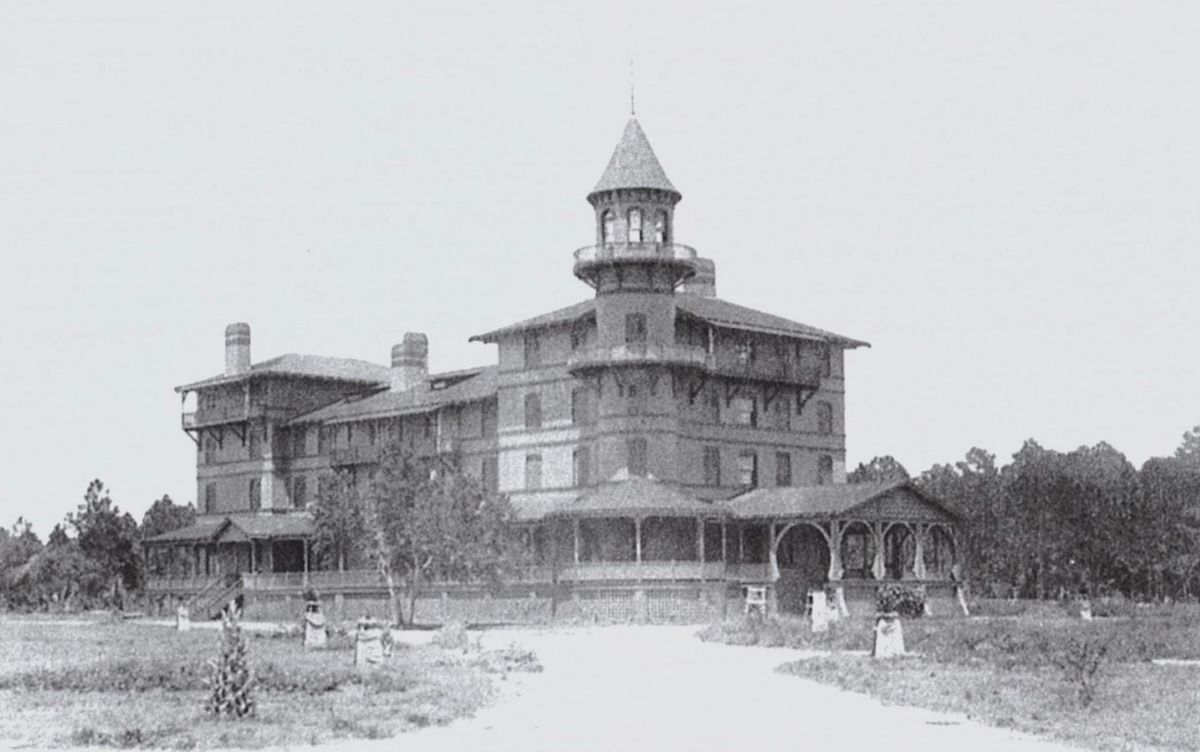
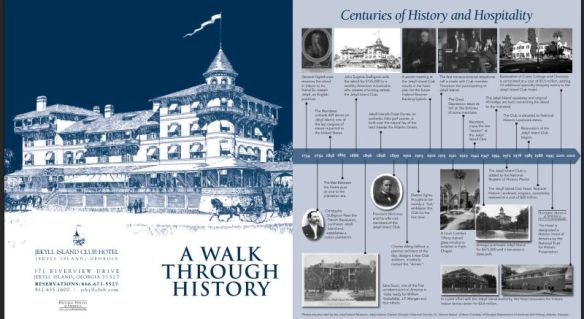


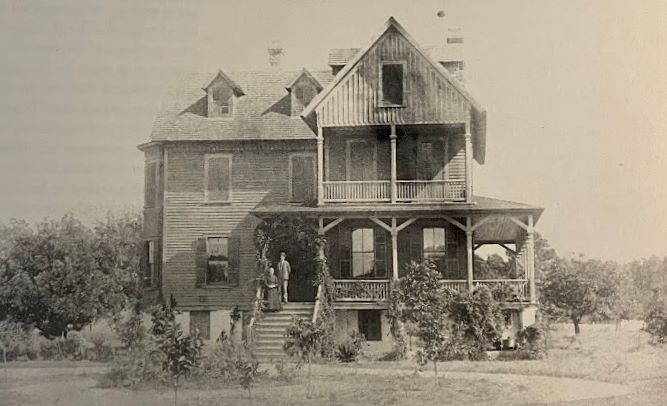
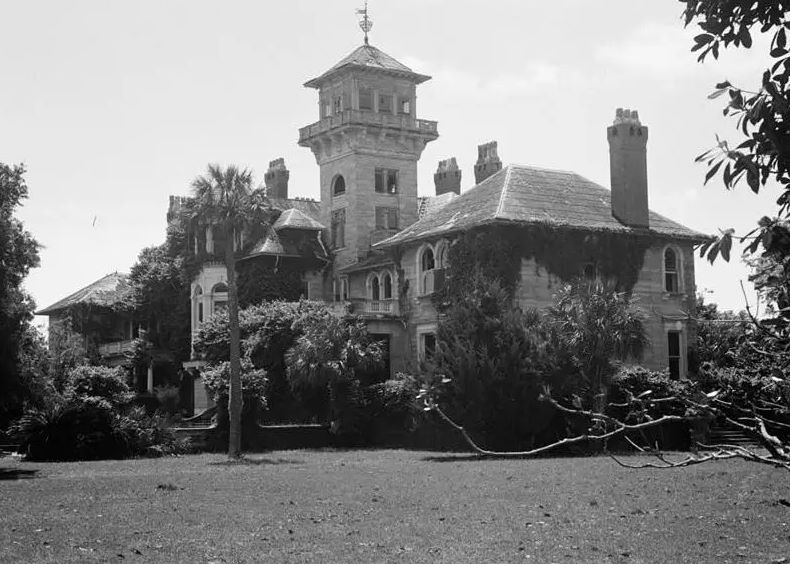
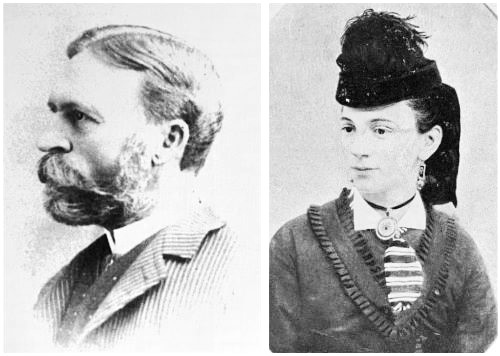
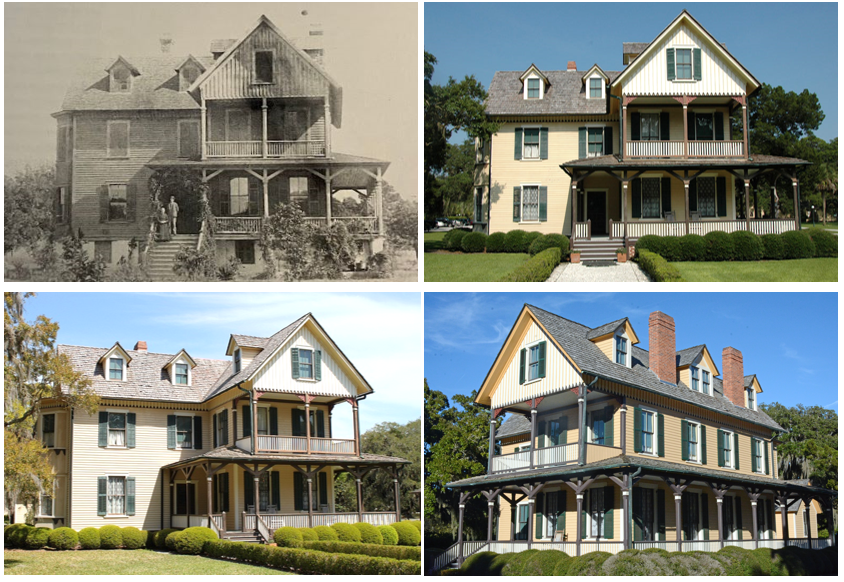
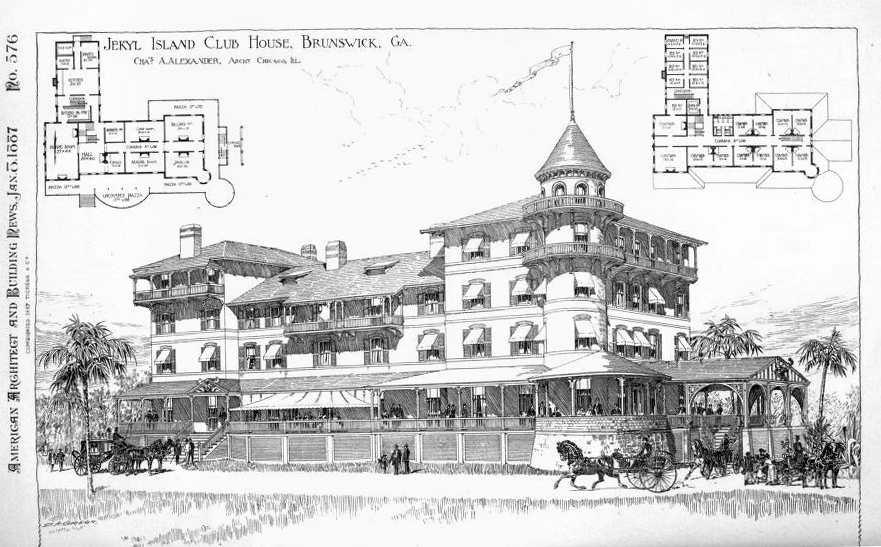
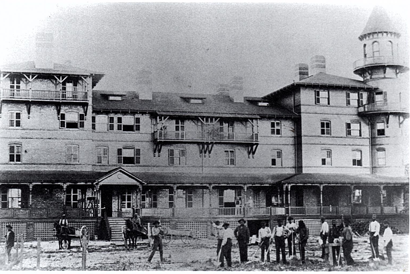
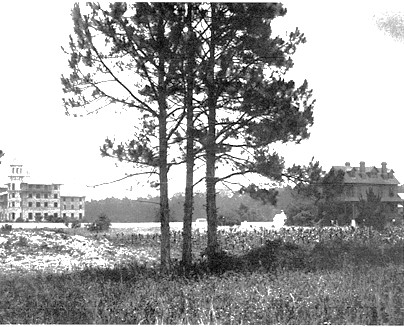

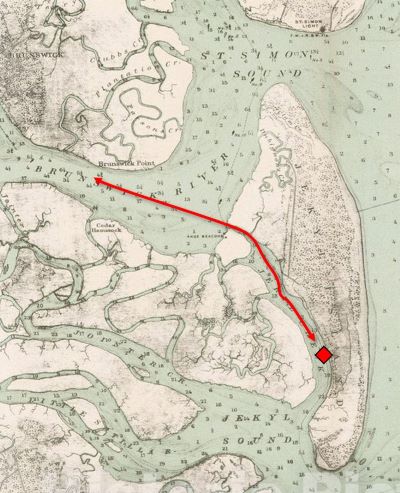
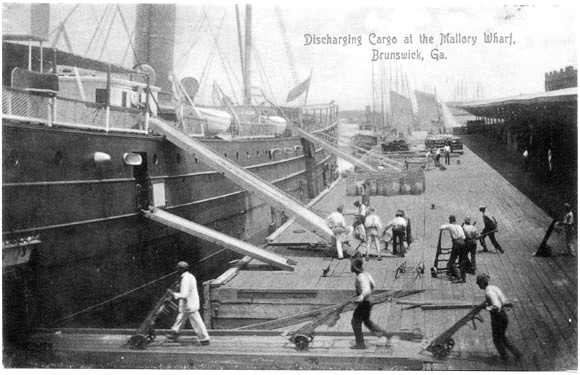
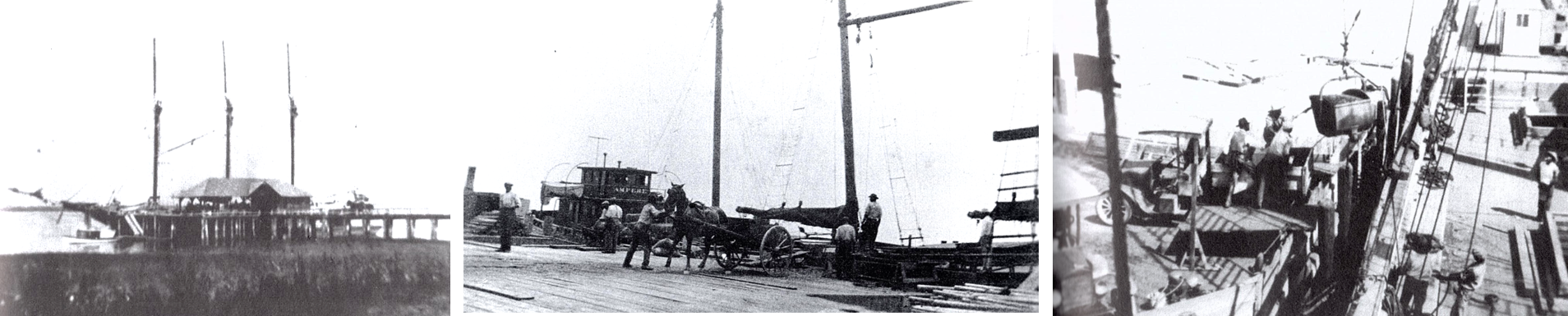
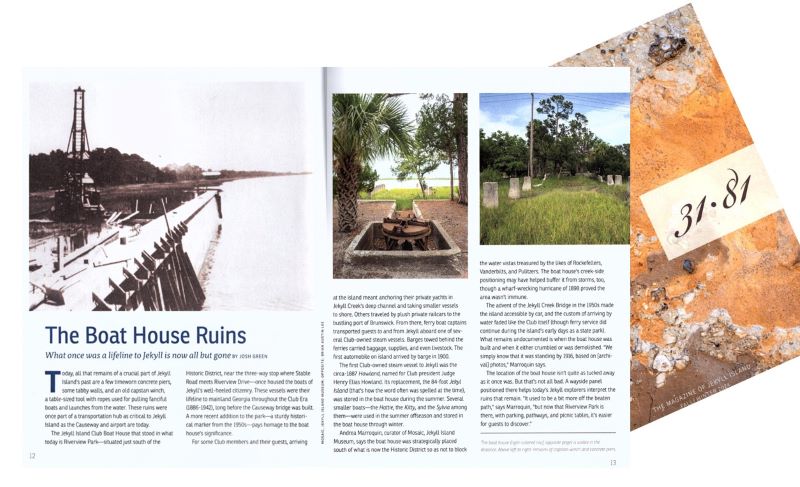
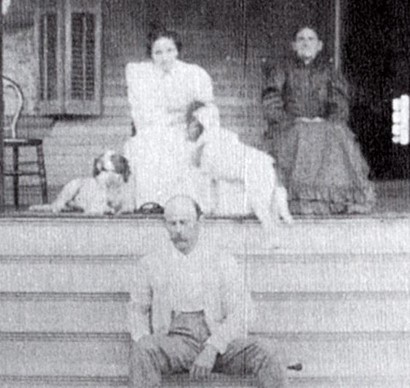
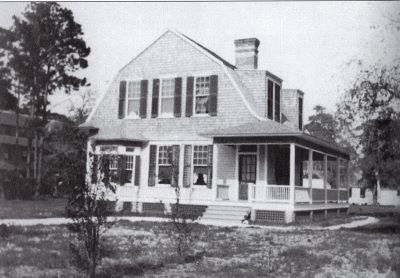
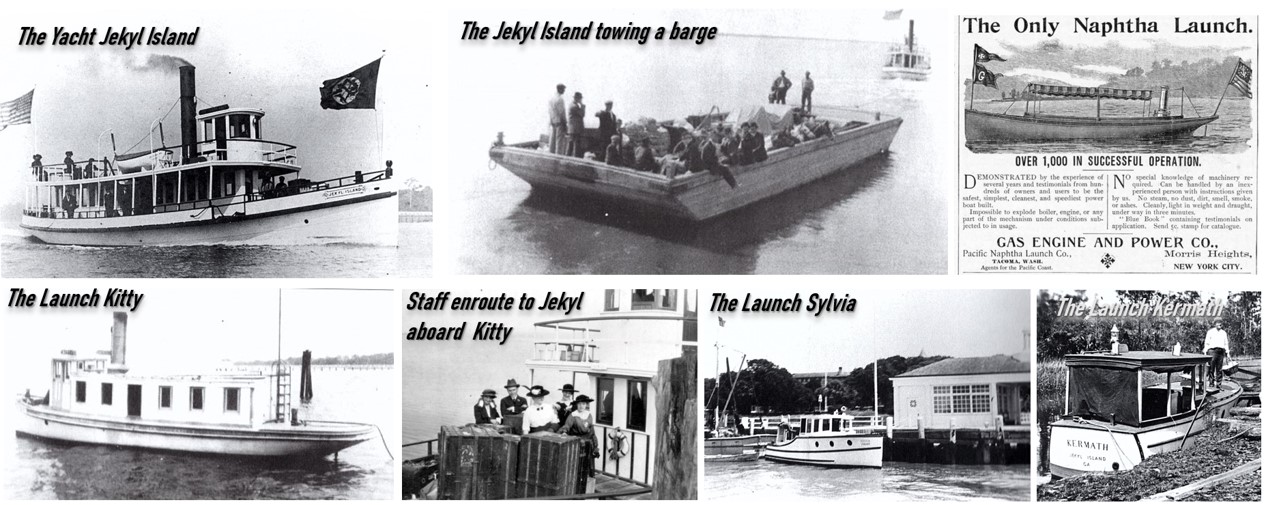
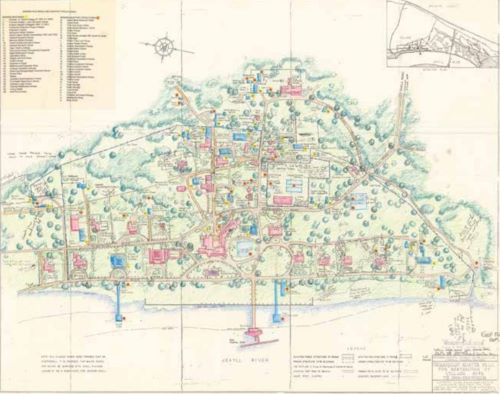
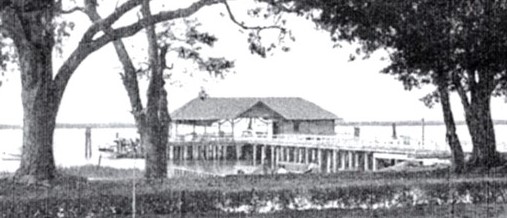
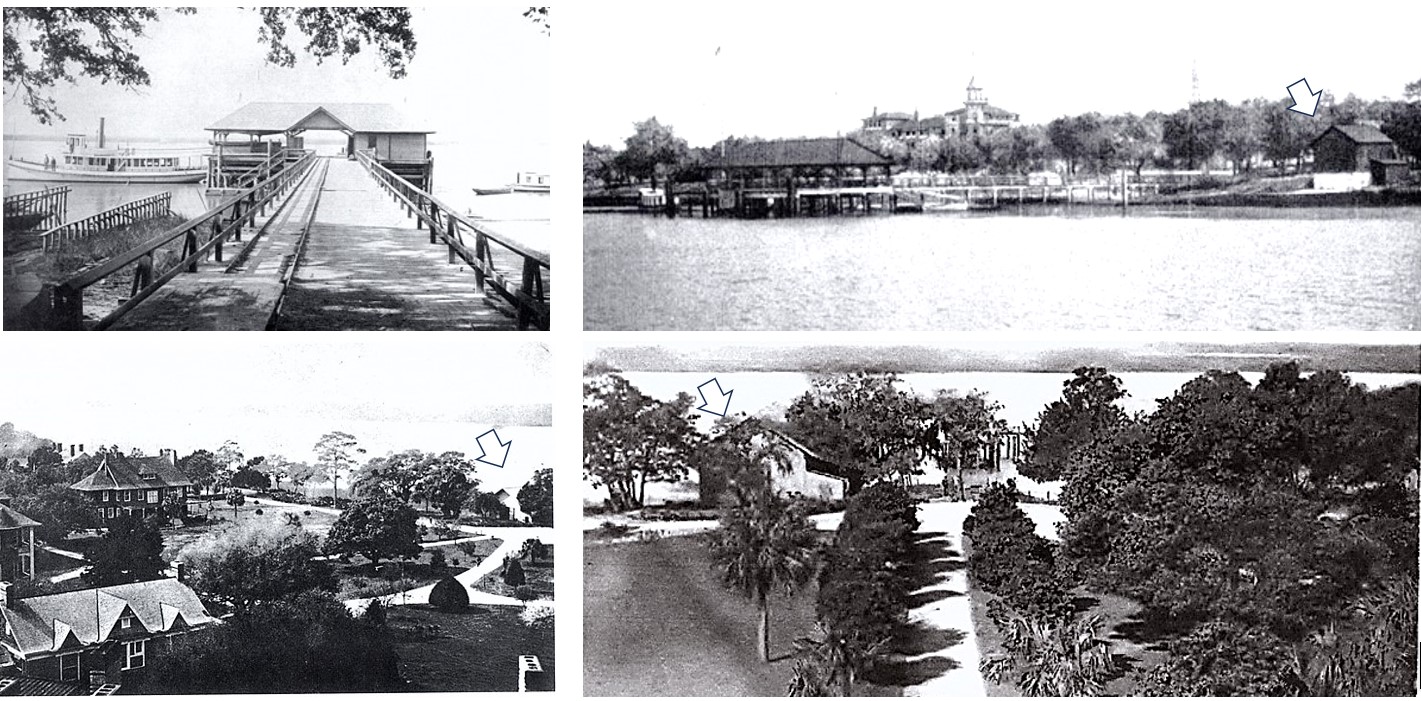
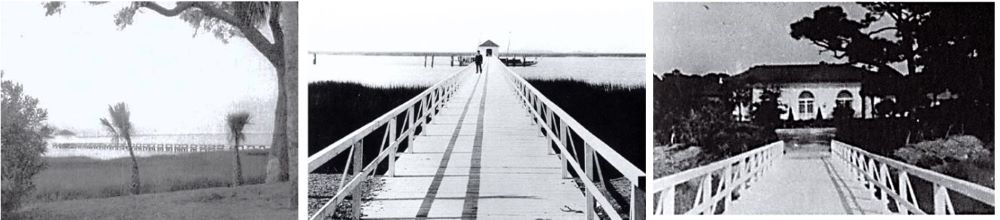
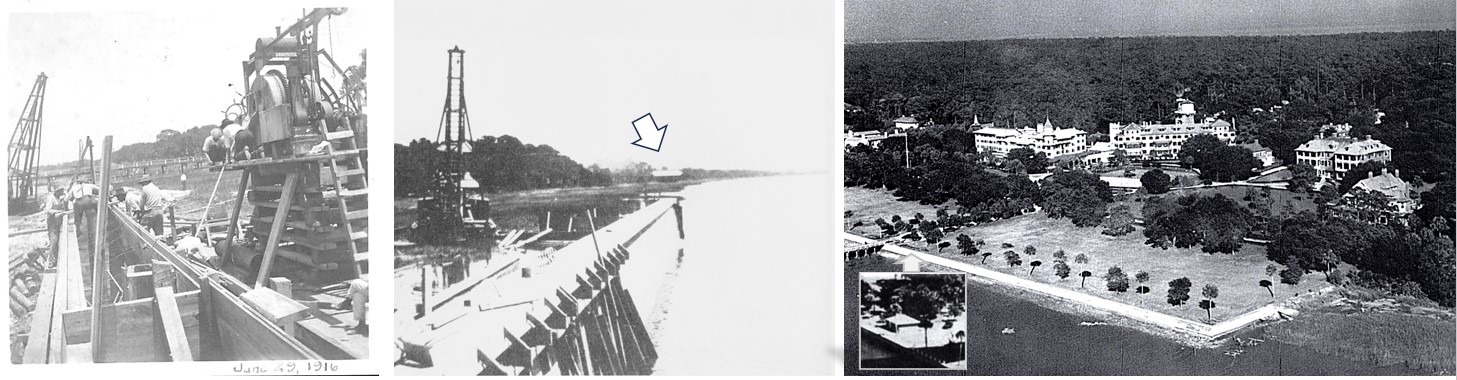
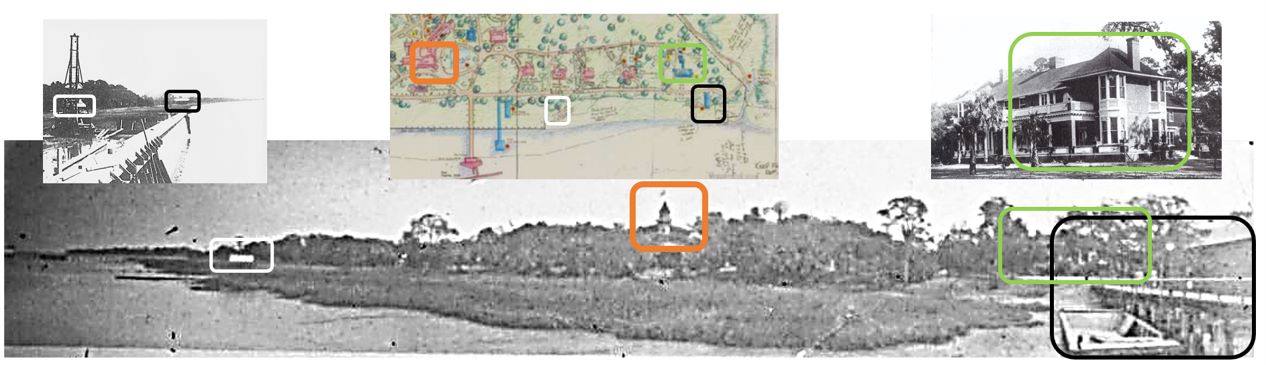
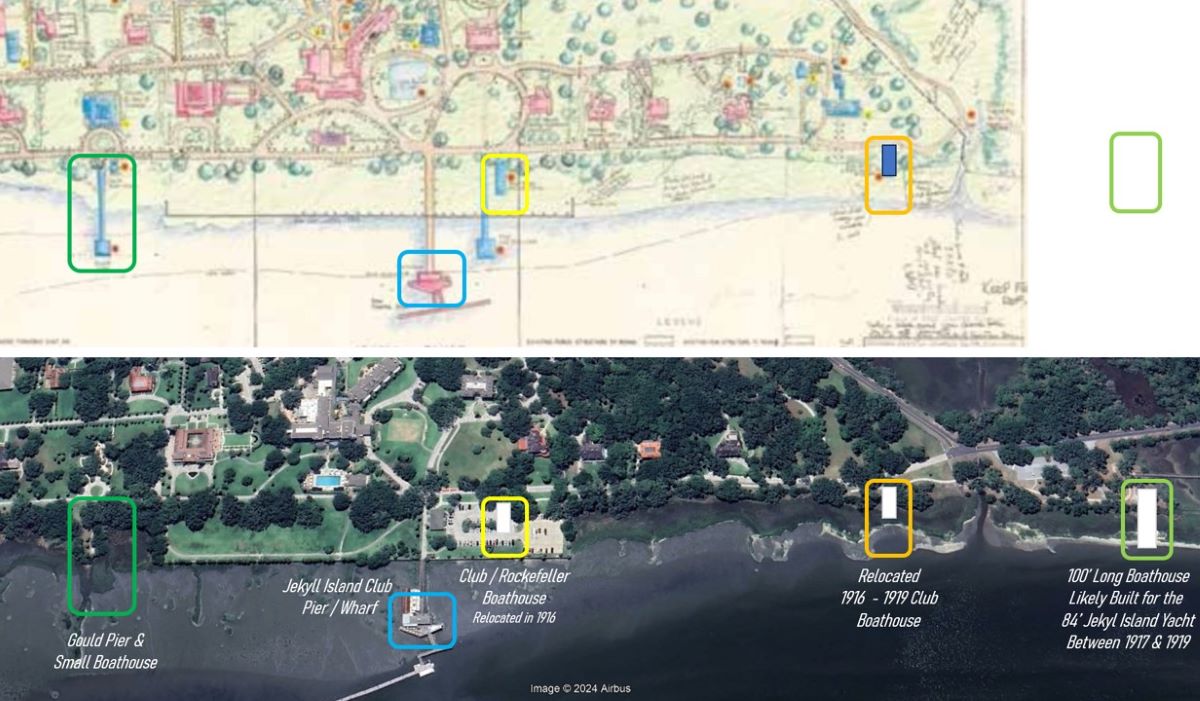
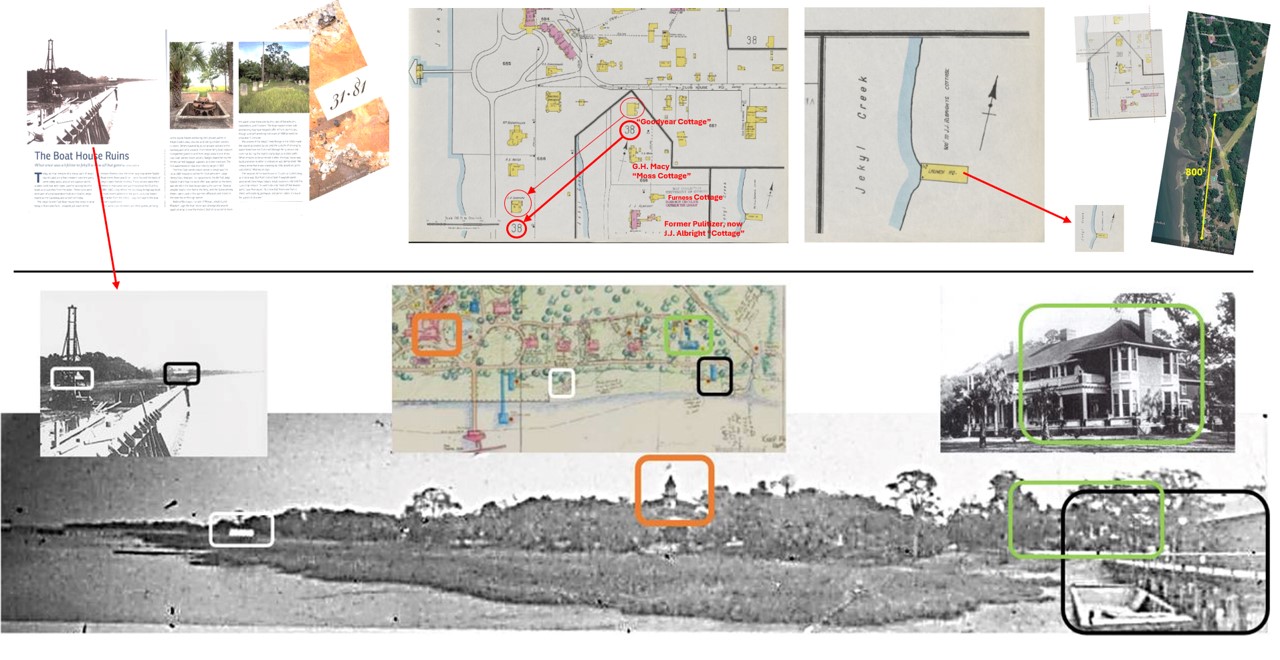
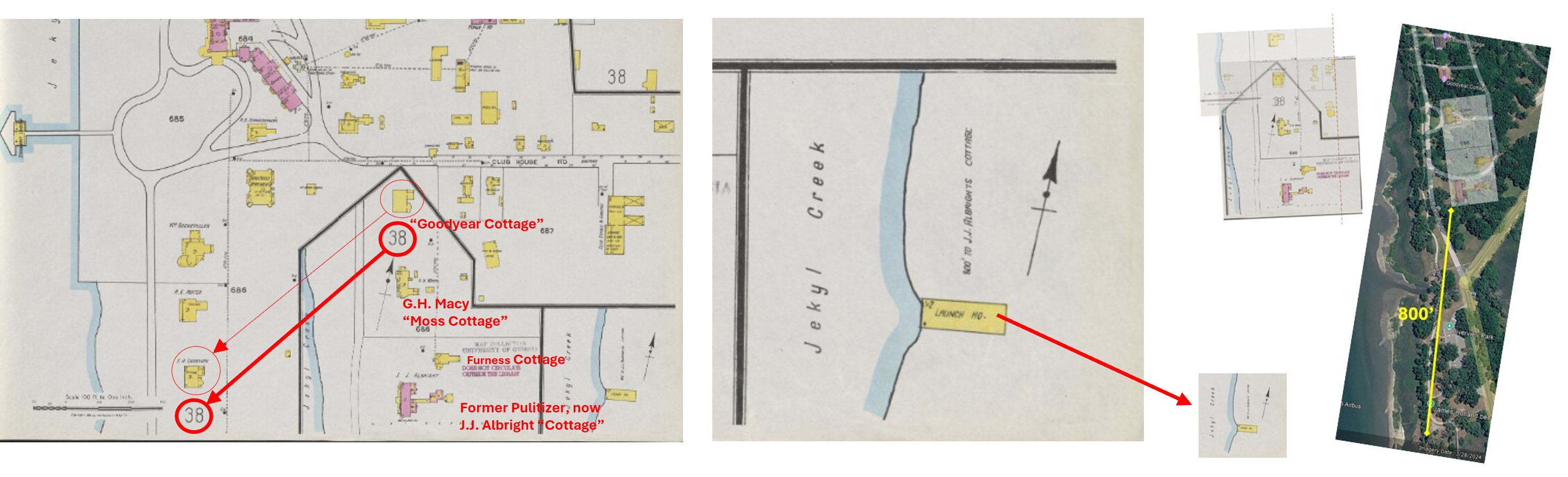
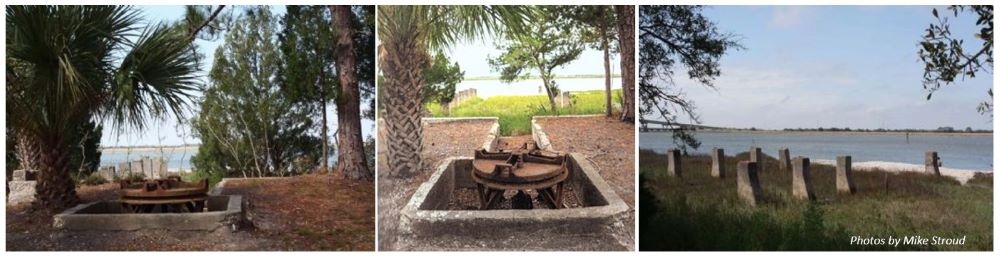
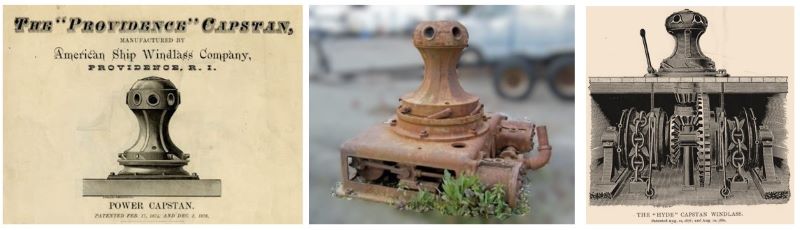
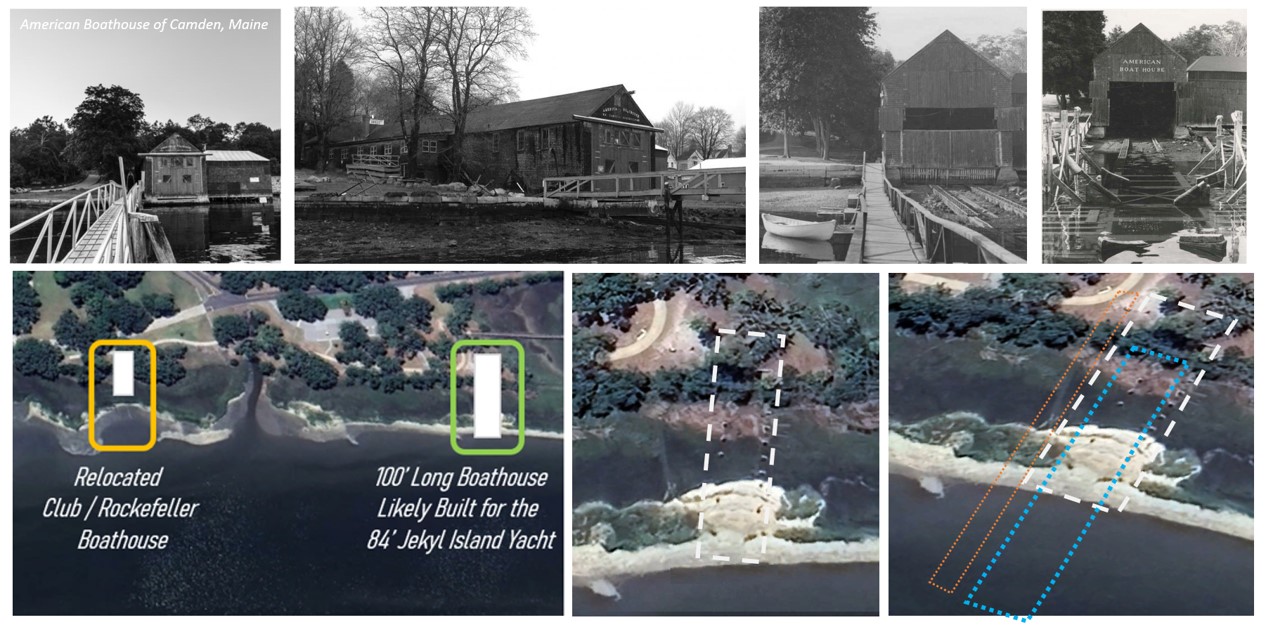
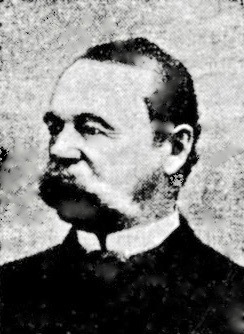
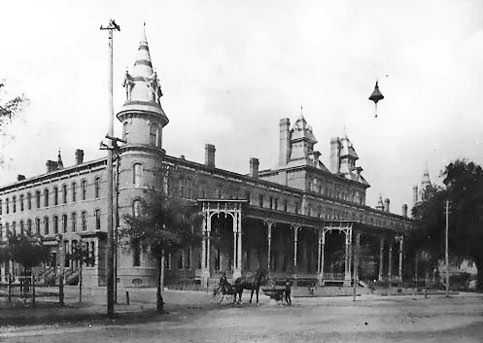
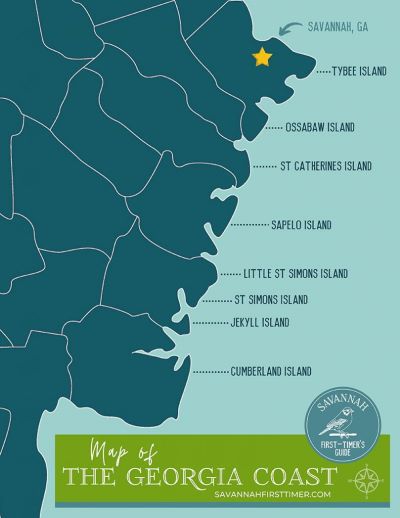


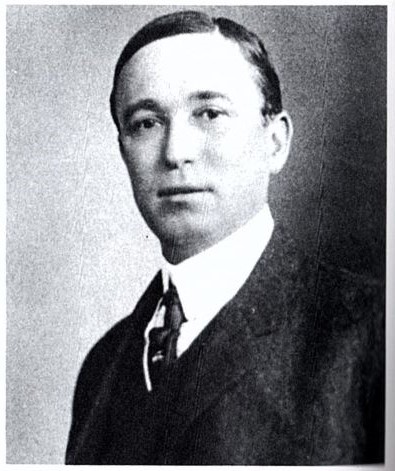


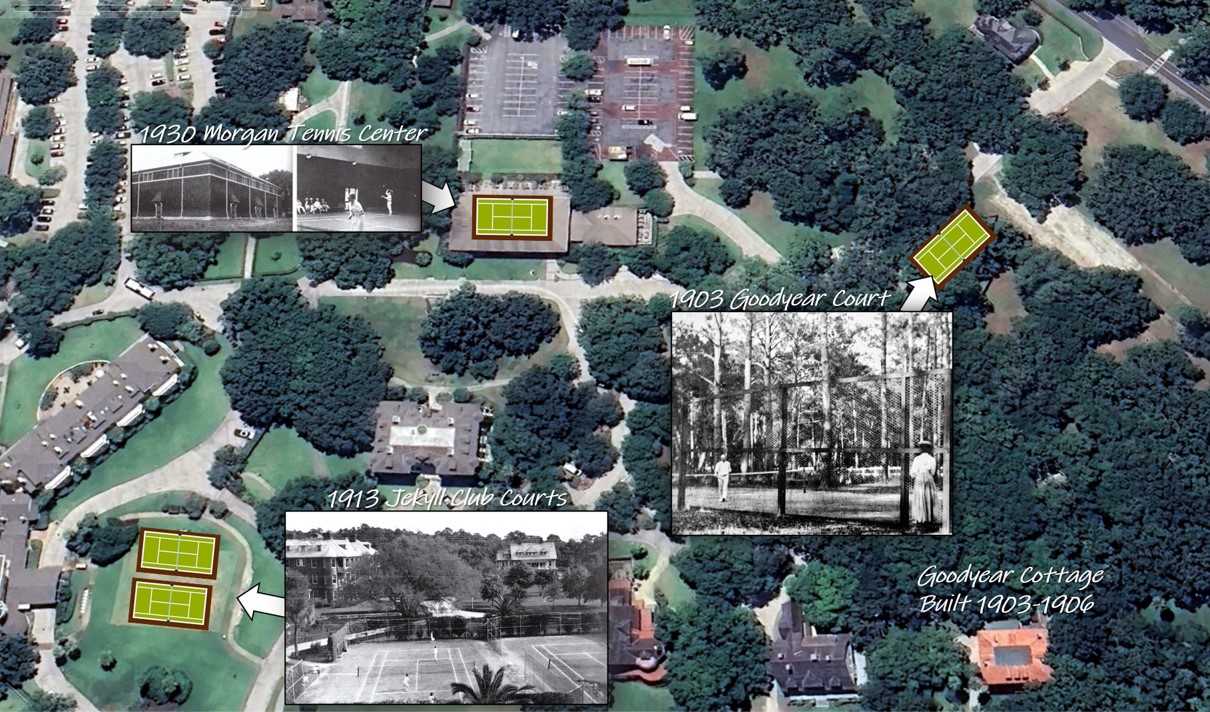
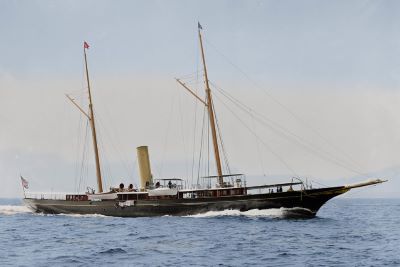

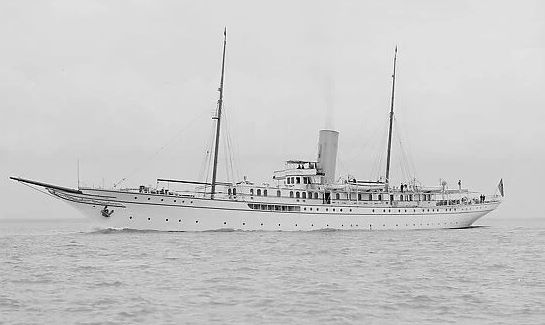
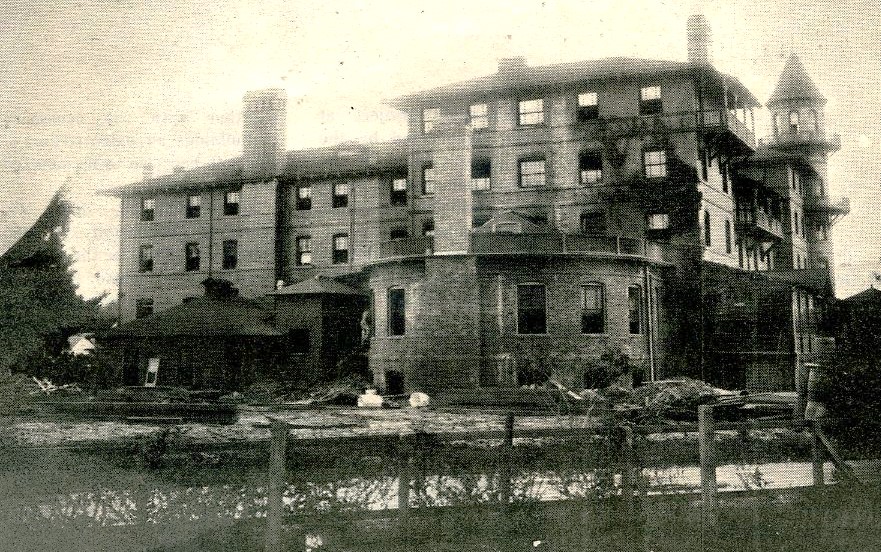
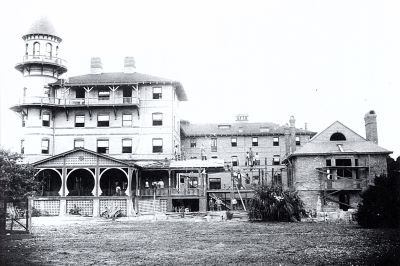
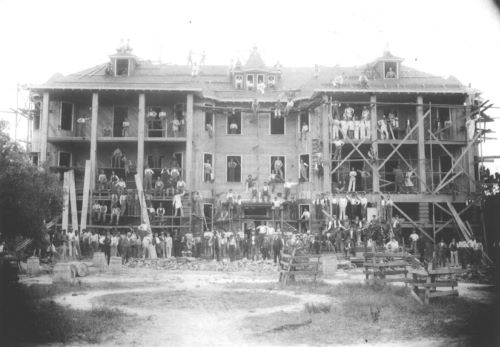
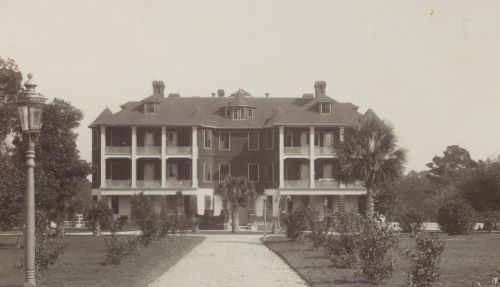
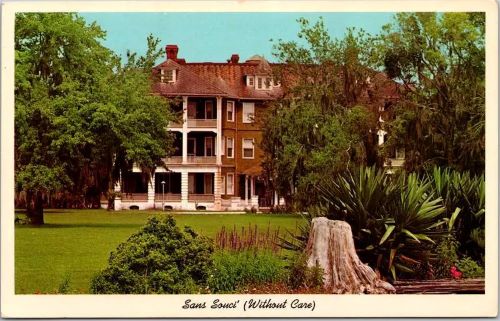
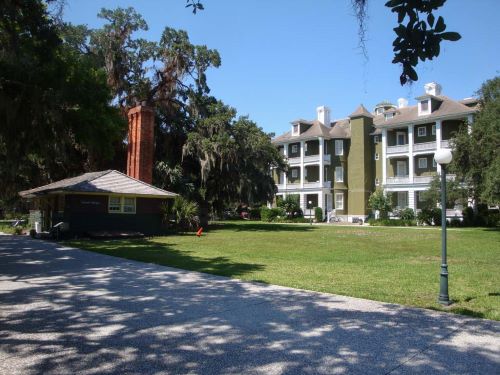
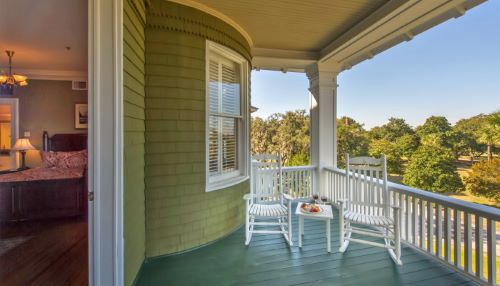
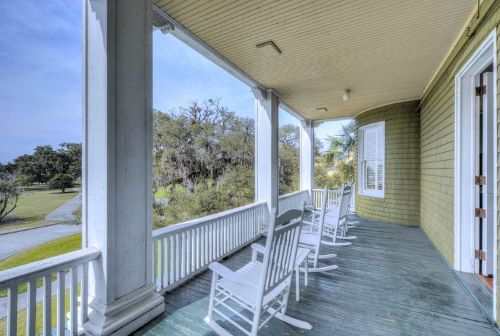

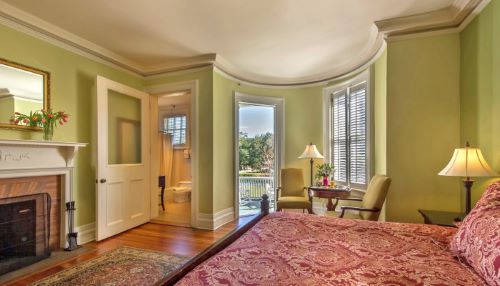
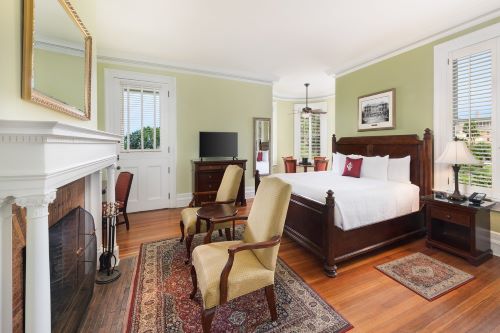
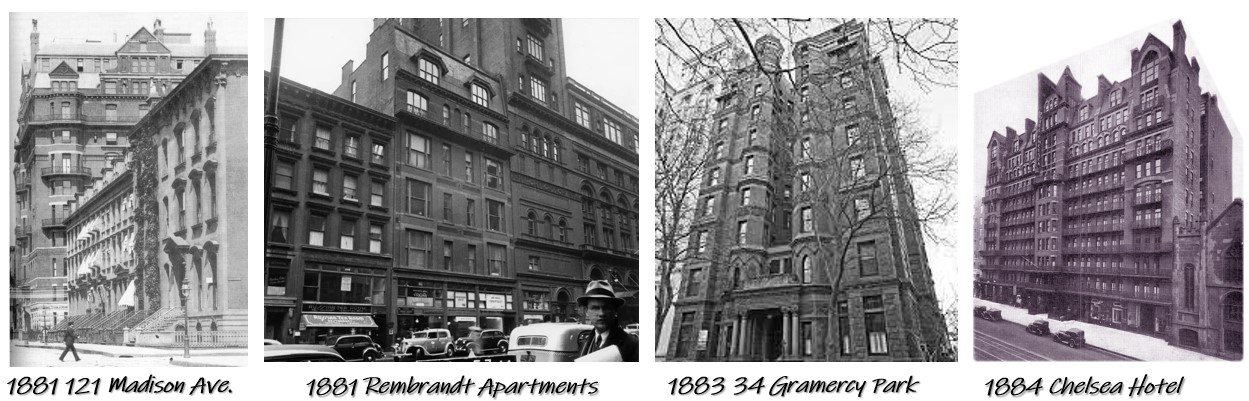

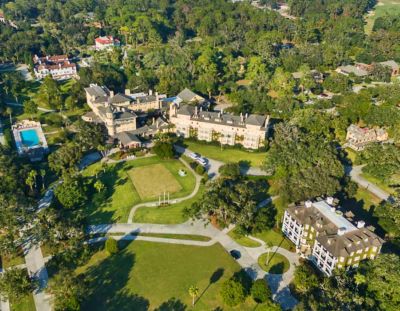

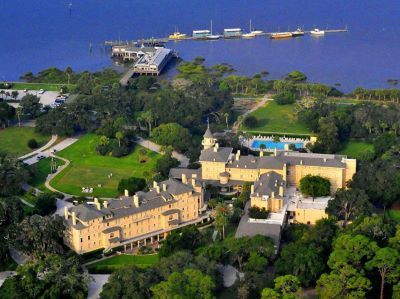
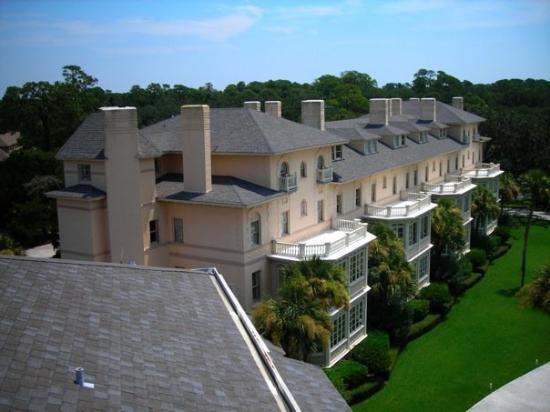
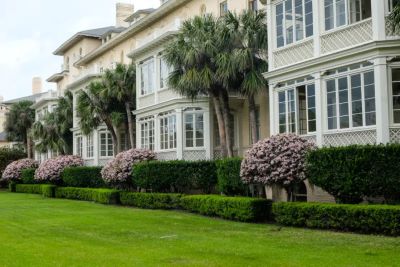


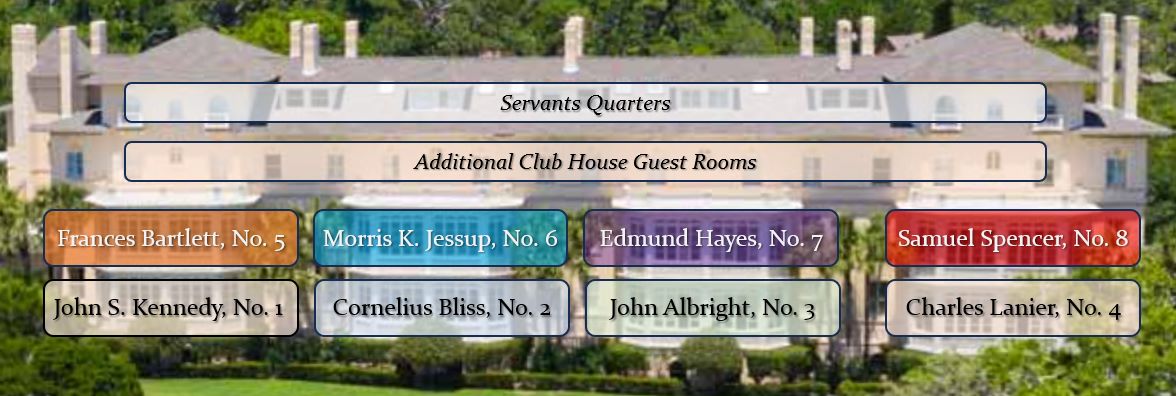

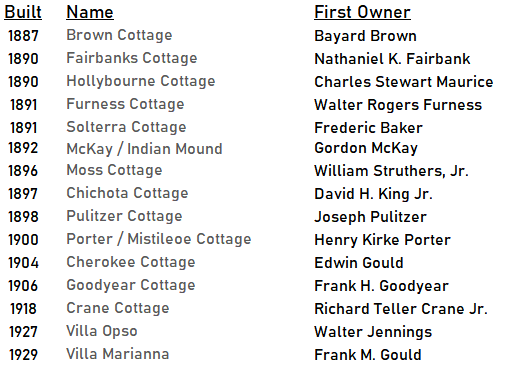
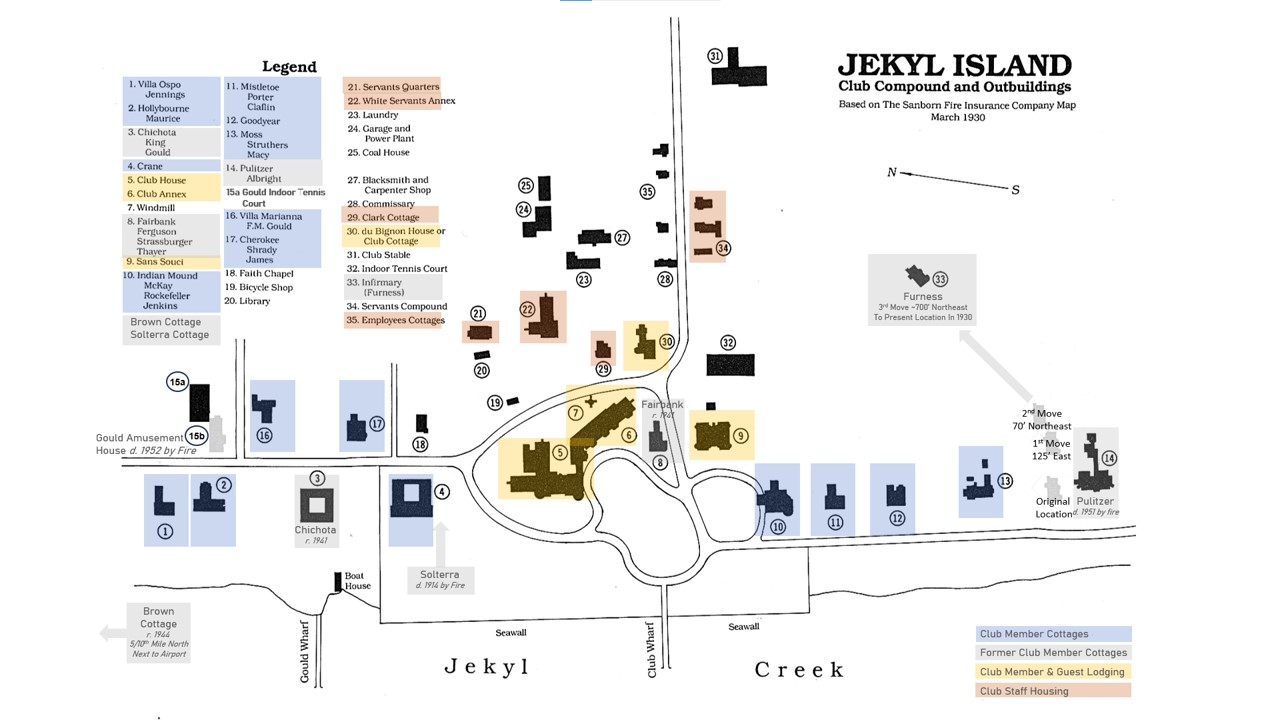
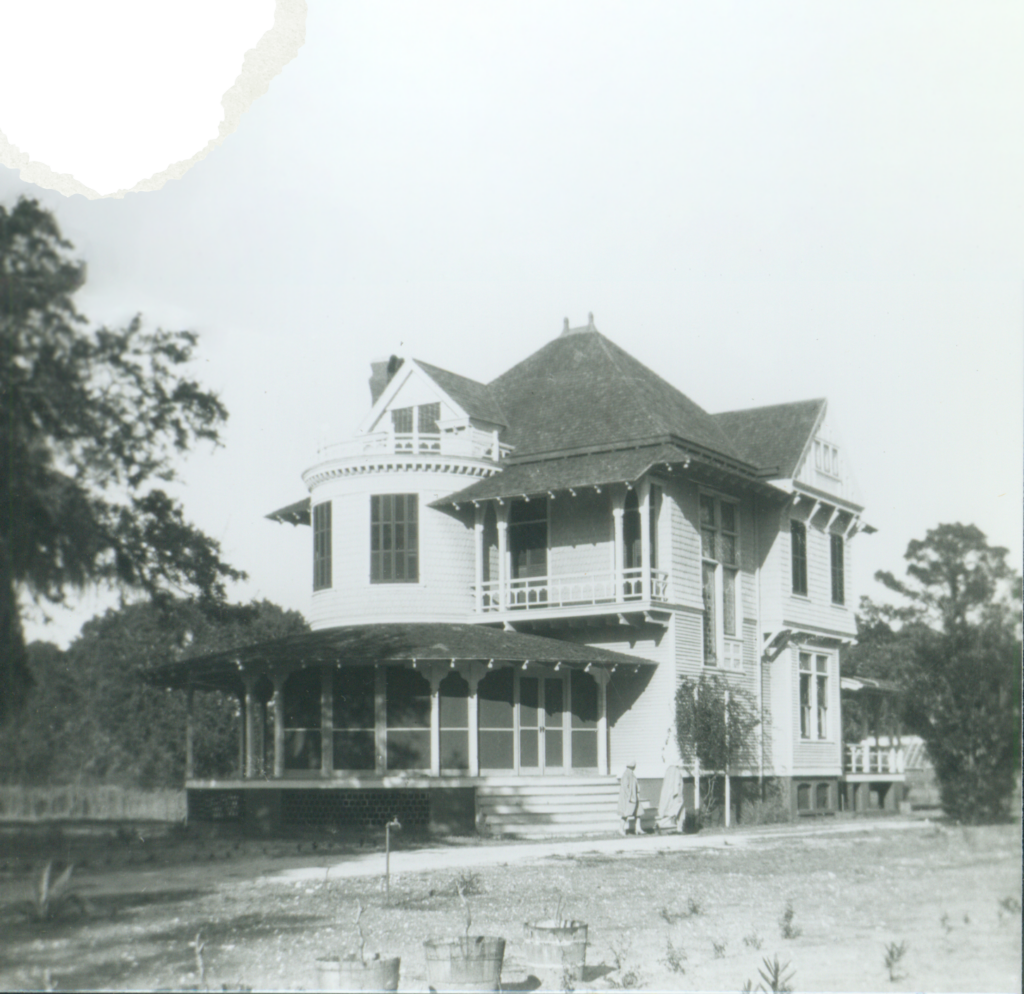
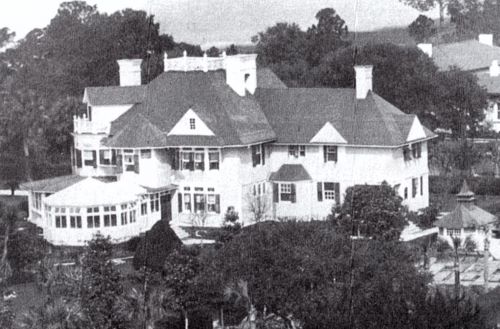

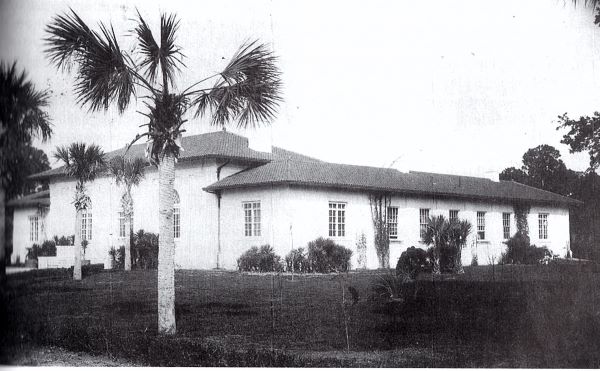

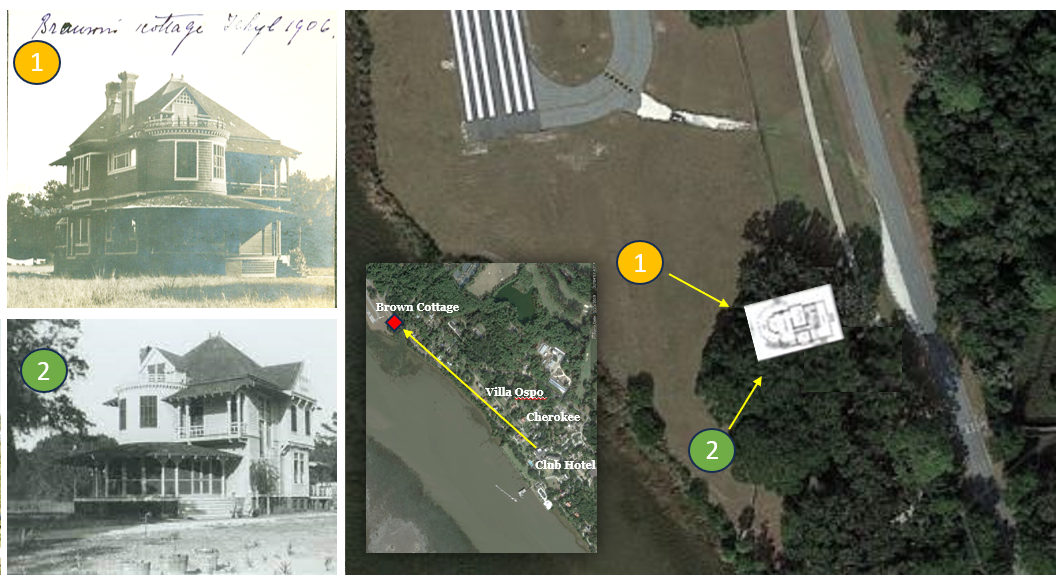
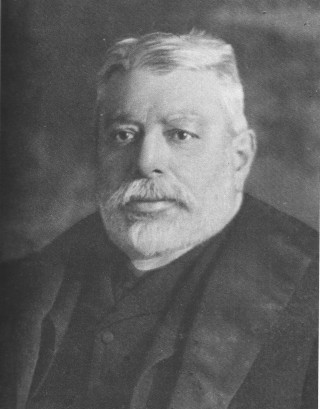
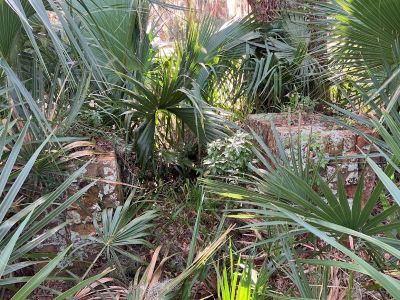
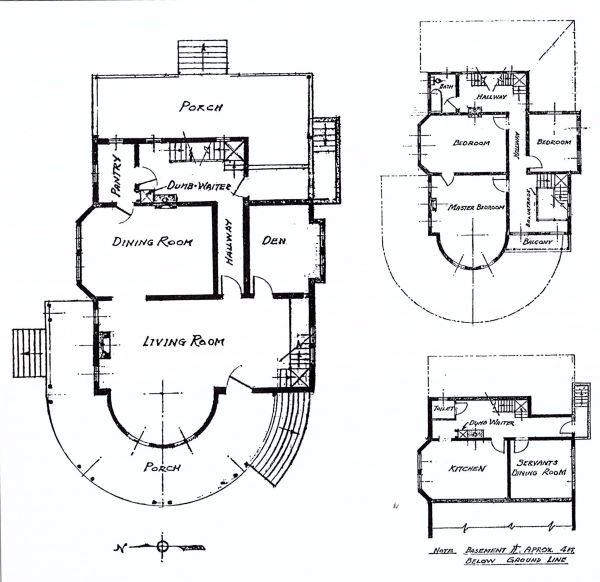
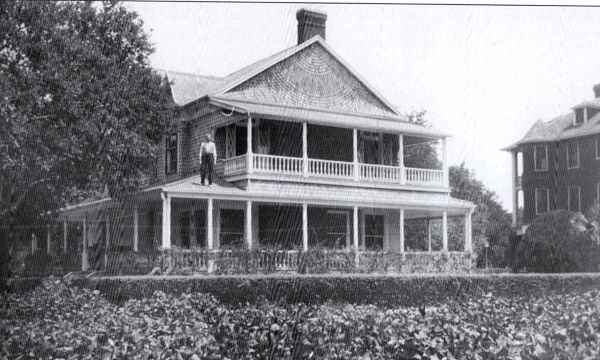


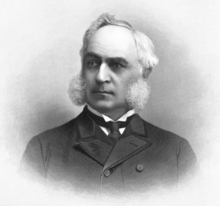
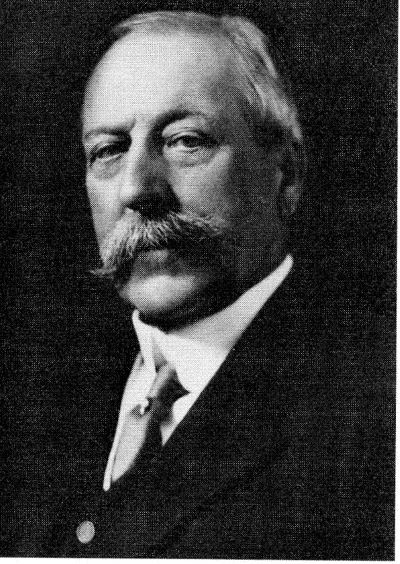
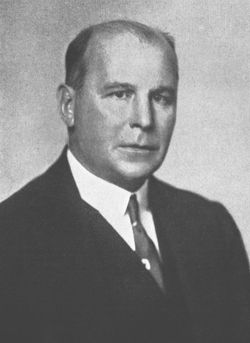
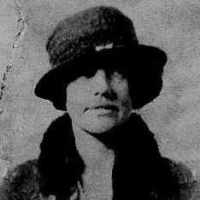

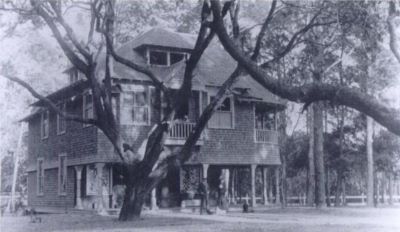
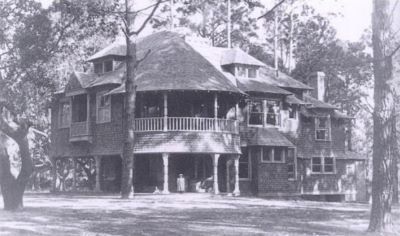
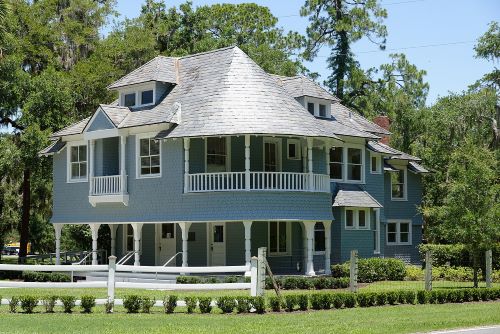
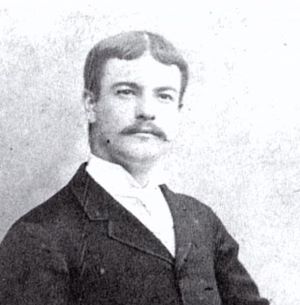
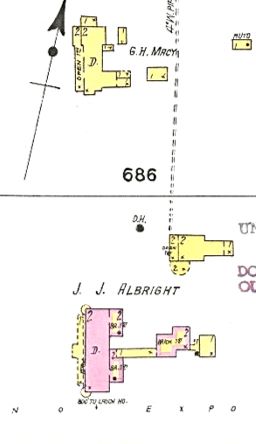
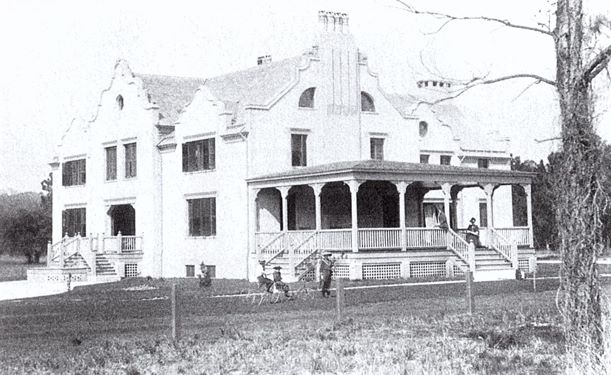
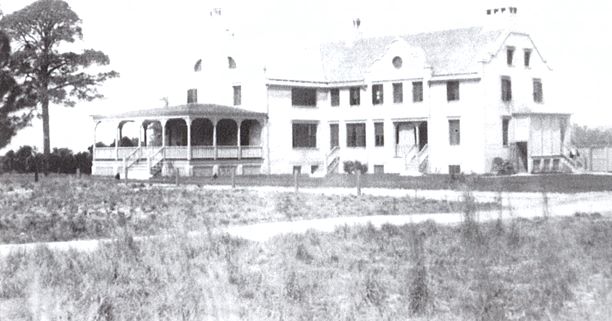
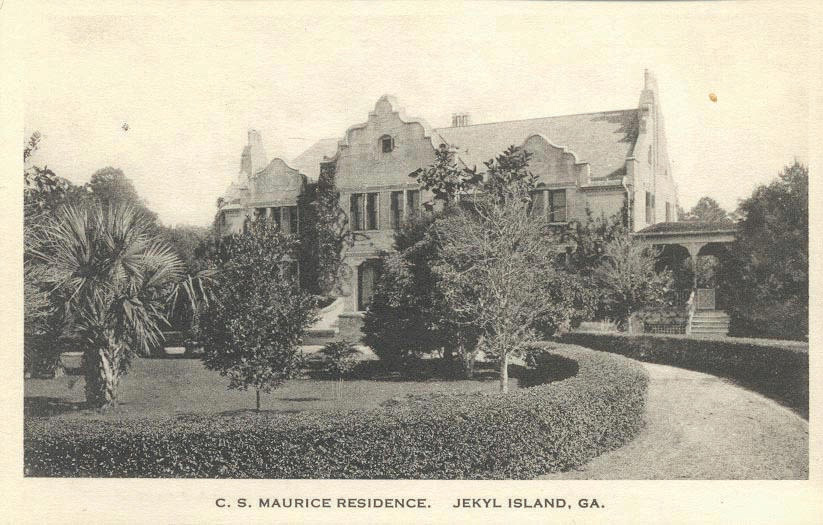
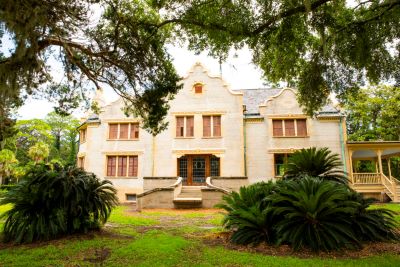
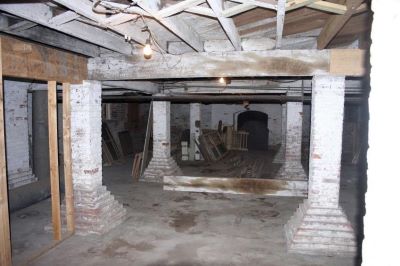
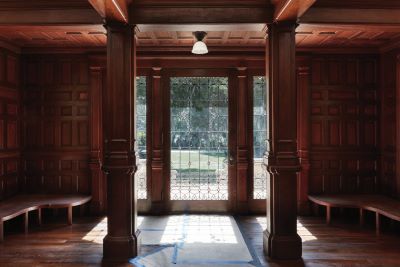
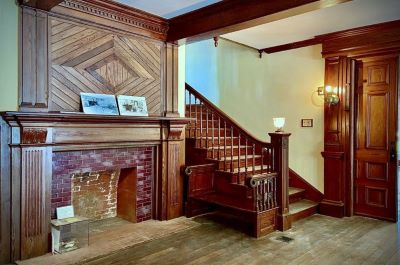

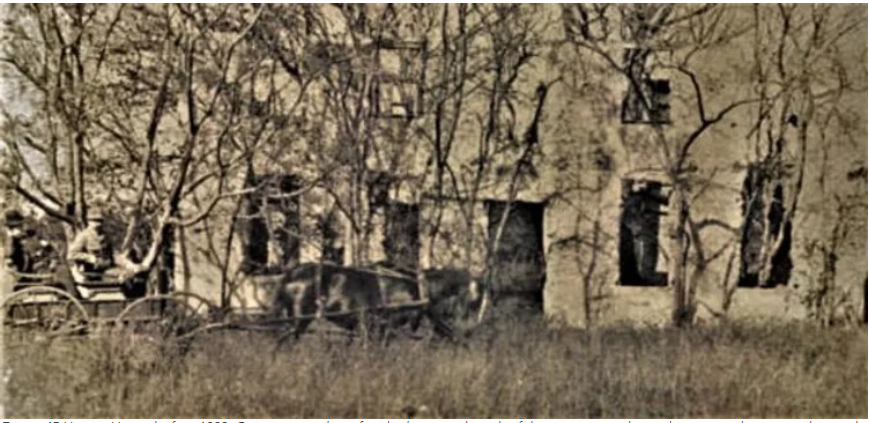
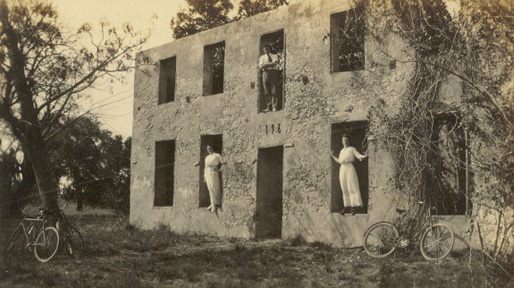
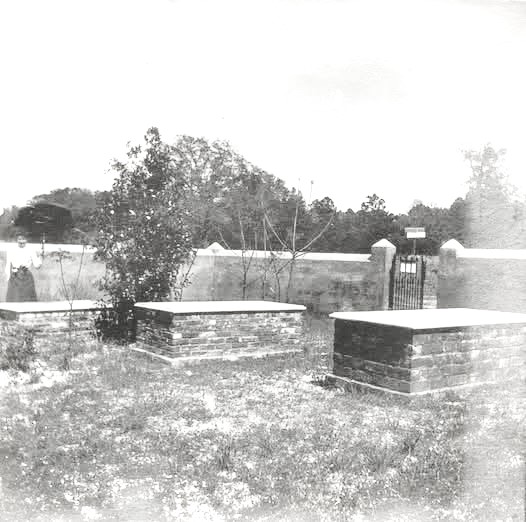
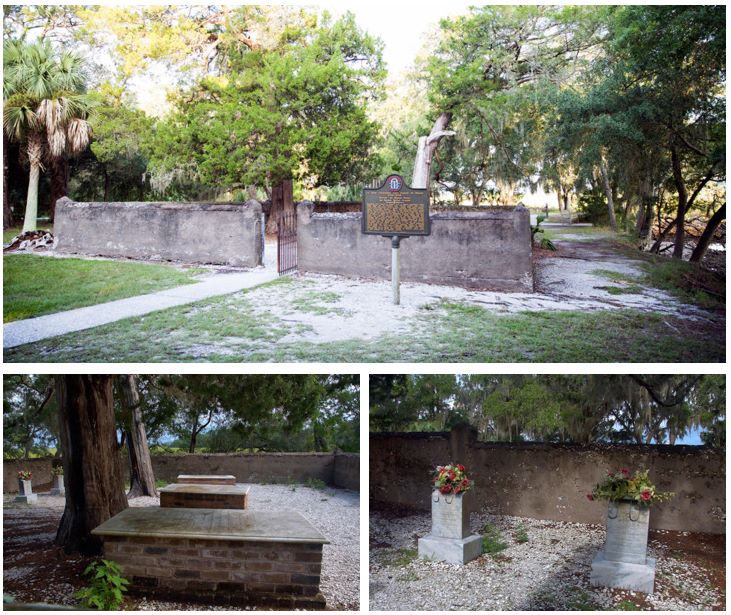
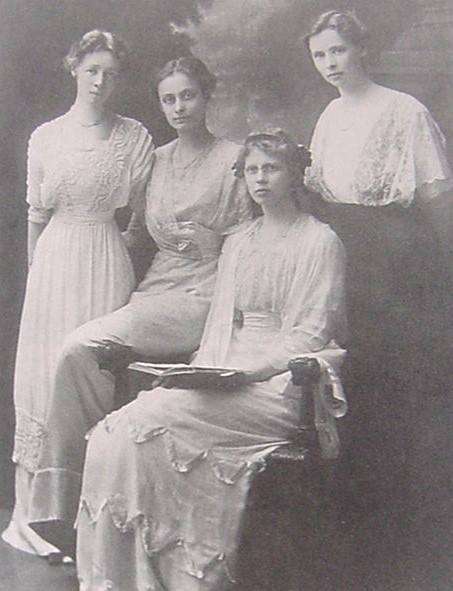


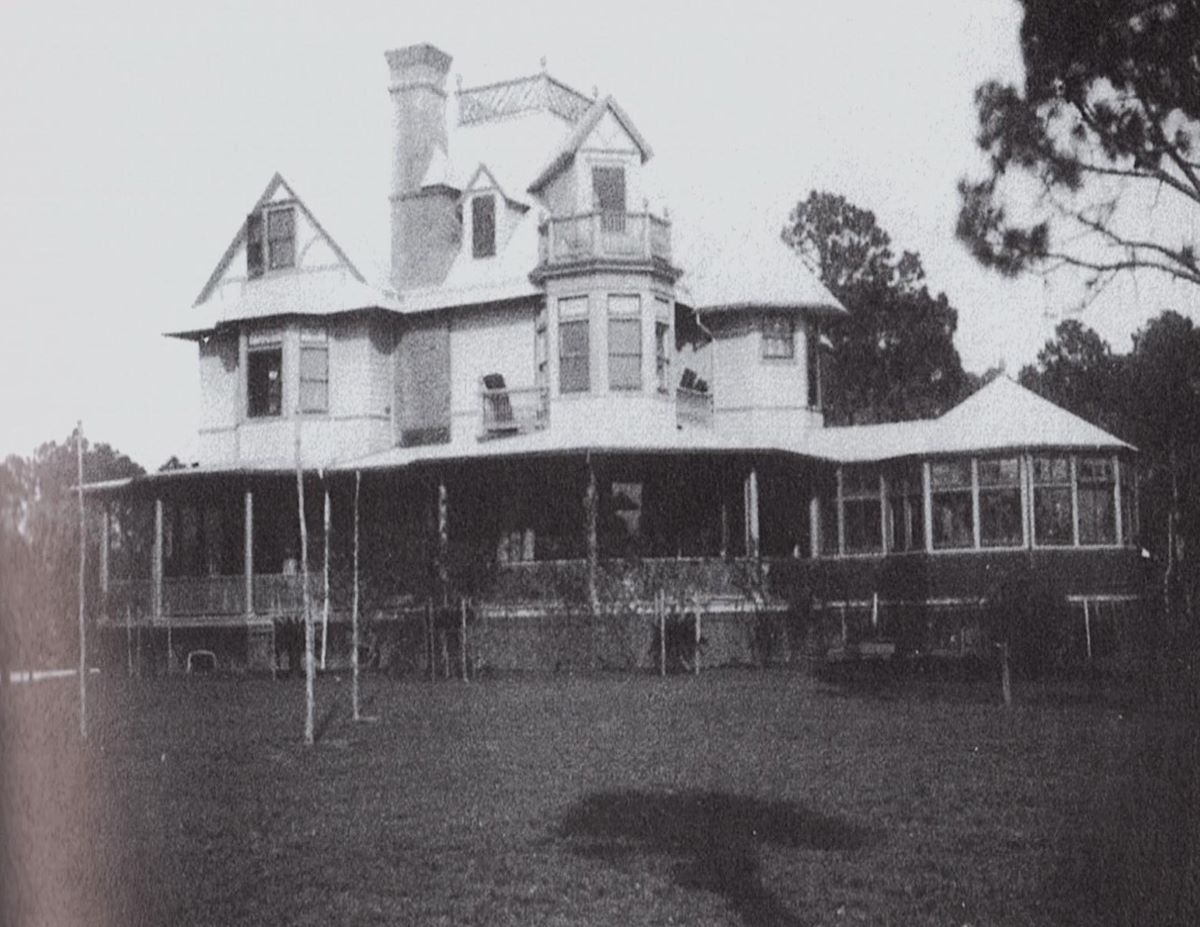

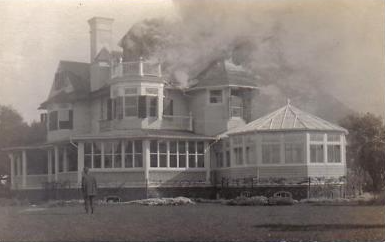
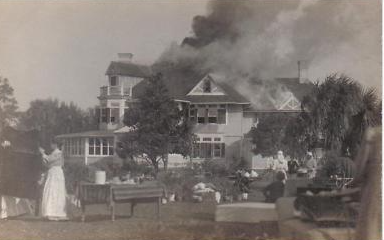
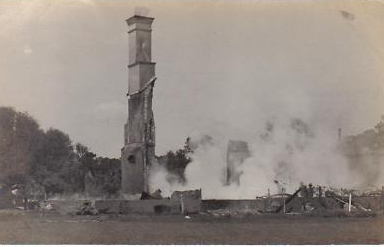
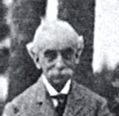
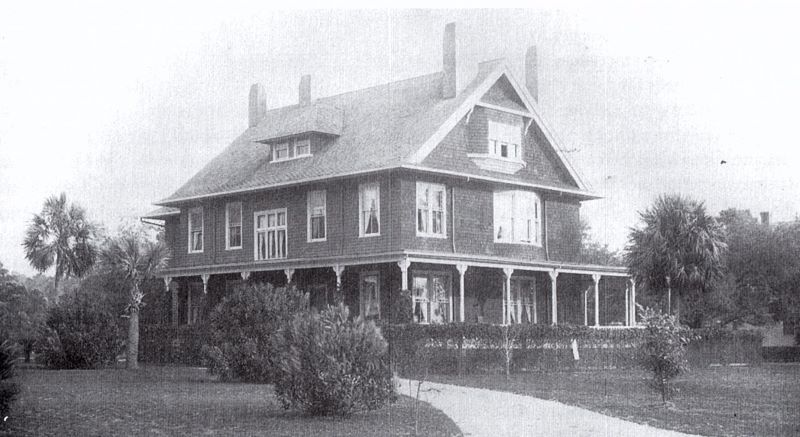
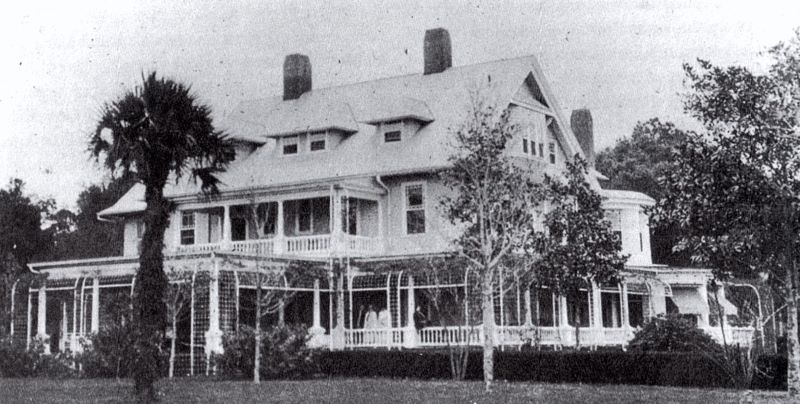
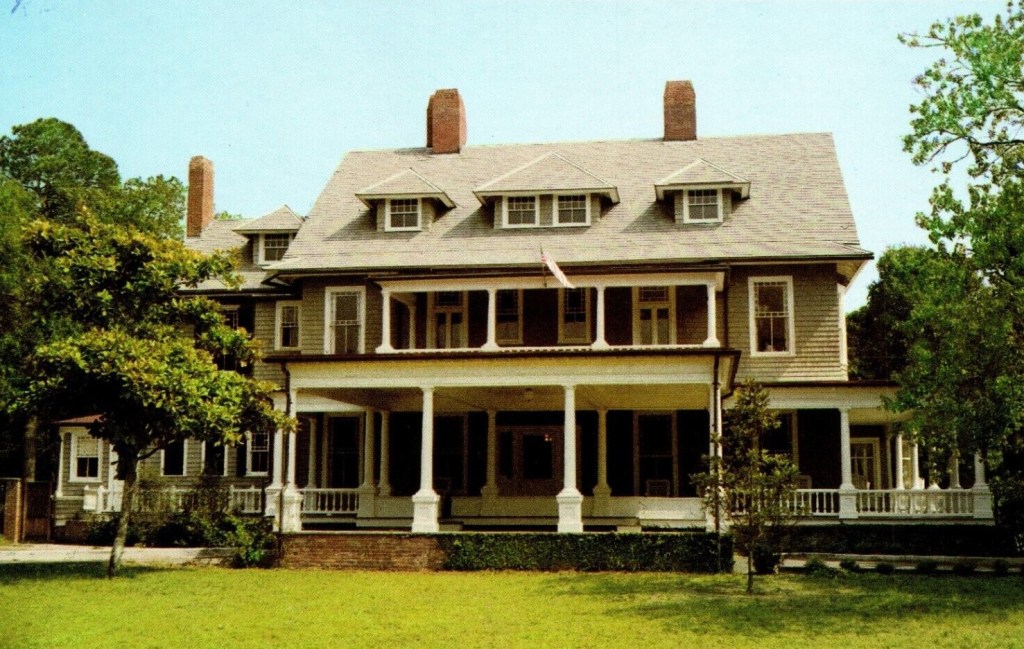

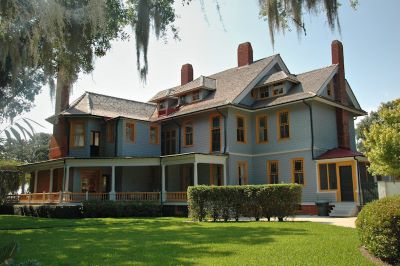
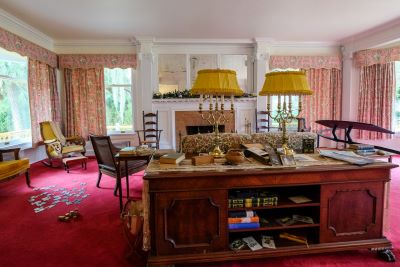
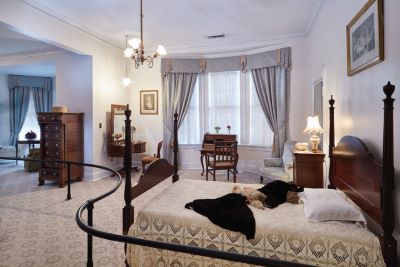

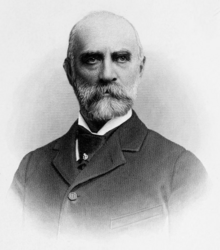


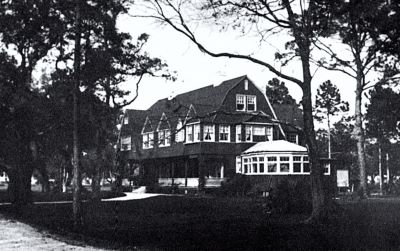
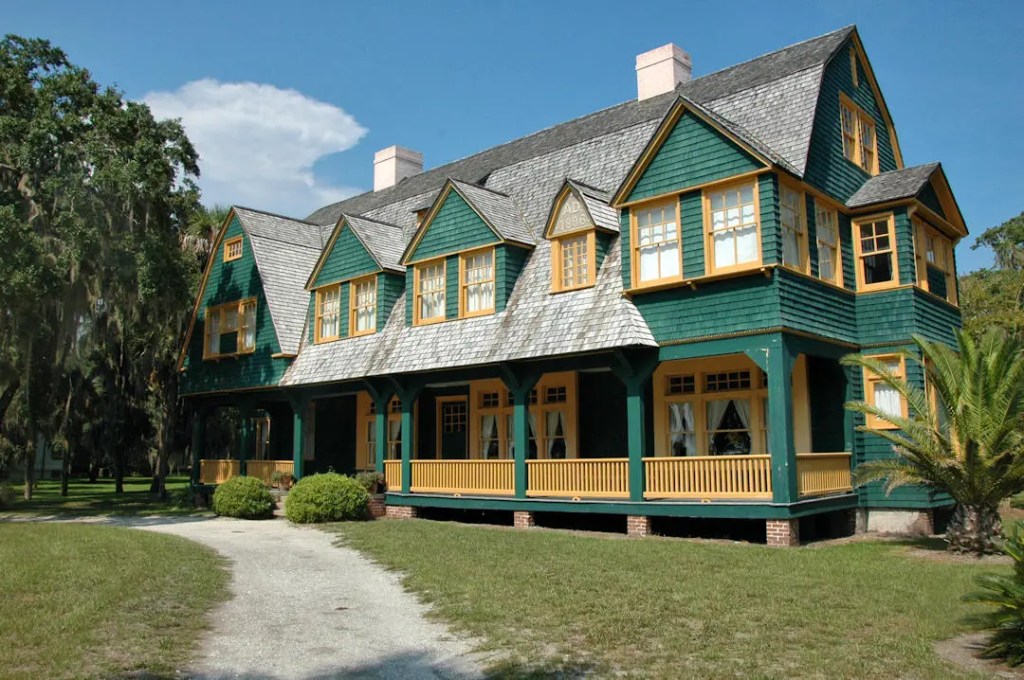
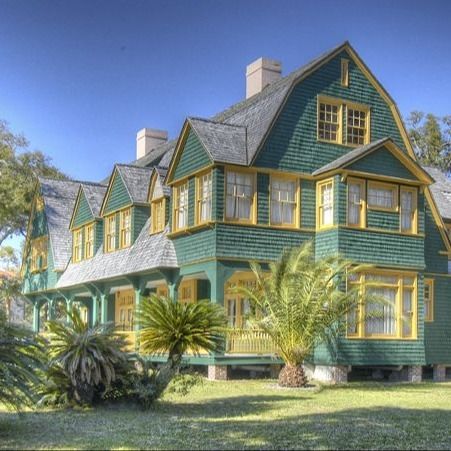


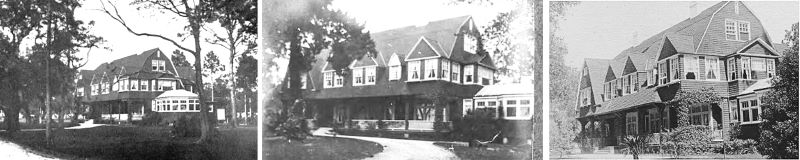
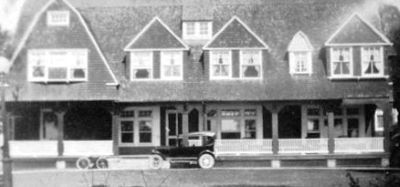

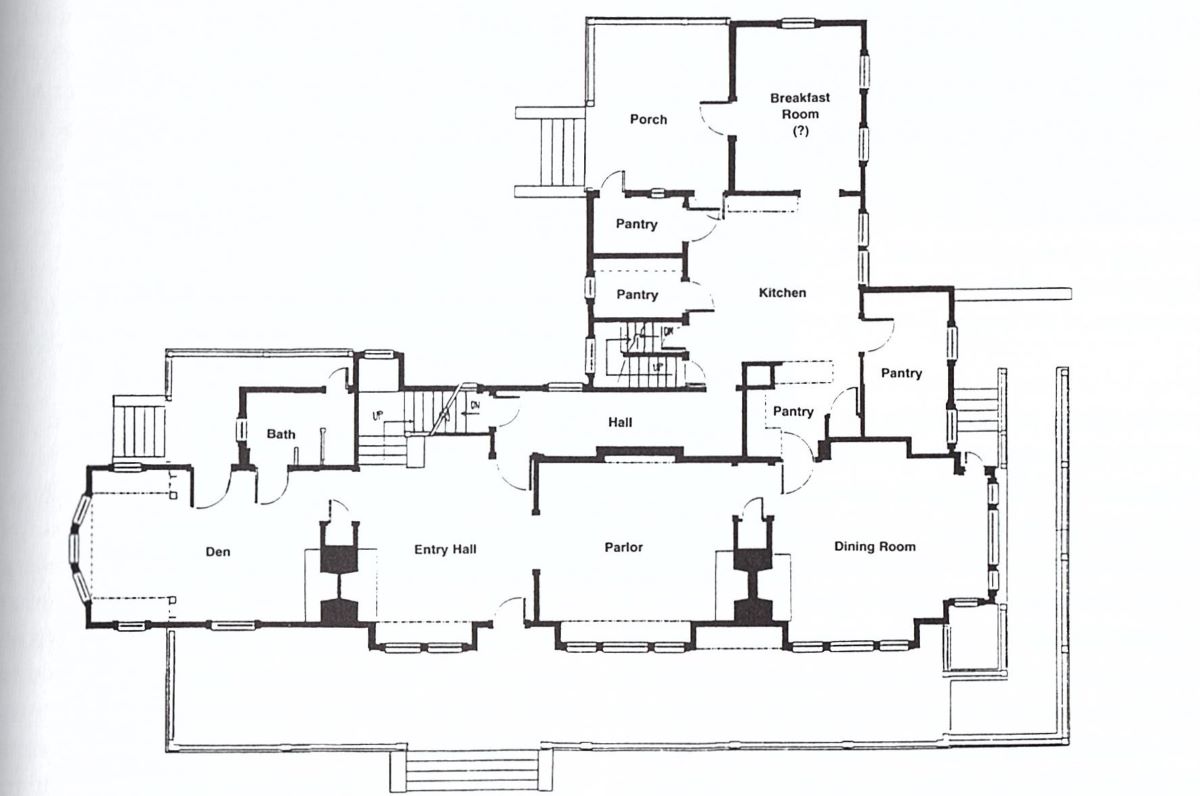
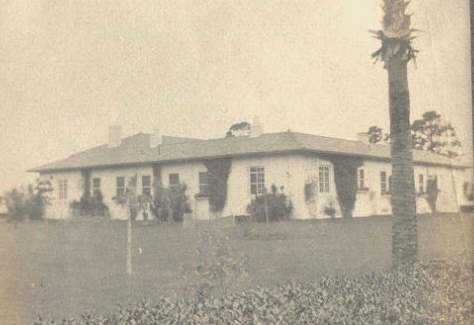
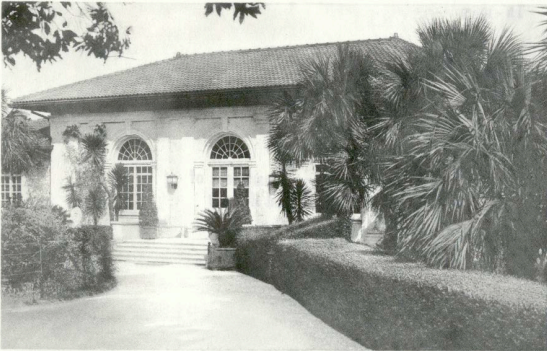
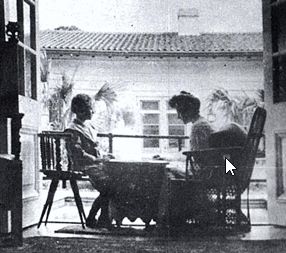


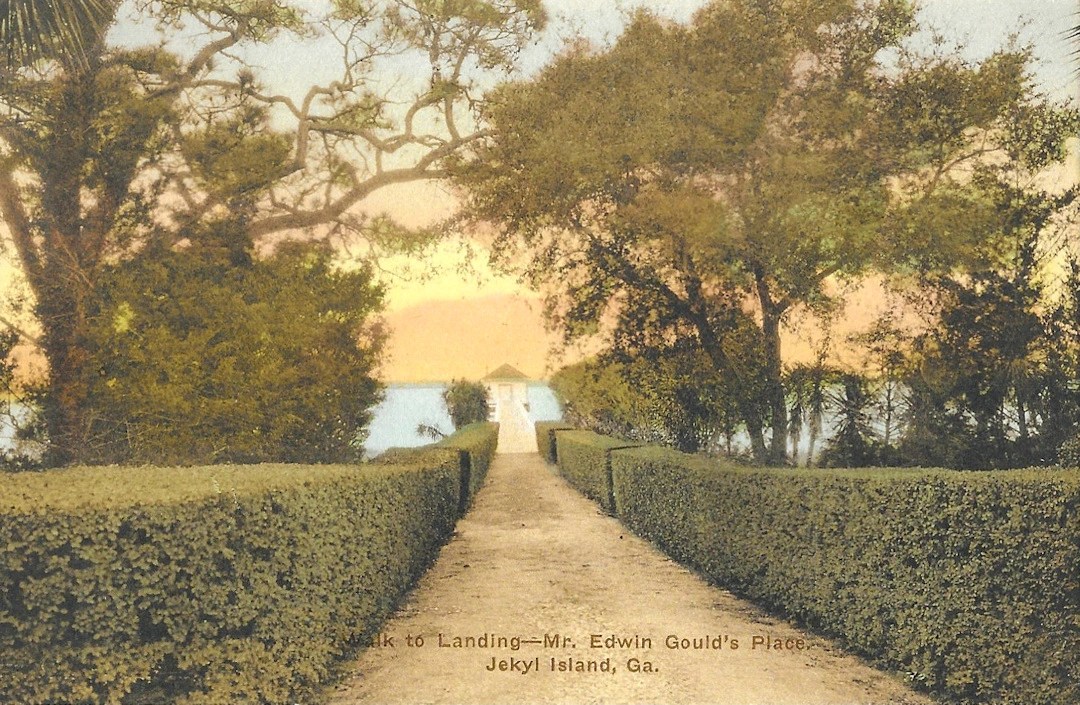

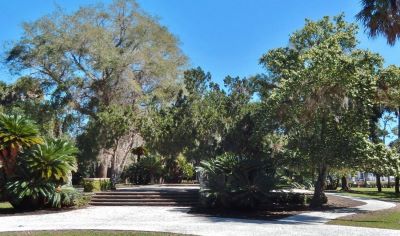
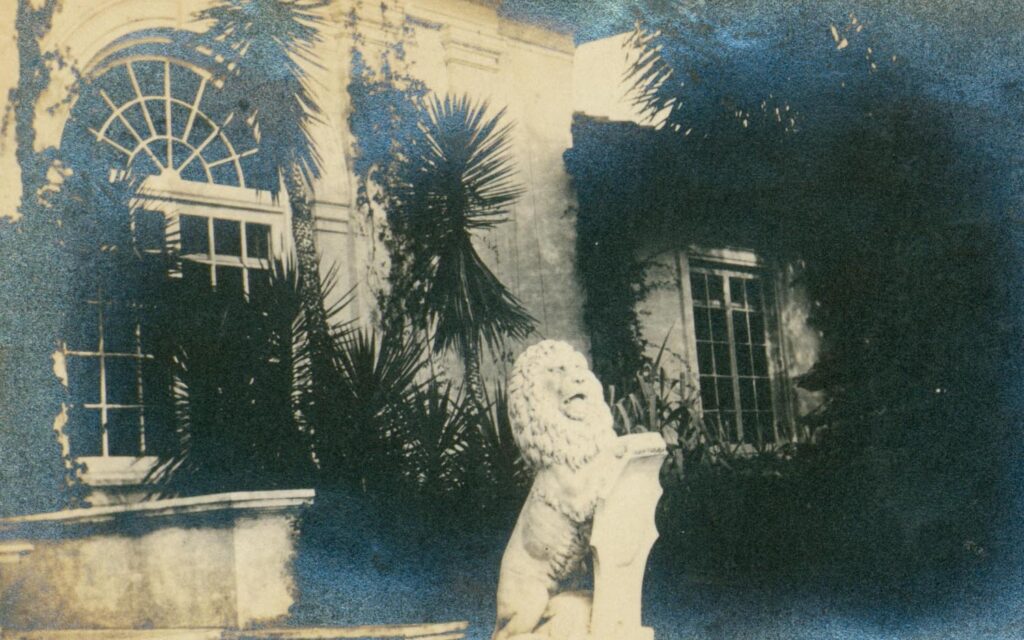
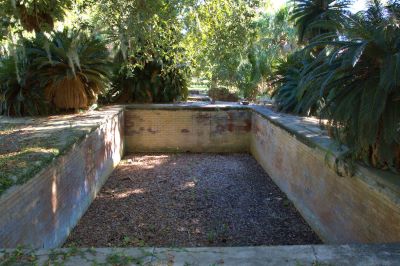
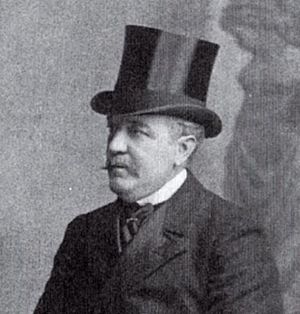
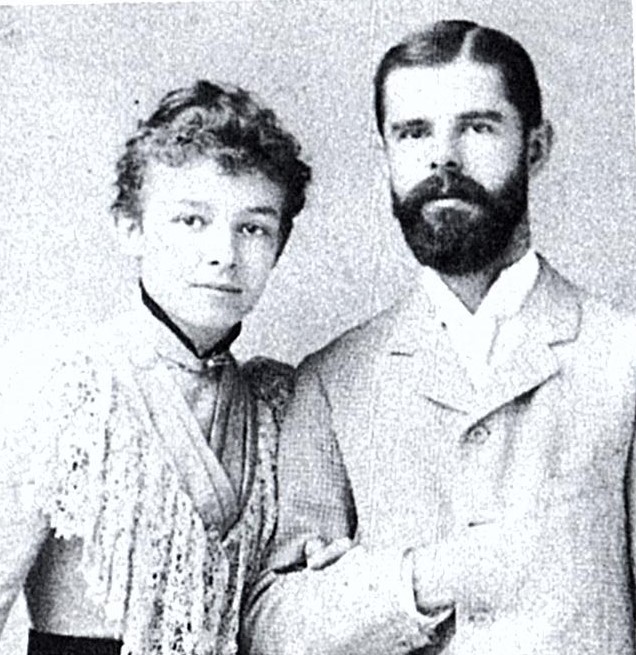

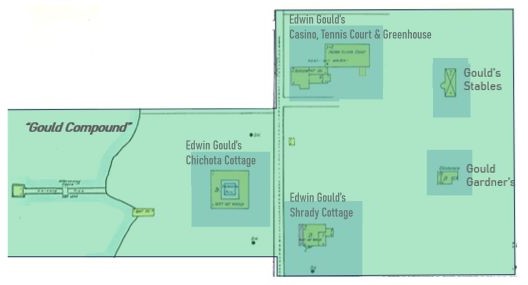
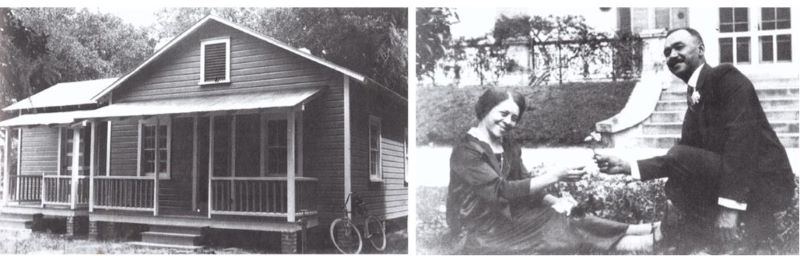
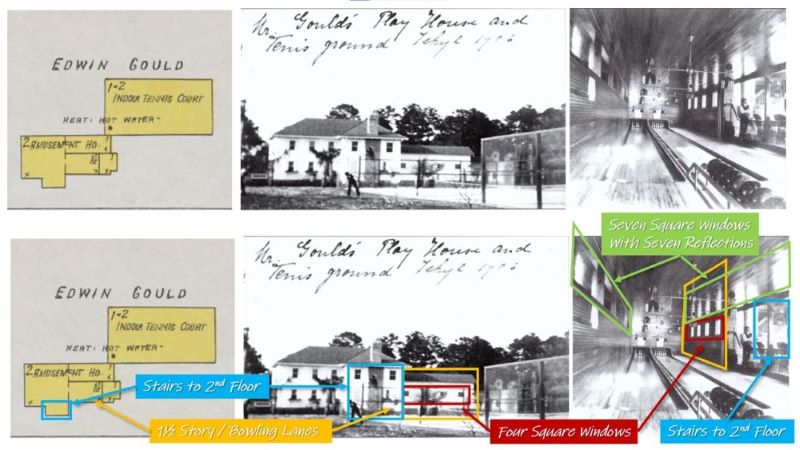
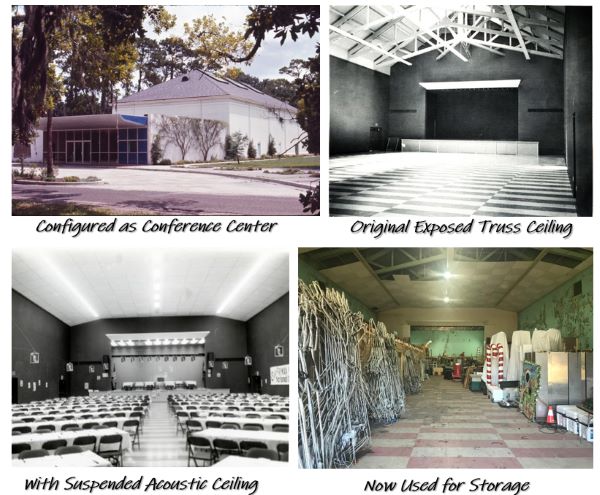
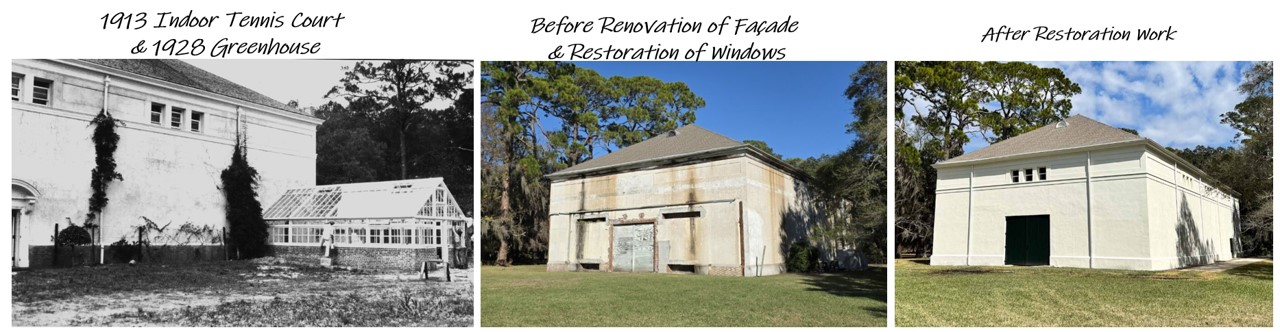

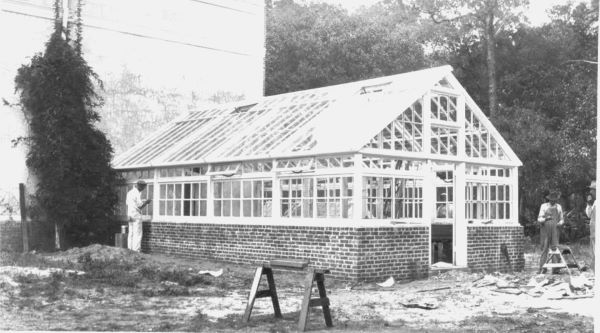


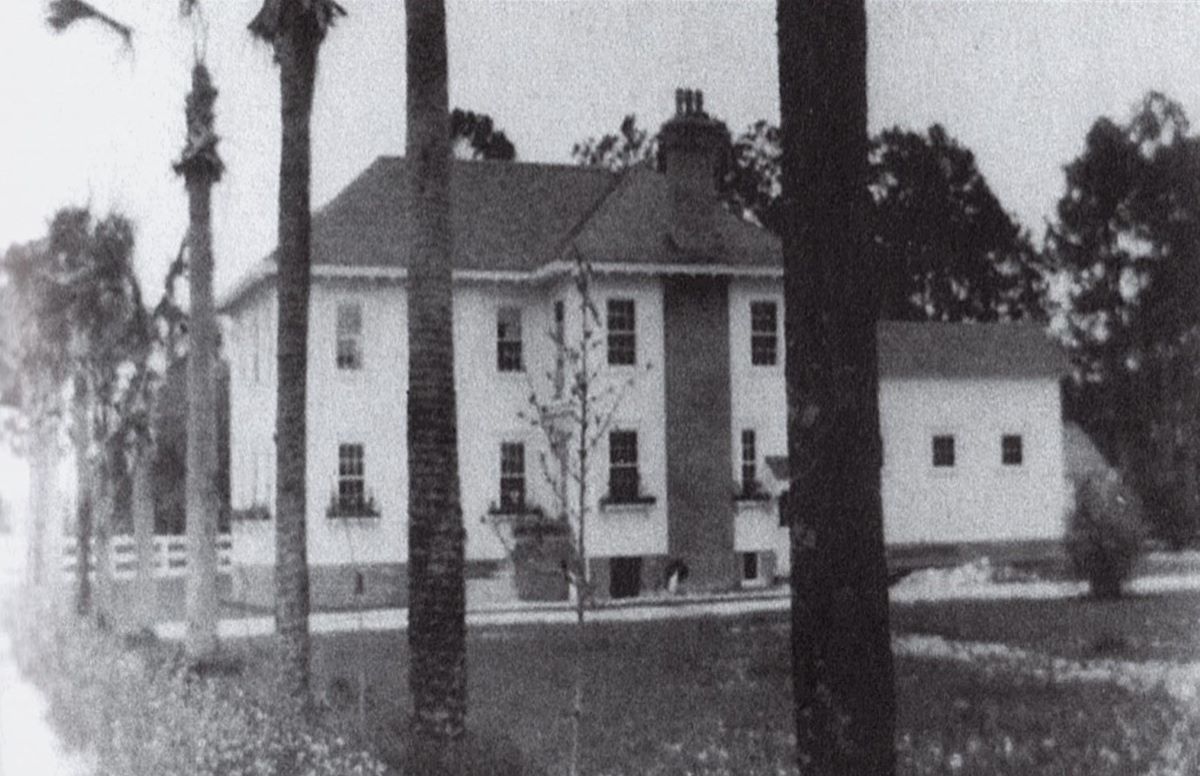
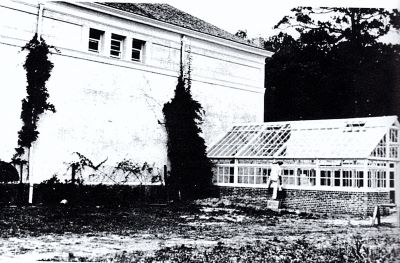


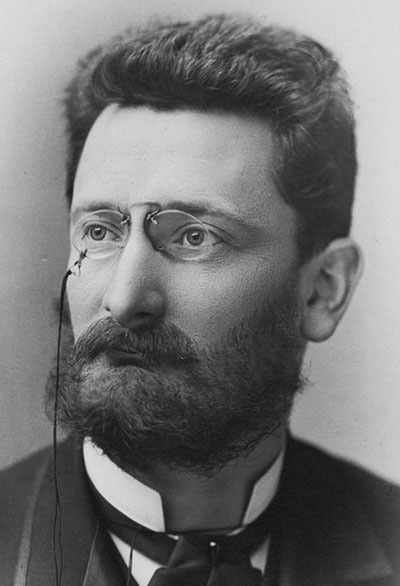

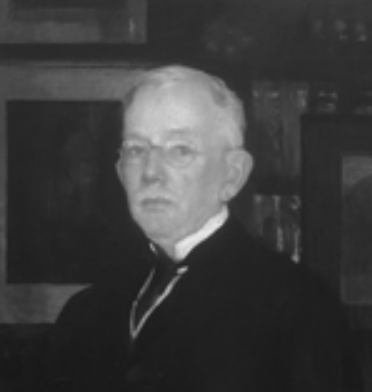
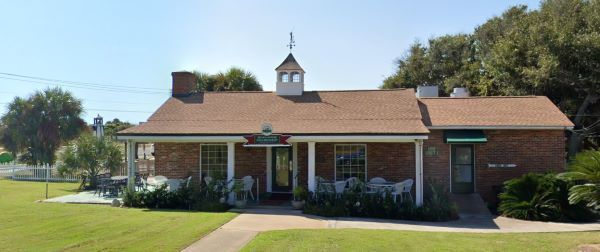
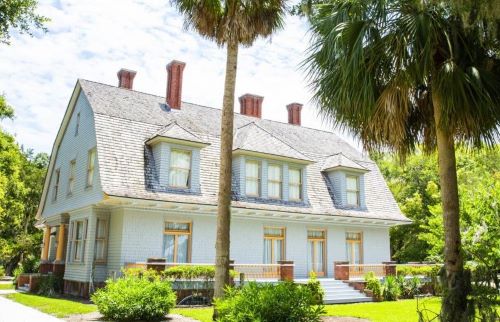
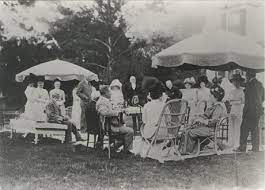

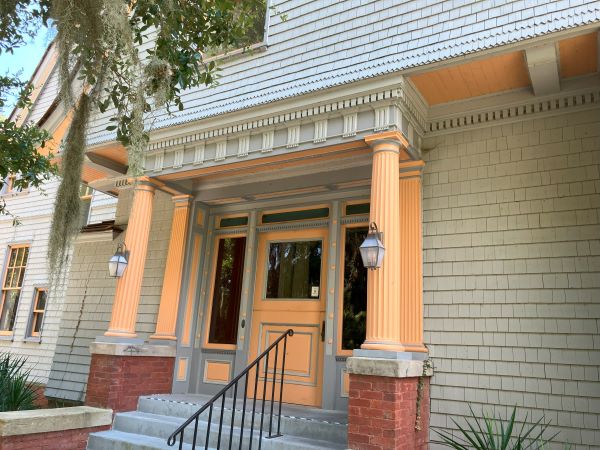
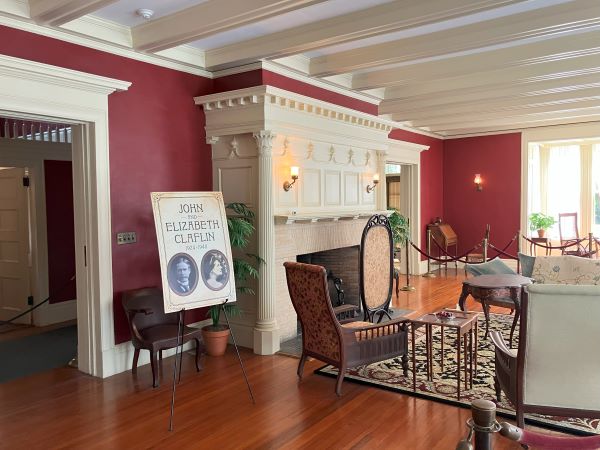

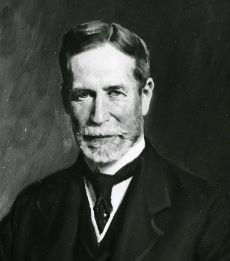


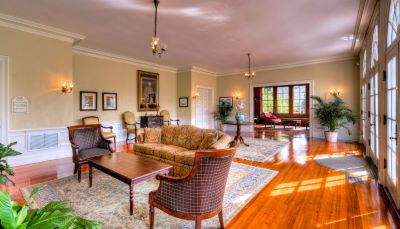


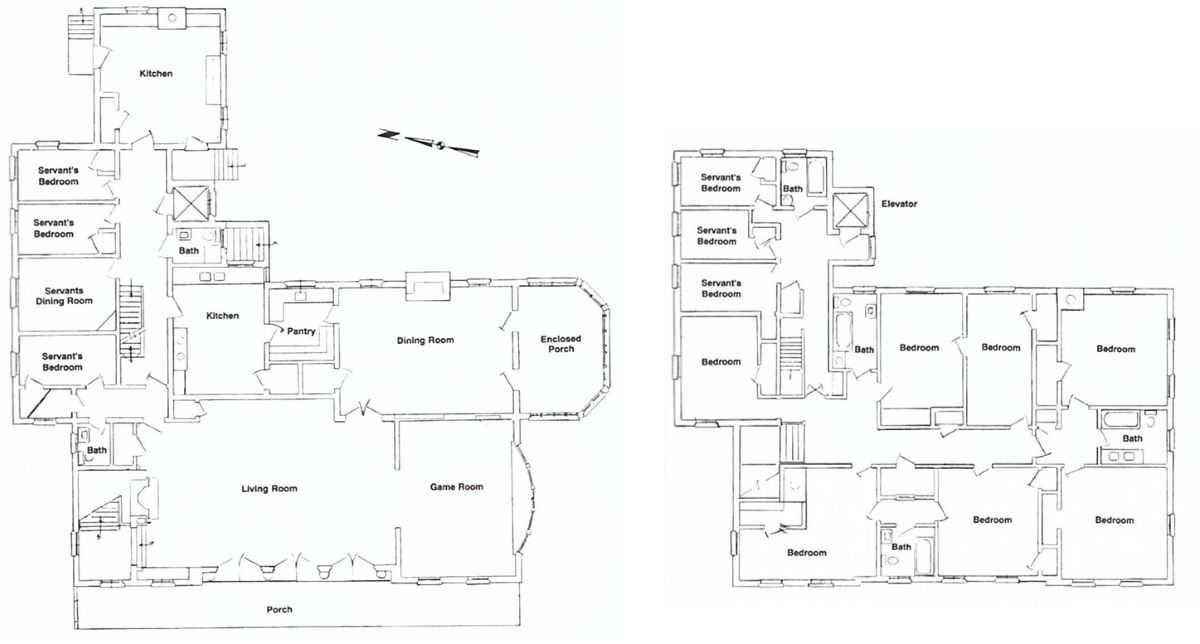


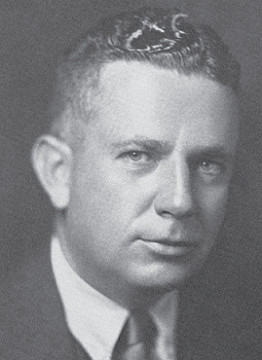
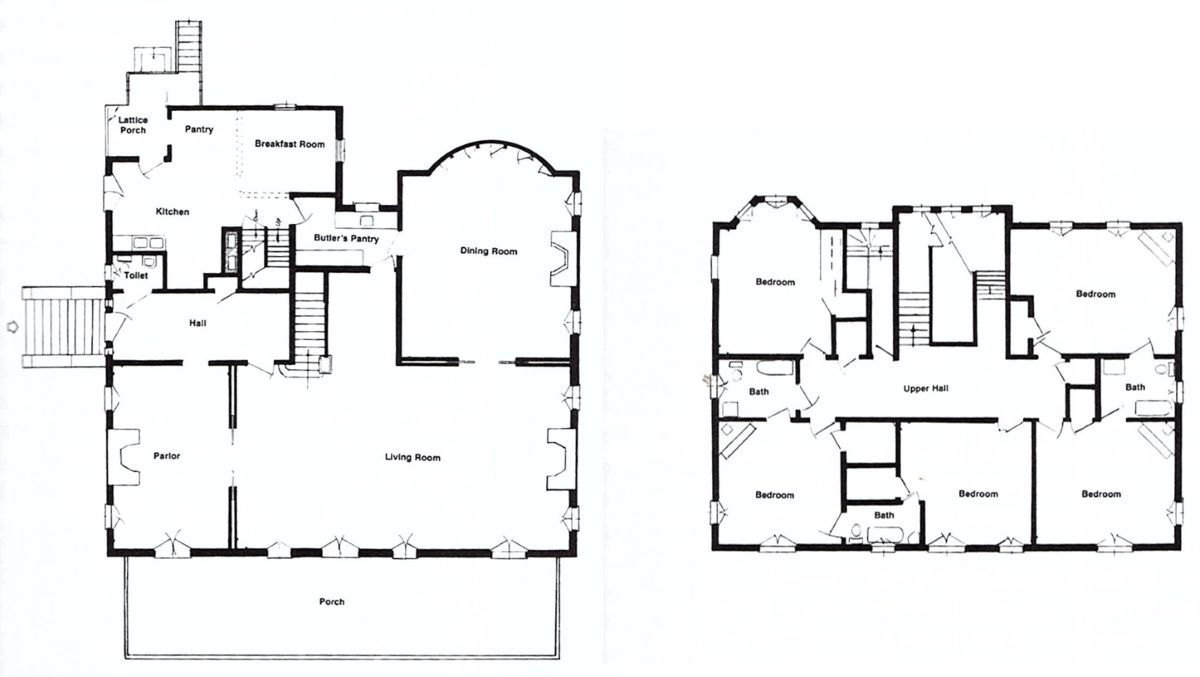
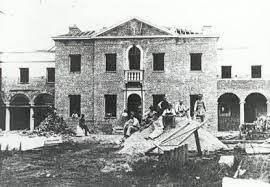

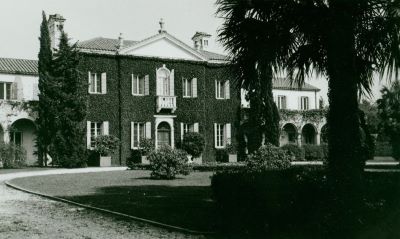
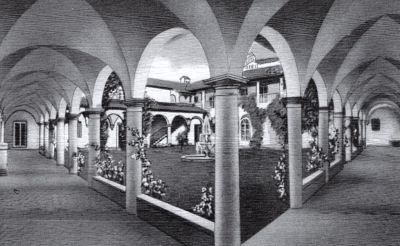

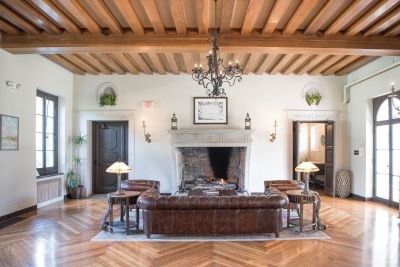

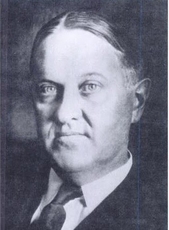
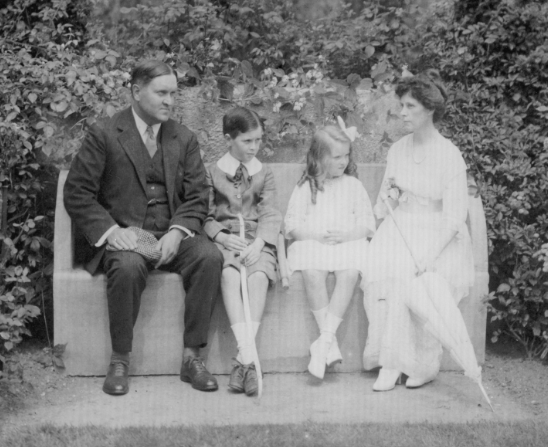
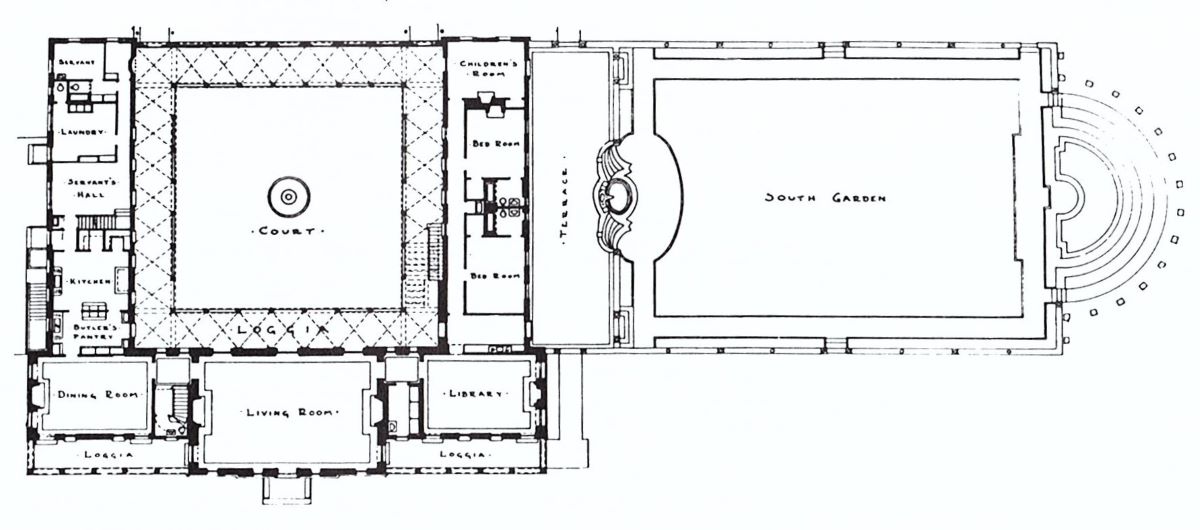

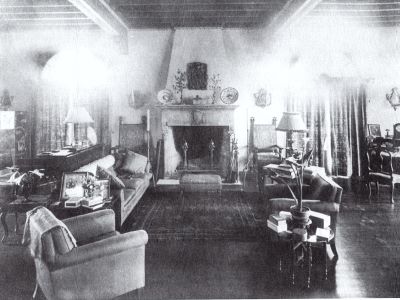

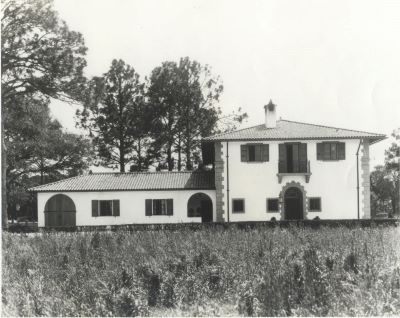
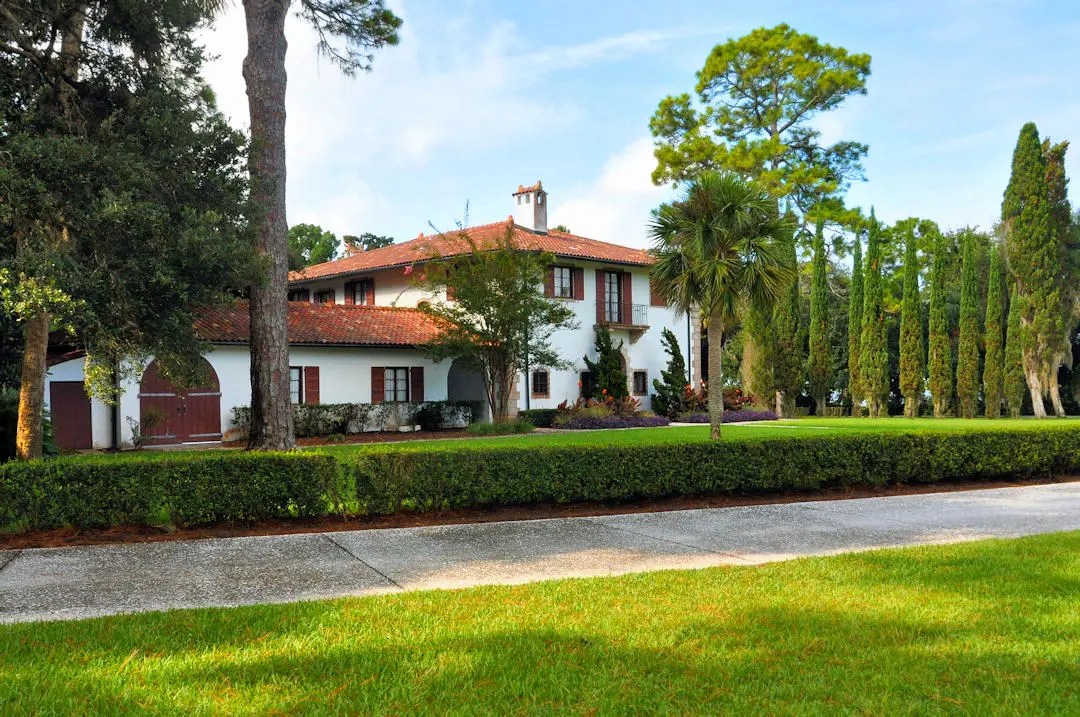

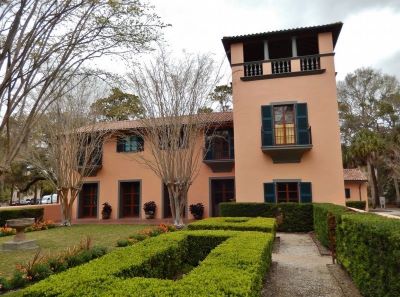


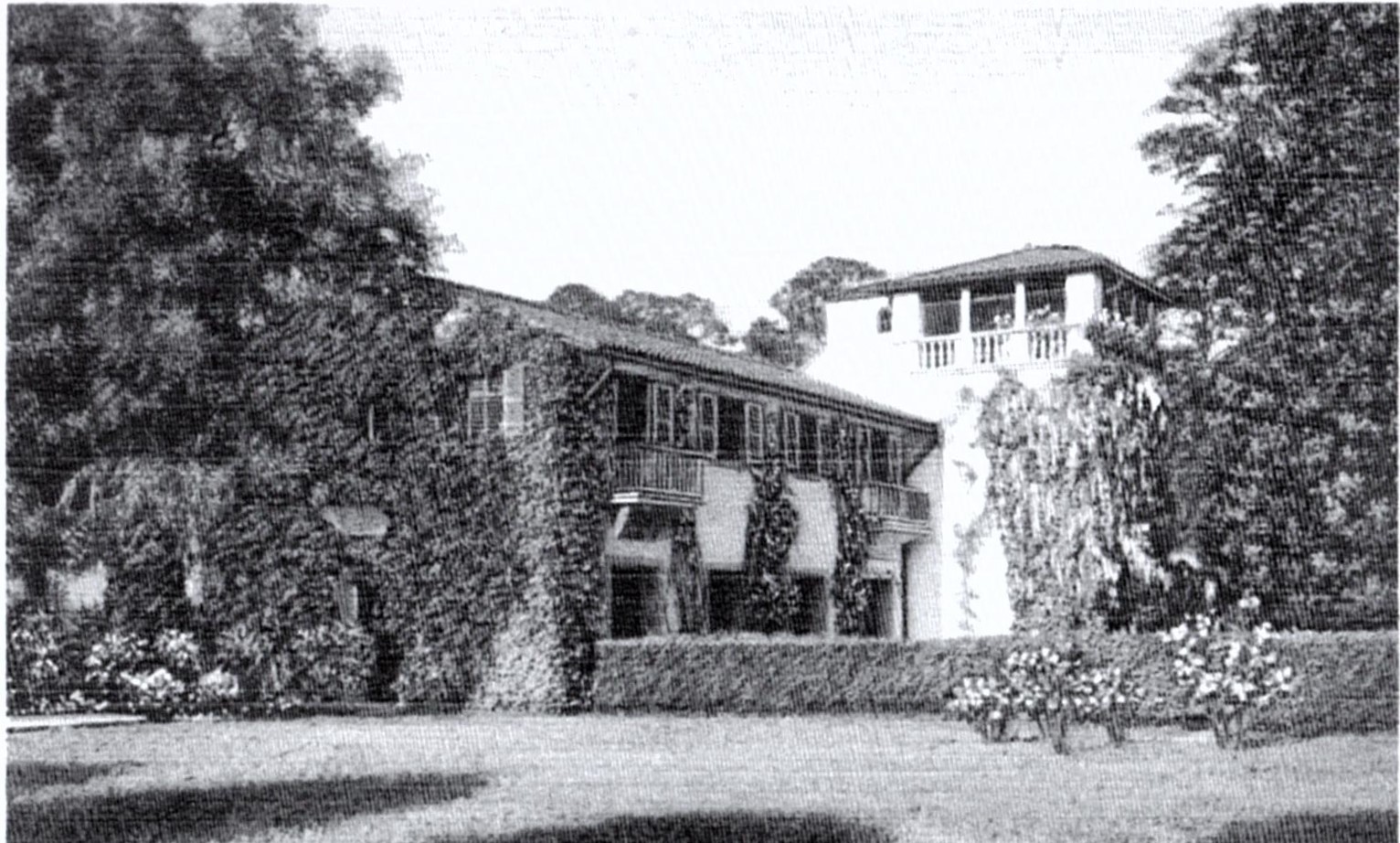
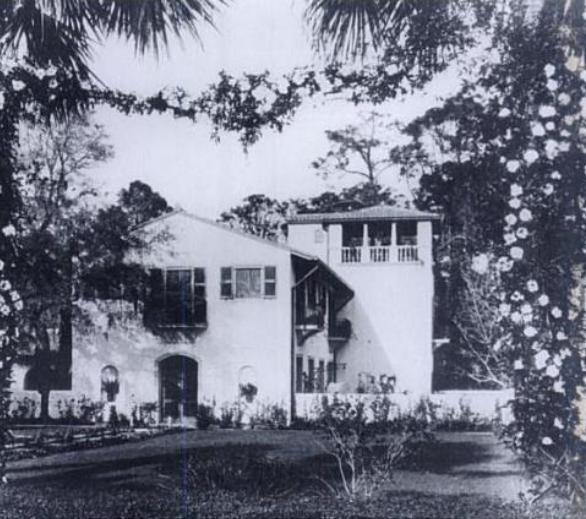
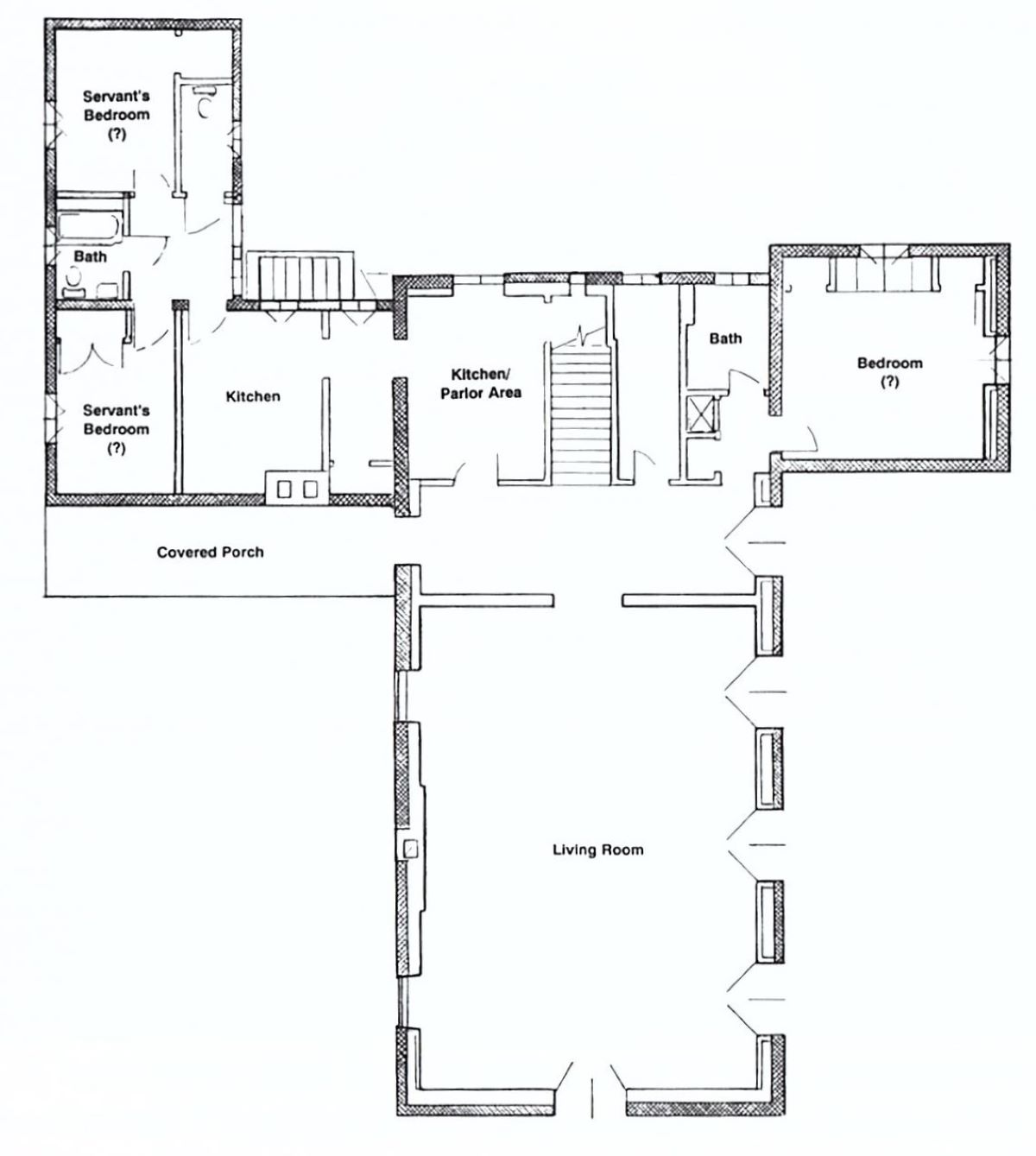
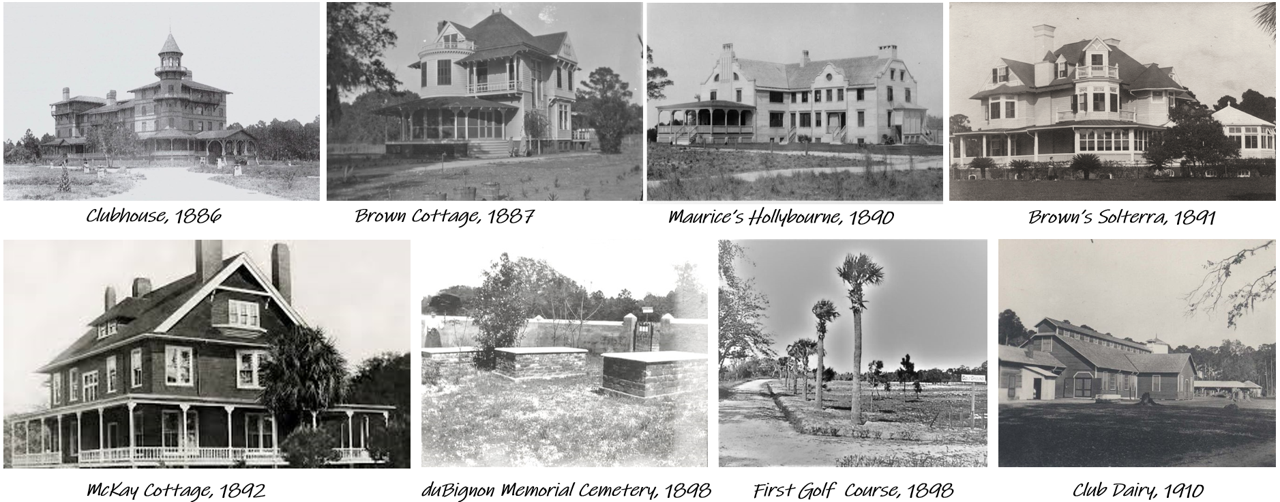
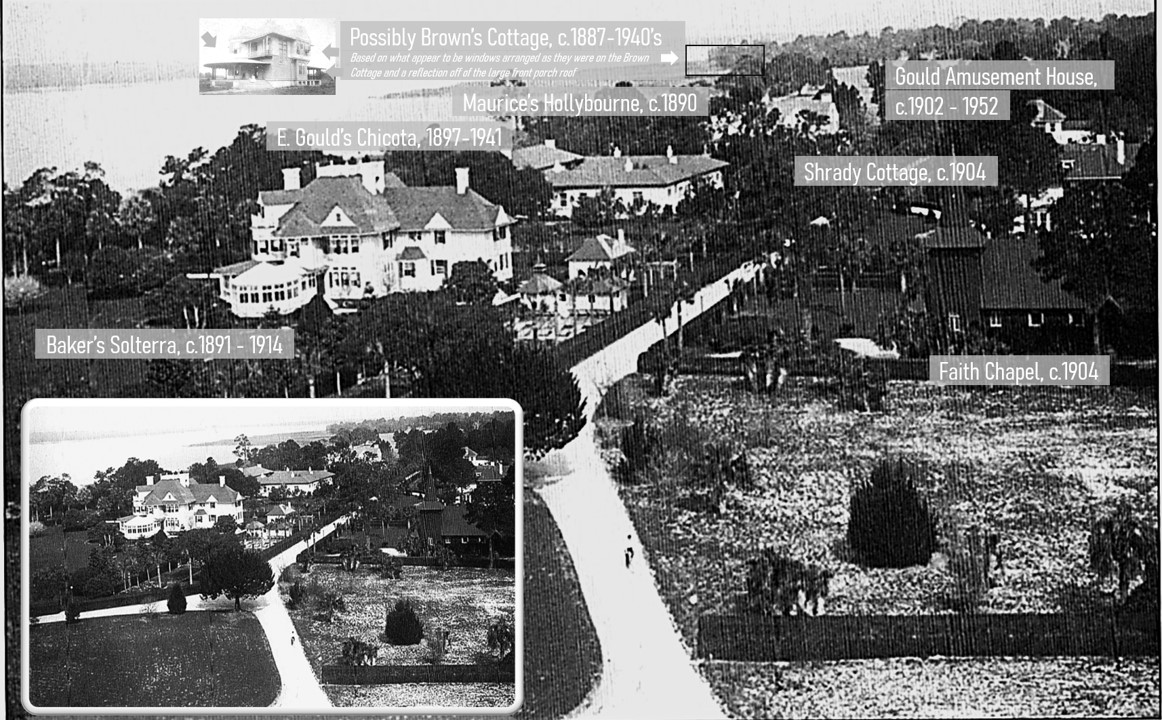
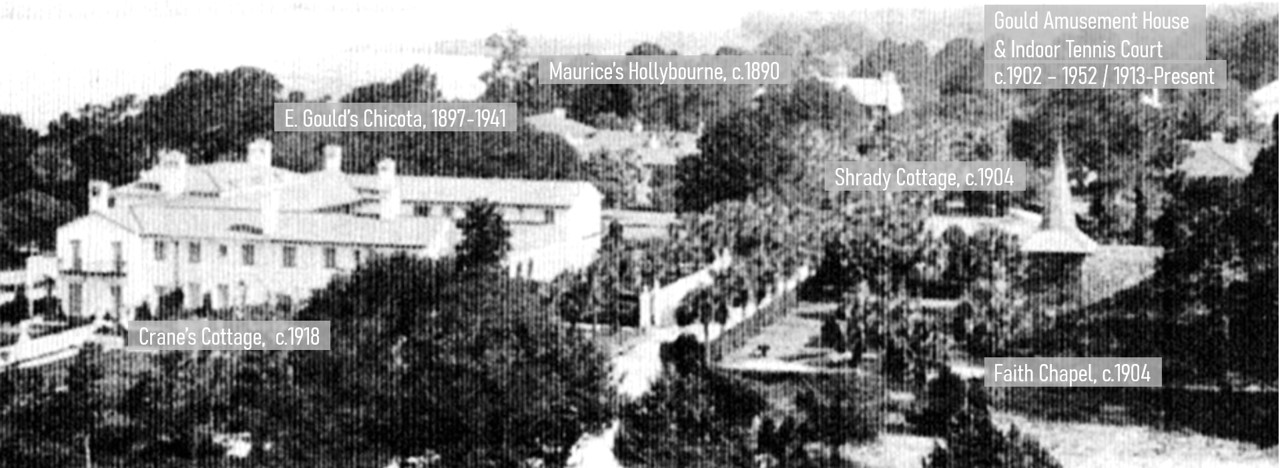
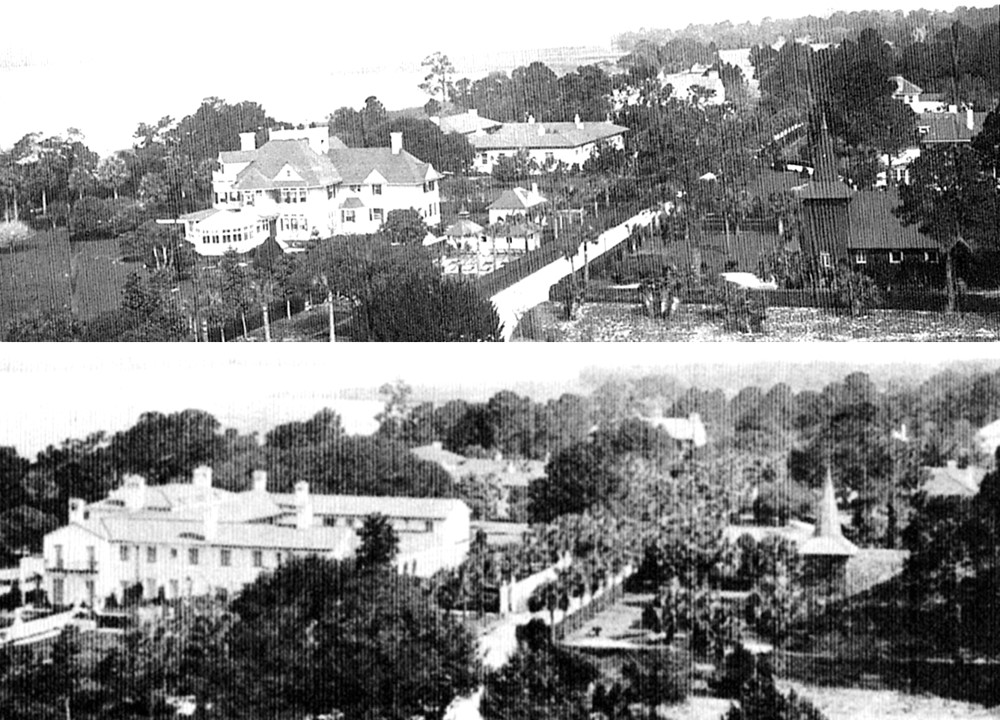
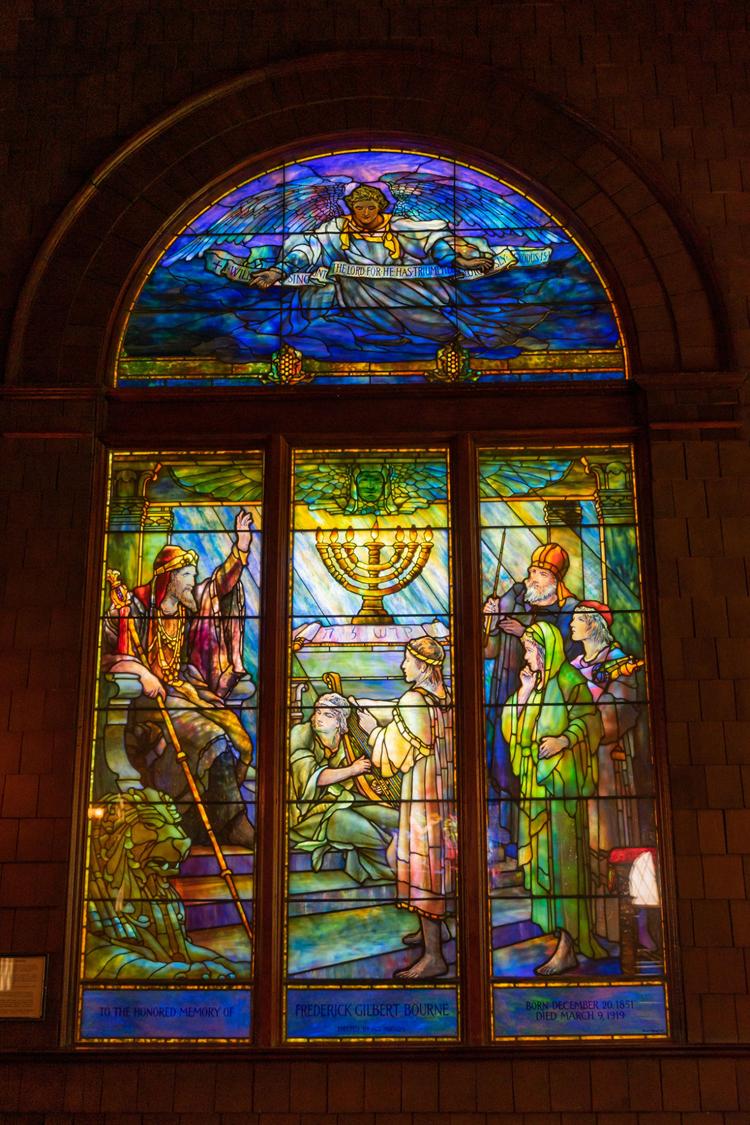
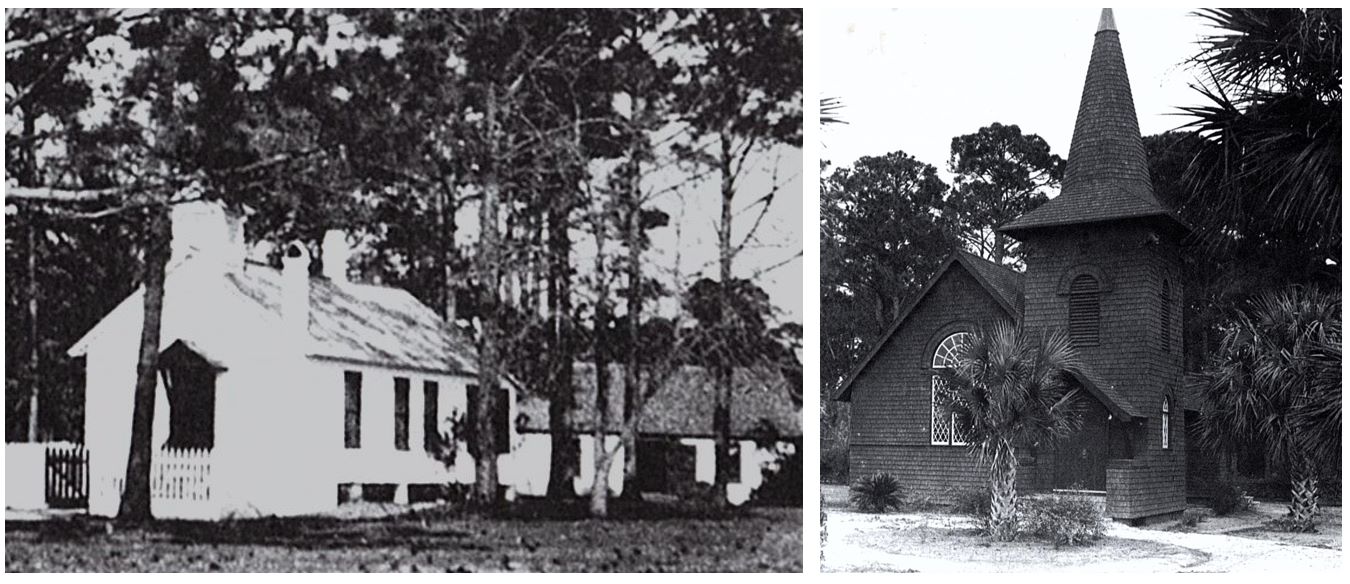
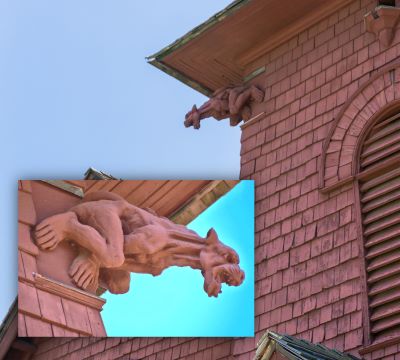
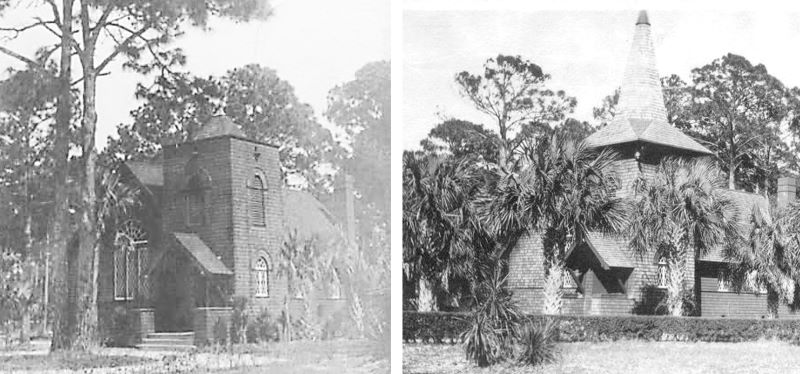
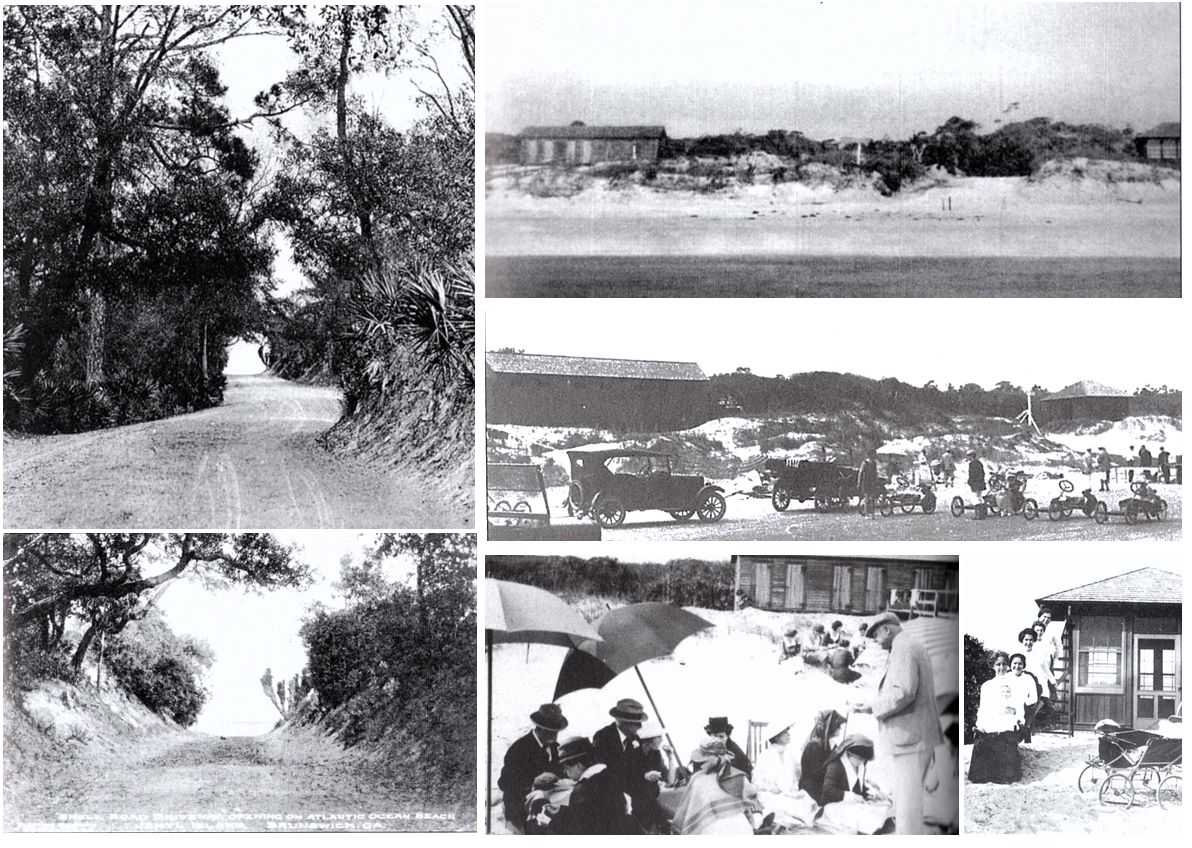
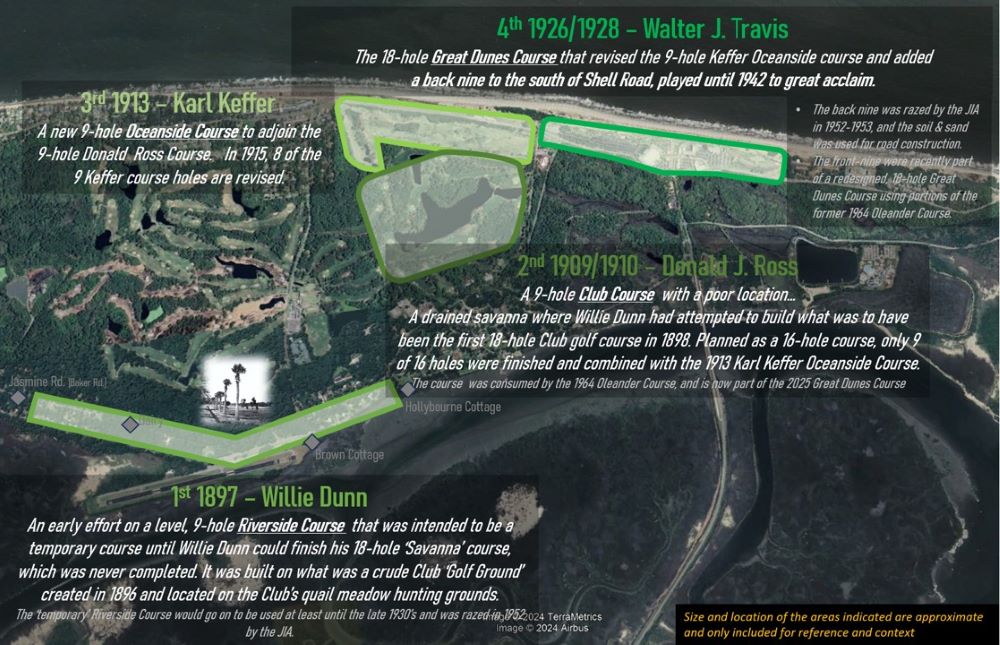

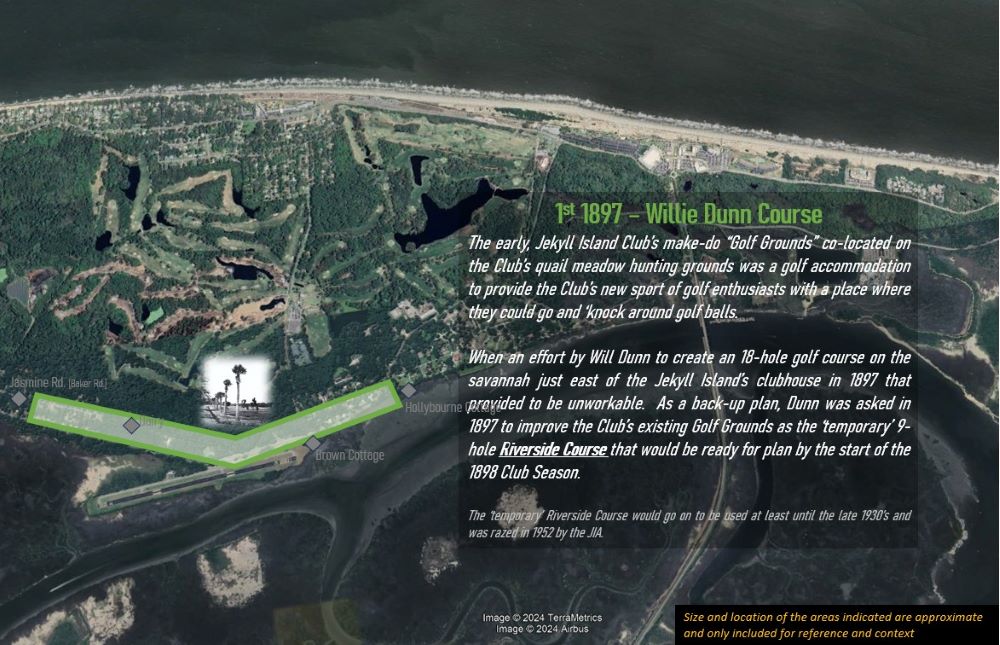
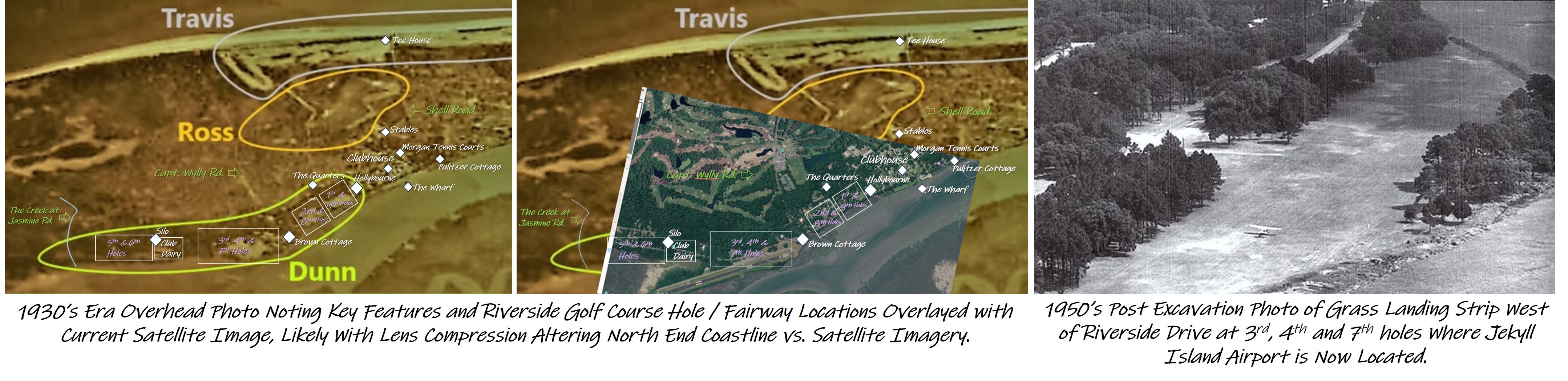
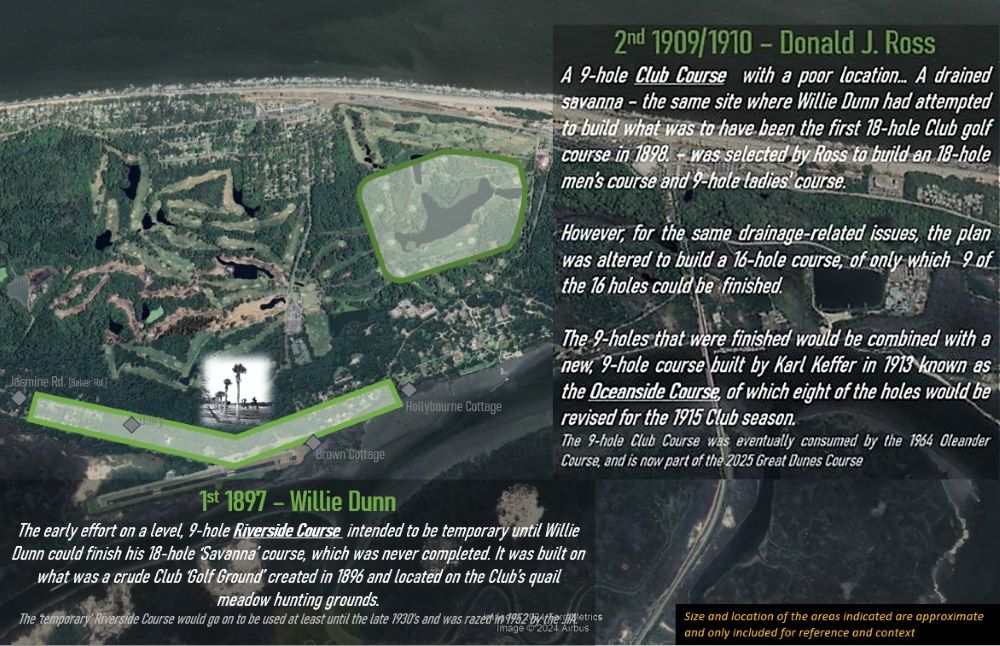
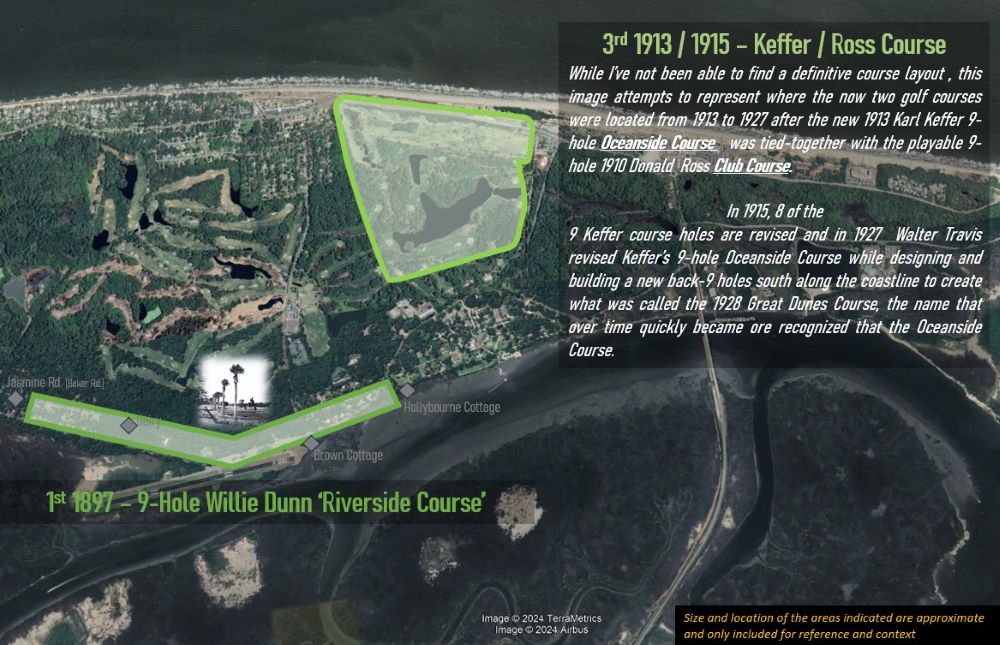
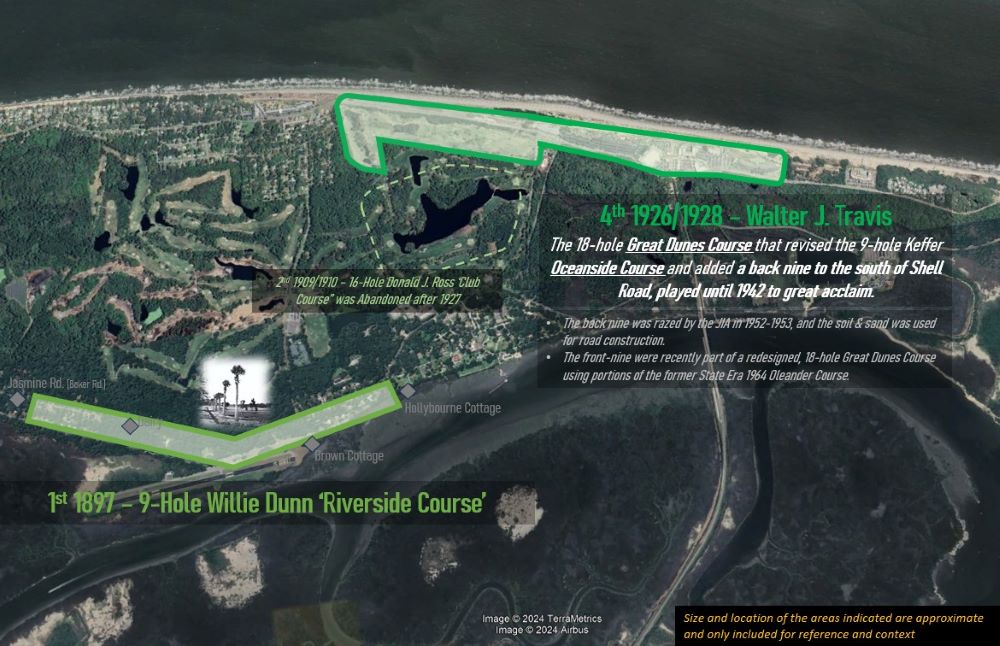
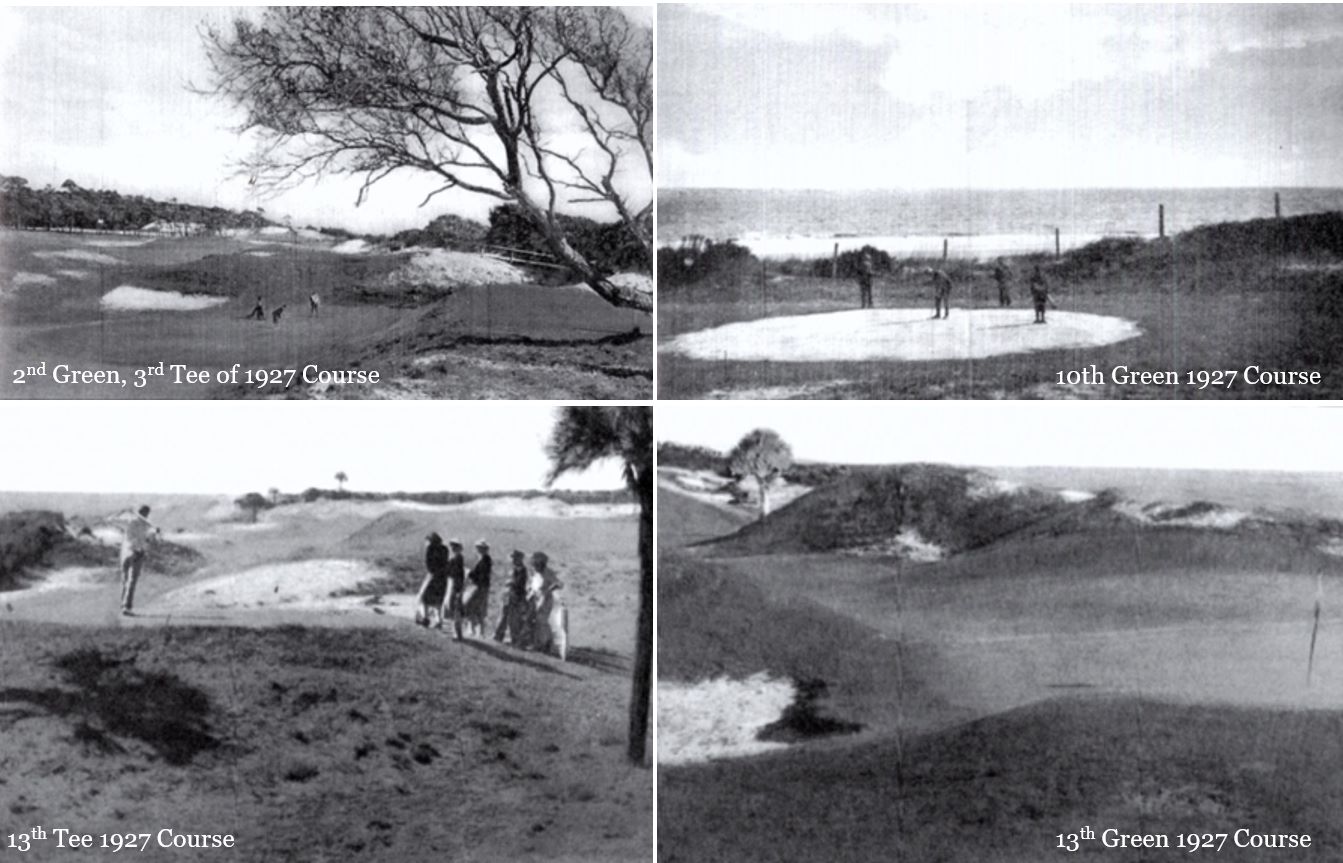
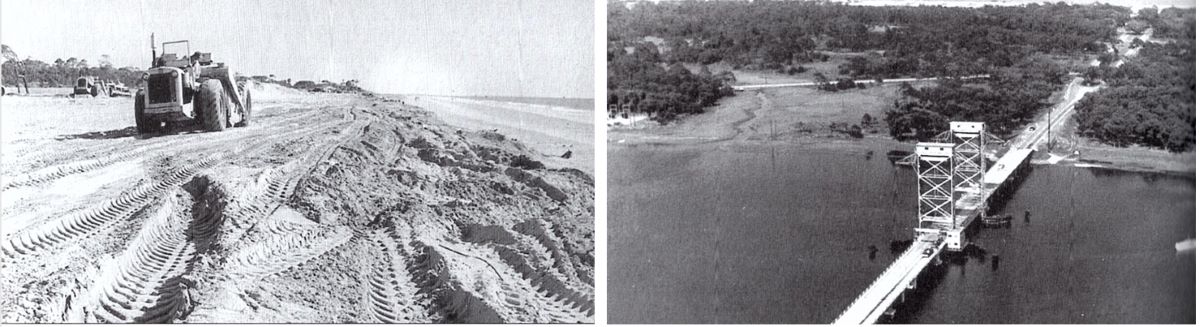
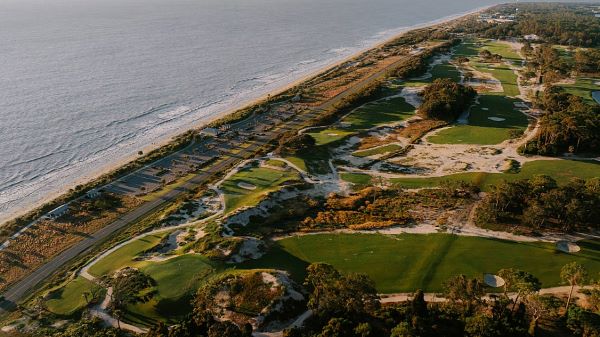

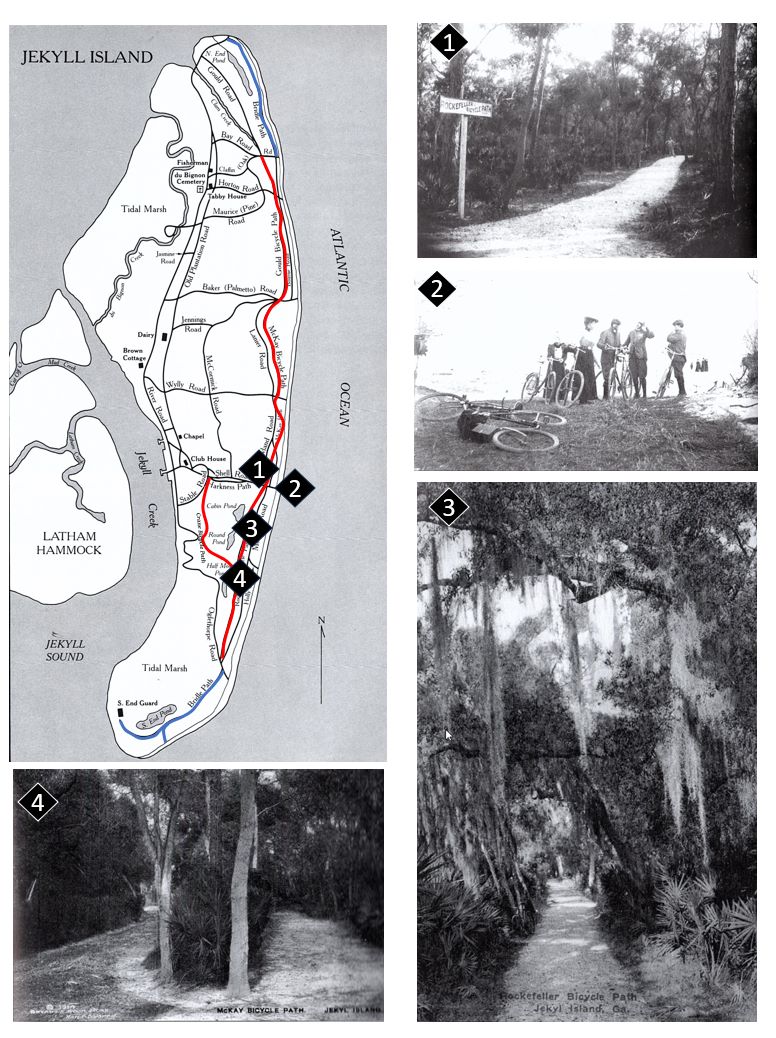
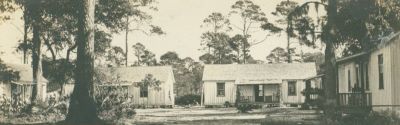
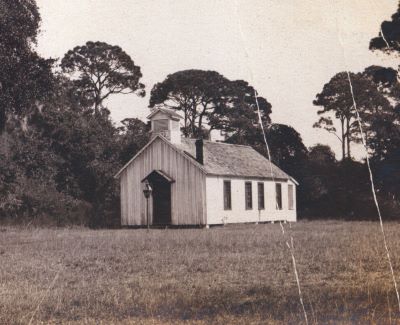
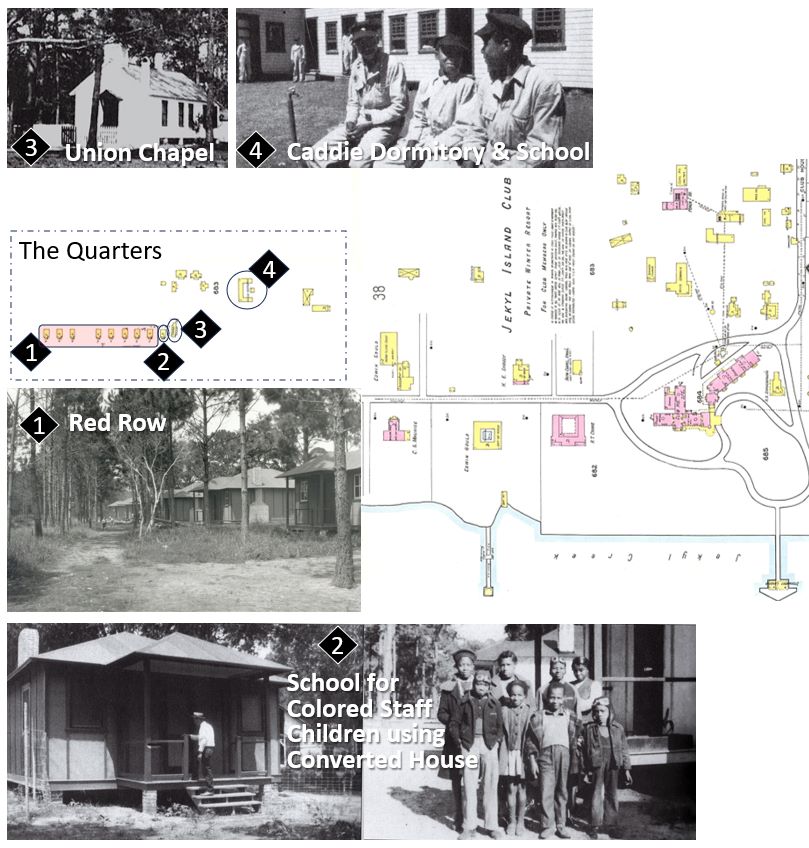
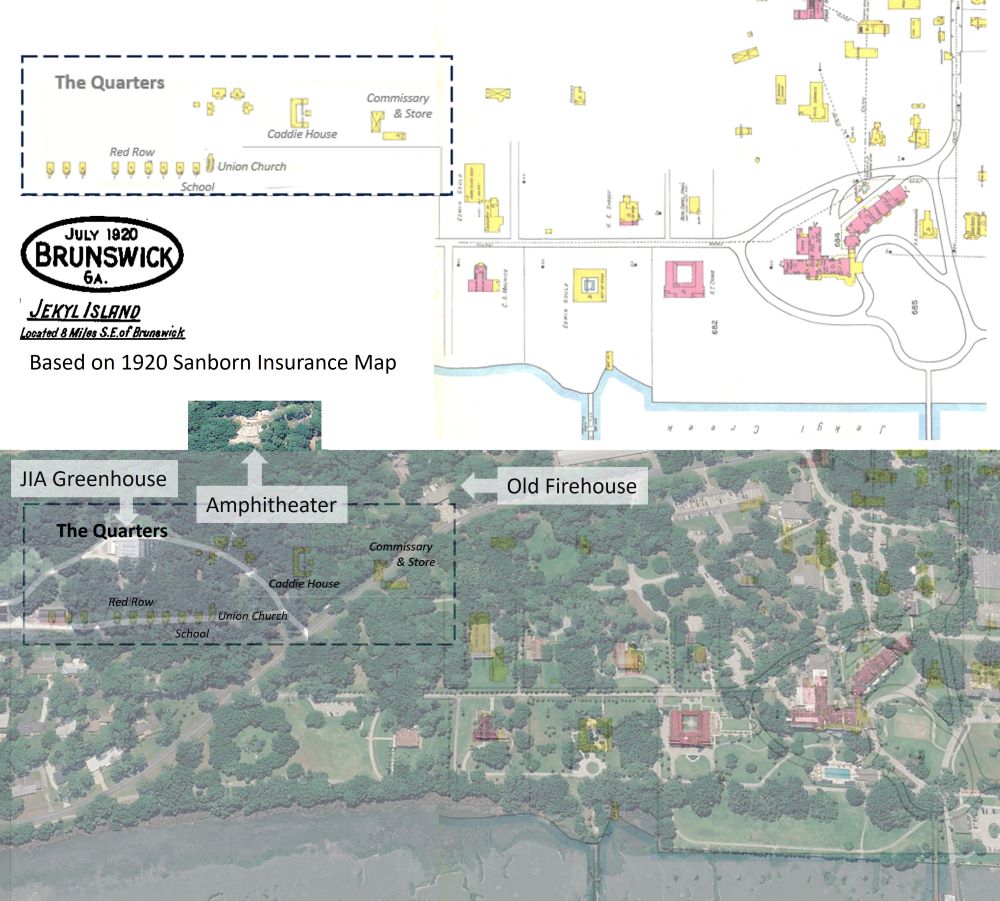


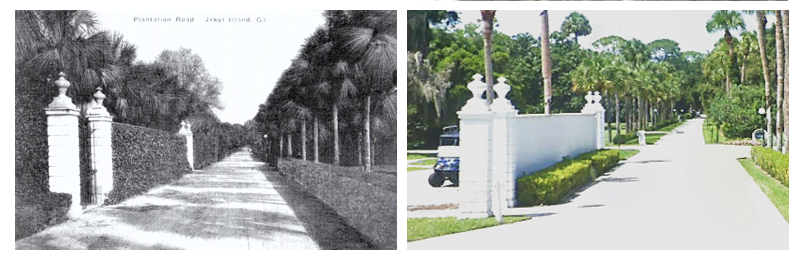
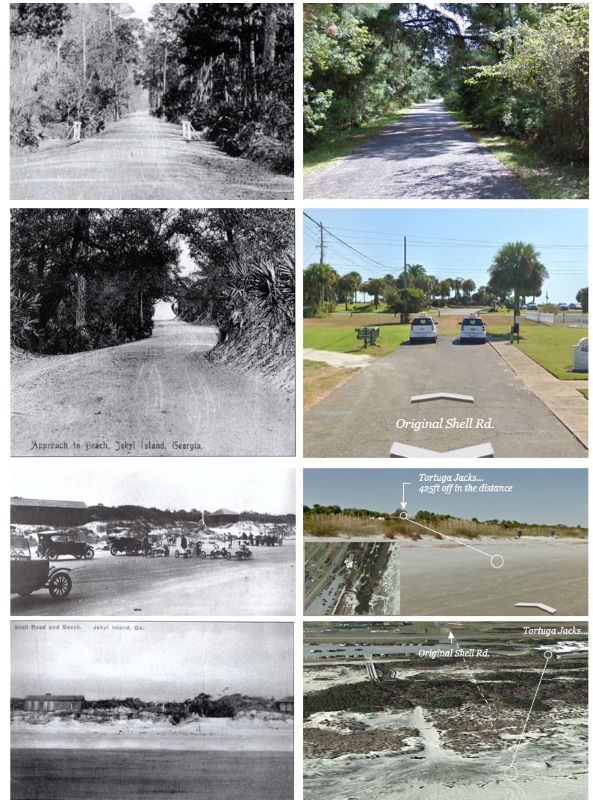
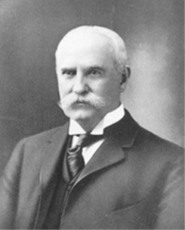
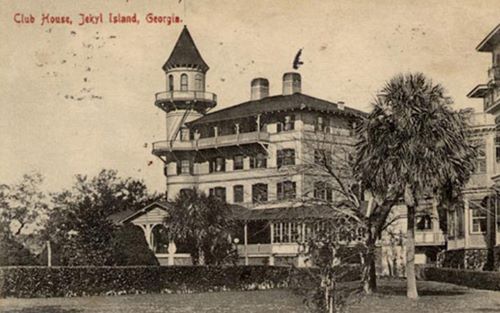
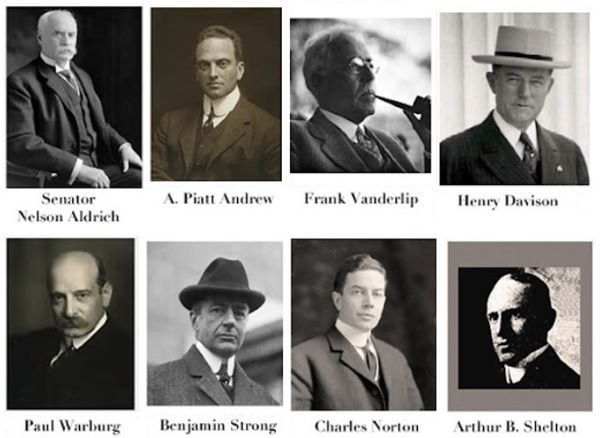
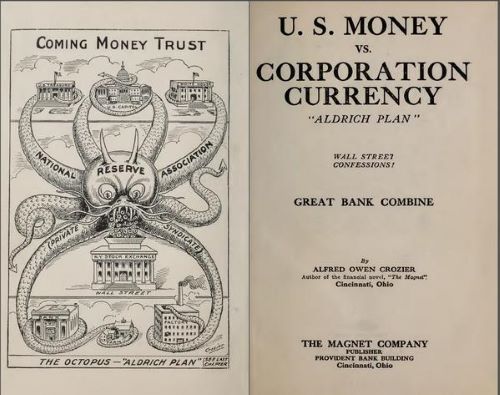
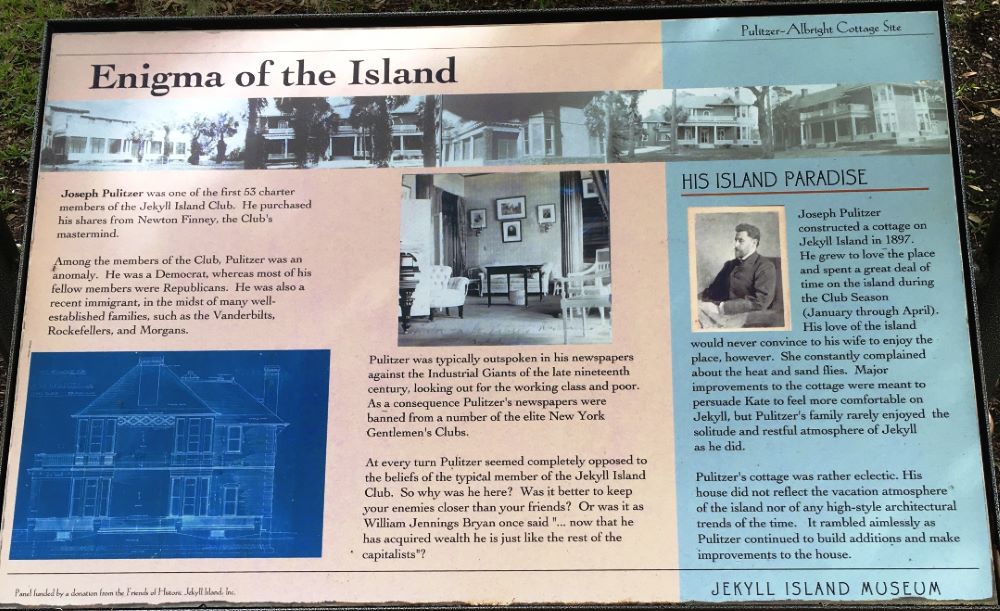
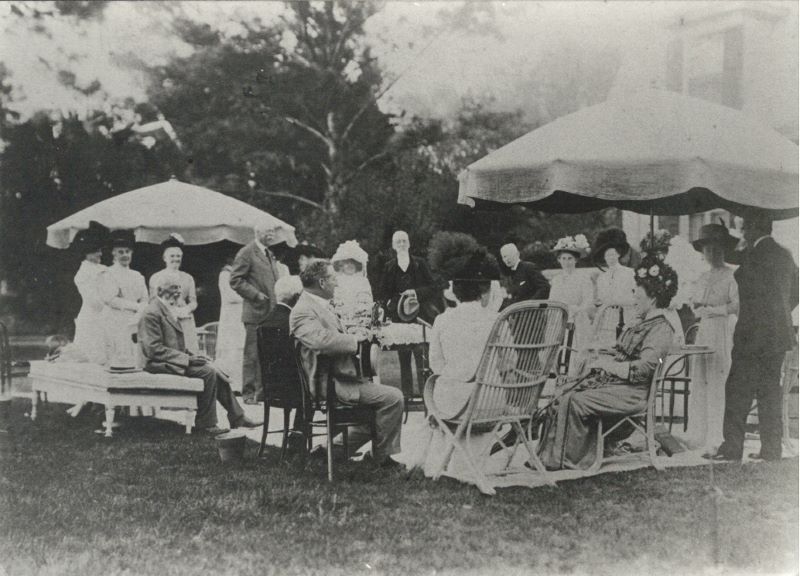
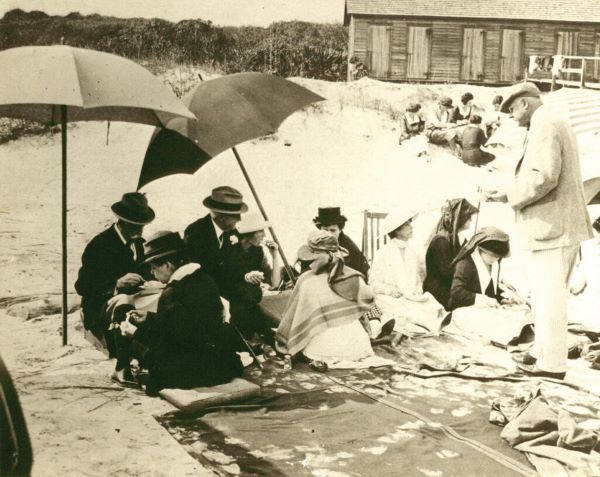

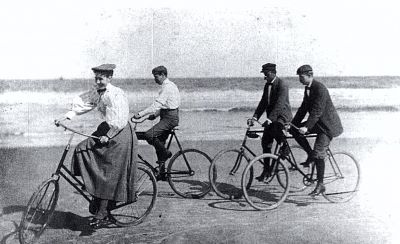

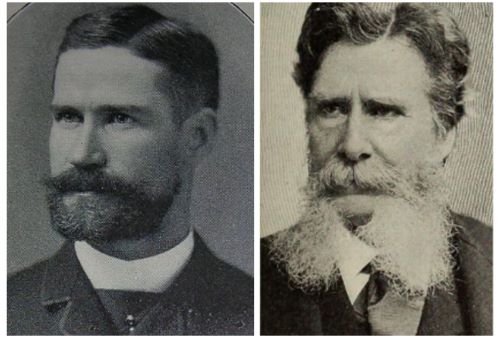

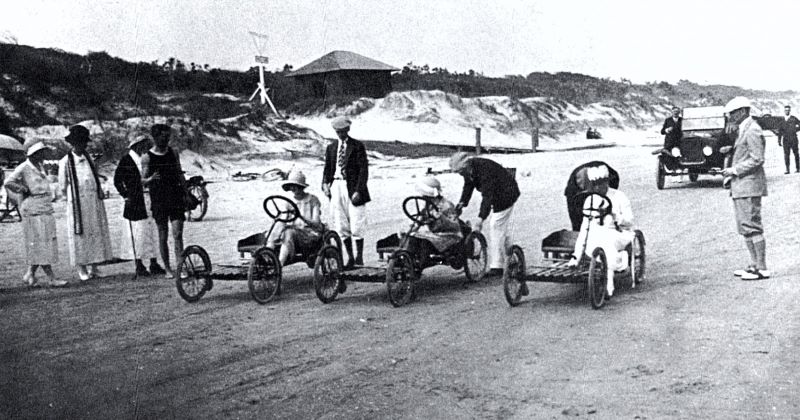

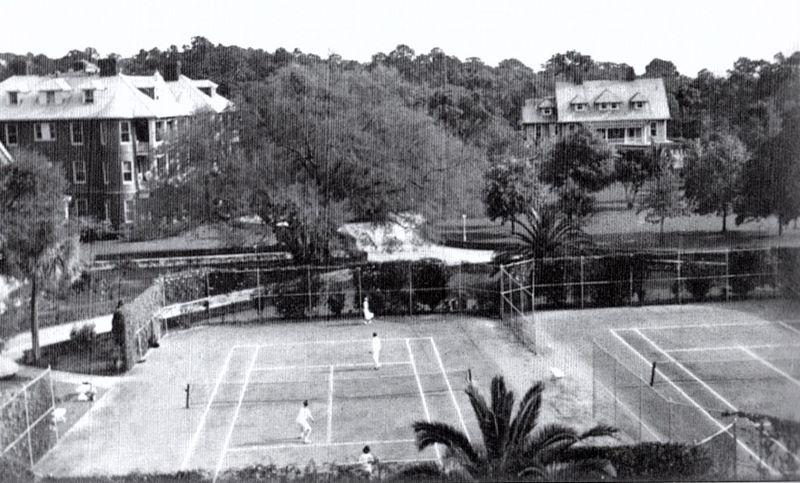
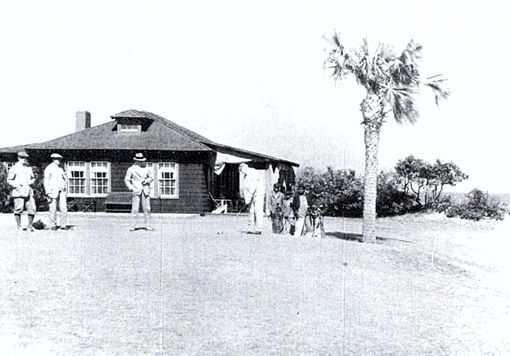


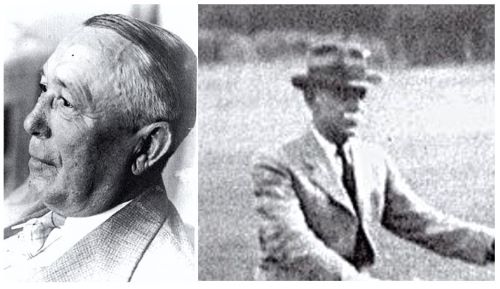
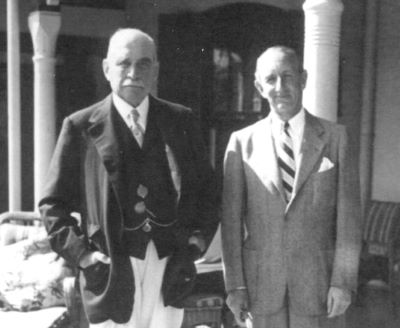

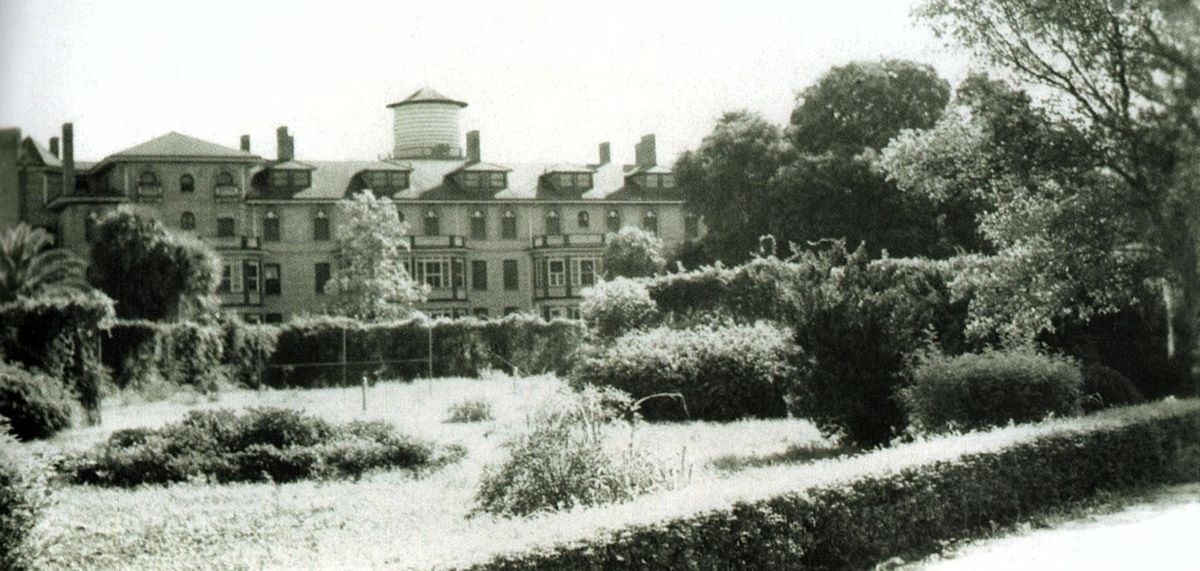
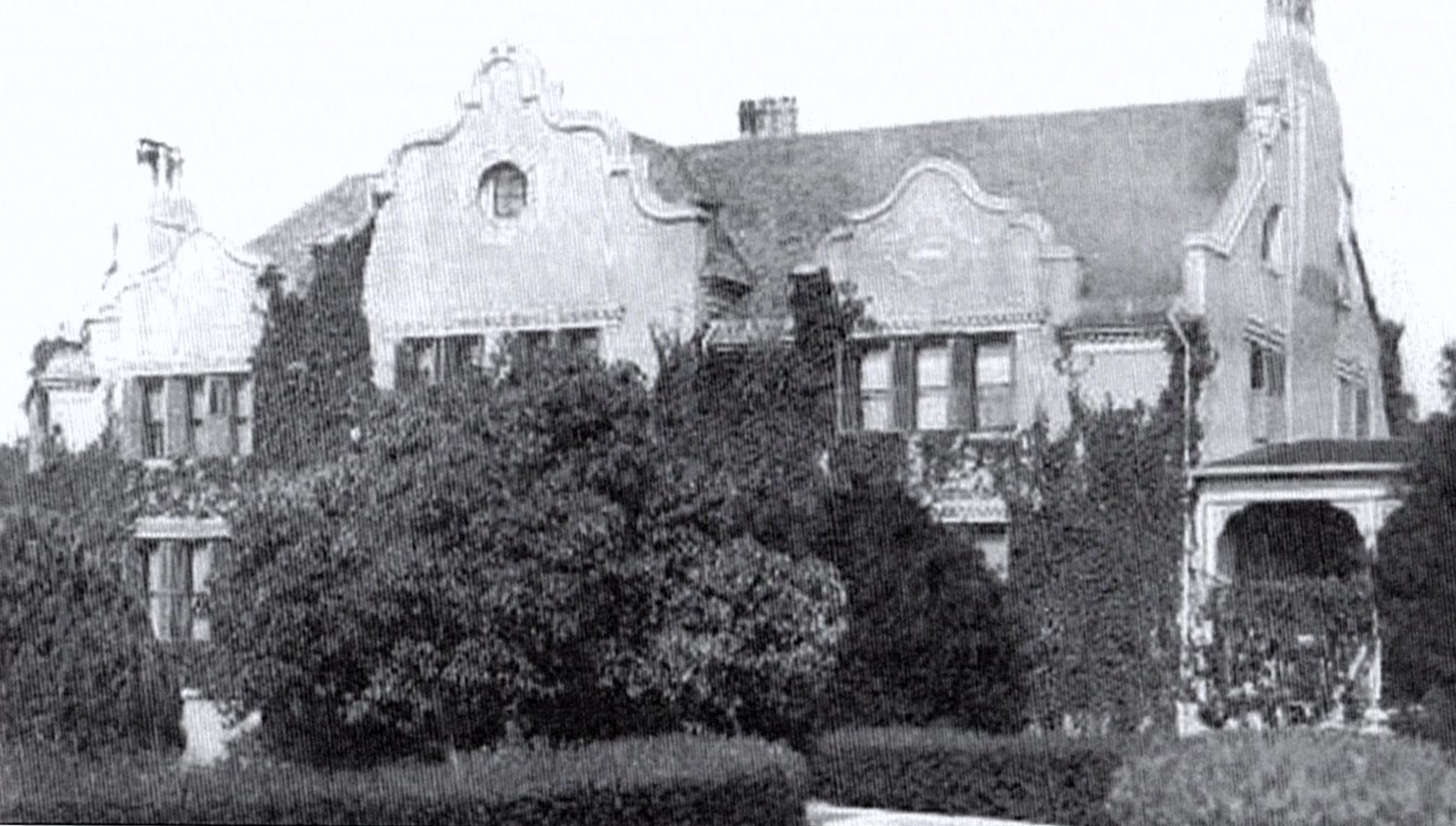
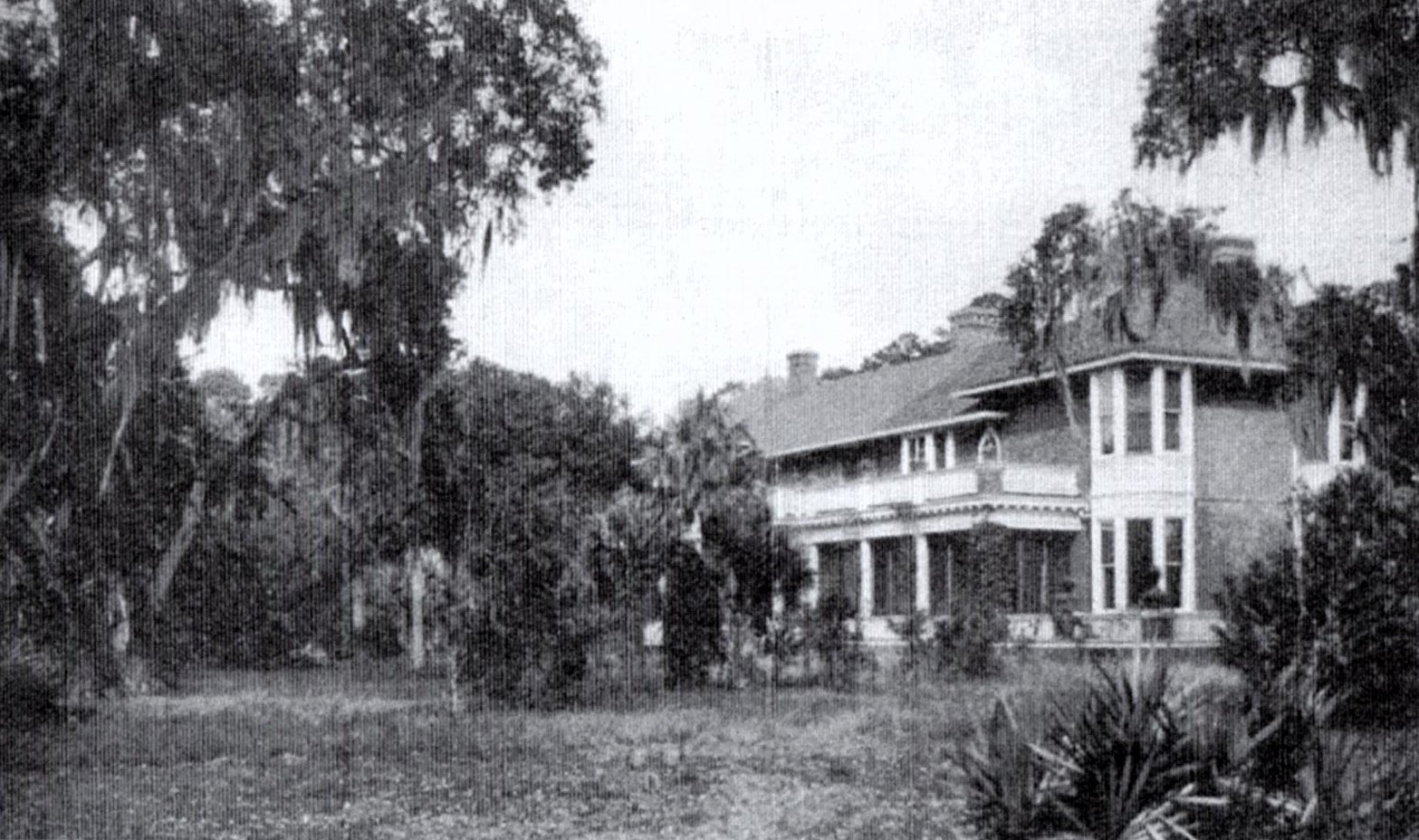
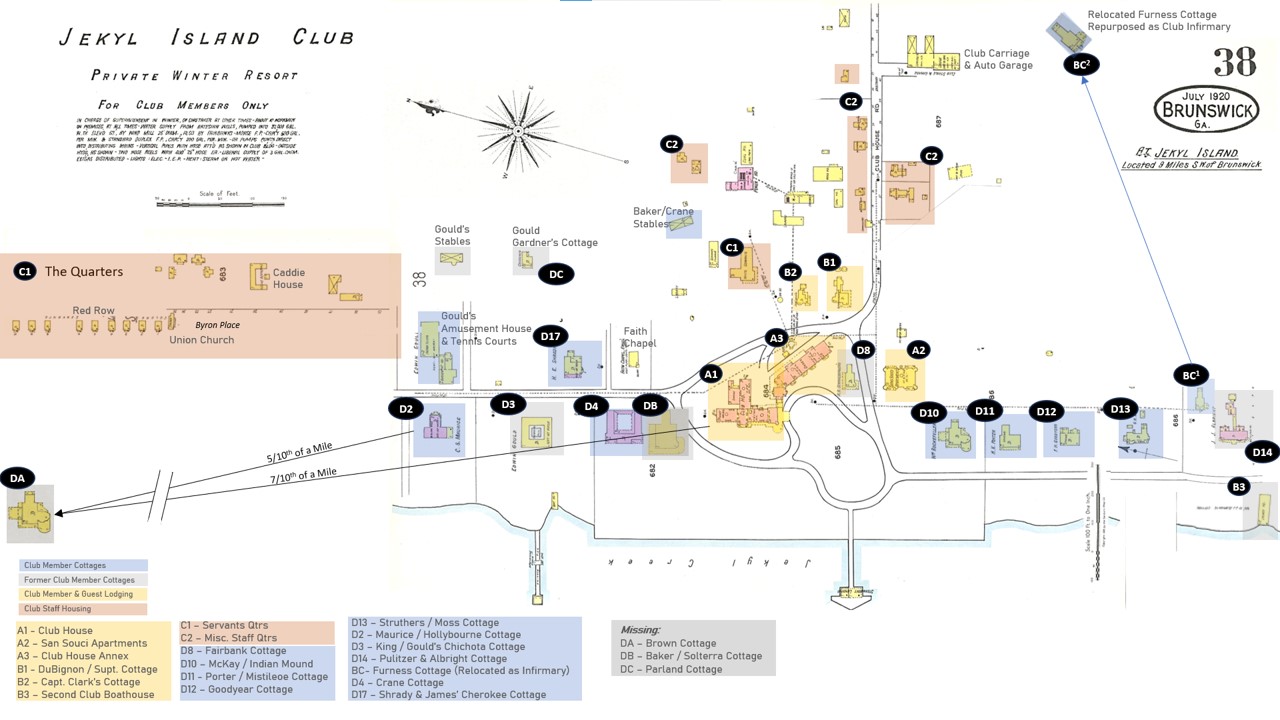
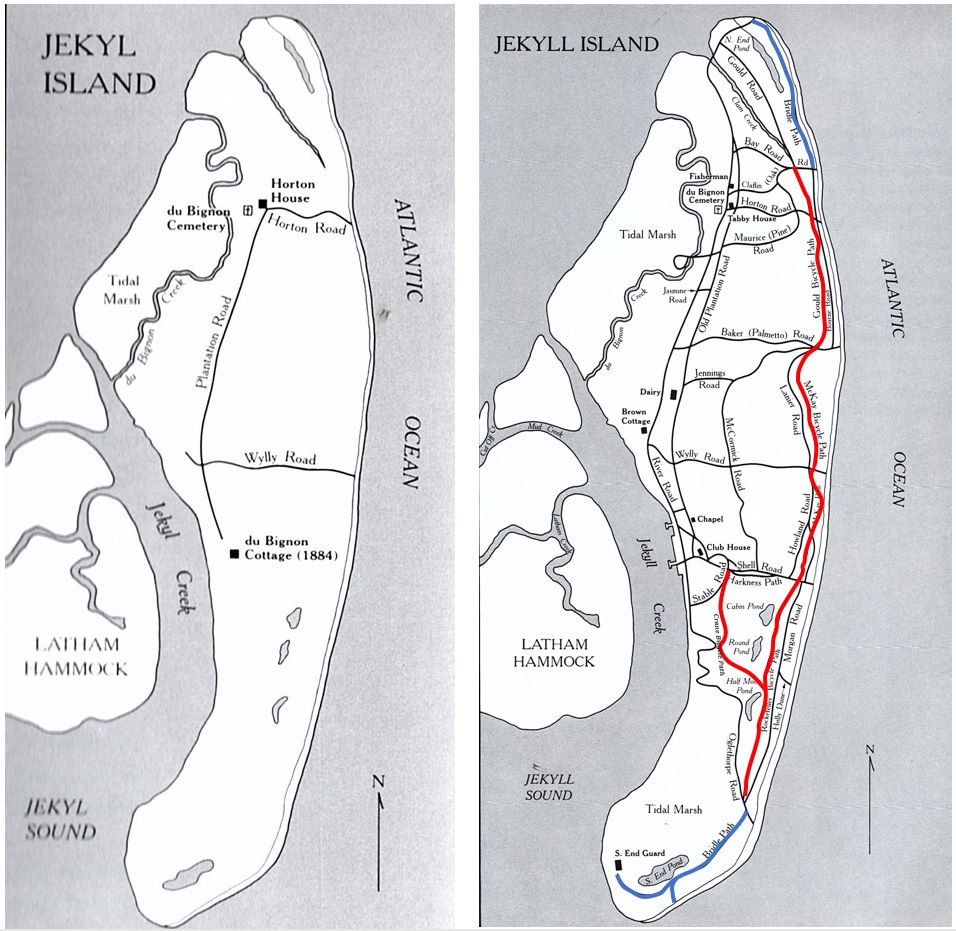
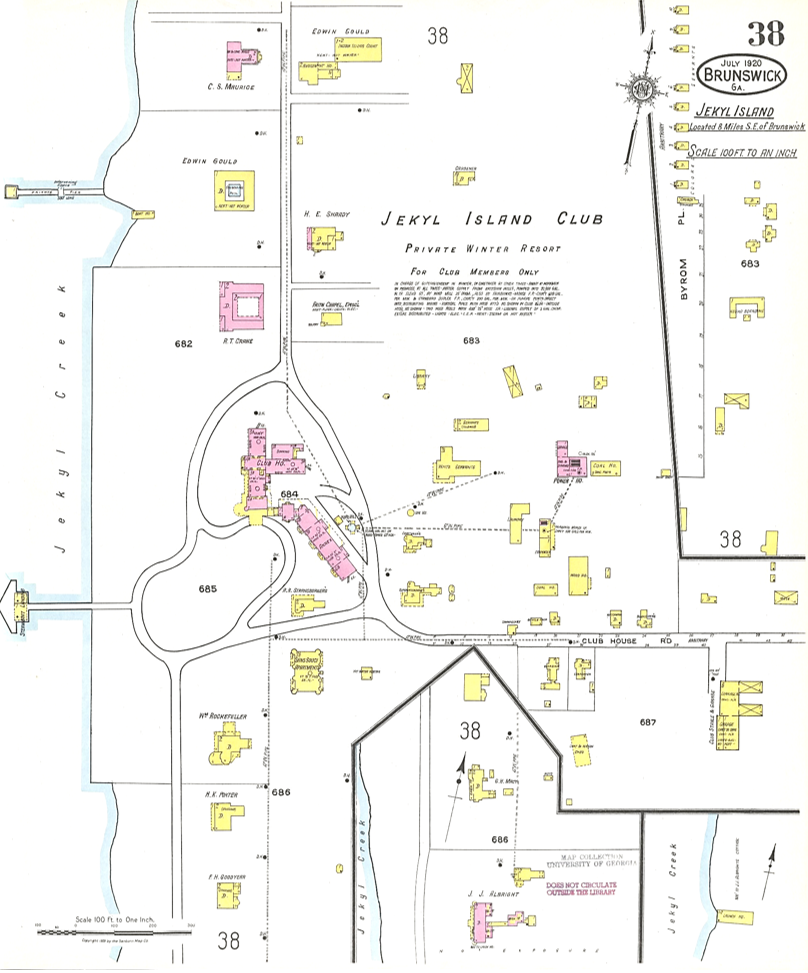
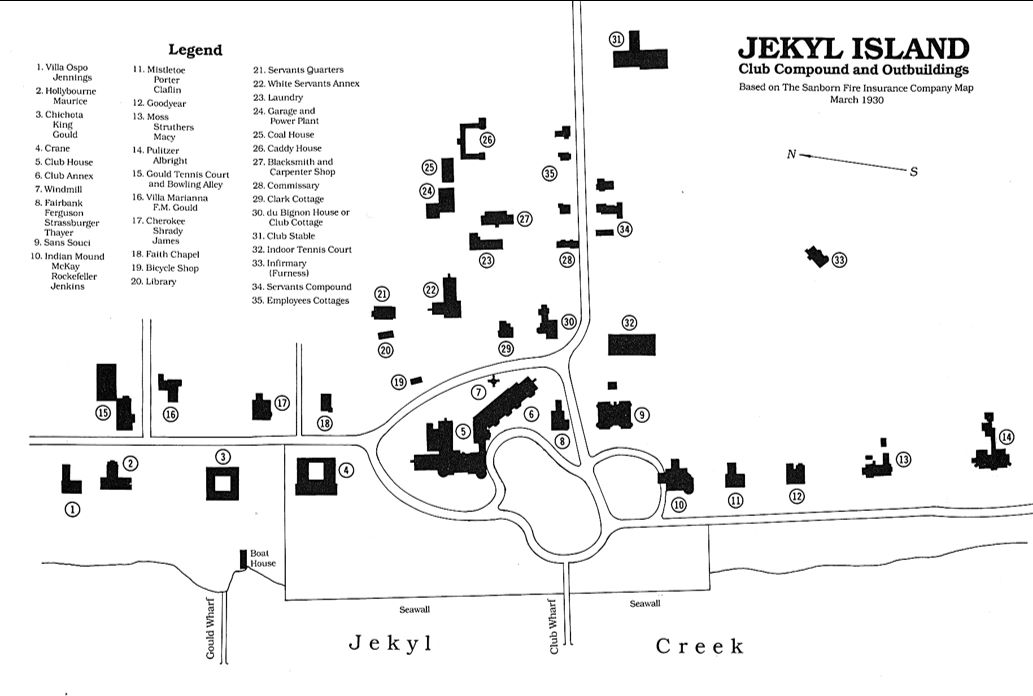
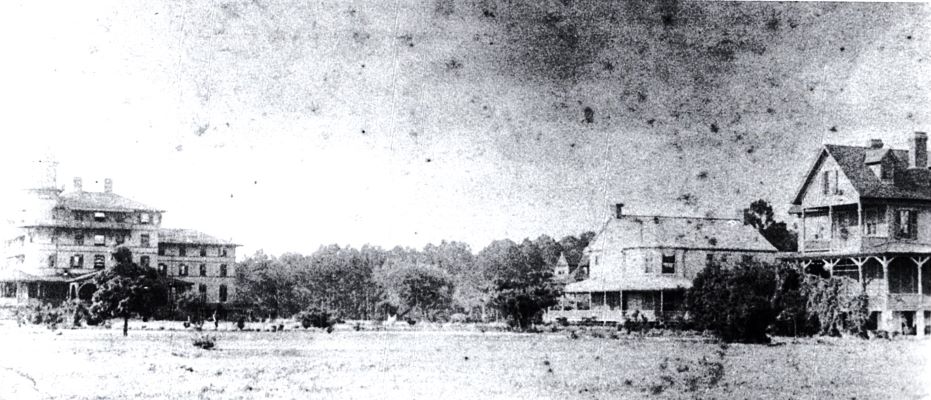

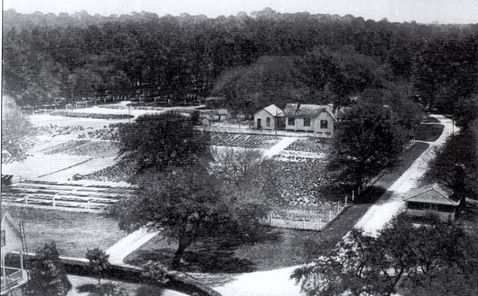
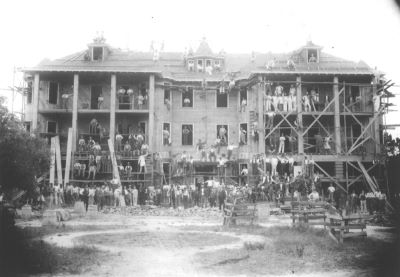
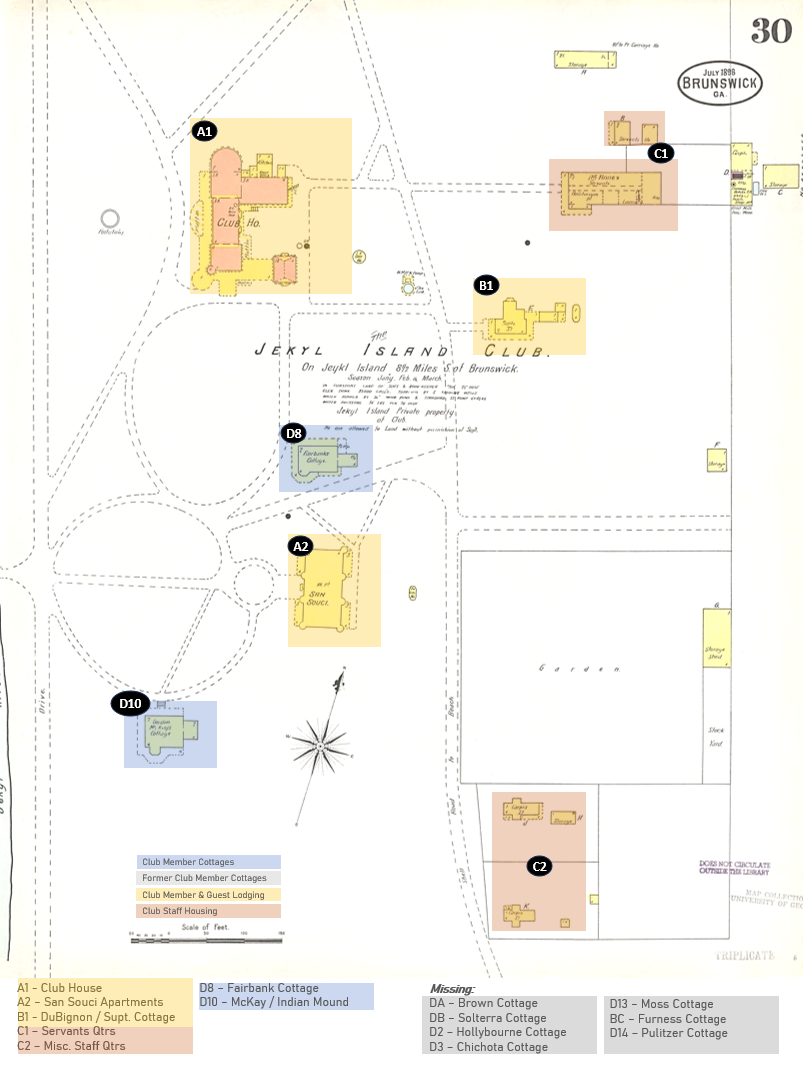
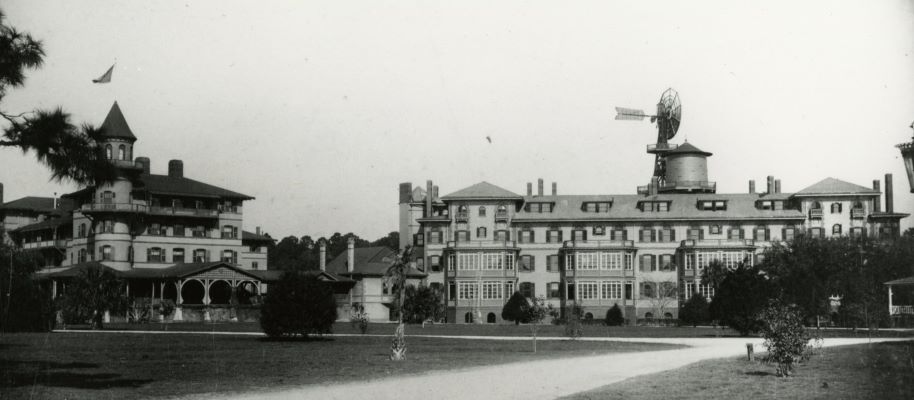

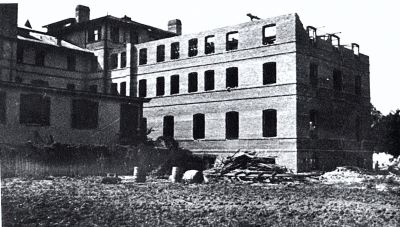
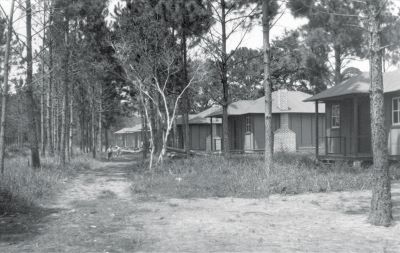
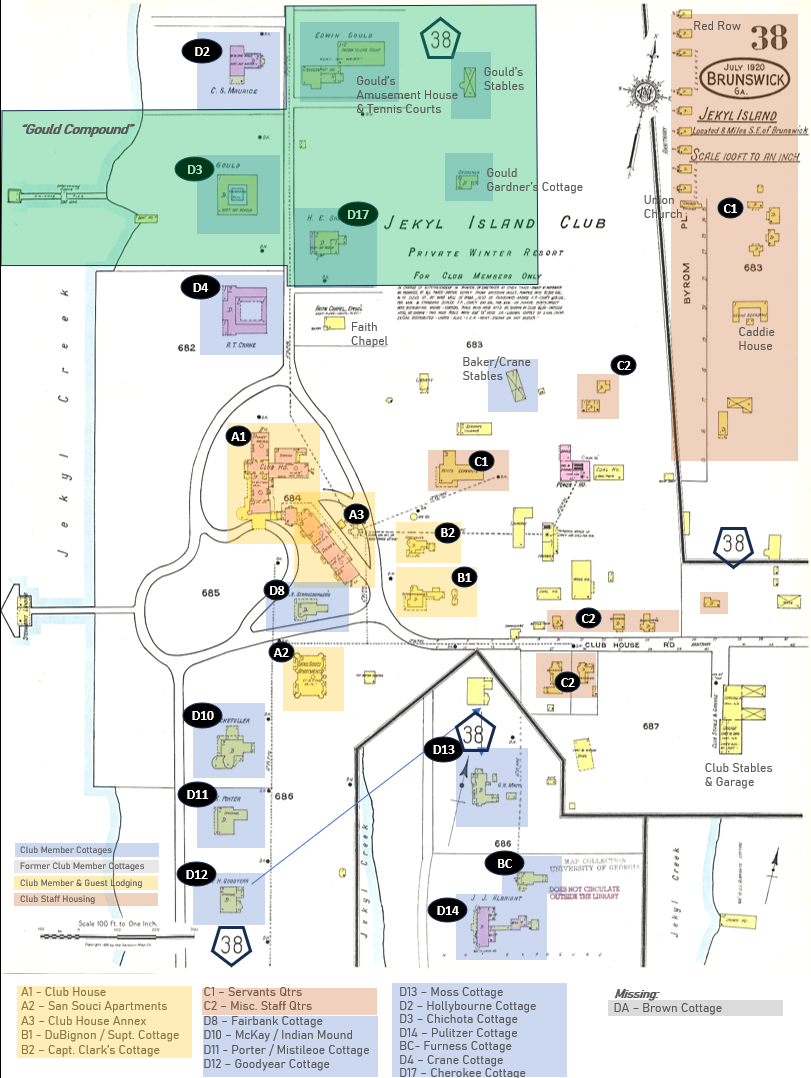
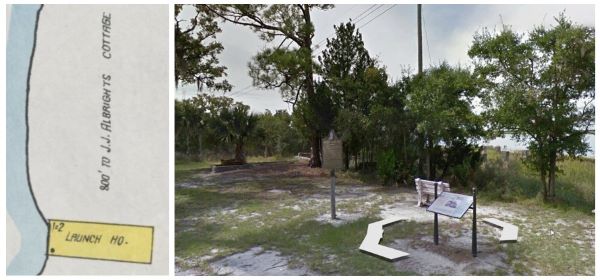

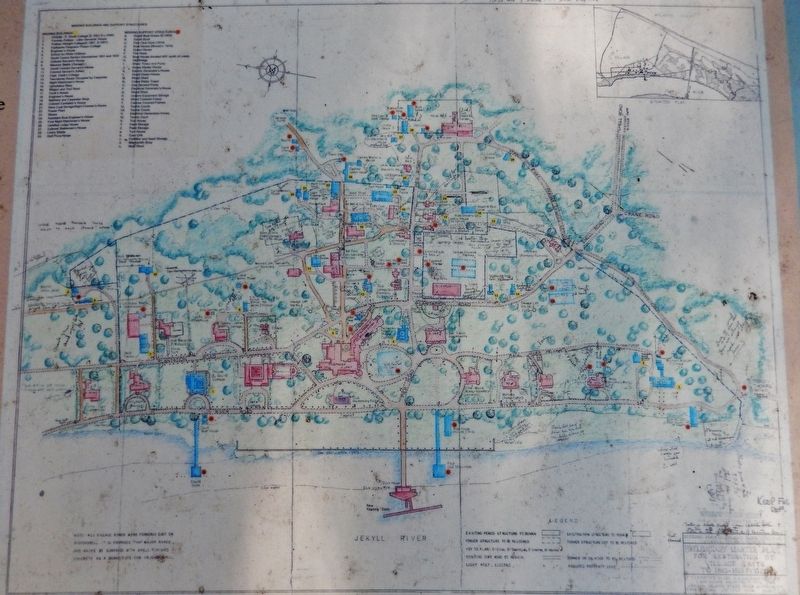


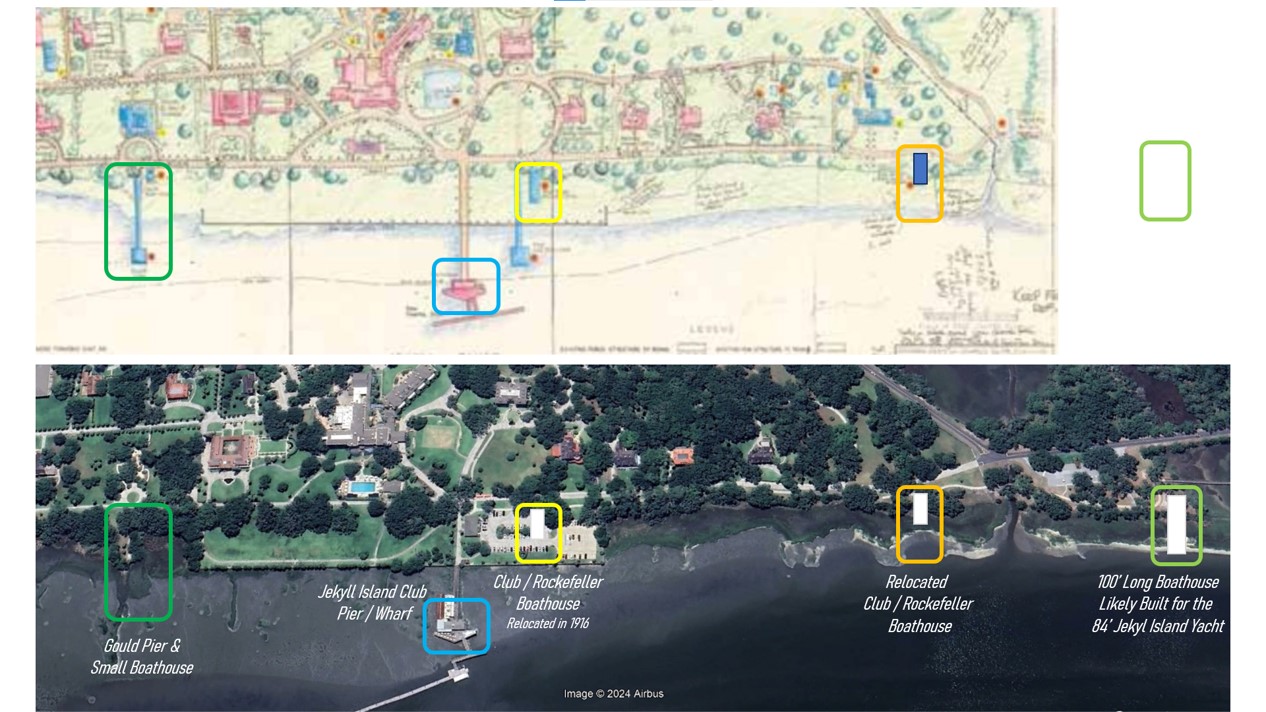

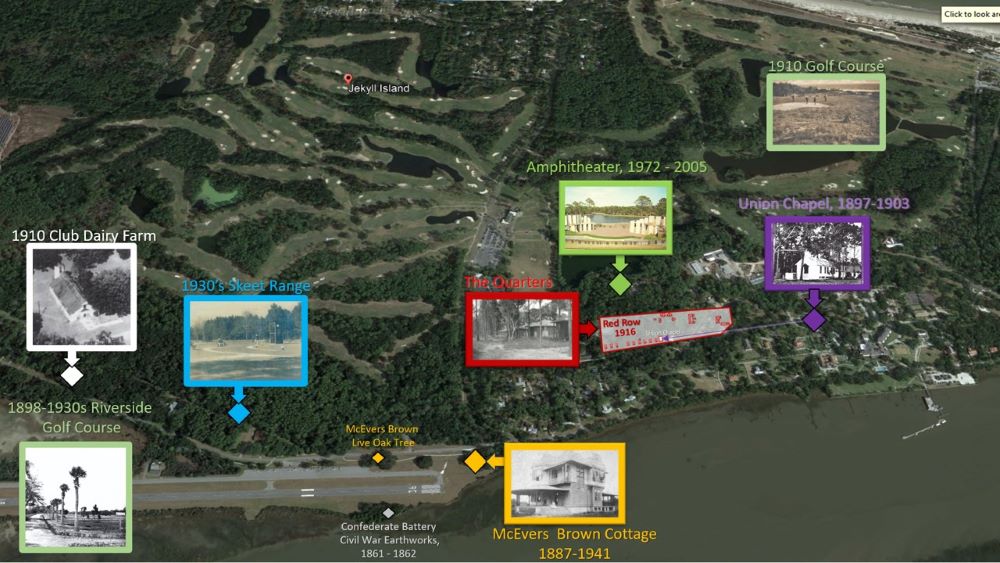
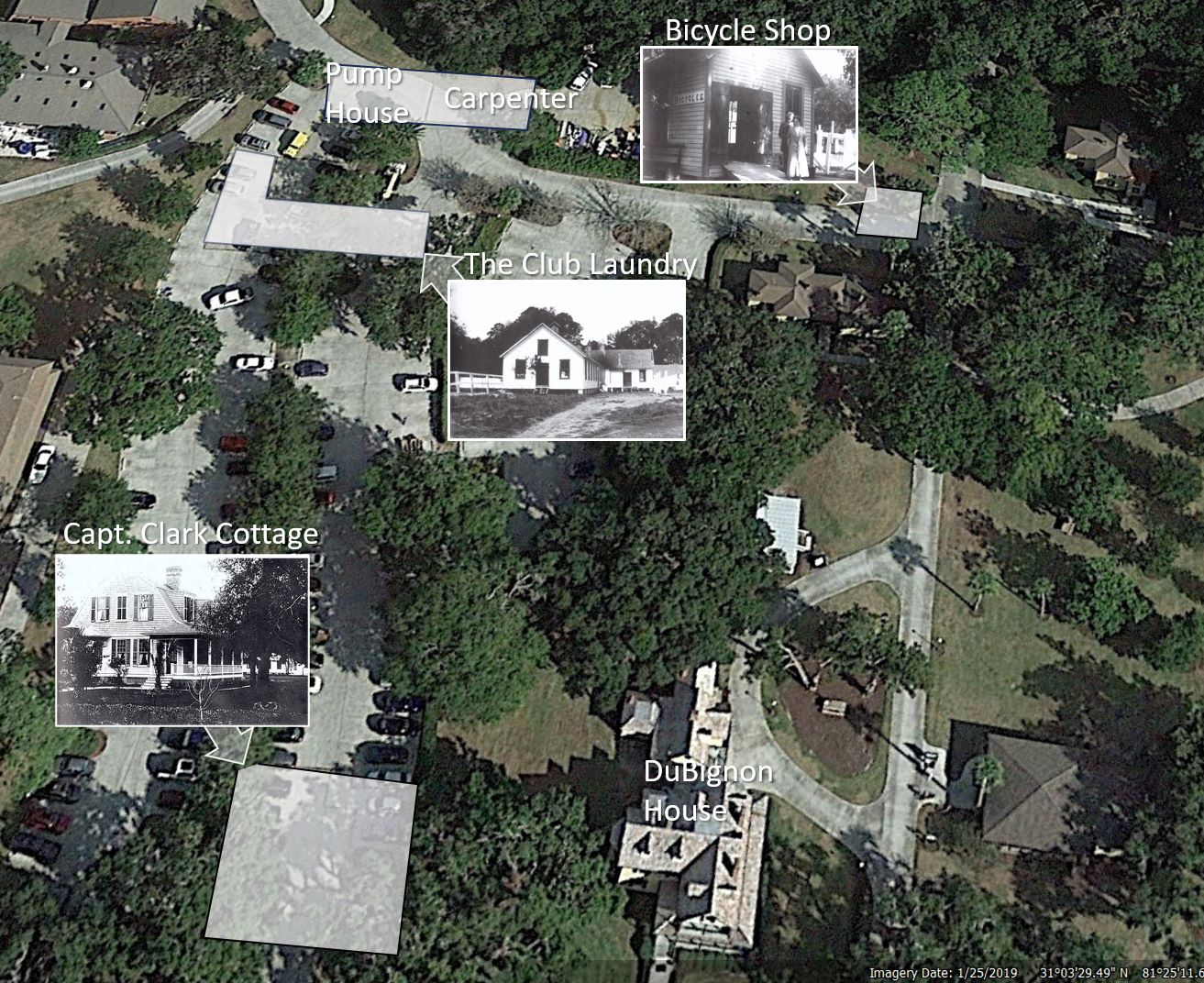

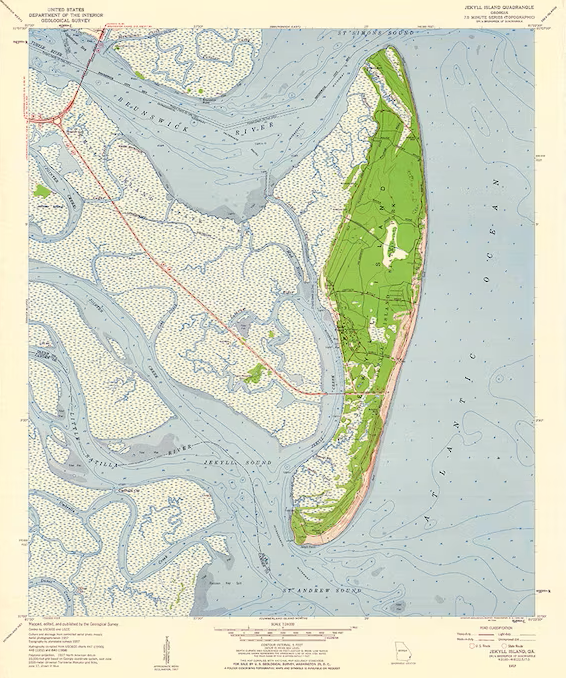
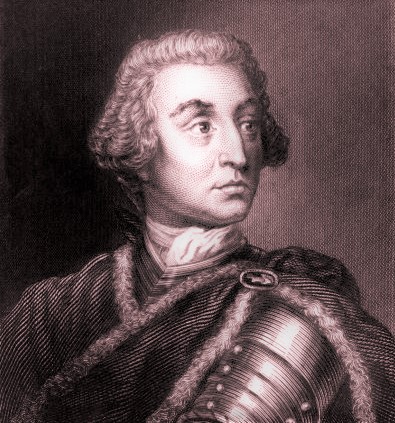
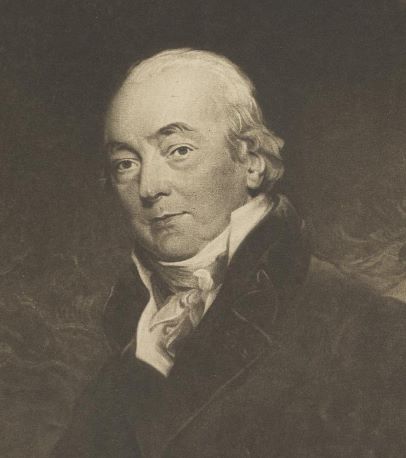
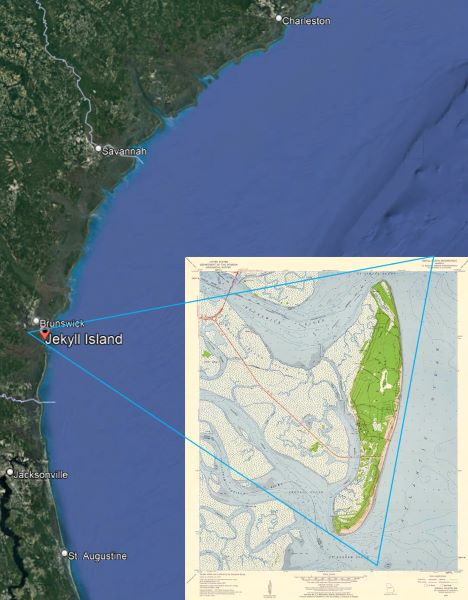


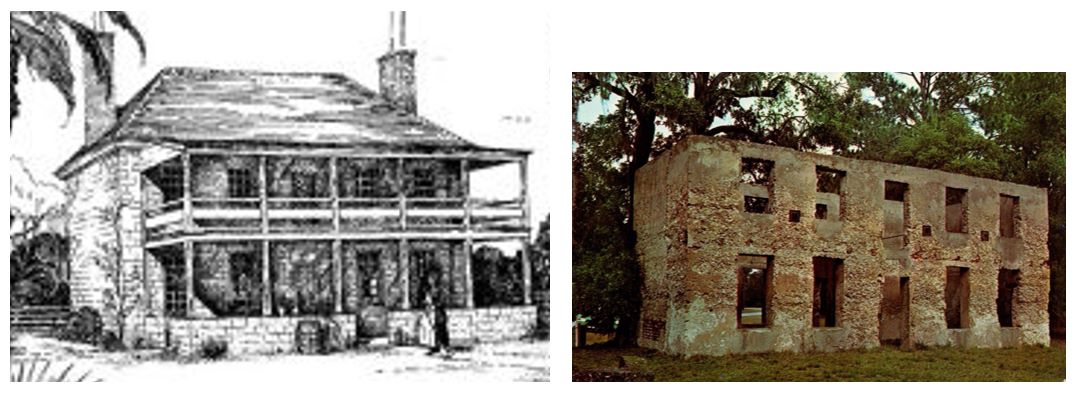

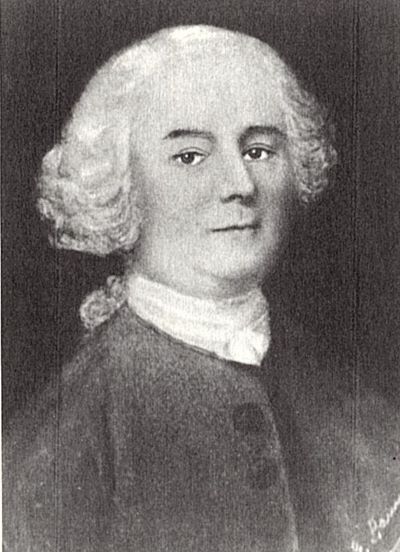
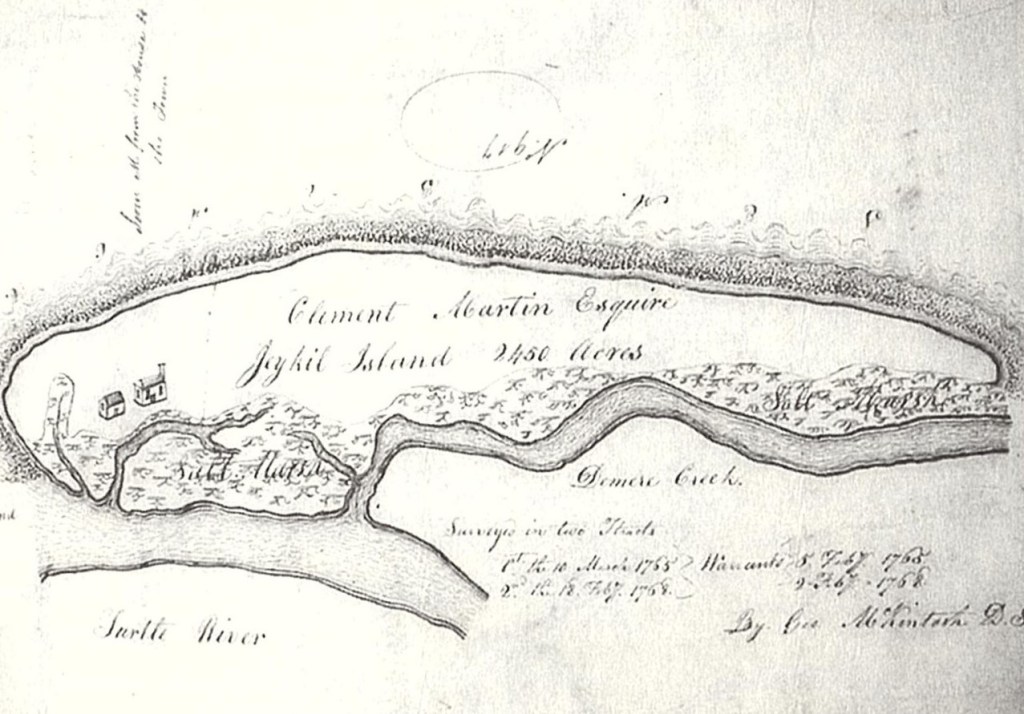
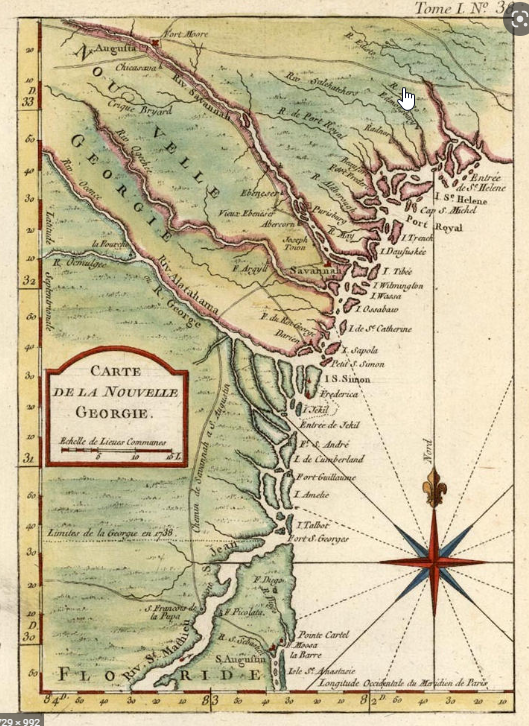
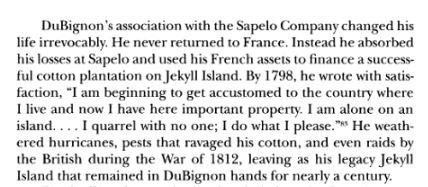
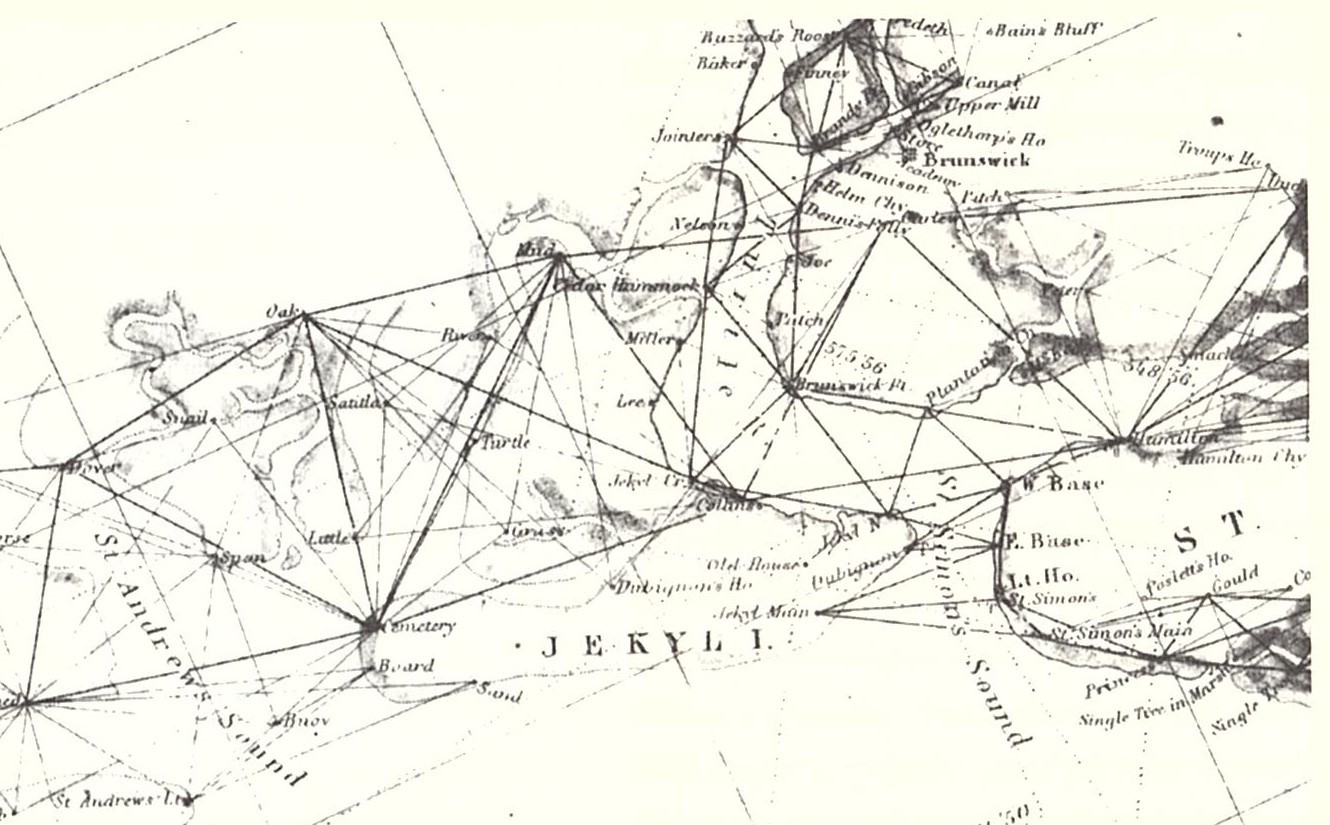

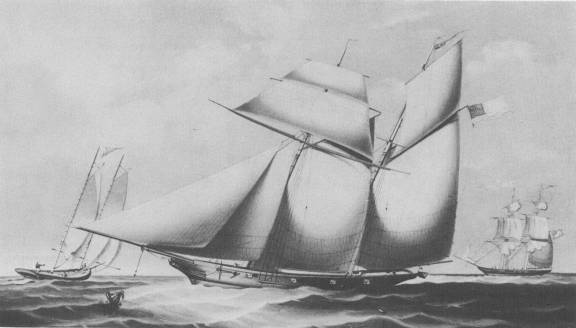

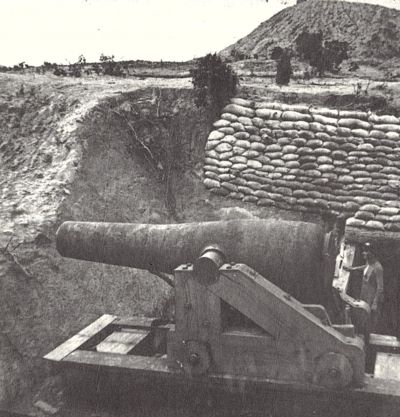


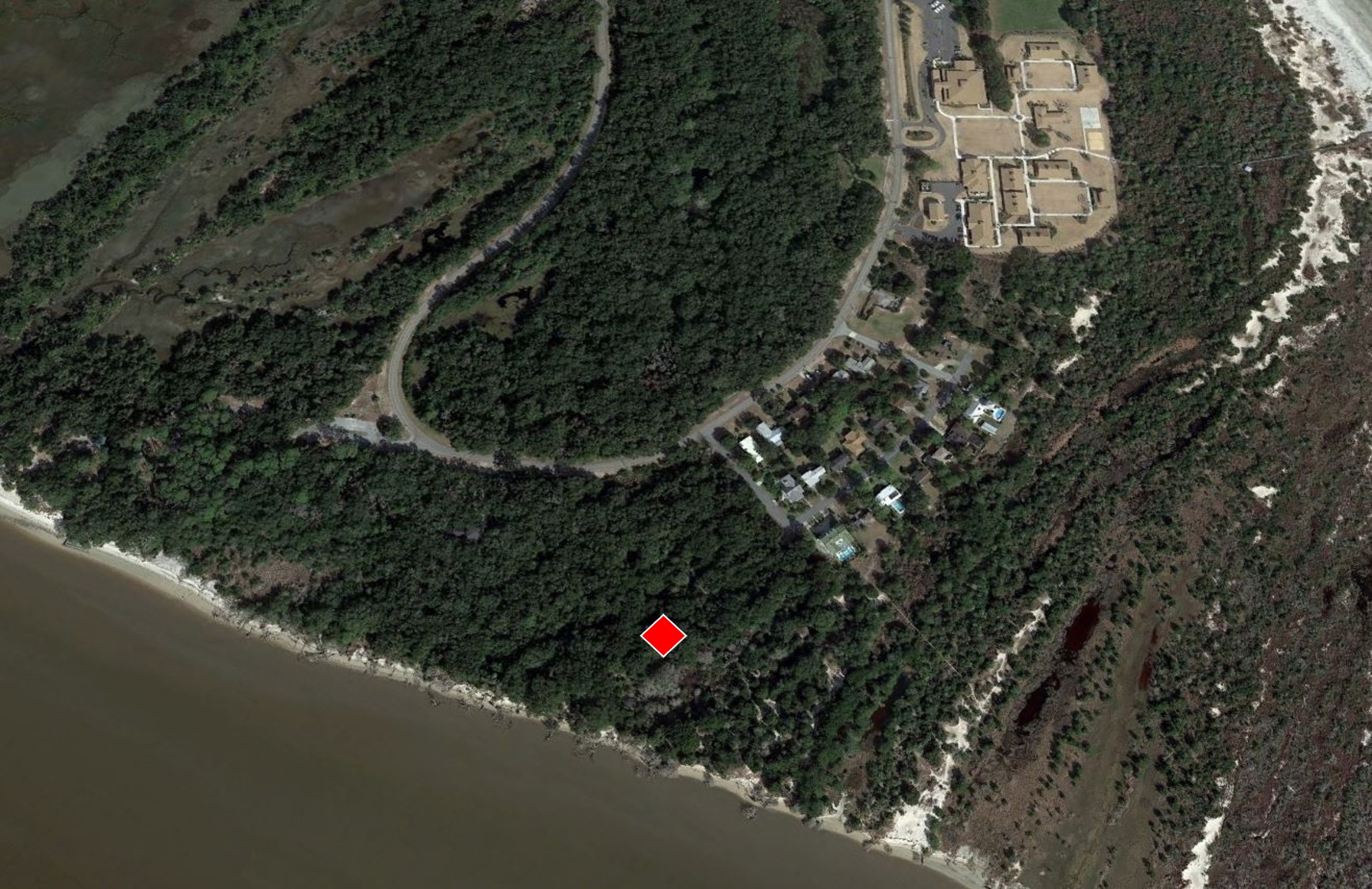
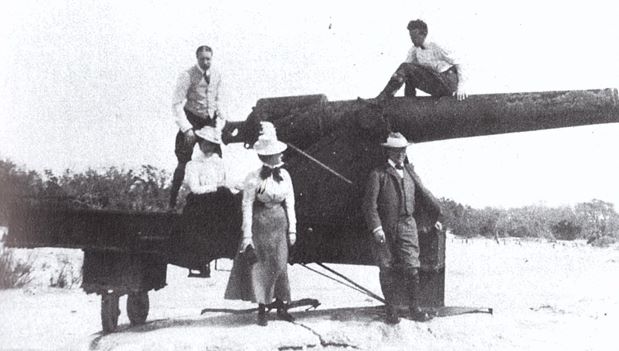
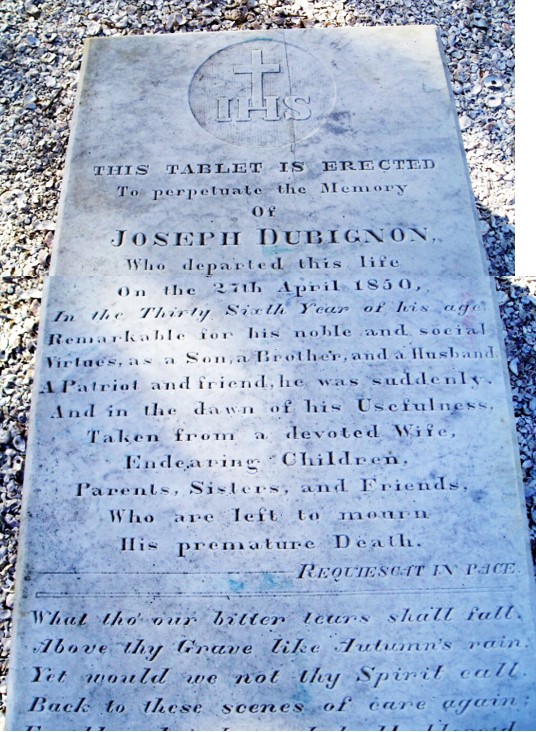
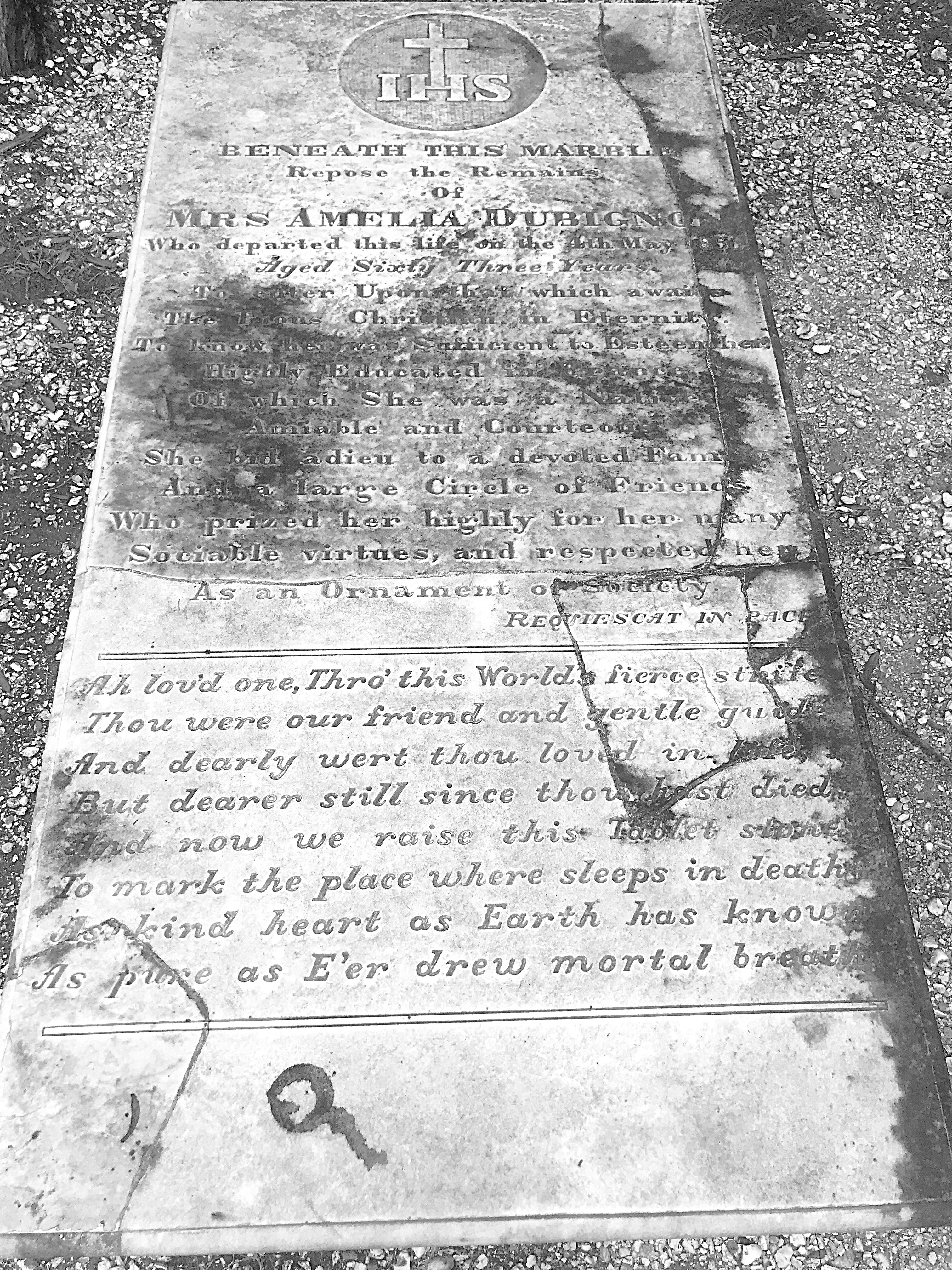
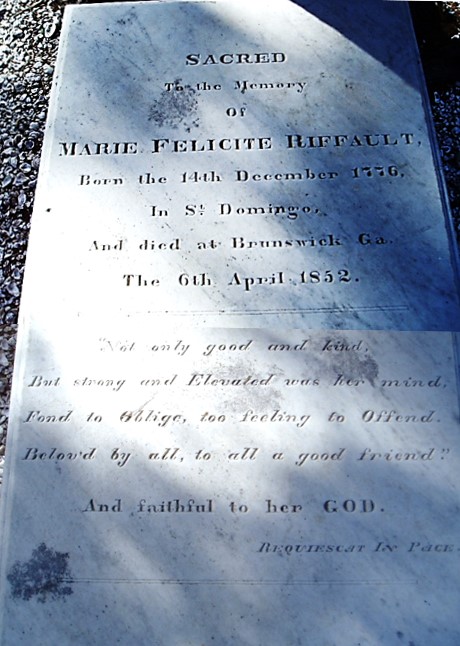
 Our Travels & Jekyll Island History