An Anthology: Segment 1 of 3, 7 November 202315,276 Word Count, 51 Min Read Time, 35 Images
Note that I am continually updating this entry with new information and corrections as I discover them during my on-going research into Jekyll Island’s History.
Note that, this is not an original work. Instead, it is my attempt and building a consolidated, chronological narrative of several excellent books and on-line resources that tell a very detailed history about Jekyll Island History that I found I needed to break down into smaller compilations, in much the same was as the authors of some of the books that I reference below. This became the first which I truncated as the Pre-Colonial and Pre-Club Era history and which I found as interesting as the more celebrated Club Era.
The most valuable of these books are the ones by June Hall McCash with various different co-authors including her late husband William Barton McCash and Brenden Martin; they are:
For anyone looking to gain a full appreciation for the subject, I strongly encourage you to find and read these works and see the images they include. They are compelling to read and filled with far more details and facts that what I’d characterize as a high-level overview of the Club Era. It was originally my intention to provide a more comprehensive look than what I have thus far composed in my spare time that quickly turned into an Alice-in-Wonderland like journey down multiple Rabbit Holes.
Reader Notes: In order to help readers gain some additional context about the Club Era,I’ve added notations on cited dollar values from ‘back-in-the-day’ of what their current value is as of November 2023 when adjusted for inflation. I’ve also used, in most cases, the post 1929 spelling of Jekyll Island with both “L’s” after it was legally changed by the state of Georgia to correct the 195-year-old error. Oh, and yes… you’ll likely come across typo’s and grammatical errors; my apologies. I’m my own proofreader and editor, which is not as effective as having fresh-eyes to review a work.
Viewing Suggestions & Recommendations
Scaling: Given the WordPress typefaces, type size and formatting — never mind the length and all of the images — my compilations are best viewed on a larger desktop computer flat screen monitor, with perhaps a Zoom Setting of 110% or 125%, as it will make it much easier to read, especially for the current year values in superscript that follow then-year dollar amounts.
Hyperlinks:You’ll find hyperlinked text in the various tables of contents for the main headings and sidebars that can be used to ‘jump to them’ vs. trying to scroll to them. You’ll also note the major section headings in each table of contents that appear in blue text are also hyperlinked. And, throughout the ‘document’ you’ll find hyperlink that can be used to jump-back to the tables of contents and indexes to speed-up navigating forward and backward in the document.
Like all hyperlinks, you just merely need to move your cursor and ‘hover’ over the blue colored and sometimes Bold text and if the cursor changes to a hand with the index finger extended, you can click on it you will be taken to that section of the document.
Links to Other Internet Sites: You will also sometimes findarticle names or other outside sources in Blue Text or sometimes Bold Blue Text when also associated with an image that I have mentioned inside the body of a paragraph or in “Notes” that indicates they are links to that article or source.
Once again, like other hyperlinked text, you just merely need to move your cursor and ‘hover’ over the blue colored text and if the cursor changes to a hand with the index finger extended, you can click on it you will be taken to a new window with that source.
Images: In many cases, unless it’s obvious from the accompanying text what an image is related to, I have included an image I will have used bold text in the body of the document next to the image that helps explain it. And, to make the images easier to see, I’ve done my best to ensure a larger and scalable image of every embedded image in my compilations can be opened with a click in a new window to provide far-greater detail.
As it is for hyperlinked text, you just merely need to move your cursor and ‘hover’ over the image and if the cursor changes to a hand with the index finger extended, you can click on it and the image will open in a new window.
Oglethorpe, the Founding of Georgia and Naming of Jekyll Island
Jekyll Island is located in Glynn County, just southeast of the city of Brunswick, south of St. Simons Island, and north of Cumberland Island. The 5,700-acre barrier island is 1.5 miles wide by 7 miles long and fronted by Jekyll Creek and salt marsh on the western side and defined by its beach and the Atlantic Ocean on the eastern side.
James E. Oglethorpe, was the 10th and last child of the well-connected, wealthy Eleanor and Theophilus Oglethorpe, born on 22 December 1696. At the age of 26 in 1722, he took ownership his family’s country estate at Godalming in Surrey England and successfully ran for the House of Commons in Parliament, winning the Haslemere seat held previously by his father and two older brothers and held for 32-years, noting the district had few voters, mostly who were tenants on land owned by the Oglethorpe family.
He moved in and out of different universities and military roles, holding mostly honorary degrees and ranks. It was as a member of Parliament where he earned a reputation as a reformer that lead to his role acting in the name of Great Britain’s King George II as the foremost member of the Georgia Trust that was granted a Corporate Charter on 21 April 1732 by King George II, for whom whom the colony and state was named. The charter was finalized by the King’s privy council on 9 June 1732, making Georgia the 13th and last of the original thirteen British colonies in North America.
Oglethorpe envisioned a colony that would serve as a haven for English subjects who had been imprisoned for debt and “the worthy poor”.
Oglethorpe imagined a province populated by “sturdy farmers” who could guard the border; because of this, the colony’s charter and his personal beliefs Georgia originally prohibited slavery.
He thought a system of smallholdings more appropriate than the large plantations common in the colonies just to the north resulting in land grants that would not be as large as most colonists would have preferred.
Oglethorpe’s personal convictions also caused him to impose very strict laws that many colonists disagreed with, such as the banning of alcoholic beverages.
Another reason for the founding of the colony was to serve as a buffer state and a “garrison province” which would defend the southern British colonies from Spanish Florida.
Oglethorpe — who did not originally plan to sail to North America and did so only after his mother died on 19 June 1732, preceded by his father Theophilus in 1702— joined the 114 would-be settlers who sailed from England in mid-November 1732 aboard the frigate ‘Anne’ making the two-month long trans-Atlantic journey and landing first at the Charleston settlement in South Carolina on 22 January 1733 to take on provisions. It wasn’t until 12 February 1733 when Oglethorpe lead the settlers on the final and short, 75-mile sailing landing at what became the settlement of Savannah, officially founding the Georgia Colony and assumed his duties as its de facto colonial governor.
He renamed ‘Isla de Ballenas’ (The Island of Whales) in the Province of Georgia in honor of his long-time friend and judge, Sir Joseph Jekyll on 28 January 1734, who was instrumental in many matters, the support he sponsored via legislation as well as his personal financial donations to establish the Georgia colony effort led by Oglethorpe. Moreover, he and Oglethorpe were ‘kindred spirits’ in terms of protecting the new colony from Spanish incursion, a prohibition on slavery, freedom of religion, and was infamously known for authoring England’s ‘Gin Act of 1736.’
For many years, including the “Club Era”, the island was spelled as “Jekyl” which likely stemmed from written decrees and documents where Sir Jekyll’s name was spelled phonetically as Sir. Jseph Jekyl and adopted as such in other written instruments: a common practice in colonial North America.
Governor Oglethorpe’s dream that the colony of Georgia would become an ideal agrarian society began to fade as the Spanish military presence in St. Augustine and Spain’s claims to a larger Florida expanded, the threat of invasion heightened causing Oglethorpe to focus his efforts on the defense of Georgia in it’s role as the buffer state for the Carolina colonies.
During these early days of the colony’s formation, given that financial support from the rest of the Georgia Trustees and British Parliament had never been sufficient, Oglethorpe mortgaged his substantial, inherited landholdings in England to finance the colony’s needs. Although he hoped that Parliament would repay his rising debts, he fully realized he could lose everything but so-believed in the cause for Georgia, he was not going to give up so long as he had resources that could be leveraged.
Oglethorpe returned to London on several occasions to lobby the Trustees and Parliament for funding to build forts in Georgia.
During a visit in 1737 Oglethorpe convinced King George II to appoint him as a colonel in the army and give him a regiment of British soldiers to take back to Georgia: at that time, Oglethorpe was still a civilian, with only limited military experience.
His request was granted with the rank of colonel in the British army and a regiment.
Oglethorpe also was given the title of “General and Commander in Chief of all and singular his Majesty’s provinces of Carolina and Georgia.” The latter led to confusion as to whether Oglethorpe was a colonel or a general.
During the active, armed conflicts with Spain, Oglethorpe did, in fact, hold a brevet field commission as a general officer in order to command all allied forces: Carolina Rangers, Indian allies, etc.
It was not until September 1743 when Oglethorpe attained the official rank of brigadier general in the British army, having in 1742 stepped down as the colonial governor of Georgia and, on 28 September 1743, returned to England where he was subsequently married for the first time at the age of 48 on 15 September 1744. It was well after now Brig. Gen. Oglethorpe had left Georgia when colonial Georgia’s ban on slavery was lifted in 1751, a year before the colony became a royal colony in 1752.
The Georgia legislature in 1929 passed legislation to correct the spelling to “Jekyll”, as used by the former sponsor of the colony. The timing was unfortunate, in that it coincided with the Great Depression of 1929 that triggered many significant changes to the Jekyll Island Club founded in 1886 and its well-to-do members who belonged to the Club until the Island was essentially occupied by the U.S. Military during World War II, and then acquired by the state of Georgia in 1947 via uncontested condemnation for $675,000, inclusive of all improvements since 1886. The combination of the original members “aging-out,” impacts from the stock market crash of 1929 and subsequent depression impacted many of the members of the exclusive, remote island Club, causing membership to decline through the 1930s, exacerbated by lifestyle and Club management changes during World War II. A common refrain from the era was, “They added the second ‘L’ and it all went to hell.”
The Pre-Club History of Jekyll Island, 1500 B.C. – 1886 A.D.
Native Americans, 2500 B.C. – 1492 A.D.
The first inhabitants of the island were small groups of Native American hunter-gatherers, sometime around 2500 B.C., during the Archaic Period. These groups were most likely composed of small family units that probably settled on Jekyll on a seasonal basis. They produced fiber-tempered pottery vessels and lived on the abundant natural resources of the area. Archaeological evidence suggests that Jekyll seems not to have supported a long-term permanent settlement by any aboriginal peoples, even though by 1000 B.C. Georgia’s coastal natives had begun to collect in settlements with less seasonal migration and larger population numbers. As Native American culture advanced, little changed on Jekyll Island. By 1540 A.D. the Georgia coast had become populated by the Guale Native Americans. The Guale extended from St. Catherines Island south to Jekyll Island, where they gave way to the Timucuan groups to the south.
The first European occupation of Jekyll Island is thought to have taken place during the late sixteenth century by which time Guale Native Americans had inhabited several of the barrier islands. During that period a chain of Spanish missions was established along the Georgia coast. The Spanish name for Jekyll was Isla de Ballenas, “Island of Whales,” because of the abundance of right whales off the island in the Gray’s Reef area. Although records dating back to 1655 suggest a Franciscan mission known as ‘San Buenventura de Guadalquini’ was established in the Brunswick area and likely on Jekyll Island, there is no physical evidence of a mission on Jekyll Island, whereas archaeological studies have shown a definable occupation by the aforementioned Guale Native Americans during the period. There is strong archival evidence that the Spanish at least explored and had contact with native peoples on Jekyll during this period.
British Colonial Georgia & Major William Horton, 1733 – 1748
In 1733 James Oglethorpe and 114 settlers aboard the frigate Anne landed and established the British colony of Georgia on Yamacraw Bluff, in present-day Savannah. The colony grew quickly, and a conflict developed with the Spanish colony of Florida to the south. Owing to its role as a barrier state — one of the reasons the charter for colonial Georgia was granted — Oglethorpe augmented the civilian farming colonists by recruiting men from England to serve as dedicated members of a militia in Georgia. William Horton was one of the men recruited and arrived in Savannah during February 1736.
Upon his arrival, Oglethorpe dispatched Horton and thirty other militia recruits to St. Simons Island to establish a town and fort at Frederica. Horton was a key player in these events, attaining the rank of major and placed in command of the militia garrisoned in the area. While establishing Fort Frederica, given his rank and role, Horton was granted 500 acres of land on the neighboring, recently re-named Jekyll island by the Trustees of the colony… for consideration of one pound, one shilling and a promise to improve the land with his ten indentured servants.
I’ve included the following to provide readers with an overview of the land grant system used in colonial Georgia under which Major Horton and other’s who came to be granted land on Jekyll Island were required invest assets and effort to develop the land. In other words, it was a gift of land, so much as an obligation to further the expansion of the colony through productive use of land for personal needs as well as commercial needs, such as the export of agriculture, both planted crops and livestock. This will become very important to understand when the Clement Martin family enters the picture in 1754.
Sidebar 1: THE ROYAL GOVERNMENT IN GEORGIA, 1752-1776 V. The Land System. By Percy Scott Flippin, Ph. D., Mercer University.
From the very beginning of the colony the acquisition of land was of vital concern to the colonists. Although the population was not numerous and land was plentiful there were specific and detailed regulations as to securing grants.
In the early colonies, a governor or proprietor could sell land or give it away to soldiers and settlers. Those who immigrated or brought a certain number of immigrants to a colony sometimes received “headright” or similar grants of land as compensation for settling the colony. The headright system referred to a grant of land, usually 50 acres, given to settlers in the 13 colonies. The system was used mainly in Virginia, Georgia, North Carolina, South Carolina, and Maryland. It proved to be quite effective by increasing the population in the British colonies.
While Georgia was a Royal Colony, land grants were issued by the Royal Governor in the name of the King of Great Britain. A colonist submitted a petition to the governor with a general description of the land he wanted. The governor issued a warrant to the colonist. The warrant directed the surveyor general to have the tract surveyed. After the survey was completed, the governor issued a grant and plat. One copy of these documents went to the grantee, another copy was kept by the surveyor general and copied into a volume as the official record copy.
The maximum grant was at first five hundred acres to a settler who had six able-bodied men servants. The character of the person desiring land and his financial ability to improve it were usually the determining factors. There was, as might be imagined, evasion of the requirements. “One method of evasion was to grant to a man the maximum acreage allowed and then to lease him an additional amount on such terms as would practically make the lease a free grant. Another evasion was to grant to a man’s brother or nephew or friend a tract of land that by private arrangement between them could be held for the benefit of one to whom the trustees could not legally grant any more land. These evasions were, however, not common enough to result in any large plantations in the colony.”
In a letter of a little later date (February 28, 1755) Reynolds stated to the Board of Trade in regard to land:
“All such allotments as do contain more than five hundred acres to any person, upon which I must beg leave to observe that the late Board of President and Assistants have informed me that they never had any directions about the terms and conditions of grants or allotments since the resignation of the charter, and the late Trustees by an instrument I have seen bearing date, July 13, 1750, did then remit all sorts of terms and conditions, except the payment of the quit-rents, (none of which has ever been paid) , and with regard to no more than five hundred acres being granted or allotted to any one person, they have since the Trustees resignation, evaded it, by frequently making allotments of large quantities of land to one person, in the names of all his children, for five hundred acres to each, many of them infants in the cradle, or to their relations, absentees, or fictitious names. And by that means all the best lands in the province have been disposed of.”
The appeal to the king and the letters from Reynolds had some effect, for by August 12, 1755, the following additional instruction was sent to Reynolds. Instead of the annual clearing and cultivating of five acres in every one hundred acres, it was provided,
…”that for every fifty acres of land accounted plantable, the patentee shall be obliged, within three years after date of patent, to clear and work three acres, at the least in that part of his tract which he shall judge most convenient and advantageous, or else to clear and drain three acres of swamp or sunken grounds or drain three acres of marsh, if any such be within his grant.
That for every fifty acres of barren land he shall put and keep on his land, within three years, after date of grant, three neat cattle or six sheep or goats, which number he shall be obliged to continue on his land, until three acres for every fifty be fully cleared and improved.
That if any person shall take up a tract of land wherein there shall be no part fit for present cultivation, without manuring and improving the same, every such grantee shall be obliged within three years from date of grant, to erect on some part of the land, one good dwelling house, to contain at least twenty feet in length and sixteen feet in breadth, and also put thereon, the like number of three neat cattle or six sheep or goats for every fifty acres.
That if any person shall take up any stony or rocky ground not fit for planting or pasture, if any such patentee shall, within three years after the passing of his grant, begin to employ thereon and so to continue to work for three years then next ensuing, digging any stone quarry or coal or other mine, one good and able hand for every hundred acres of such tract, it shall be accounted a sufficient cultivation and improvement.
That when any person who shall hereafter take up and patent any land shall have seated, planted, cultivated or improved the said land, or any part of it, according to the directions above mentioned, such patentee may make proof of such seating, planting, cultivation and improvement, in the General Court, or in the court of the county, district or precinct, where such land shall lie, and have such proof certified to the Register’s Office, and there entered with the record of said patent, a copy of which shall be admitted as good evidence on any trial to prove the seating and planting.
By 1737 Horton established a homestead1 on the northern end of Jekyll next to the Marshes of Glynn and began to farm the land, raise cattle as well as further extending the colonial Georgia occupation of land to the south. In 1740, he returned to England to see his family after four-long years in Georgia and to attend to other duties associated with furthering the development of the colony, raising recruits to return with him and also arranged for the families of his new troops to travel to and settle in Georgia, including his wife Rebecca and their two sons, William and Thomas when he returned in June 1942, as a most precipitous time.
Note1 : There is reference to ‘fortifications’ on the north end of Jekyll Island and an ‘outpost’ commanded by William Horton’ interrelated with his homestead mentioned in a 2018 Coastal Georgia DNR study, but only Horton’s 2nd homestead structure and a few other ruins from that era remain.
After an unsuccessful siege of St. Augustine by colonial British militia lead by Oglethorpe in 1740 during the War of Jenkins’ Ear, Spanish forces launched a retaliatory invasion of Jekyll and St. Simons Islands, targeting Fort Frederica in midsummer 1742. Over a two-week period, Oglethorpe and his ‘allied forces’ at St. Simons Island engaged the invading Spanish forces in a skirmish at Gulley Hole Creek and on July 7, 1742 ambushed the Spanish in the Battle of Bloody Marsh in a drizzling rain. As a result, the Spanish retreated, never again to present a threat to British colonization of the Southeast. It was during their retreat from this incursion by the Spanish that Horton’s original stick-built house on Jekyll Island was partially destroyed, along with his plantation, stores and livestock.
Horton, his family and several indentured servants — remembering colonial Georgia still forbid ownership of enslaved people — re-established the plantation and re-built the structural walls of the home out of tabby in 1743 that still stands today. After rebuilding the house the Horton’s were able to reestablish their plantation, grain stores, livestock and provided for many across the bay in Brunswick at Fort Frederica while also entertaining at their home with Major Horten actively engaged in colonial matters by 1745. While attending to his military duties that took him to Savannah during King George’s War from 1744-1748 he was still able to find time for family and to even pursue brewing beer for the troops at Frederica in a large copper kettle he acquired in 1747 and installed in a wood outbuilding nearly his grain storage barn. It was also in 1747 that Major Horton fell ill during an epidemic, but recovered only to once again fall ill in 1748 while in Savannah where he died while still in his 40’s. His 500-acre grant was passed to his younger and more ambitious son, Thomas — it’s unknown if his older son William had left the colony before reaching adulthood or quite possibly died — who had no interest in being a planter thus the island was left without a caretaker for the immediate future. HIs wife Rebecca was granted a pension, never re-married and died in 1800 per colonial pension records. The remains of the Horton home are among the oldest structures in Georgia and listed on the National Register of Historic Places.
The importance of Major Horton’s role in support of Oglethorpe as both a military and colonial leader, while at the same time establishing a viable plantation on the Island in spite the aforementioned ransacking by the Spanish as well as the challenges posed by the natural environment of the island while separated from his wife and family for four years before they joined him in colonial Georgia However, the death of William Horton and the indifference of his son Thomas towards Jekyll Island left the island with an uncertain future.
For the rest of the eighteenth century, Jekyll Island and its subsequent land holders and owners would be caught up in family disputes and the political upheavals of a colony in turmoil. Their stories move along the timeline to the end of the trustees management of the Georgia Colony, the King’s establishment of the royal colony, the next surge of activity in the plantation era at Jekyll Island, as well as its end during the Civil War before the Jekyll Island Club Era began in the 1880’s.
Subsequent Ownership of Jekyll Island, 1749 – 1800
Between Horton’s death and 1791, several different personalities were granted land by the King on Jekyll Island, including Capt. Raymond Demere, Clement Martin and Jane & Richard Leake.
Lt. Paul &Capt. Raymond Demere, 1749 – 1767
Lt. Paul Demere and his brother Capt. Raymond Demere were officers serving under Oglethorpe in Georgia from May 1738 through Oglethorpe’s return to England in 1743, and then under the subsequent colonial governors in South Carolina. It was first Lt. Demere who commanded a small garrison of troops on Jekyll Island established at the Horton house in June 1749 thru September 1750, at which point his brother, Capt. Demure, took charge of the post. It’s noteworthy that on 1 January 1751 the peculiar institution of slavery became legal in Georgia at the behest of the planters.
During his years of service, Capt. Demure was granted thousands of acres of land by the trustees and King from Charleston to the border with Florida, including land on St. Simons Island and 600 acres on which to graze cattle on Jekyll Island, but not Major Horton’s 500 acres on Jekyll Island as they had been passed to his son Thomas. Thomas Horton had never set foot on Jekyll since inheriting the grant, so Capt. Demure was permitted to make sure of the land, but never held title to it. In 1754, at the age of 52, Demere oversaw the reconstruction of Fort Prince George at Keowee, South Carolina and construction of Fort Loudoun at what was then the western-most outpost of the British colonials that is now in Tennessee, settling in his property at St. Simons Island after retiring from the British Army in 1761, were he died at the age of 64 in 1766. His brother Paul had been killed in August 1760 fighting the Cherokee after taking over command of Fort Loudoun from Capt. Demure in 1757. Hence, the property on Jekyll was once again without a land-grant holder as his heirs had no interest in the island and his neighbor and member of Georgia’s Royal Council, Clement Martin Jr., had sufficient foresight and connections to apply for and be granted Capt. Demure’s 600 acres on Jekyll Island.
Clement Martin, Sr. was a retired British sea captain and merchant who took up residence on St. Christopher in the West Indies, also known as St. Kitts, in 1723. Upon arriving he married Jane Edwards and began a family, eventually with seven children. He likely owned a sugar plantation, given it was the most profitable crop grown on the island, given the sizeable number of enslaved people he brought to Georgia in 1767.
However, it was his eldest son, Clement Martin, Jr, aka. Clement Martin, Esqr., born in St. Kitts during the 1720’s who played a key role in the Jekyll Island history after becoming a prominent and wealthy land holder in Georgia after arriving from St. Kitts in 1754. Having served as an assistant register of deeds in St. Kitts, Martin Jr. came to be recommended for, and appointed to serve on the Royal Council in Georgia in the Upper House of the Assembly at the Court of St. James on 17 Dec 1754 where he was known as Clement Martin, Esqr. Due to politics and personality issues with the then-royal governor John Reynolds, he was wrongly removed from his seat in September 1755. Martin Jr. was eventually re-instated and re-seated in 1760. This came after Governor Reynolds had been removed in and replaced by Lt. Governor Henry Ellis on 16 February 1757 who, in turn, was replaced by the last and most popular royal governor of Georgia, James Wright in 1760 and after learning of the injustice of Martin Esqr’s removal by Governor Reynolds, appointed him to fill one of two vacancies on the Royal Council when he became governor.
Petitions for Land-Grants:
Shortly after arriving in Georgia, in August 1754, Martin Jr. began to petition the Royal Council in Georgia for the usual 500-acre land-grant near Newport River under the name Clement Martin.
His younger brother William Martin may have arrived with Martin Jr. in 1754, as he also petitioned for his first 500-acre land-grant adjoining Martin Jr’s at Newport River.
Curiously, on 5 March 1756, a Clement Martin, Sr. applied for and received a 500-acre land grant close to the Newport River land granted to Clement Martin, Jr.
However, as already noted, Martin Sr. didn’t arrive in Georgia until 1767, by which time Clement Martin, Jr. / Esqr. had made multiple land-grant requests, so it is possible he submitted one on behalf of his father.
Those additional land grants included several made on 5 March 1956 that included a lot in /Savannah’s Heathcote Ward, one at Hardwicke No. 63 in St. John’s Parish, next door to Capt. Demere, and 500 acres on the north side of Lake Ogeechee,
However, the latter does not explain why on 6 August 1765 Martin Jr. filed a petition for a 2,000-acre land-grant at an area known as Butter Milk Bluff on the River St. Mary for his ‘forty Persons in Family.’
Another one of Martin Jr.’s younger brothers, John Martin, came to Georgia most likely in 1755, petitioned for a 100-acre land grant on 4 July 1958 at a place called Midway, having attested that he had been in the colony for three-years by that time.
Following the passing of his neighbor Retired Capt. Demere in 1766, and a month after Capt. Demere’s will had been probated, Martin Jr. requested Demere’s 600-acres on Jekyll Island be passed to him using his council title of ‘Clement Martin, Esqr.’ The request was granted and the land passed to Martin Jr. instead of Demere’s heirs, noting General Surveyor who granted the request was a fellow council member of Martin Jr.
As noted earlier, Clement Martin Sr. left St. Kitts and came to Georgia on 3 July 1767 with his wife Jane and their three daughters Betsy, Ann and Jane to be closer to his sons. He left his land in St. Kitts in the hands of overseers as were many of the British land-holders at St. Kitts do to fears about a potential uprising by the enslaved people of color, severe weather and presence of pirates and privateers who made temporary port on the island, further raising the risk of violence on the island.
The reputation and name recognition of his son, Clement Martin Jr / Esqr was of a benefit to Clement Martin Sr when he arrived in Georgia and curiously filed a land-grant petition for the entirety of Jekyll Island for he and the 100 enslaved people he brought to Georgia from St. Kitts to occupy and cultivate. It was upon the arrival of Martin Sr that confusion begins to surface on matters where there are already land grants in the name of Clement Martin, Clement Martin Esqr. and Clement Martin Jr, never mind a growing rift between Martin Sr and Martin Jr.
It was on 5 April 1768 that the King granted Clement Martin Esqr his petition for the balance of land on colonial Georgia’s Jekyll Island — noting Clement Martin Jr had just one-month prior resigned the 600 acres as well as another 1,200 acres he had subsequently acquired in exchange for other lands in the Colony — and coming to some arrangement with Major Horton’s son, Thomas and heir to Horton’s grant of 500 acres, per a requirement to secure title to that portion of the Island by the King’s council.
Martin Sr, his wife and three daughters took up residence in the Horton house where his oversaw and raised livestock — much of it left on the island by Capt Demure’s heirs –– as well as what was likely some type of crop without great success on the 2,450-acre island. It’s noteworthy that the same struggle to cultivate crops on the island were encountered by Capt Demere before him with the benefit of enslaved labor, as well as Major Horton who struggled to manage the land prior to being allowed to own enslaved people, noting the King did not acquiese to settler’s demands to allow the ownership of enslaved people in Georgia until 1 January 1751.
During the subsequent seven years that Martin Sr. lived on Jekyll Island, his three daughters had been married — Betsy died within three-years of her 1768 marriage to John Simpson leaving a son, Clement Jacob Simpson — with Ann and then Jane being married in 1774. Jane’s husband was Richard Leake, an successful Irish settler and surgeon, who would come own Jekyll Island in 1784 after a tumultuous series of events in the Martin family that coincided with the American Revolution.
It was also during those seven years that family issues developed between Martin Sr. and Martin Jr., and that Martin Sr. struggled to make the island plantation productive, consuming much of his wealth and taking on significant debts. At the same time, tensions between the colony’s so-called ‘patriots,’ the King and loyalists were building as the demands, regulations and demands being placed on the North American colony were fanning the flames of rebellion that gave rise to the Revolutionary War in 1775. From your history books you may recall it was on 23 April 1775 when hostilities at Lexington and Concord, Massachusetts eventually causing King George III to declared all the Colonies to be in a state of rebellion on 23 August 1775.
While there are no causes of death listed, it was on 11 October 1775 when Martin Jr. who would have been in his mid-50’s died in the Yamacraw community of Savannah, and just over a month later when his father, Martin Sr. died in his 70’s at Sunbury Georgia that became a ghost-town after the Revolutionary War, despite having been the second largest seaport on the lower Atlantic Coast, as only the port of Savannah was larger. It is thought Martin Sr. had gone there to visit his son, John, who had settled there and recently become a military officer at the recently established Fort Morris by colonial patriots.
The death of the two family leaders left Jekyll island in limbo, as Martin Sr’s debts were nearly as great as the value of the island and his remaining son John — as by then William Martin had either died or also fallen-out of favor with his father as he was not named in Martin Sr’s will — had been deemed a traitor for siding with the British during the war. As such, all persons deemed traitors forfeited all lands owned and were barred from owning land in the Colonies.
Once again, in an effort to make a long story short, the Revolutionary War along with issues with both Martin Sr. and Martin Jr’s heirs did not get resolved until Martin Sr’s daughter, Jane and her huband John Leake who came to the fore who by this time was a Clerk of the Court in the House of Assembly, took over as the administrator of the estate. On 21 January 1784, Dr. Leake posted a notice soliciting for all demands against the estate be filed by 1 March 1784.
During the 1700’s, revolutionary eagerness was slow to take hold in colonial Georgia, given it had not been chartered as the last British Colony until 50-years after Pennsylvania (the 12th) and 70-years after South and North Carolina (the 10th and 11th), as well as the effective leadership of Royal Governor Sir James Wright. Under Wright, Georgia had prospered under royal rule, and many Georgians thought that they needed the protection of British troops against a possible Indian attack. Sir James Wright was the third and last British Royal Governor who successfully encouraged the colony’s growth by attracting new settlers, productive negotiating with the Native Americans and overseeing the expansion of Georgia’s territory. Wright himself became one of the largest landowners in the state with eleven plantations and 523 enslaved people.
As revolutionary fervor spread through the colonies, Wright’s popularity, along with his administrative ability, effectively delayed rebellious activity in Georgia. However, in January 1776, a group of patriots led by Joseph Habersham issued an arrest warrant for Governor Wright and briefly took him prisoner. Within a month, Wright broke his parole and left Savannah for London on the British Navy man-of-war, the HMS Scarborough.
Georgia did not send representatives to the First Continental Congress that met in Philadelphia, Pennsylvania, in 1774, nor did any of its elected officials go the Second Continental Congress in 1775, only Lyman Hall — an active and early leader in the Georgia’s revolutionary movement— representing St. John’s Parish was present as a non-voting participant. A year later, as an official representative of Georgia, Hall signed the Declaration of Independence along with Button Gwinnett and George Walton of Georgia.
During the American Revolution, and having made little progress in their northern campaign, British troops began a southern campaign in an effort to defeat the colonials in America, capturing Savannah, then the capital of Georgia.
In the battle for Savannah in October 1779, Brigadier-General Casimir Pulaski was given charge of the armies of both the American and French forces under General Benjamin Lincoln and Count d’Estaing, respectively. The British had controlled Savannah for almost a year, and the combined French and American forces made a valiant attempt to gain control of the city but failed. While leading a cavalry charge, Pulaski was wounded and ultimately died without every gaining consciousness and became the only high-ranking officer of foreign birth to lose his life for the American cause during the American Revolutionary War.
When the British captured Savannah in December 1778 Sir James Wright was reinstated as Royal Governor.
The Battle of Kettle Creek fought on February 14, 1779, northwest of Augusta, was the most important battle of the American Revolutionary War to be fought in Georgia. The victory by the American Patriot Militia virtually ended the movement to remain loyal to England among Georgians. A Patriot loss at Kettle Creek would have forced the surrender of Washington’s forces in the north had given the British control of Georgia’s backcountry towns and settlements.
Governor Sir James Wright returned to Georgia on July 14, 1779, and announced the restoration of Georgia to the crown, with the privilege of exemption from taxation. Thus, Georgia became the first, and ultimately the only one of the thirteen states in rebellion to be restored to royal allegiance. The British continued to hold the city until after the battle of Yorktown in October 1781. Wright and the royal government evacuated Savannah on July 11, 1782 and returned to England.
Dr. Leake was born to British parents living in Cork, Ireland. He went on become a surgeon who arrived in Georgia in 1774 and subsequently met and married Jane Martin later that year. While not while necessarily being sympathetic to the patriots or loyalist, he had not been rumored to be, nor was he ill treated or deemed a traitor and added to the Bill of Attainder as was John Martin had.
As noted above,21 January 1784 Leake posted notice as Martin Sr’s estate administrator soliciting all demands, for which none were received. However, before all matters were resolved, the Martin Sr. estate was seized by the Liberty County sheriff pursuant to confiscating and auctioning-off all the lands of the traitor, John Martin. Dr. Leake protested the sale, arguing Jekyll Island had never passed to John Martin as the estate was not yet settled. The sheriff did not relent and moved forward with the auction. Having previously purchased numerous confiscated lands from owners who had been banished, Dr. Leake was the successful bidder on Jekyll Island at £500-pounds $111,735 USD adjusted for inflation but refused to pay based on the already disputed sale and it was subsequently resold again at auction where Dr. Leake won the island for £34 pounds $7,597 USD adjusted for inflation and eleven shillings and the county sued him for the difference. However, the process allowed him to acquire title to all of Jekyll Island without had to deal with the heirs or creditors.
Dr Leake and his wife Jane may or may not have ever lived in Horton house briefly in 1784 or 1785, as in June 1785 they took up residence at their ‘Little Ogeechia’ plantation, while he continued to farm at Jekyll as a planter, raise livestock and cut timber with several different overseers living on the island at Horton house, with enslaved people of color brought in to tend the lands and sea cotton being his primary cash crop.
In 1791, Dr. & Mrs. Leake moved to their large, mainland Belleville plantation in McIntosh County, Georgia and in April 1791 sold his Little Ogeechee plantation for £850 pounds sterling $192,481 USD adjusted for inflation, having already sold Jekyll Island on 15 February 1791 for £2,000 pounds sterling $452,905USD adjusted for inflation to Francis Marie Loys Dumoussay de la Vauve who, by that time, had purchased four of the barrier island from John McQueen: Sapelo, Blackbeard, Caberreta and Little Sapelo.
After buying Jekyll Island from Leake on 14 Feb 1791, it was later discovered by the local tax collector of Chatham County that Doumoussay had failed to pay the property taxes on those islands, seized Jekyll Island and sold it at public auction on 17 April 1792 to cover the £100-pounds $22,652 USD adjusted for inflation tax obligations. The winning bidder was Nicholas Francois Magon de la Ville-huchet, one of Doumoussay’s investors in Sapelo Island, who in turn, conveyed a fourth of Jekyll island to each of the Sapelo Company’s French co-owners: DuBignon, Doumoussay and Julien Josepth Hyacinth de Chappedelaine on 22 May 1792.
In 1802 Dr. Leake went on to acquire a tract of about 5,000 acres at Sapelo South End from the agents of the dissolved French Sapelo Company. The negotiations for this transaction were completed by Dr. Leake’s son in law, Thomas Spalding, upon the sudden death of Dr. Leake later in 1802. South End, through the agricultural energies and resourcefulness of Spalding, evolved into the largest and most productive plantation on the island with Sea Island cotton, sugar cane and provision crops cultivated at several location
Of the Sapelo co-owners, only DuBignon who was quite taken with Jekyll Island, moved his family to and took up residence in the former Horton house and re-established the plantation on the island in the 1790s.
DuBignon was a French aristocrat, former French Navy sea captain, privateer and entrepreneur who amassed a small fortune through trade and privateering. During the recent American Revolution, DuBignon harassed British shipping in the Indian Ocean, capturing a dozen ships including one ‘prize’ valued at more than a million French livres. He also added to his fortune through commercial ventures in India.
Sidebar 3: Privateers & the American Revolution
For those who don’t know, in 1776 the Continental Navy had 27 ships vs. Britain’s 270. The Continental Navy never had more than eight ships at sea at one time during the war. By the end of the war, the British Navy’s ship total had risen close to 500, and the Continental Navy’s had dwindled to 20. Many of the best seamen available had gone off privateering, and Continental Navy commanders and crews both suffered from a lack of training and discipline.
Conversely, as for privateers like DuBignon supporting the colonial-rebellion, an estimated 70,0000-plus men served aboard 1,000-plus privateer ships that carried upward. of 20,000-plus guns over the course of the war, with hundreds at sea at any one time. In 1781, for instance, there were only three Continental Navy vessels at sea compared with 499 privateers.
Privateers captured well-over 2,000 British merchant ships — a factor that helped to turn British public opinion against the war — as well as nearly 350 British Navy vessels and 89 British privateers. The British estimated that 10 percent of the troops and cargo sent to the American colonies never made it, with the total value of privateers’ prizes captured range from $15 million to $60 million. A great many sea captains gained their wealth as part of the Rogue Navy of Private Ships Helped Win the American Revolution.
As of 14 October 1800, through land-swaps and outright acquisition from his Sapelo partners, Jekyll Island was completely owned by DuBignon upon purchasing the final fourth for $2,143 $52,218 adjusted for inflation. He and his descendants would remain the principal owners until 1886, with agriculture — a Southern plantation with enslaved labor growing Sea Island cotton — as the primary activity on the island until 1 January 1863 and President Lincoln’s Emancipation Proclamation.
Note 2: I have deferred to the Jekyll Island Club’s spelling of DuBignon vs.using du Bignon
The history of the first four generations of the DuBignon family in Georgia is interwoven with that of Jekyll Island, of which the DuBignons had fractional ownership from 1794 until 1800, and then full ownership from 1800 – 1886. During their nearly 100 years at Jekyll, these descendants of French emigrants became prominent figures in Glynn County, Georgia.
Sidebar 4: Christophe Poulain DuBignon,1739 -1825
Christophe Poulain DuBignon (1739-1825) was the son of an impoverished Bréton aristocrat. Breaking social convention to engage in trade, he began his long career first as a cabin boy in the navy of the French India Company and later as a sea captain and privateer. After retiring from the sea, DuBignon lived in France as a “bourgeois noble” with income from land, moneylending, and manufacturing.
Uprooted by the French Revolution, DuBignon fled to Georgia late in 1790, settling among other refugees from France and the Caribbean. A community long overlooked by historians of the American South, this circle of planters, nobles, and bourgeois was bound together by language, a shared faith, and the émigré experience.
On his Jekyll Island plantation, DuBignon learned to cultivate cotton. However, he underwrote his new life through investments on both sides of the Atlantic, extending his business ties to Charleston, Liverpool, and Nantes. None of his ventures, Martha L. Keber notes, compelled DuBignon to dwell long on the inconsistencies between his entrepreneurial drive and his noble heritage. His worldview always remained aristocratic, patriarchal, and conservative.
The patriarch of the Jekyll Island DuBignon family was born in 1739 His retirement some 50-years later in the 1780s to his country estate in Brittany was cut-short by the French Revolution. Like many French aristocrats, DuBignon moved his family to Georgia in 1791 and became a partner in the Sapelo Company. As the company began to falter, in 1794 he exchanged his share of land on Sapelo Island for land at Jekyll Island with his partners and by 1800 he owned all of Jekyll Island, as noted above. He settled with his family in the Horton House, a residence built out of tabby by Major William Horton in 1743, that DuBignon restored and from there began cultivating on Jekyll Island on his now substantial plantation with fifty-nine enslaved people, as well as owning a house in Savannah, a house in Frederica, land in Brunswick while also operating the sloop Annubis engaged in coastal trade between Savannah and Brunswick.
Sidebar 5: Slavery Reform in the Midst of Jekyll’s Pre-Civil War & Pre-Club Years
Effective on 1 January 1808, the U.S. government banned the importation of enslaved people as part of a comprehensive attempt to close the slave trade. By passing the law in March, Congress gave all slave traders nine months to close down their operations in the United States. This act did not, however, abolish the practice of slavery in the United States or the domestic slave trade.
While the act provided an enormous penalty for anyone building a ship for the trade or fitting out an existing ship to be used in the trade — up to $20,000 $487,342 adjusted for inflation— , enslaved people continued to be smuggled into the nation illegally. While there are no exact figures known, historians estimate that up to 50,000 enslaved people were illegally imported into the United States after 1808, mostly through Spanish Florida and Texas, before those states were admitted to the Union. However, South Carolina Governor Henry Middleton estimated in 1819 that 13,000 smuggled enslaved people arrived every year.
DuBignon adapted to life as a cotton planter on Jekyll Island and prospered at times. But the profitability of cotton dropped sharply in later years due to President Thomas Jefferson’s embargo against the British, the Panic of 1819, and the devastating effects of hurricanes. In raids on Jekyll Island during the War of 1812 British troops plundered DuBignon’s plantation, but the greatest impact during his life on the island resulted from British Vice Admiral Alexander Cochrane’s April 1814 Proclamation whereby the British would welcome enslaved African-Americans by negotiating for their freedom by joining the British military, or by relocating as a free people to a British colony.
As a result, twenty-eight of DuBignon’s slaves — nearly half of the plantation’s enslaved labor force — left Jekyll with the British following a 1 December 1814 raid on the Island, plundering his home and destroying livestock at a cost to DuBignon of $69,419 $1,691,542 adjusted for inflation in damages of which only $10,690 $186,483 adjusted for inflation was recovered in 1828, three years after his death. To survive lean times, DuBignon leveraged his assets in France to finance his operations at Jekyll, making his plantation a truly transatlantic enterprise. In 1819, however, prospects were so discouraging that he put Jekyll Island up for sale. When no buyers came forward, the island remained under family ownership. DuBignon died at Jekyll in 1825 at eighty-six years of age, followed by his wife in 1828, leaving his son Henri in full possession of the island and the mansion house.
Colonel Henri Charles Poulain DuBignon, 1787 – 1866
Henri DuBignon combined plantation management with civic duties, serving as commissioner of the city of Brunswick, Inferior Court judge, and trustee for Glynn Academy. His militia service distinguished him most, and he carried the rank of colonel and became the became the patriarch of the family when his father died in 1825.
However, it was much earlier in 1807 when he met and married his first of three wives. Before meeting Henri DuBignon, Ann Amelia Nicolau had been born in France in 1787, just ahead of the French Revolution. He parents moved their two sons, Joseph and Bernard, and Ann to Santo Domingo –– then a French possession that eventually became the Dominican Republic in 1844 — where the children all became orphaned when her parents (NFI) were killed during the uprisings by enslaved people of color.
Her brother Joseph was the first to immigrate to the United States and after finding himself employed on Jekyll Island by the DuBignon family, sent for his brother Bernard and sister Ann to join him. Before they arrived in 1804, he contracted malaria likely from slaves on the island and perished in a drowning incident. Her brother Bernard became Ann’s guardian; however, he too became very ill, but his fate was not shared.
Given few options, the 21-year-old saw marriage as the best option and she had by then come to the attention of 21-year-old Henri DuBignon. After a courtship, a prenuptial agreement was signed on 30 April 1807 granting the couple 40 acres on Jekyll Island and 10 enslaved people. They were eventually married on 18 January 1808 and was Ann became the first of Henri’s three wives. She bore Henri nine children between 1808 and 1826, Joseph being her 5th.
Given she had bore 9 children in 19 years, the physical demands of raising children while also being perpetually pregnant and other household chores, recently widowed when her husband George Butler Aust passed, Sarah Ann Aust, nee: Maccaw with three children was hired by Henri DuBignon likely in the mid-to-late 1930’s to assist Ann with the children and household chores, and took up residence at the DuBignon plantation with her three children, the oldest Mary Delora Aust and her brother Paul and sister Fredonia Aust.
Many of his adult children moved to the mainland as soon as they could to establish homes and careers. His sons Charles and Joseph, for example, left Jekyll Island to pursue opportunities in politics, serving as state legislators for Glynn County in the 1840s. It’s noteworthy that Henri essentially disinherited his oldest son Joseph in 1939 for purportedly having what his father said would be consanguineous marriage with his half-niece3 — Felicite Elizabeth Riffault on 22 January 1839, the daughter of Charles Pierre Riffault and Marie Anne Felicite Riffault, nee Grand Du Treuilh — against his wishes.
Note 3: Try as I might, I’ve not been able to connect the family ties between either of her parents and Henri DuBignon that would have given made one of them a half-brother or sister, unless Felicite Riffault’s mother — whose gravestone is curiously one of the the three found on the Horton House grounds — was somehow related to Joseph’s mother, Ann Amelia duBignon, nee Nicolau. However, it is noteworthy that Joseph’s fraternal grandmother, Marguerite Anne Lossieux de Fontenay, had previously been married through which Joseph’s father Heni had two half-sisters, Marguerite de Billot and Marie Clarice de Boisquenay. However, I’ve been unable to trace either of them to Felicite Riffault, but I have seen a family tree produced by the Jekyll Island Museum that does show a relationship branch from Marguerite Anne Lossieux to Felicite Elizabeth Riffault.
However, in due time Henri make Sara his mistress and had three more children with her in the 1840s while working and living at the DuBignon plantation and assisting Ann with the other children. Sarah, knowing Ann DuBignon was in failing health, assumed if and when Ann passed she would take her place as Henri’s wife. It was at the age of 63 after years of perpetual poor health when Ann Amelia DuBignon died from pneumonia on Saturday, 4 May 1950, exactly a week after her 36-year-old son Joseph — who had been disinherited and estranged by his father 13-years earlier — died the previous Saturday, 27 April 1950.
Before Ann had passed, Henri had taken an interest in Sarah’s oldest 22-year-old daughter Mary Delora, with whom he fathered yet another child in 1953. Prior to the birth, Henri married Mary Delora in November 1952.
Henri moved to Ellis Point above the upper Turtle River in Brunswick, Georgia, after his second marriage to Mary Delora in 1852, and Jekyll was no longer the center of family life and it is believed the Horton house was likely abandoned at that point and was found in ruin by March 1862 when union forces landed on the island and surveyed what was left of the mansion.
Mary Delora DuBugnon would go on to have several other children before Henri died at the age of 79 in 1866. Several of Sarah’s children by DuBignon had their surnames legally changed to Turner. Given his multiple marriages and extramarital affairs, Henri DuBignon fathered no less than twenty children.
Having essentially disinherited his oldest son Joseph for having a consanguineous marriage with his half-niece against his wishes, DuBignon bequeathed the majority of his estate — less the furnished ‘mansion house’, buildings and servants that was left to his wife as well as a stipend of $600 a year $18,607adjusted for inflation — to his son Henri when he died.
Pre-Civil War Survey Maps with DuBignon-Era Structures Noted
Charles DuBignon
Henri’s son Charles DuBignon gave up public life, it was said, being “too truthful and upright to excel as a politician.” His marriage to the wealthy heiress Ann Virginia Grantland in Milledgeville, however, established him as a prosperous and respected planter in Baldwin County.
Henri’s son Joseph DuBignon’s as previously noted, had gotten off to a promising start in the Georgia House of Representatives and his career in politics was cut short by his death in 1850 at age thirty-six, leaving behind a widow, Felicite Riffault, and six children, including Josephine and John Eugene DuBignon who all lived on property in Brunswick.
during a storm on 29 November 1858 a ship named the Wanderer owned by Savannah businessman Charles Lamar, was diverted to and unloaded its contraband cargo of 409 enslaved people on Jekyll Island. This was one of the last cargoes of enslaved Africans brought to the United States.
The incident is noteworthy because the Federal Slave Importation Act, passed in 1807 and effective on 1 January 1808, had banned the foreign importation of enslaved peopleinto the United States. News of the Wanderer landing off the coast of Jekyll Island and its cargo quickly spread across the country and contributed to the sectional tensions between the North and the South that would soon lead to secession and the Civil War..
Where it all Began
Late in 1857 Colonel John D. Johnson, a New Orleans, Louisiana, sugar baron who was also a member of the prestigious New York Yacht Club, commissioned a 238-ton luxury sailing vessel to be built on Long Island for his personal use. Upon its completion, the Wanderer was considered to be one of the world’s most impressive privately owned pleasure crafts. Of particular note was the ship’s ability to achieve high speeds; its streamlined design allowed it to sail at a maximum of twenty knots per hour.
Despite the ship’s attributes, Johnson, for whatever reason, did not keep the Wanderer for long. In 1858, while on a voyage back to New Orleans, Johnson sold the vessel for $25,000 $956,000 adjusted for inflation to William C. Corrie in Charleston, South Carolina. Corrie, a prominent South Carolinian with strong ties to political circles in Washington, D.C., and to the elite business community of New York City, hoped the purchase of the Wanderer would afford him admittance into the New York Yacht Club and catapult him into some of the city’s most exclusive social groups.
Shortly after his purchase, Corrie was approached by business associate Charles A. L. Lamar of Savannah, who proposed that together they retrofit the Wanderer and convert it into a slave ship. Lamar, a descendent of a prominent Savannah family that included the second president of the Republic of Texas, a U.S. Supreme Court justice, and U.S. treasury secretary Howell Cobb, was a “fire-eating” radical who had long opposed the U.S. government’s restriction on the importation of enslaved people: Corrie agreed
Corrie returned the Wanderer to New York and oversaw its conversion to a ship outfitted to smuggle enslaved people. Despite the rumors and red flags, the Wanderer passed all inspections and was subsequently cleared for passage to Charleston, South Carolina. On 18 June 1858, the Wanderer departed from New York harbor and arrived in Charleston seven days later where foodstuffs, pans, and tins were put aboard, along with sufficient Georgia pine to construct a second deck beneath the existing 114-foot main deck once the ship reached Africa.
The Wanderer then set sail for Africa, still flying the triangular pennant of the New York Yacht Club, and arrived at the mouth of the Congo River in the Kingdom of Kongo on 16 September 1858. The current-day Democratic Republic of the Congo was then a Portuguese protectorate with a long-established slave market.
Although portions of the West African coastline were patrolled by the British navy, specifically the British African Squadron, which sought to prevent the penetration of illegal slave traders, the Wanderer and its crew easily sailed up the Congo to areas where enslaved people were readily available. Once there, Corrie and Lamar arranged for Captain Snelgrave, a representative for an illegal New York slave-trading firm, to provide 500 African slaves — most of them teenage boys — at a rate of $50 per head, paid for with rum, gunpowder, cutlasses, and muskets rather than with paper or gold. For a period of 10 days, Corrie had so-called ‘tight-packing’ shelves and pens built into the Wanderer’s hold to house human cargo. The entire transaction was completed in less than a month, and by mid-October the Wanderer had begun its return voyage to the United States.
After 42-days at sea, in the early morning hours of 28 November 1858, the Wanderer arrived off the coast of Jekyll Island. James Clubb, a pilot very familiar with the waters of the Jekyll Island sound, was hired by Corrie and Lamar to bring the large ship past the sandbars to the south end of Jekyll Island the entry point arranged by Henri DuBignon Jr., which along with temporary lodging on Jekyll Island was the extent of the DuBignon’s involvement in the planning and execution of the illegal slave trading incident.
The enslaved people were tightly confined in the hull and only allowed on deck once a day, 50 at a time, to eat and stretch their legs. Several purportedly died from lack of air below deck. Of the 487 Africans taken on-board, 78 perished en route, and except for the mortality figures, little else is known about the middle passage experience. The 409 Africans who survived the journey were treated by Brunswick doctor, Robert Hazelhurst as they disembarked the Wanderer, some had diarrhea, scurvy and skin diseases.
Again, this was not a remote or unusual event during this period of time in the United States, it was just unusual for it to occur at Jekyll Island. The new enslaved people were surprised and confused to see other enslaved people of African descent acquired decades ago by the DuBignons, wearing pants and shirts and speaking English. The 409 enslaved people were kept on the DuBignon plantation and the DuBignons received about 40 of the captives as payment for using Jekyll as the landing and temporary lodging location. Within a matter of days, Lamar and Corrie dispatched the balance of the captives to slave markets in Savannah and Augusta, as well as to markets in South Carolina and Florida. However, rumors of the illegal slave trading made its way to the Brunswick Port authorities who impounded the Wanderer once it came into port.
The Aftermath of the Wanderer Incident
Although Corrie, Lamar, and others associated with the smuggling efforts had been somewhat successful, locals quickly spread the word that newly imported enslaved people had been spotted on native soil. Later evidence revealed the crew of the Wanderer had presented counterfeit documentation to the authorities, a discovery that led to an investigation and Lamar, Corrie, and his conspirators were subsequently tried in federal court in Savannah in May 1860.
The federal government tried Lamar and his conspirators three times for piracy in Savannah, GA but was unable to get a conviction, possibly due to being a jury of the indicted men’s peers. There has also been speculation that one of the judges in the case was Lamar’s father-in-law. Prosecutors were unsuccessful in proving their case and the local jury returned a verdict of not guilty.
The Wanderer incident incensed many northerners and contributed to the increasingly strained and deteriorating relationship between the North and the South. Then U.S. president James Buchanan responded to the Wanderer incident by proposing the federal government adopt a more aggressive stance against the slave trade. A little more than a year later, the Civil War began 12 April 1861, a month after President Lincoln took office on 4 March 1861….
A little more than a year later, the Civil War began. In the spring of 1861 Union troops seized the Wanderer as an enemy vessel at Key West, Florida. The Union navy converted the ship and used it for various purposes, including gunboat, tender, and hospital ship. At some point after 1865 the Wanderer was purchased by a private citizen and sailed commercially until December 28, 1870, when it sank in the Caribbean, off the coast of Cuba.
It appears some of the enslaved people used the surname DuBignon after President Lincoln issued the Emancipation Proclamation on 1 January 1863, and gained their freedom. One, Clementine who was born on the Wanderer, was known as Clementine “Steamboat” DuBignon as an adult where she remained as freed-woman living at the DuBignon plantation on Jekyll Island.
In addition to the normal impediments to managing a plantation on an island, the Civil War touched-on Jekyll Island in 1861 when President Abraham Lincoln ordered a blockade of the Southern coast. Confederate forces responded by fortifying the entrances to the port of Brunswick and both fortifications and batteries were built on both St. Simons and Jekyll Islands.
On Jekyll Island, in October 1861 Confederate troops — 23-officers and 359 soldier –placed a total of six pieces of heavy cannon in earthwork battery positions. The strong walls of the batteries were built of palmetto logs, heavy timbers, sandbags and then faced with iron removed from railroad lines.
An Example: CSA Earthwork Battery
A marker at the Jekyll Island Airport points out the site of one of the batteries. Because they border the runways, the earthworks can not be visited, but can be easily viewed from the small picnic area by the marker. To reach the viewing point, simply follow North River View from the historic district. The marker is on the left just past Captain Wylly Road and adjacent to the fence by the airport runway.
As the war continued and Confederate forces faced attacks on multiple fronts, the defense of the Georgia coast was placed under the supervision of General Robert E. Lee, who had not yet risen to the command of the Army of Northern Virginia. After considering the situation, with an insufficient number of troops and cannon to properly defend the coast, on 10 February 1862, Lee recommended a concentration on strong points such as Savannah and recommended that the cannon be removed from Jekyll Island and the fortifications abandoned.
As a result, the cannon were removed from Jekyll Island by Major Edward G. Anderson and taken to Savannah. It was at this same time that General Lee, with the support of Georgia’s Confederate Governor Joseph Brown, burned the city of Brunswick as likely the DuBignon homestead on Jekyll Island, as they consolidated forces at Savannah.
On 9 March 1862, a federal naval force consisting of the USS Mohican, Pocahontas and Potomska took formal possession of St. Simons, Jekyll and Brunswick. Union troops eventually landed on Jekyll Island without opposition in January of 1863, whereupon they demolished as much of the Confederate installations as possible. In time, only the overgrown mounds of the earthworks remained.
Sidebar 8: The U.S. Spanish-American War Battery at St. Andrews
The earthworks at the airport are not to be confused with two cast-iron, Civil War–era gun emplacements on the southwestern side of Jekyll Island.
Though of Civil War vintage, the emplacements were installed during the Spanish-American War in 1898. In his autobiography, President Teddy Roosevelt complained about the pressure to protect “everything everywhere,” writing: “One Congressman besought me for a ship to protect Jekyll Island, off the coast of Georgia, an island which derived its sole consequence because it contained the winter homes of certain millionaires.”
Location of Parrot Gun Mounts
There’s no evidence that the emplacements and their cannons were ever used, except for practice. Each of the emplacements was equipped to mount both 100- and 200-pounder muzzle-loading seacoast artillery. The guns themselves are long gone; the government ordered them removed on May 17, 1898, soon after the Spanish Pacific Squadron was defeated in the Battle of Manila Bay.
The emplacements now are far removed from the beachfront—some 800 feet from shore—due to the slow and steady accretion of sand, soil, vegetation and trees over 125-years.
The following photo was taken in 1899, prior to the removal of the 1860-vintage Parrott cannons that were installed at both the northern and southern ends of Jekyll Island in 1898 during the brief, Spanish American War. The guns were not removed until April 1900, giving Club members and their guests a unique opportunity to see and photograph the cannons. It is amazing how much accretion occurred over the years, which was a constant issue that remains with the western shore of Jekyll Island.
The Civil War Breaks the Chain of DuBignon Ownership, 1866 – 1879
In 1863 Colonel Henri DuBignon divided the island among the three surviving sons of his first marriage — Charles, John Couper, and Henri Charles — and his one unmarried daughter, Eliza. Each son received roughly one-third of the property and Eliza a token of thirty acres. Although Charles relocated permanently to Milledgeville after his marriage, the other two brothers resided on Jekyll and managed the plantation until the hostilities of the Civil War forced its evacuation of the island.
The role of the DuBignons as members of the planter aristocracy ended with the Civil War and abolition of slavery, as it pushed Jekyll beyond the point where it could to be a financially sustainable and viable plantation. The death of Colonel DuBignon in 1866 brought a symbolic close to this era, as his surviving sons and daughter we unable to sustain support for their former plantations and home, as the vast areas had become overgrown and most of the structures were in ruin after the war, while their wealth — much of it held in confederate currency and bonds — was now worthless or gone.
Of Col DuBignon’s children, only Charles who had inherited the southern third of the island and Eliza who had received a token 30-acres of land had retained their ownership.
Henri Charles DuBignon’s northern third of the island had ultimately been acquired by Martin Tufts, a Savannah freight agent in 1876 pursuant to an 1870 owed $3,100 $72,000 adjusted for inflation debt to Mary Heisler, a widow from Savannah who successfully sued and eventually acquired the property through a court judgment. The impoverished Henri Charles died at Brunswick in 1885.
John Couper DuBignon’s middle third was acquired by Gustav Friedlander and W.O. Anderson in 1883, Brunswick Merchants for the sum of $5,235.26 $159,000 adjusted for inflation, likely to settle a debt. John Couper remained on the island, living off of charity from Jekyll Island Club members in a small shack until his death in 1890.
The Jekyll Island Club Members Preserve the Horton House, “Old Tabby”
It is noteworthy that in 1898, members of the Jekyll Island Club lead by Charles and Charlotte Maurice took it upon themselves to stabilize and partially restore the abandoned, remaining tabby shell of the Horton House which was subsequently the home of Christophe Poulain DuBignon who, as noted earlier, acquired fractional ownership of the island in 1790’s and took-up residence in the Horton House in 1794, acquiring full-ownership in 1800. Throughout the time the home remained in the DuBignon family it was also known as the DuBignon Plantation Home or DuBignon Mansion.
After his father Christophe Poulain DuBignon passed in 1825, DuBignon’s son, Colonel Henri Charles Poulain DuBignon, was the next member of the family to reside in the home attending to the plantation using enslaved labor from 1825 until likely leaving the island in 1852, which would coincide with the year on one of three gravestones found on the Horton House / DuBignon Mansiongrounds. The house and grounds were found in near ruin in 1862 when the island was occupied by Union Troops during the Civil War., the year prior to when Henri divided Jekyll Island ownership among his three remaining sons and one unmarried daughter.
The Restoration of the Horton House and Creation of the Dubignon Memorial Graveyard
By May of 1898, year using concrete, iron bracing rods on the chimney and adding-back brick-concrete wall sections with a concrete veneer, the Maurice lead group was able to restore the structure to the physical form it maintains to this day.
While the Jekyll Island Club’s volunteer and amateur preservationists were working on the Horton House / DuBignon Mansion, they found three gravestones — also known as full grave ledgers — for three people associated with the DuBignon family: Joseph DuBignon, Ann Amelia DuBignon, and Marie Felicite Riffault.
The gravestones at one time in the past had been used to cover their graves sites on the grounds of the Horton House / DuBignon Mansion, but over time had been disturbed and damaged or perhaps moved by either Confederate or Union Army troops who occupied the island during the Civil War, perhaps even animals left to go wild and other naturally-occurring changes in the landscape that separated the gravestones from the burial plots.
The Jekyll Island Club preservationists built a new, small memorial cemetery within sight distance of the Horton House / DuBignon Mansionout of a low, stucco covered brick wall with a concrete veneer finish –– the same techniques they used as they restored the Horton House / DuBignon Mansion— wherein they placed the three gravestones.
The White marble gravestones were signed at the bottom with “Wm. T White, marble cutter Ch. So. Ca.”.
To help and preserve the gravestones, in addition to the walled and gated cemetery enclosure, they were placed on above ground, exposed brick ‘tombs‘ in a respectful manner and in the center of the memorial cemetery.
Note that in recent past, the gravestones and headstones were restored and cleaned to a high degree However, you can get a good idea of how much the island’s landscape has changed over the years by comparing the previous, early Club Era black & white photo with these more recent color photos.
In 1912, two additional headstones were added to the cemetery, possibly more-or-less memorial markers for two Club employees who accidentally drowned in the Jekyll Creek on 12 March 1912.
The People for Whom the Three Gravestones Were Produced
Joseph DuBignon, (b.1814, d.1850)
The first to have been buried of the three was Joseph DuBignon, the son of Colonel Henri Charles Poulain DuBignon and grandson of Christophe Poulain DuBignon who died of unknown causes on 27 April 1950.
THIS TABLET IS ERECTED
To perpetuate the Memory Of JOSEPH DUBIGNON Who departed this life On the 27th April 1850, In the Thirty Sixth Year of his age. Remarkable for his noble and social Virtues, as a Son, a Brother, and a Husband. A Patriot and friend, he was suddenly, And in the dawn of his Usefulness, Taken from a devoted Wife, Endearing Children, Parents, Sisters, and Friends, Who are left to mourn His premature Death.
REQUIESCAT IN PACE.
What tho’ our bitter tears shall fall. Above thy Grave like Autumn’s rain. Yet would we not thy Spirit call. Back to these scenes of care again; For bless’d is he, and doubly bless’d, Who nobly all Life’s paths hath trod. Content to find his final rest. Within the bosom of his GOD.
Born in 1814, by the age of 25 he was a lieutenant in the Glynn County Volunteers, having married Felicite Elizabeth Riffault on 22 January 1839, the daughter of Charles Pierre Riffault and Marie Anne Felicite Riffault, nee Grand Du Treuilh.
They had five daughters and a son between 1941 and 1949, the first four on Jekyll Island by 1945, and then two more in Brunswick in 1946 and 1949.
Their second daughter, Josephine, born on 1 February 1841, would go on to meet and mary Newton Sobieski Finney who, co-founded the Jekyll Island Club with her younger brother, John Eugene DuBignon on 2 February 1849.
In 1845, he was off to a promising start in politics when he was elected as a member of the Georgia House of Representatives and became a Justice of the Inferior Court of Glynn County in 1846.
However, his life was cut short by his death in 1850 at age thirty-six, leaving behind a widow, Felicite Riffault, and six children, including Josephine and John Eugene DuBignon who all lived on property in Brunswick.
What makes all of this interesting, is that Joseph was essentially disinherited and remained estranged from his father Henri Charles DuBignon for purportedly going against his wishes and marrying Felicite Elizabeth Riffault in 1839, who Henri claimed was his half-niece, and thereby had a consanguineous marriage.
Try as I might, I’ve not been able to connect the family ties between either of her parents and Henri DuBignon that would have given made one of them a half-brother or sister, unless her mother — whose gravestone is curiously one of the other two — was somehow related to Joseph’s mother, Ann Amelia duBignon, nee Nicolau. However, it is noteworthy that Joseph’s fraternal grandmother, Marguerite Anne Lossieux de Fontenay, had previously been married through which Joseph’s father Heni had two half-sisters, Marguerite de Billot and Marie Clarice de Boisquenay. However, I’ve been unable to trace either of them to Felicite Riffault.
Although not buried on Jekyll Island, Joseph DuBignon’s widow Felicite Elizabeth Riffault DuBignon was born in 1812, in Savannah,Georgia. Her father was 35-year-old Charles Pierre Riffault, and her mother was 36-year-old Marie Anne Felicite Grand DuTreuilh. She married Joseph Dubignon on 22 January 1839 at Brunswick, Georgia and had five daughters and a son. She continued to live in Brunswick until the time of her also somewhat early death at the age of 53, on 10 October 1865. She is buried in Brunswick’s Oak Grove Cemetery.
Ann Amelia duBignon, nee Nicolau, (b.1787, d.1850)
The second to have been buried of the three was Ann Amelia duBignon, the first wife of Colonel Henri Charles Poulain DuBignon and Joseph DuBignon’s mother, who died on Saturday, 4 May 1850, exactly one week after her son Joseph’s death on Saturday, 27 April 1850.
BENEATH THIS MARBLE
Repose the Remains Of MRS. AMELIA DUBIGNON Who departed this life on the 4th May 1850 Aged Sixty Three Years. To enter Upon that which awaits The Pious Christian in Eternity. To know her was Sufficient to Esteem her. Highly Educated in France, Of which She was a Native; Amiable and Courteous. She bid adieu to a devoted Family And a large Circle of Friends Who prized her highly for her many Sociable virtues, and respected her As an Ornament of Society.
REQUIESCAT IN PACE
Ah lov’d one. Thro’ this World’s fierce strife Thou were our friend and gentle guide And dearly wert thou loved in life, But dearer still since thou hast died. And now we raise this Tablet stone, To mark the place where sleeps in death. As kind heart as Earth has known As pure as E’er drew mortal breath.
As noted earlier under the brief bio on Colonel Henri Charles Poulin DuBignon, Ann Amelia Nicolau was born in France in 1787, moved to Santo Domingo with her family and became orphaned along with two brothers, Joseph and Bernard, after her parents had been killed during the slave uprisings in Santo Domingo.
Her brother Joseph was the first to immigrate to the United States and after finding himself employed on Jekyll Island by Christophe DuBignon, sent for his brother Bernard and sister Ann to join him. Before they arrived in 1804, Joseph contracted malaria likely from slaves on the island and perished in a drowning incident.
Given few options, the 21-year-old Ann saw marriage as her best option and she had by then come to the attention of Henri Charles Poulain DuBignon. They were eventually married on 18 January 1808 and she was Henri’s first of three wives1. She bore Henri nine children between 1808 and 1826, Joseph being her 5th. As already noted, she died exactly a week after her son Joseph on 4 May 1850 at the age of 63 from pneumonia, noting that her 18-years of near constant pregnancy and rearing nine children left her in poor health for many years.
Note 1: I’ve only been able to find where Henri DuBugnon had two legal marriages, one to Ann in 1808 and a second to Mary Delora Aust in 1952. However, it’s fair to say he essentially had common-law, albeit bigamous marriage to Sarah Ann Aust in the 1940’s producing three children at the same home where he was living with his wife Ann, and also had some type of a similar, marital relationship with one of his female black slaves with whom he fathered several illegitimate children.
Marie Anne Felicite Riffault, nee Grand Du Treuilh , (b.1776, d.1852)
The third to have been buried of the three was Marie Anne Felicite Ruffault, the mother of Joseph DuBignon’s wife, Felicite Elizabeth Riffault and his mother-in-law. She died on 5 April 1852 at 76-years-of-age, just a few months before Henri Dubignon and his new wife Mary Delora DuBignon moved off the island and abandoned the Horton House / DuBignon mansion and just ahead of the Civil War when both Confederate and then Union Troops occupied the island.
SACRED To the Memory Of MARIE FELICITE RIFFAULT, Born the 14th December 1776, In St. Domingo, And died at Brunswick Ga. The 6th April 1852.
“Not only good and kind, But strong and Elevated was her mind, Fond to Oblige, too feeling to Offend. Belov’d by all, to all a good friend.” And faithful to her GOD.
REQUIESCAT IN PACE.
When Marie Anne Felicite Grand Dutreuilh was born on 4 December 1776, in Petite-Rivière-de-l’Artibonite, Dessalines, Artibonite, Haiti, her father, Jean Baptiste Jerome Grand du Treuille, was 26 and her mother, Marie Anne Felicite Rossignol de Belleanse, was 22. She had a daughter with Charles Pierre Riffault., Felicite Elizabeth Riffault. She died on 6 April 1852, in Brunswick, Georgia at the age of 75, and was buried at the Horton House and Plantation property on Jekyll Island, Georgia.
George F. Harvey & Hector DeLiynassis, 21 March 1912
The other two headstones that were placed in the DuBignon Cemetery were added well after the Jekyll Island Club members had built the memorial cemetery and moved the three gravestone markers into it.
Back on 21 March 1912, one of the Jekyll Island Club’s waiters, George Harvey a young immigrant worker from England, apparently went swimming in the Jekyll Creek and came under duress and was drowning. Another young waiter and purportedly per June McCash’s novel “Almost to Eden” was the personal waiter for the J.P. Morgan, Sr. family, 23-year-old Hector “The Greek” DeLiyannis and immigrant worker from Smyrna, Greece — misspelled Syrmna on the memorial — attempted to rescue him and also drowned. While it is believed both of the young men were buried somewhere on the island, the headstones appear to be just like the three gravestones that were moved there: they were memorials placed there by the Jekyll Island Club’s members to honor their dear departed friends and staff members from the Club.
However, given the actual gravesites upon which the gravestones had originally been placed — along with the assumed and unmarked gravesites for several other members of the DuBignon family who lived on the island since the late 1790s — had been lost to time, there are no remains under the three gravestones in the DuBignon Memorial Cemetery. It is in effect, a memorial cemetery with merely the gravestones that honor the people represented by the markers.
This was purportedly confirmed in the 1970s during other historical research on the Horton House / DuBignon Mansion site when the cemetery was scanned with earth-penetrating sonar, to include the two headstone markers added in 1912 for the two hotel waiters who accidentally drowned in the Jekyll IslandCreek on 12 March 1912.
There Are LIkely Many Unmarked Graves on Jekyll Island
Just for context, unmarked graves were quite common in the 1700’s and 1800’s, particularly in times of war, or during outbreaks of malaria, tuberculosis, yellow fever and the like when bodies would be buried with little or no markings, and with perhaps a description of where a family member was buried in the family bible, i.e., next to a tree or some other object that seemed permanent at the time, but also was lost to time.
Such was the case even with the patriarch and matriarch of the DuBignon family on Jekyll Island. Having survived a raid by the crew of the British ship HMS Lacedemonian in the War of 1812 when the DuBugnon plantation was sacked of its valuables, livestock and its slaves, Christophe DuBignon died in peace on his beloved Jekly Island on 15 September 1825 and was buried in an unmarked grave “close to an old oak tree by the DuBignon Creek”. Similarly, his wife Marguerite died on 29 December 1825 and was buried close to her husband. It’s thought their graves are close to the present day DuBignon Memorial Cemetery, but time has erased all traces just as it has with most of the many, many other souls whose bodies were likely buried on the island and without regard to their station in life, be they the master or the servant.
In 1971, the Horton House was accepted and listed on the National Register of Historic Places as being among the oldest tabby buildings in the state. The application makes for interesting reading, albeit in some cases straying from history and incorrectly citing history. But, then again, it was prepared by the Jekyll Island Authority home office in Atlanta, Georgia, who likely relied upon other accounts collected over time and perhaps over-generalized and embellished. But, with regard to the Horton House and Memorial Cemetery, it makes for an interesting summary to the application:
From 1791 to 1886 Jekyll Island was owned by the duBignon family, fugitives from the French Revolution. The original owner, Le Sieur Christophe Poulain de la Houssaye duBignon, repaired the tabby Horton house adding wooden wings and made it his home. The old fields were turned to the cultivation of indigo and Sea Island cotton. Upon his death in 1814 duBignon was buried at a now unknown spot near duBignon Creek.
Generations of his family were buried in the duBignon cemetery overlooking the creek and across from the Horton-duBignon House. During the Civil War, the tabby house and several later duBignon houses were destroyed, as was the plantation economy.
Members of the Jekyll Island Club who purchased the island in 1888 grew interested in the island’s history and reinforced the ruins of the old tabby house. They also built a wall around the cemetery where they buried two sailors [sic] drowned at sea on March 21, 1912.
In 1947 the state purchased the entire island and placed its administration under the Jekyll Island State Park Authority, guaranteeing its conservation and preservation.
The shell of the Horton-duBignon House, the ruins of the old brewery and the small duBignon cemetery stand in marked contrast to the fabulous Jekyll Island Club complex only a short distance away. Yet the contrast marks well the different phases of Jekyll’s history – from the simple 18th century military outpost, to the 19th century cotton plantation, to the 20th century millionaire’s village-altogether having national significance.

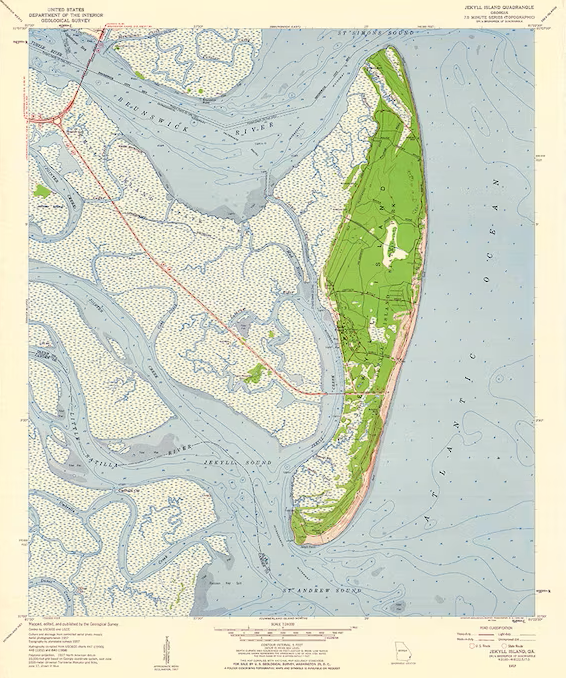
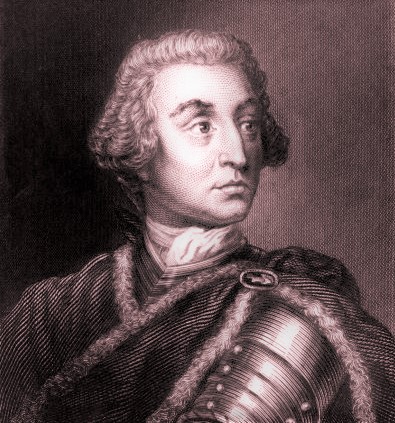
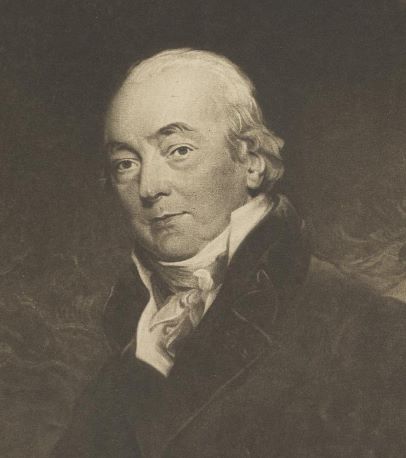
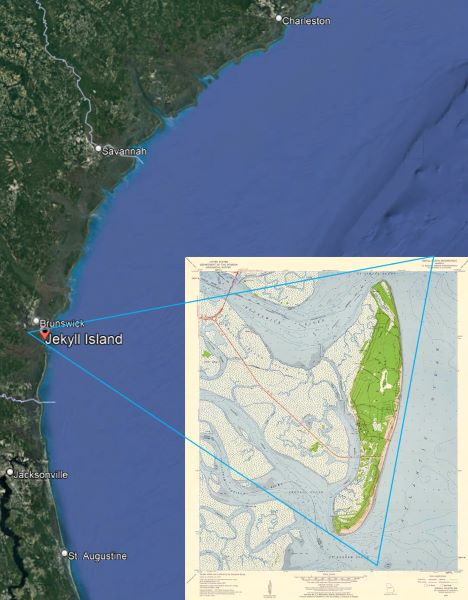
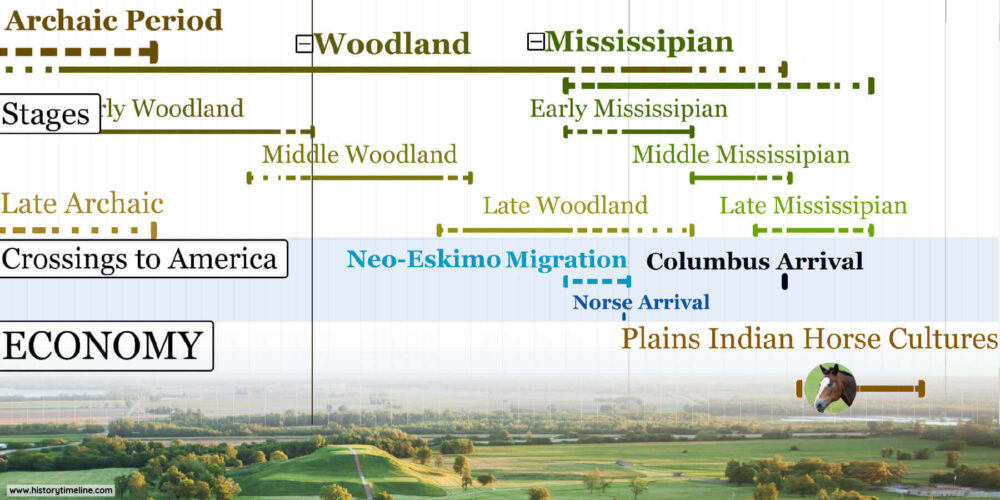


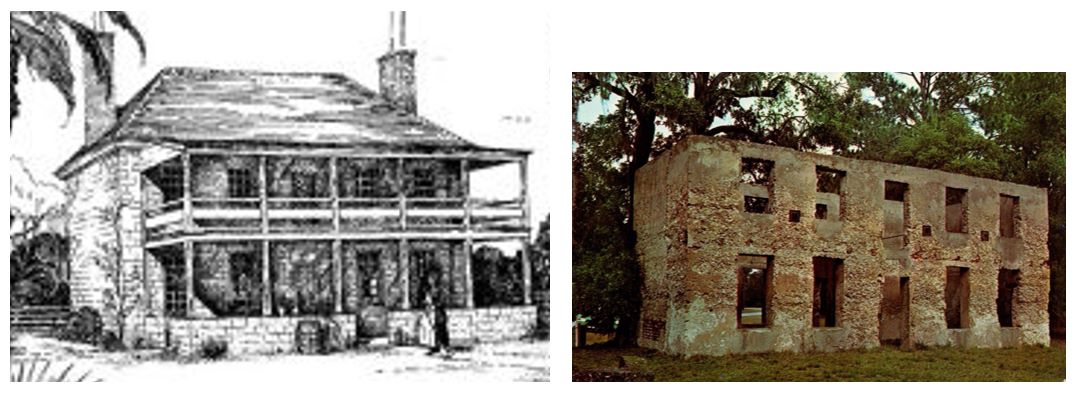

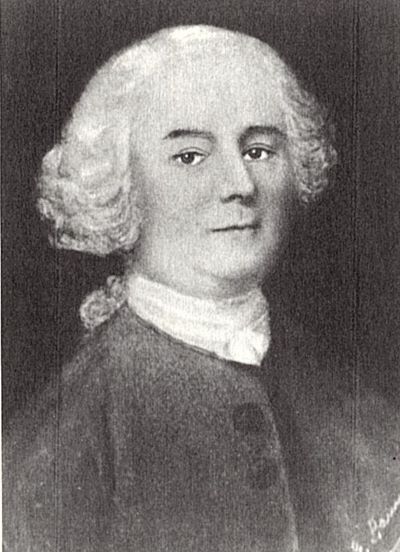
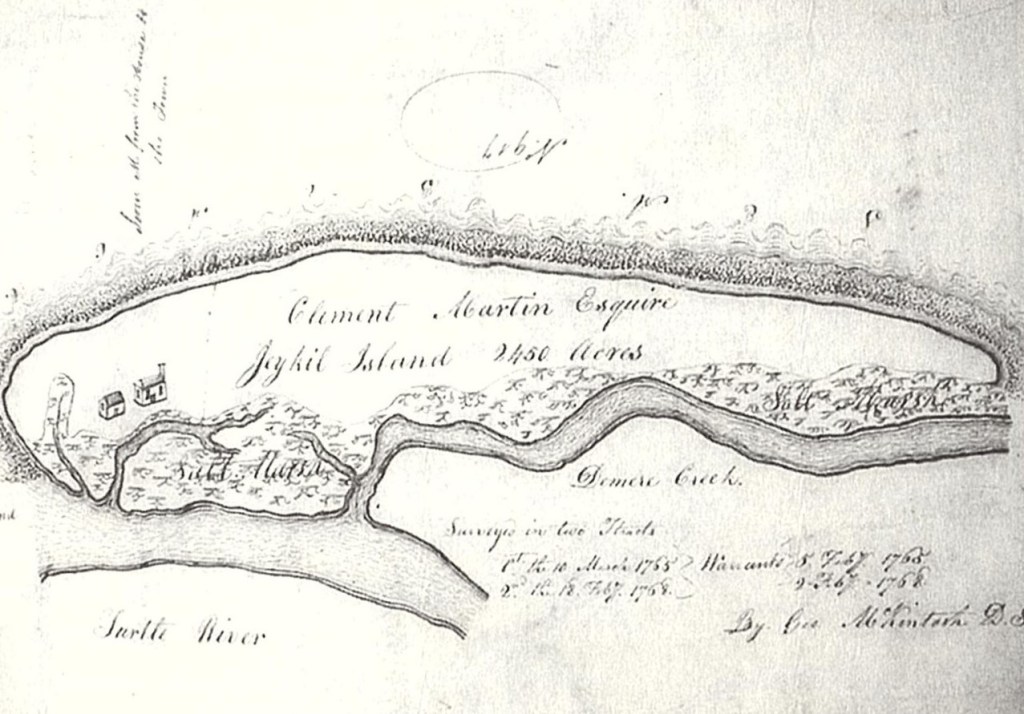
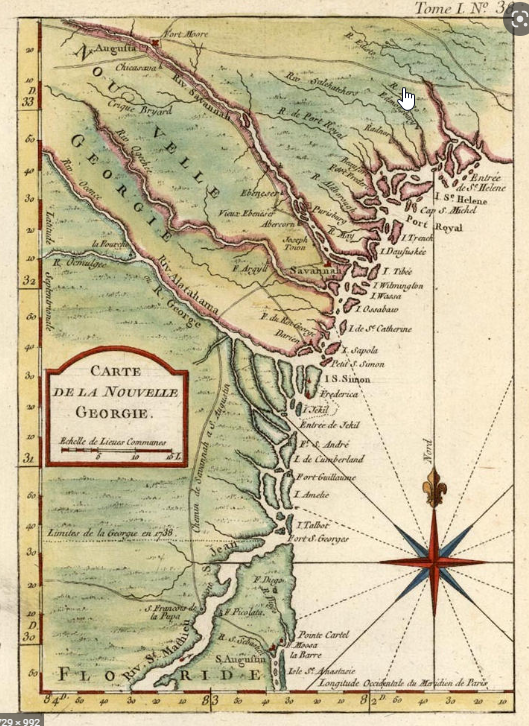
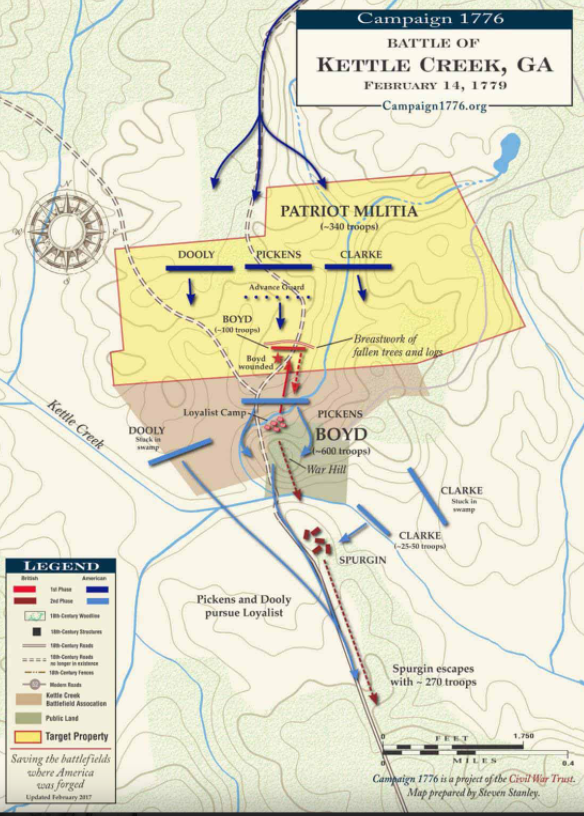
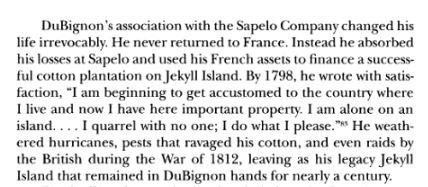
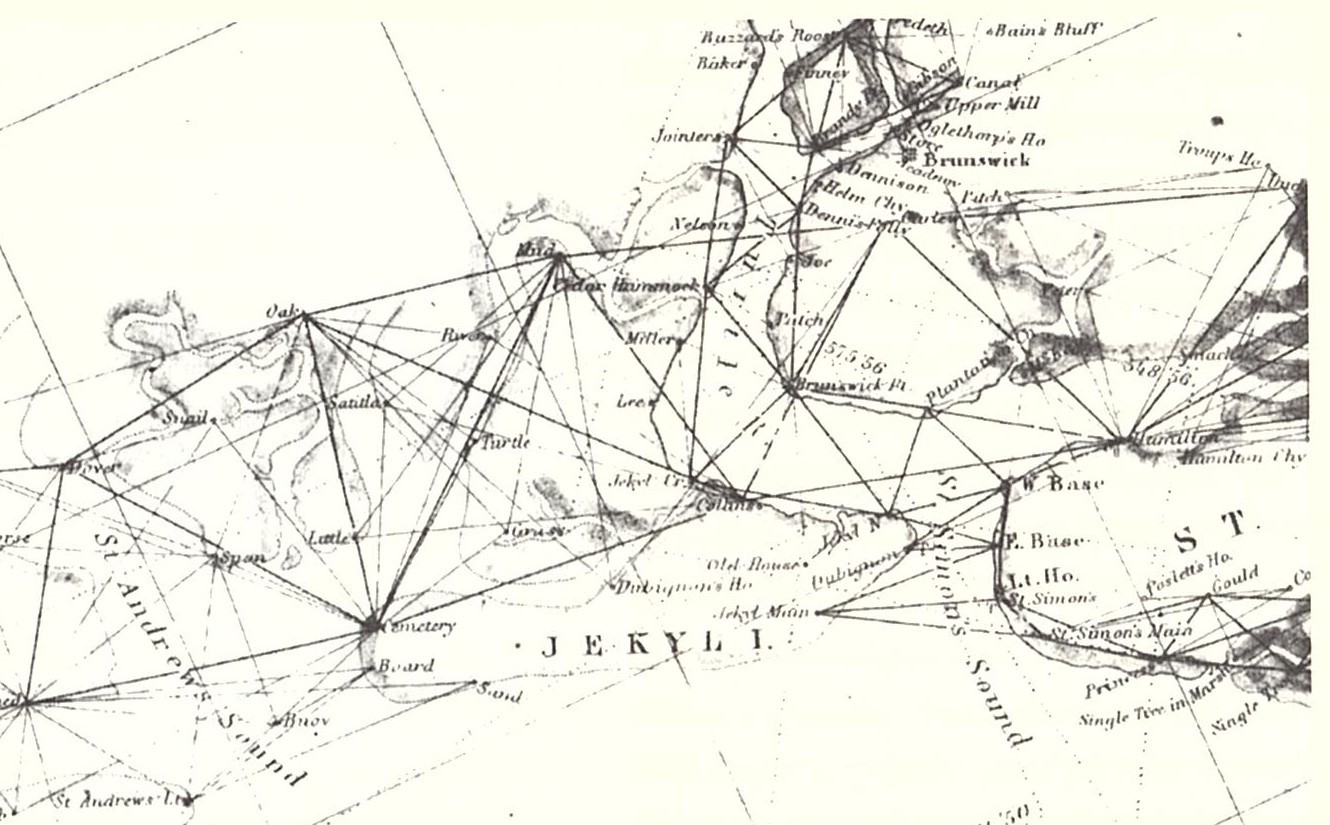

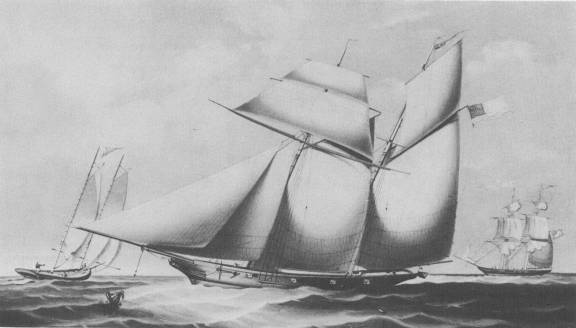

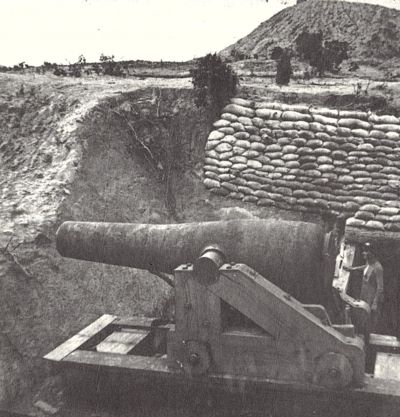


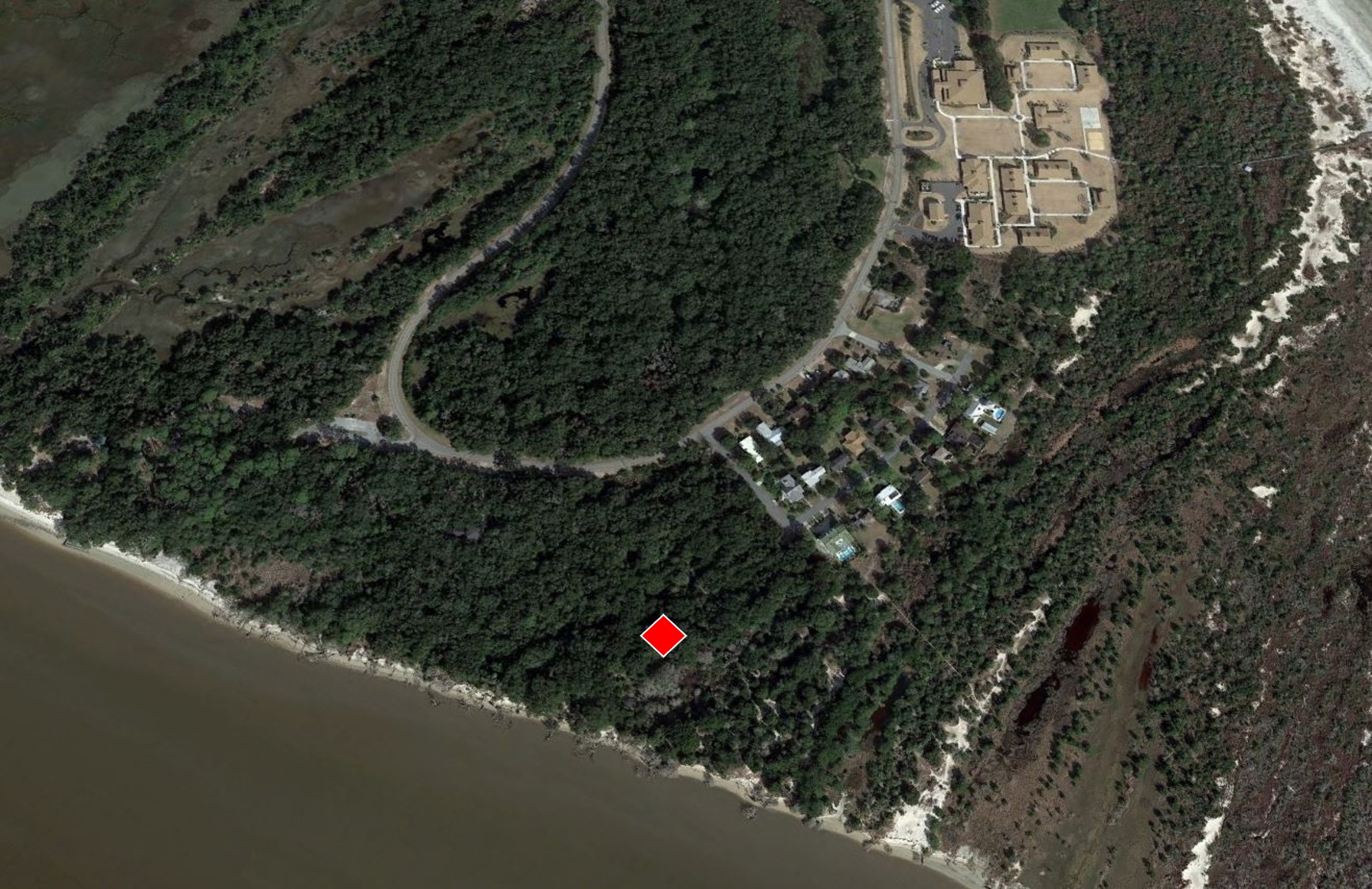
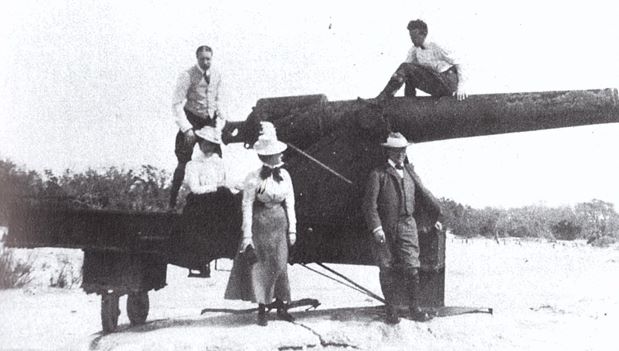
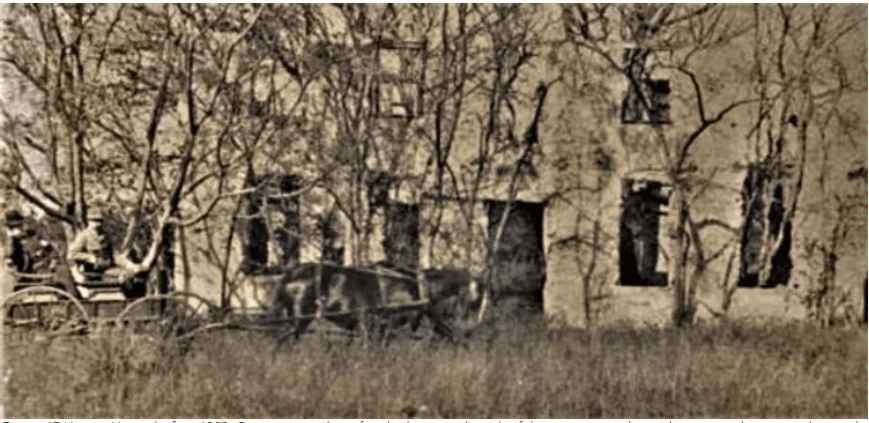
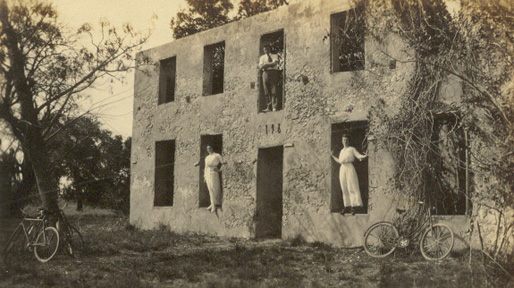
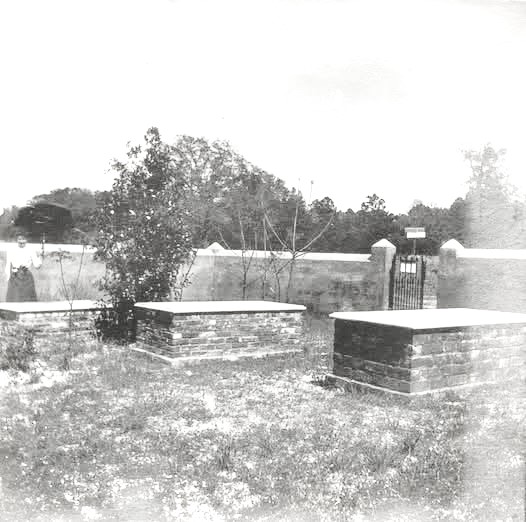
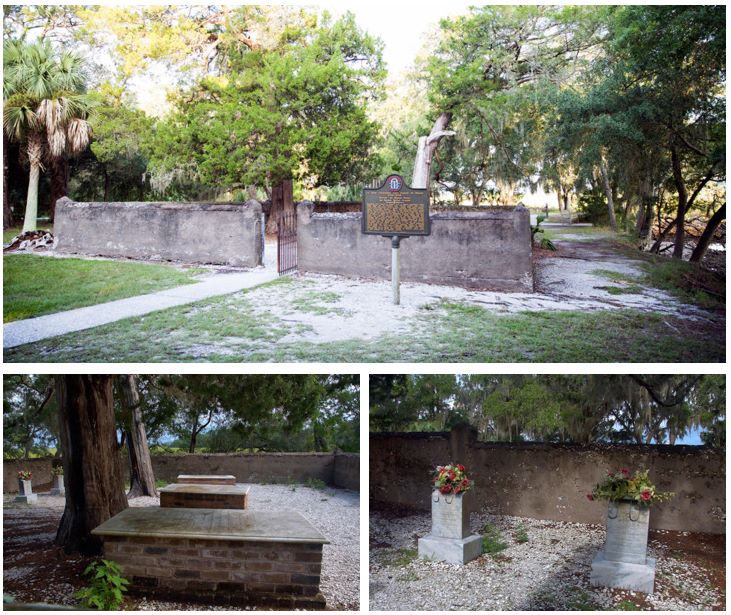
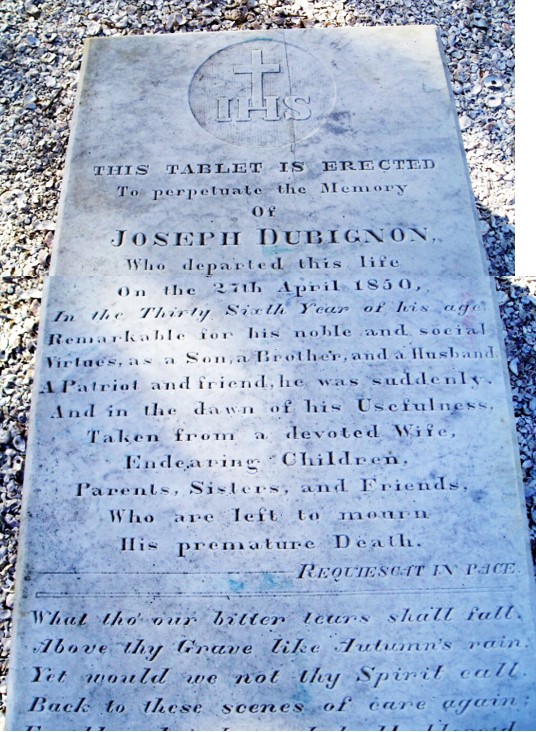
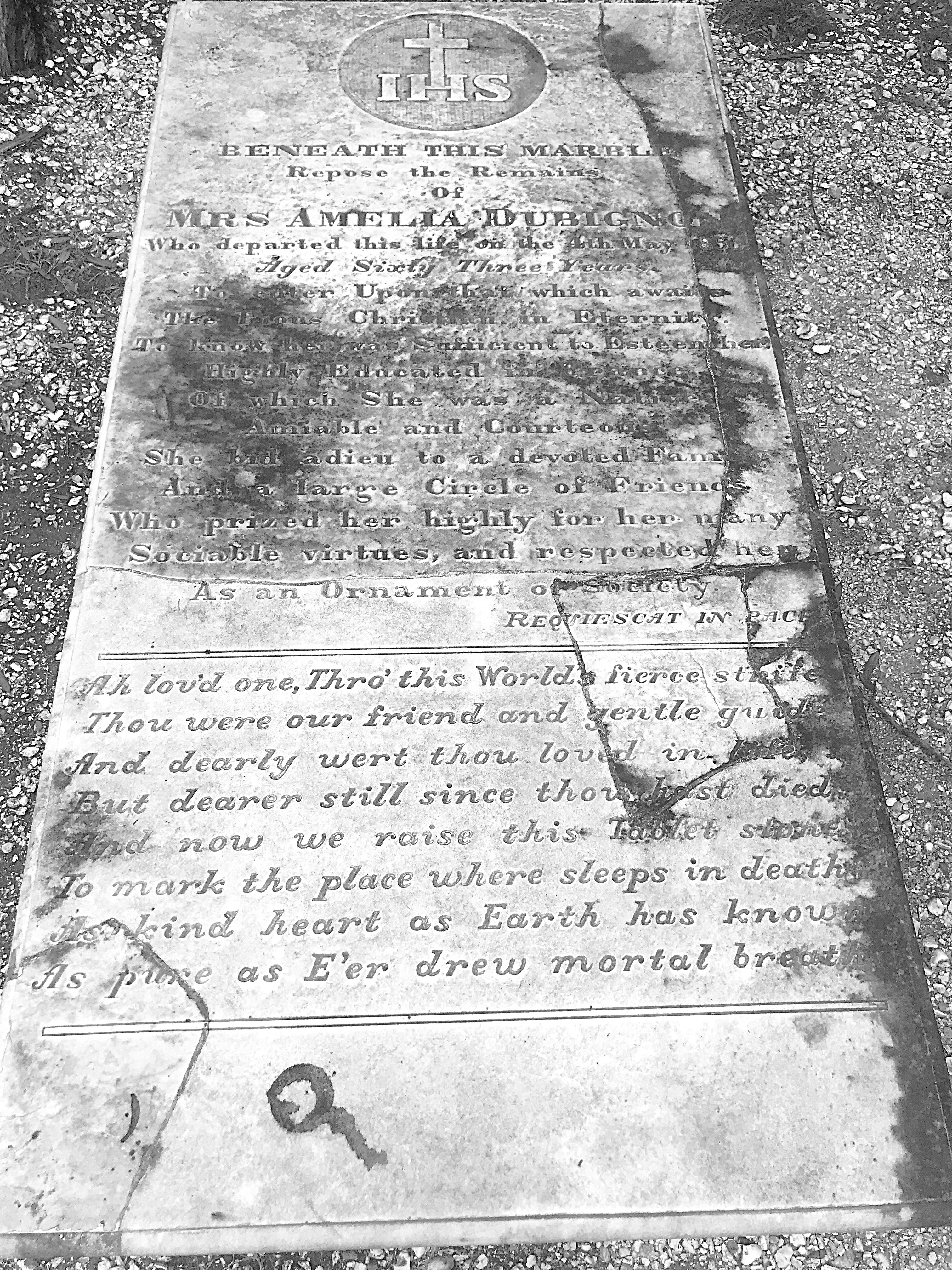
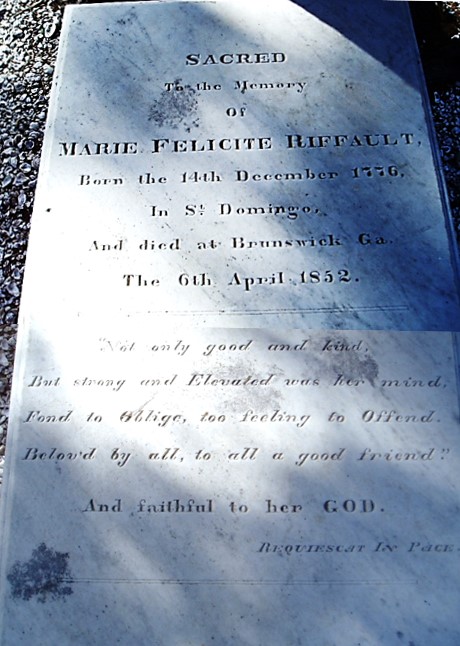
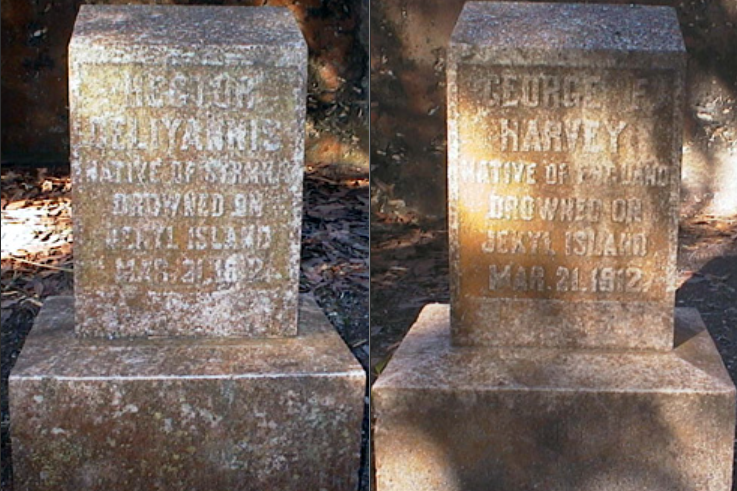
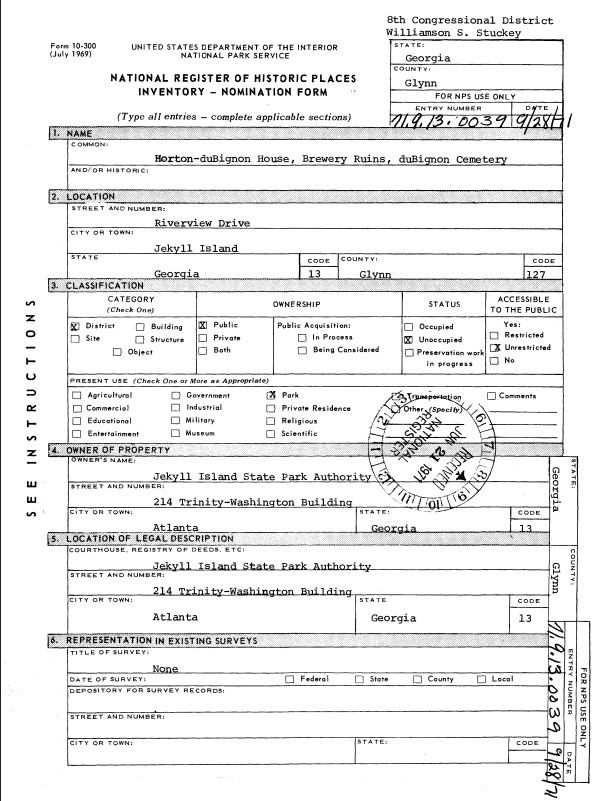
 Our Travels & Jekyll Island History